

Retaliation at Work What Teachers Must Do Immediately During a School Investigation
When Your Career Is Suddenly on the Line
Few moments feel as overwhelming as being called into a meeting and told there is an investigation involving you. For many educators, that moment comes without warning and quickly turns into fear about their job, reputation, and future. What begins as a simple inquiry can escalate into serious allegations of misconduct, harassment, or discrimination that may affect your entire career. In many cases, teachers in Dallas Fort Worth school districts are placed on administrative leave before they even understand what is happening.
This is where the danger begins. What many teachers do not realize is that retaliation at work often starts quietly, long before any formal findings are made. The employer may begin documenting, limiting communication, or placing the employee in a difficult position under the guise of an internal review. Without immediate action, an employee can unknowingly harm their own case.
Why Retaliation at Work Happens During School Investigations
School systems are structured environments where agency policies, internal reporting procedures, and administrative hierarchies play a significant role. When a teacher reports misconduct, raises a concern, or participates in a protected activity, they may become a target for retaliation. This retaliation can take many forms, including reassignment, isolation, or sudden scrutiny of performance.
Under Title VII and other federal law, retaliation is prohibited when an employee engages in protected conduct such as reporting discrimination or harassment. However, employers may still attempt to justify their actions by citing the agency’s mission, internal concerns, or alleged violations of workplace rules. These explanations often mask decisions that are actually punitive.
The Immediate Shock of Being Placed on Administrative Leave
Being placed on administrative leave can feel like an instant judgment. In many cases, the employer will grant administrative leave as a precaution while an investigation is ongoing. This leave may be labeled as paid administrative leave, but that does not mean the situation is harmless.
Teachers are often told that the leave is temporary or for brief or short periods, but the reality is that these periods can extend longer than expected. During this time, the employee is removed from their employee's current position, which can create long-term damage to their professional standing. Even if the leave is classified as an excused absence, the stigma can remain.
What Administrative Leave Really Means for Teachers
It is important to understand that administrative leave is not just time off. It is a strategic step used by employers during investigations. While some forms of leave, such as paid leave, may appear neutral, they are often tied to deeper agency judgments about the situation.
In some cases, the employer may categorize the situation as investigative leave, which signals that serious allegations are being reviewed. This type of leave can be used while gathering evidence, interviewing witnesses, or conducting internal reviews. The decision to place a teacher on leave is often made quickly, sometimes by an agency head or administrator acting under internal authority.
Signs That Retaliation at Work Is Already Happening
Retaliation is not always obvious at first. It can develop in subtle ways that are easy to overlook. Teachers should be alert to changes that occur after they report concerns or become involved in an investigation.
Common warning signs include:
- Sudden placement on administrative leave without clear explanation
- Reassignment to a less desirable position or removal from a desirable position
- Increased scrutiny or negative evaluations from a supervisor
- Exclusion from meetings or communication with other employees
- Pressure to resign or accept a different role
These actions may appear administrative, but they can indicate retaliation, especially when they follow a protected activity.
The Role of Human Resources During Investigations
Many teachers assume that human resources is there to support them. While HR plays an important role, it is essential to understand that their primary responsibility is to the employer. HR professionals are often involved in enforcing agency policies, conducting interviews, and documenting findings.
In some cases, HR may recommend notice leave or additional administrative leave depending on the situation. They may also coordinate with agency officials or other authorized agency officials to ensure compliance with internal procedures. This process can feel formal and structured, but it is not always neutral.
How Investigations Expand Beyond the School
Some school investigations involve outside entities. Depending on the nature of the allegations, police, federal agencies, or other authorities may become involved. This is especially true in cases involving serious claims such as misconduct or violations of state laws.
When external agencies participate, the stakes increase significantly. Statements made during interviews may be shared with law enforcement or used in broader proceedings. Teachers must understand that what begins as a workplace matter can quickly escalate into a legal issue.
The Legal Framework Protecting Teachers
Teachers have rights under both state laws and federal law. Title VII of the Civil Rights Act is one of the primary protections against retaliation and discrimination. It ensures that employees who report unlawful conduct are protected from adverse actions by their employer.
Additional protections may come from executive order, presidential directive, or presidential memorandum policies that guide how agencies handle employee rights. These frameworks are often supported by OPM regulations and OPM guidance, which influence how federal employees and certain educational institutions manage personnel issues.
What Teachers Must Do Immediately
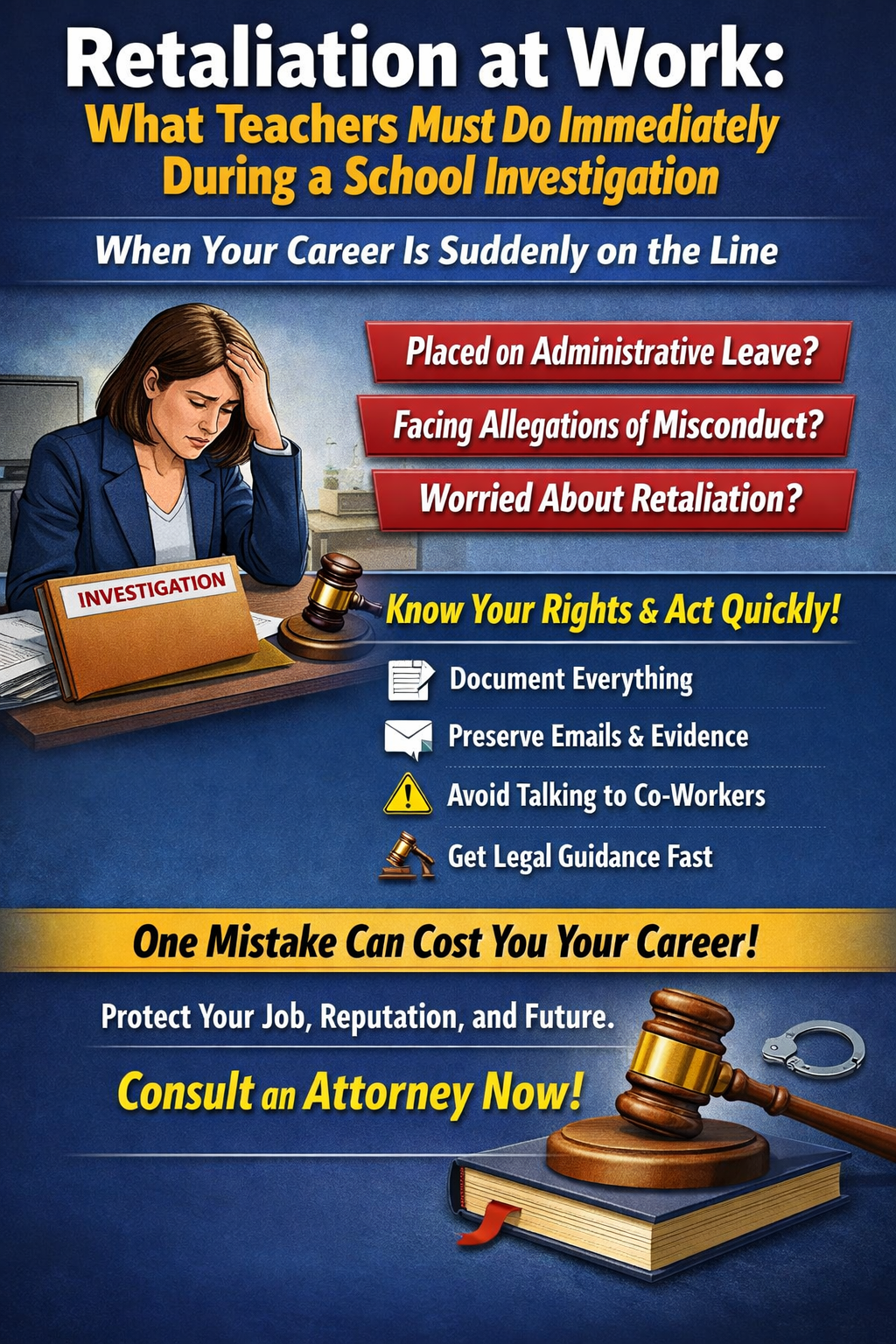
Time is critical when facing a school investigation. The actions taken in the first few days can determine the outcome of the case. Teachers should avoid reacting emotionally and instead focus on protecting their rights in any potential workplace retaliation case.
Key steps include:
- Document every communication with the employer or agency officials
- Avoid discussing the case with a co worker or others who may report back
- Request clarification on the terms of administrative leave
- Preserve emails, messages, and any evidence related to the situation
- Seek legal guidance before making any formal statements
These steps help protect the employee from making statements that could be used against them later.
Mistakes That Can Cost You Your Career
One of the most common mistakes is assuming the investigation will resolve itself. Many teachers believe that cooperating fully without guidance will clear their name. Unfortunately, this approach can lead to unintended consequences.
Another mistake is speaking freely during interviews without understanding how the information may be used. Even small inconsistencies can be interpreted negatively during agency judgments. In some cases, employees unknowingly provide statements that support claims of alleged misconduct.
How Employers Build Cases During Investigations
Employers often follow structured processes when conducting investigations. These processes may involve reviewing documents, interviewing witnesses, and analyzing workplace behavior. The employer may rely on internal policies, past records, and input from agency officials, while educators may benefit from expert legal support for teachers and schools to navigate these steps.
In some cases, investigations are conducted on an ad hoc basis, meaning they are tailored to the specific situation. This can create inconsistencies in how cases are handled. The employer may justify decisions by referencing the agency’s mission or operational needs.
Understanding Investigative Leave vs Administrative Leave
While both terms are used interchangeably, there are differences between investigative leave and administrative leave. Investigative leave is typically used when there are serious concerns that require immediate removal from the workplace. Administrative leave may be used for broader reasons, including safety or operational concerns.
Both types of leave can be applied on a time limited basis, but extensions are common. Teachers should be aware that these leaves are often part of a larger strategy and not simply temporary measures.
The Impact on Pay and Benefits
Many teachers are told they will remain on paid administrative leave, but this does not always guarantee long-term financial stability. Changes in status can affect pay, benefits, and future employment opportunities.
In some cases, the employer may transition the employee to unpaid status or impose restrictions that affect their income. Understanding how leave status impacts compensation is essential for planning and decision-making.
How Retaliation Can Affect Your Reputation
Reputation is one of the most valuable assets a teacher has. Even unproven allegations can create lasting damage. Colleagues, administrators, and future employers may view the situation negatively, regardless of the outcome, which is why many educators turn to legal support focused on protecting teachers’ careers and licenses.
Retaliation can amplify this damage by creating a narrative that the employee is problematic. This can lead to isolation in the workplace and difficulty securing future positions.
The Role of Federal Guidelines in School Investigations
Certain school systems follow guidelines influenced by federal agencies and personnel management standards. These guidelines may reference provisions in the United States Code and outline how employees should be treated during investigations, making it important to understand how an expert education lawyer can interpret and apply these rules.
While these rules are designed to ensure fairness, they can also be used to justify administrative decisions. Teachers must understand how these frameworks apply to their situation.
When Family Responsibilities Are Affected
Investigations do not just impact the employee. They can also affect family responsibilities, financial stability, and overall well-being. Extended periods of administrative leave can create uncertainty for a family member who depends on the employee’s income.
In some cases, employees may need to request accommodations or adjustments due to personal circumstances. These requests must be handled carefully to avoid additional complications.
How Workplace Culture Influences Outcomes
The culture of a school or district plays a significant role in how investigations are handled. Some workplaces prioritize transparency and fairness, while others may focus on protecting the institution.
Understanding the environment can help teachers anticipate how the process will unfold. It can also provide insight into whether retaliation is likely to occur.
The Importance of Documentation
Documentation is one of the strongest tools an employee has during an investigation. Keeping detailed records of events, communications, and interactions can make a significant difference.
This includes documenting any changes in treatment, such as reassignment or exclusion. These records can help establish patterns of retaliation and support legal claims if necessary.
How Safety Leave and Notice Leave May Be Used
In some cases, employers may use safety leave or notice leave as part of the investigation process. These forms of leave are often justified as necessary for maintaining workplace safety or operational stability.
However, they can also be used strategically to limit the employee’s access to information or colleagues. Understanding how these leaves are applied is critical.
What Happens After the Investigation
The outcome of an investigation can vary widely. The employer may determine that no wrongdoing occurred, or they may take disciplinary action based on their findings. In some cases, the employee may face reassignment, suspension, or termination.
Even if the findings are inconclusive, the impact of the investigation can linger. Teachers must be prepared for all possible outcomes and understand their options moving forward.
Protecting Yourself Against Discrimination and Harassment
Teachers who experience discrimination or harassment during an investigation must take proactive steps to protect themselves. This includes reporting concerns through appropriate channels and documenting all incidents.
Legal protections exist to address these issues, but they must be enforced. Taking action early can prevent further harm and strengthen the employee’s position.
Why Legal Guidance Is Critical
Navigating a school investigation without legal guidance is risky. The process is complex, and the stakes are high. An education law attorney for teachers and administrators can help interpret regulations, identify violations, and develop a strategy for protecting the employee’s rights.
Legal professionals can also communicate with the employer on behalf of the employee, reducing the risk of misstatements or misunderstandings, and an education law attorney providing expert legal guidance for teachers can manage these communications strategically.
How Retaliation at Work Can Escalate Quickly
Retaliation often begins with small actions that escalate over time. What starts as a minor inconvenience can turn into significant consequences, including loss of position or income.
Recognizing these patterns early is essential. Teachers who act quickly are more likely to protect their rights and achieve a favorable outcome.
Taking Control of the Situation
While the situation may feel overwhelming, teachers have options. By understanding their rights, documenting events, and seeking guidance, they can take control of the process.
The key is to act quickly and avoid common mistakes. Waiting too long can limit available options and increase the risk of negative outcomes.
How Immigration Status and Internal Policies Can Affect a School Investigation
During a school investigation, factors such as immigration status and internal administrative procedures can unexpectedly become part of the discussion, especially when outside agencies or broader compliance issues are involved. Schools often issue internal policies consistent with district guidelines and federal expectations, and these policies are meant to prohibit retaliation against teachers who participate in protected activities. However, the reality is that how these policies are applied can vary depending on how the agency determines the seriousness of the situation. In some cases, actions taken by administrators may appear justified because they are specifically authorized under internal rules, even if they feel unfair to the employee. Investigations may be framed as temporary measures lasting brief periods, but those periods can stretch far beyond what was initially communicated, particularly in high-stakes matters like a TEA investigation where Texas educators must protect their licenses.
For individual employees, understanding how these policies operate is critical. Schools may rely on rules that seem unrelated at first glance, including policies that cover activities such as blood donations or participation in officially sponsored events, to evaluate conduct or attendance patterns, which is where experienced education law legal services can help clarify risks and next steps. These decisions may also be supported by an other provision within internal guidelines that allows flexibility in handling unique situations. Over the course of a calendar year, repeated actions or documentation can be used to build a narrative about an employee’s performance or behavior. For example, a teacher who raises a concern about discrimination may later find that unrelated issues are suddenly being documented and reviewed as if they are directly related to the investigation, similar to how allegations in a TEA educator investigation in Texas can quickly expand in scope. In these moments, it is essential that the process is handled with fairness and respect, but teachers must be aware that not all investigations are conducted with the same level of neutrality.
Speak With Masterly Legal Solutions Today
If you are facing retaliation at work or have been placed on administrative leave during a school investigation, you do not have to navigate this situation alone. These cases move quickly, and every decision you make can impact your future.
At Masterly Legal Solutions, we work with educators who are dealing with complex workplace issues, including discrimination, harassment, and retaliation. We understand how school systems operate and how investigations can affect your career.
Call us at (972) 236-5051 for a free consultation. We will take the time to listen to your situation, answer your questions, and help you understand your options. The sooner you take action, the better your chances of protecting your career and your reputation.
Disclaimer: This article is for educational purposes only and does not constitute legal advice. Every situation is different, and you should contact a qualified attorney to discuss your specific circumstances.

Teacher Rights When Assaulted by a Special Needs Student: Safety, Reporting and Investigation Issues







Looking for Legal & Business Solutions? Contact Us Now
Fill in the form or call us to set up a meeting