

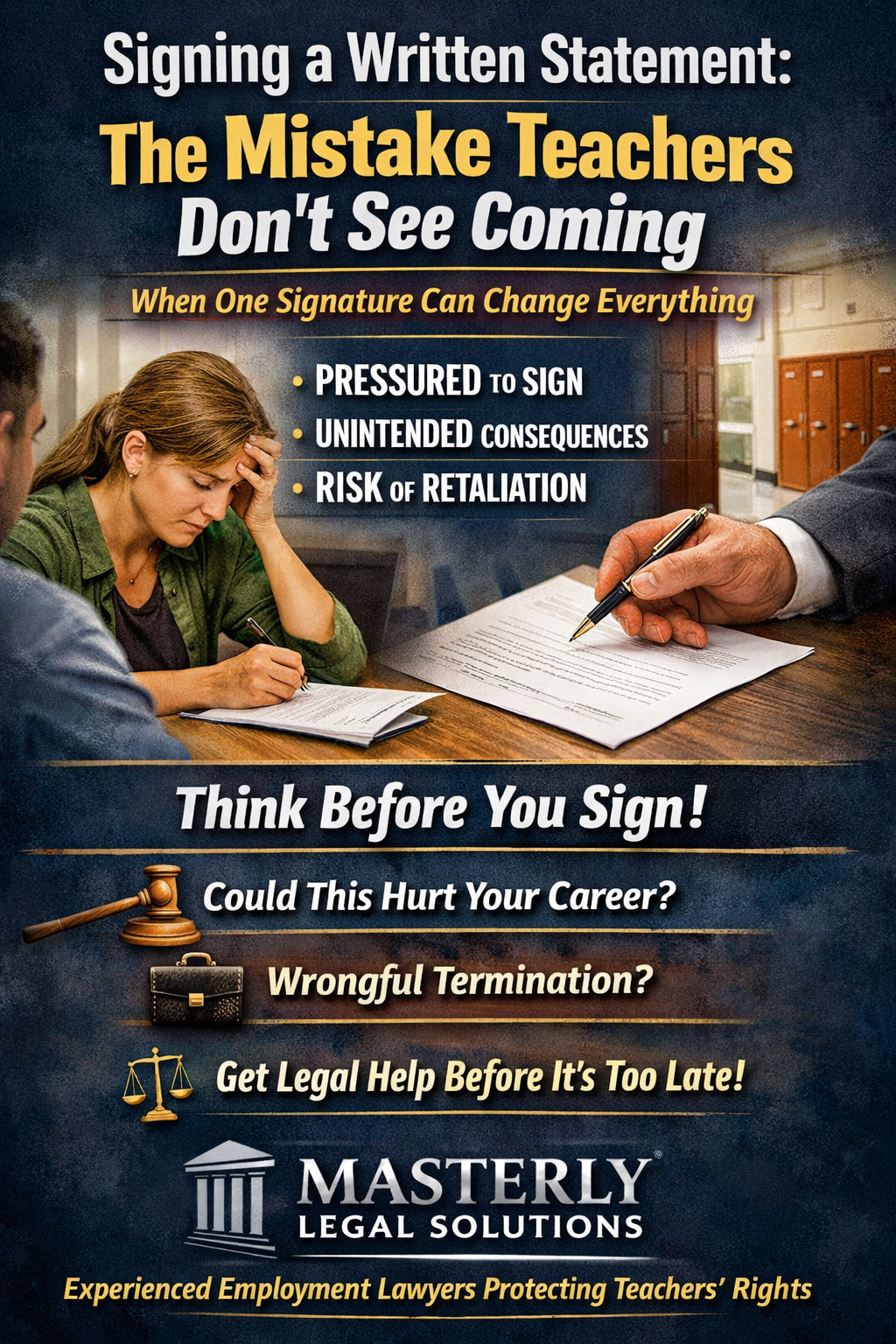
Signing a Written Statement: The Mistake Teachers Don’t See Coming
When One Signature Can Change Everything
For many teachers, the classroom feels like a place of structure, fairness, and accountability. Unfortunately, the same cannot always be said about the workplace environment behind the scenes. In school districts in Austin and across Texas, educators are often asked to sign written statements during investigations, complaints, or internal reviews without fully understanding the legal impact. What seems like a routine request can quickly become a serious legal issue.
At Masterly Legal Solutions, we have seen firsthand how a single signed statement can be used against employees in ways they never expected. Whether the issue involves workplace harassment, discrimination, or retaliation, teachers must understand their rights before agreeing to anything in writing.
Why Written Statements Are Riskier Than They Appear
Many teachers assume that signing a written statement is simply a formality. In reality, these documents can become key evidence in employment law cases, especially when disputes escalate into retaliation claims or wrongful termination cases.
Once signed, a statement is often treated as a final and binding account of events. Employers may rely on it heavily when making decisions that affect your job, including termination or disciplinary action. This is why consulting an experienced attorney before signing is critical.
The Pressure Teachers Face in the Workplace
Teachers often feel pressure from their employer to cooperate quickly during an investigation. Administrators may present written statements as routine or necessary for compliance. However, this pressure can lead employees to sign documents without reviewing them carefully or seeking legal advice.
In many cases, employees are not informed that they may be participating in a process that could lead to retaliation or even termination. This is particularly concerning in workplace environments where power dynamics favor administrators over individual teachers.
Understanding Retaliation in Texas Schools
Retaliation is one of the most common issues teachers face after speaking up. Under employment law, retaliation occurs when an employer takes adverse action against an employee for engaging in a protected activity. This can include filing a complaint, reporting illegal conduct, or participating in an investigation.
In Texas, retaliation can take many forms, and it is strictly prohibited under federal law and the Texas Labor Code. Teachers who experience retaliation may have legal options, but those options can be limited if they have already signed damaging statements.
What Counts as a Protected Activity
Not every action qualifies as protected activity, but many do. Teachers who report workplace discrimination, harassment, or illegal activity are often protected under the law.
Examples of protected activity include:
- Filing a complaint with the equal employment opportunity commission or EEOC
- Reporting sexual harassment or workplace harassment
- Requesting reasonable accommodation under the disabilities act
- Raising concerns about unpaid wages or workplace violations
When an employee complains about these issues, the employer is prohibited from retaliating against them.
How Retaliation Shows Up in Schools
Retaliation in school districts does not always look obvious. In fact, it often appears subtle at first. Employers may take actions that seem minor but have long-term consequences for employees.
Common examples of retaliation include:
- Negative performance evaluations after a complaint
- Sudden changes in job duties or classroom assignments
- Denial of promotions or professional opportunities
- Increased scrutiny or disciplinary action
These actions can create a hostile work environment and may eventually lead to wrongful termination.
The Role of Written Statements in Retaliation Claims
Written statements often play a central role in retaliation claims. When an employee signs a statement, the employer may later use it to justify adverse action.
For example, a teacher who reports harassment may be asked to write a statement. If that statement is incomplete, unclear, or written under pressure, it can be used to discredit the teacher’s claim. This is where having an attorney involved becomes essential.
Why Employers Request Written Statements
Employers request written statements for several reasons, but not all of them benefit the employee. While some statements are used to gather information, others are used to protect the employer from liability.
In some cases, employers are building a record that supports their decisions, including termination or discipline. This is especially true in complex employment law cases involving discrimination or retaliation.
The Risk of Adverse Action
Adverse action refers to any action taken by an employer that negatively affects an employee’s job. This can include termination, demotion, or reduction in pay.
When a teacher signs a written statement, it may be used as justification for adverse action. This is why it is important to carefully review any document before signing and to consult with employment lawyers who understand Austin employment laws.
How Retaliation Can Lead to Wrongful Termination
Retaliation often escalates over time. What begins as subtle workplace changes can eventually lead to termination. When an employee is wrongfully terminated, they may have grounds for a legal claim.
Wrongful termination cases often involve retaliation, discrimination, or violations of federal law. Teachers who believe they have been wrongfully terminated should contact a law firm immediately to protect their legal rights.
The Intersection of Discrimination and Retaliation
Discrimination and retaliation are closely connected. Teachers who report workplace discrimination based on sexual orientation, national origin, or disability may face retaliation from their employer.
Unlawful discrimination is prohibited under both state and federal law. However, proving a discrimination claim often requires strong evidence, including documentation and witness testimony.
Sexual Harassment and Written Statements
Sexual harassment cases often involve written statements. Teachers who report harassment may be asked to document their experiences in writing.
While this can be an important step, it also carries risks. A poorly written or incomplete statement can weaken a claim and make it more difficult to seek compensation later.
The Importance of Legal Guidance
One of the biggest mistakes teachers make is signing documents without consulting an attorney. Employment lawyers can help review statements, identify risks, and ensure that employees are not putting themselves in a vulnerable position.
At Masterly Legal Solutions, our attorneys are committed to helping Austin workers navigate complex employment issues. We understand how employers operate and how to protect employees from unlawful retaliation.
What Happens After You Sign
Once a statement is signed, it becomes part of the official record. Employers may use it in internal investigations, disciplinary proceedings, or legal disputes.
This is why it is so important to ensure that any statement you sign is accurate, complete, and carefully reviewed.
Filing a Complaint the Right Way
Filing a complaint is often necessary, but it must be done correctly. Teachers should understand the process and their rights before taking action.
This may involve filing with the EEOC or the Texas Workforce Commission, depending on the nature of the claim and the type of retaliation or labor complaint. Each process has specific requirements and deadlines that must be followed.
The Role of Retaliation Lawyers
Retaliation lawyers play a critical role in protecting employees. They help determine whether an employer’s actions are unlawful and whether a claim can be pursued.
Experienced retaliation lawyers understand how to build strong cases and hold employers accountable for their actions.
How a Law Firm Can Help
A skilled law firm can provide guidance at every stage of the process. From reviewing written statements to representing employees in court, legal support is essential.
At Masterly Legal Solutions, our education law attorneys for teachers and administrators are committed to representing employees and helping them fight for the compensation they deserve.
Understanding Your Legal Rights
Teachers have legal rights under both state and federal law. These rights are designed to protect employees from discrimination, harassment, and retaliation.
Understanding these rights is the first step toward protecting yourself in the workplace.
The Impact of Workplace Harassment
Workplace harassment can create a toxic environment that affects both job performance and personal well-being. Teachers who experience harassment should take action and seek legal advice from a firm that focuses on legal support for educators and license defense.
Harassment claims often require detailed documentation, which is why written statements must be handled carefully.
Reasonable Accommodation and Disability Rights
Teachers with disabilities have the right to request reasonable accommodation under the disabilities act. Employers are required to provide accommodations unless doing so would create undue hardship.
Failure to provide reasonable accommodation can lead to legal claims and potential compensation.
The Importance of Documentation
Documentation is key in any employment dispute. Teachers should keep records of all communications, including emails, memos, and written statements.
This information can be crucial in building a strong case and proving retaliation or discrimination, and well-drafted employee handbook policies and procedures often become important evidence as well.
How Cases Vary Depending on Circumstances
Every case is different. The outcome of a claim may vary depending on the facts, evidence, and legal arguments involved.
This is why it is important to work with experienced education and employment lawyers in Texas who understand the nuances of employment law in Texas.
Protecting Yourself Before It’s Too Late
The best way to protect yourself is to act early. Before signing any document, take the time to review it carefully and consult with an attorney.
This simple step can prevent serious legal issues down the line and protect your career.
When to Contact an Attorney
If you are asked to sign a written statement, it is important to contact an attorney immediately. Do not assume that the document is harmless.
An experienced attorney can review the statement, provide guidance, and help you avoid common mistakes, especially when you need education law legal protection as a teacher.
Why Teachers Trust Super Lawyers
Many teachers turn to super lawyers for guidance because of their experience and proven track record. These professionals understand the complexities of employment law and are committed to protecting employees.
Choosing the right attorney can make a significant difference in the outcome of your case, particularly when you need legal protection for teachers and their rights.
Building a Strong Retaliation Claim
Building a strong claim requires evidence, strategy, and legal expertise. Retaliation claims often involve multiple factors, including timing, documentation, and employer behavior.
Working with retaliation lawyers can help ensure that your claim is properly developed and presented.
The Role of Federal Law in Employment Cases
Federal law plays a significant role in employment disputes. Laws such as the family medical leave act provide protections for employees and establish guidelines for employers.
Understanding these laws is essential for anyone facing workplace issues.
Holding Your Employer Accountable
Employers must be held accountable for their actions. When they engage in illegal activity or violate employee rights, legal action may be necessary.
A skilled attorney can help you pursue justice and seek compensation for damages.
Standing Up Against Unlawful Retaliation
Unlawful retaliation is a serious issue that affects many employees. Teachers who experience retaliation should not remain silent.
Taking action can help protect your rights and prevent similar issues for others.
How We Represent Employees
At Masterly Legal Solutions, we are dedicated to representing employees in a wide range of employment law cases. Our team works tirelessly to protect clients and achieve the best possible outcomes.
We understand the challenges teachers face and are committed to providing personalized legal support.
Understanding Workplace Retaliation in Schools
Workplace retaliation occurs when an employer takes negative action against employees for engaging in legally protected activity, such as reporting harassment, discrimination, or illegal conduct. In school environments, workplace retaliation can be especially difficult to identify because it often appears subtle at first. Teachers may notice changes in treatment, increased scrutiny, or exclusion from opportunities after raising concerns. Understanding what workplace retaliation looks like is essential to protecting your legal rights and ensuring that your employer does not take unlawful action against you.
When an Employer Is Punished for Illegal Conduct
In certain employment law cases, an employer may be held legally responsible and punished for violating the law. This can happen when there is clear evidence of retaliation, discrimination, or other illegal activity in the workplace. Courts and regulatory agencies may impose penalties, require policy changes, or award compensation to affected employees. Holding an employer punished for unlawful behavior is not just about individual justice—it also helps prevent similar misconduct in the future.
The Role of the Texas Board in Teacher Complaints
The Texas board plays an important role in overseeing educator conduct and handling certain complaints within school systems. When issues arise involving teacher discipline or allegations, the texas board may become involved in reviewing the situation. However, teachers should be aware that these proceedings can have serious consequences for their careers. This is why it is critical to consult an attorney before submitting statements or participating in investigations that may be reviewed at this level.
Recovering Lost Wages After Retaliation
Employees who experience retaliation, wrongful termination, or are placed on administrative leave may be entitled to recover lost wages and protect their teaching careers. When a teacher is removed from their position or suffers reduced pay due to unlawful actions by an employer, compensation may be available through legal claims. Lost wages can include not only salary but also benefits and future earning opportunities that were impacted. Working with experienced employment lawyers can help determine the full scope of compensation you may be eligible to pursue.
How the Supreme Court Influences Employment Law
Decisions made by the supreme court have a significant impact on employment law across the country, including in Texas. These rulings shape how laws are interpreted and enforced, particularly in cases involving retaliation, discrimination, and employee rights. Understanding how the supreme court has ruled on similar issues can provide insight into how your case may be handled. This is another reason why having a knowledgeable attorney is so important when navigating complex legal matters.
How Other Laws May Protect Teachers
In addition to federal law and the Texas Labor Code, there are other laws that may provide protections for teachers facing workplace issues. These laws can cover a wide range of situations, including leave rights, disability accommodations, and protections against discrimination. Because multiple laws may apply to a single situation, it is important to evaluate each case carefully. An experienced attorney can help identify which legal protections apply and how they can be used to strengthen your claim.
Recognizing Other Forms of Retaliation
Retaliation does not always come in obvious ways. In fact, it can take other forms that are harder to detect but equally damaging. These may include isolation from colleagues, denial of resources, or subtle changes in job responsibilities that affect performance. Employees should be aware that retaliation can occur in many different ways, and even minor actions can contribute to a larger pattern of unlawful behavior. Recognizing these other forms early can help you take action before the situation escalates further.
Speak With Our Team Today
If you are a teacher in Austin or anywhere in Texas and have been asked to sign a written statement, do not take that step lightly. Our team at Masterly Legal Solutions is here to help you understand your options and protect your future.
We offer free consultations to discuss your situation, review your documents, and provide clear guidance on your next steps. Contact us today at (972) 236-5051 to speak with an experienced attorney who is committed to protecting your rights and helping you fight for the compensation you deserve.
Disclaimer: This article is for informational purposes only and does not constitute legal advice. Reading this content does not create an attorney-client relationship. For specific legal guidance regarding your situation, please contact a qualified attorney.



Teacher Rights When Assaulted by a Special Needs Student: Safety, Reporting and Investigation Issues


Looking for Legal & Business Solutions? Contact Us Now
Fill in the form or call us to set up a meeting





