
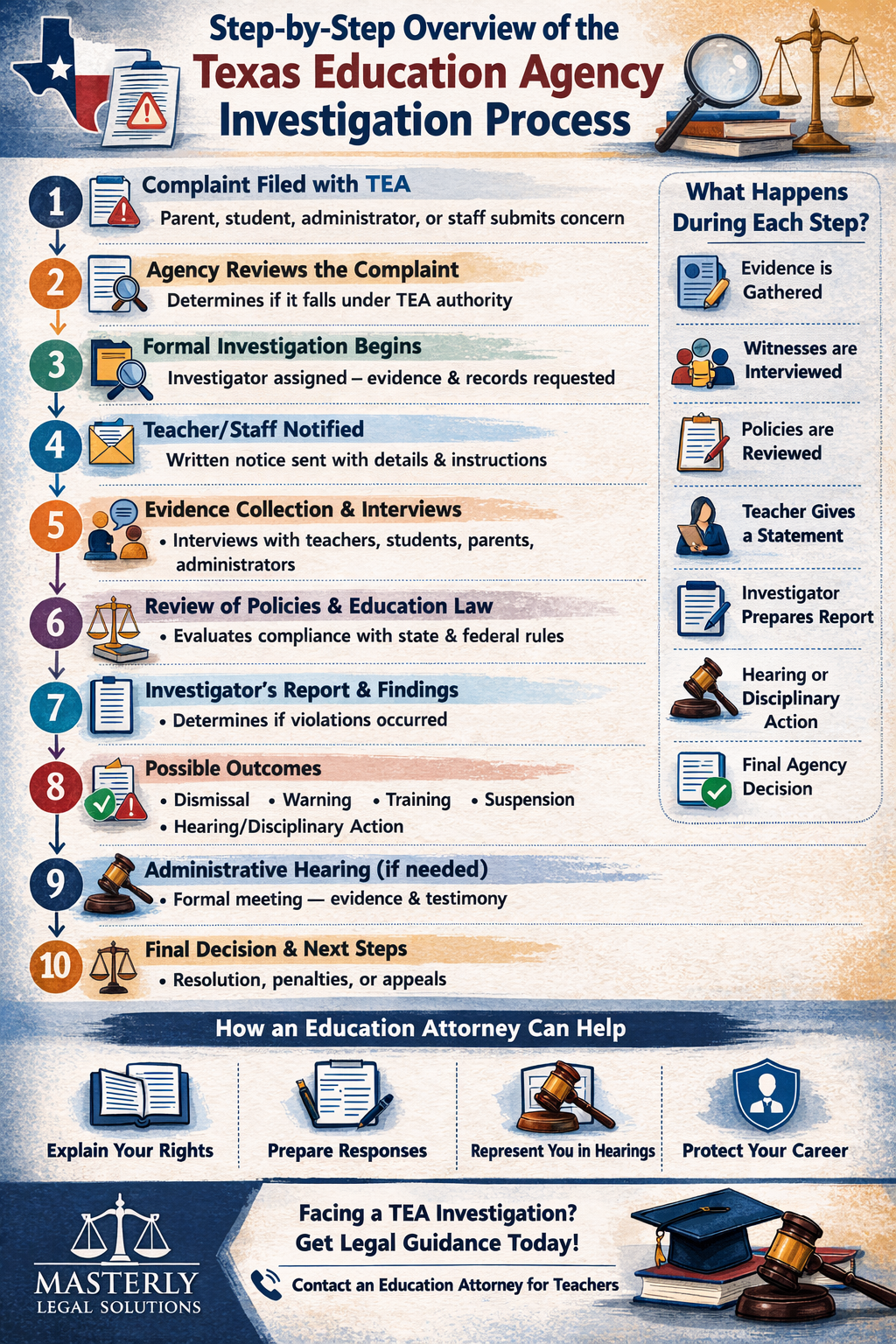
Step-by-Step Overview of the Texas Education Agency Investigation Process
Educators often dedicate their careers to helping students grow academically and personally. When a complaint triggers a Texas Education Agency investigation, however, many teachers suddenly find themselves navigating a complex legal and administrative process. The experience can feel overwhelming, especially when questions arise about professional reputation, employment issues, and the future of a teaching career.
At Masterly Legal Solutions, our firm regularly works with teachers and other educators who are facing investigations or disciplinary actions within schools. Understanding how the investigation process works can make a significant difference in protecting your rights and preparing for what may come next.
This guide explains the step-by-step Texas Education Agency investigation process, the legal issues that may arise, and how an education attorney for teachers can help educators protect their careers. Our goal is not only to explain the law but also to empower teachers with the knowledge they need to move forward with confidence.
Understanding the Role of the Texas Education Agency
The Texas Education Agency oversees public education across the state. This department regulates public school systems, supervises school districts, and ensures that schools follow education law and professional standards.
When concerns arise involving teachers, administrators, or other school employees, the agency may open an investigation. These investigations often relate to allegations involving misconduct, discrimination, harassment, or violations of professional codes.
Because education law intersects with federal law and state regulations, these investigations may also involve issues connected to the civil rights act, title ix, and other federal protections affecting students and educators.
Why Investigations Occur in Schools
Investigations often begin after a complaint is filed. Complaints can come from parents, administrators, other teachers, or even students, and understanding common TEA investigation causes and teacher protections can help educators respond appropriately.
Schools and educational institutions are responsible for protecting students and maintaining professional standards. When a concern arises, school districts may report the matter to the Texas Education Agency.
Common reasons investigations arise include many of the issues outlined in TEA investigations and how educators can protect themselves:
- Allegations of harassment or bullying
- Concerns related to student discipline
- Complaints involving discrimination
- Reports of improper conduct with students
- Violations of professional standards
Although some investigations are resolved quickly, others may lead to disciplinary hearings or administrative action.
The Importance of Understanding Education Law
Education law governs how schools operate and how educators interact with students, parents, and administrators. These laws also protect the rights of teachers, students, and institutions, and an education law attorney for teachers and administrators can help explain how those protections apply in practice.
A deep understanding of education law is essential when dealing with a state investigation. The rules governing schools can involve federal law, state statutes, and agency policies.
These legal frameworks influence how investigations are conducted and how disciplinary actions are handled.
The Beginning of an Investigation
The investigation process usually begins when the Texas Education Agency receives a complaint. The department reviews the complaint to determine whether it falls within its authority.
If the complaint raises legitimate concerns, the agency may open a formal investigation. This step begins a structured process designed to evaluate the allegations and gather evidence, making it important to understand Texas TEA investigations and teacher certification help that may be available.
For many teachers, this stage can be stressful because they may not yet know the full details of the complaint.
Notification of the Investigation
Once the agency decides to move forward, the teacher or school employee typically receives notice of the investigation.
The notice may outline the nature of the complaint and provide instructions regarding the next steps. Teachers may also be asked to provide statements or documentation.
Receiving such a notice can be intimidating, which is why many educators consider speaking with education lawyers early in the process.
Gathering Evidence and Statements
During the investigation phase, investigators collect information from multiple sources. They may interview administrators, students, parents, and other teachers.
Investigators may also review emails, policies, classroom materials, and disciplinary records.
Evidence gathering is designed to determine whether any education law violations occurred, and resources focused on defending educators in TEA investigations can help teachers understand what to expect at this stage.
Interviews Conducted by Investigators
Teachers involved in an investigation may be asked to participate in interviews. These discussions allow investigators to hear the educator’s explanation of events.
Although interviews may appear informal, the statements made during these conversations can influence the outcome of the investigation.
For this reason, educators often seek legal representation from experienced education attorneys before participating in interviews and may follow immediate steps after receiving a TEA investigation notice to protect their rights.
Reviewing Policies and Institutional Procedures
Investigators also examine the policies followed by schools, charter schools, and private schools. These policies often determine whether educators complied with professional expectations.
Education law requires that schools maintain certain standards related to student safety, academic integrity, and civil rights.
Understanding how policies apply in the context of the investigation is an important part of the process.
Investigations Involving Student Rights
Some investigations involve allegations related to student rights. Laws such as the family educational rights and privacy act protect student records and confidentiality.
Schools must handle these issues carefully, especially when students with disabilities or special education needs are involved.
Investigations may examine whether educators followed requirements under the disabilities education act or other federal protections.
The Role of Title IX Investigations
Many education investigations involve title ix, which addresses discrimination and harassment based on gender in educational programs.
Title IX investigations often occur in colleges, universities, and public school systems.
These investigations may involve allegations of harassment, discrimination, or bullying among students or staff.
Addressing Harassment and Bullying Allegations
Bullying and harassment concerns have become increasingly common in modern schools.
Investigators examine whether administrators and teachers responded appropriately when complaints were raised.
Schools must ensure that students are protected from harassment and discrimination, regardless of gender, religion, or national origin.
Investigations Related to Special Education
Cases involving special education often require careful review of federal laws such as the rehabilitation act and the disabilities act.
These laws protect students with disabilities and ensure they receive proper support and accommodations.
Investigators evaluate whether schools provided services that meet federal standards for students with special needs.
Evaluating Teacher Conduct
When teachers are accused of misconduct, investigators assess whether professional boundaries were maintained.
These reviews may involve classroom interactions, disciplinary decisions, or communications with students and parents.
The goal is to determine whether disciplinary actions or additional oversight may be necessary, so educators should be aware of guidance on how to survive a TEA investigation and protect a teaching license.
The Role of Administrators in Investigations
School administrators play a key role during investigations. They often provide documentation, policies, and reports requested by investigators.
Administrators must balance supporting their staff while cooperating with state authorities.
Investigations sometimes reveal broader issues affecting how schools manage complaints and disciplinary actions.
Possible Outcomes of an Investigation
After reviewing the evidence, investigators determine whether violations occurred.
Possible outcomes include:
- Dismissal of the complaint
- Written warnings
- Mandatory training requirements
- Suspension or disciplinary actions
- Referral for administrative hearings
Each outcome depends on the specific facts uncovered during the investigation.
Administrative Hearings and Legal Proceedings
Some cases proceed to administrative hearings, where evidence is presented before a decision-making body.
These hearings can resemble court proceedings, although they take place within an administrative system, and many educators rely on an education law attorney for expert legal guidance during this phase.
Educators may benefit from having education law attorneys present during these hearings.
When Investigations Lead to Litigation
In some circumstances, disputes escalate into litigation.
For example, allegations involving discrimination or civil rights violations may eventually be heard in federal court.
Education lawyers with extensive experience in education cases can help clients navigate these proceedings.
Protecting Academic Freedom
Educators also have rights related to academic freedom and free speech.
Sometimes investigations arise when teachers express opinions on controversial subjects or classroom discussions.
Education law recognizes that teachers must have room to teach and engage students without fear of retaliation.
Addressing Employment Disputes in Schools
Investigations can sometimes overlap with employment disputes between teachers and school districts.
These disputes may involve workplace discrimination, disciplinary actions, or conflicts with administrators.
Legal support can help educators protect their careers and respond effectively.
The Role of Parents and Students in Investigations
Parents often play an important role in investigations, especially when concerns involve a child’s safety or academic environment.
Investigators may interview students and parents to gather additional perspectives.
Schools must balance protecting students with ensuring that educators receive fair treatment.
Investigations in Charter Schools and Private Institutions
Investigations do not only occur in public school systems. Charter schools and private schools may also face regulatory oversight.
Different rules may apply depending on the institution’s structure and funding.
However, education law principles often still govern how complaints are handled.
How Education Lawyers Assist Educators
Facing an investigation can be stressful, which is why many teachers seek help from education lawyers.
These attorneys provide guidance, protect their clients’ rights, and help educators prepare responses.
A knowledgeable lawyer may review evidence, explain legal risks, and communicate with investigators.
Comprehensive Representation for Educators
Education lawyers often provide comprehensive representation in a broad range of education related matters.
Their work may include helping clients respond to investigations, representing teachers in hearings, and handling litigation.
This representation ensures educators receive professional support when serious allegations arise.
Experience Matters in Education Cases
Investigations involving schools and universities often require attorneys with extensive experience in the education field.
Education law matters frequently involve complex regulations, federal laws, and administrative procedures, making it beneficial to work with experienced education law attorneys offering comprehensive legal services.
Lawyers who regularly handle education cases develop a deep understanding of how these systems operate.
Challenges Educators Face During Investigations
Investigations can create emotional and professional challenges for teachers.
Concerns about reputation, career stability, and interactions with students can create significant stress.
Legal guidance can help educators manage these challenges and respond confidently, especially when supported by Texas education lawyers providing expert legal help for schools and teachers.
Support for Teachers and Education Professionals
At Masterly Legal Solutions, our attorneys are committed to supporting teachers and educators facing investigations.
Our firm understands how serious these situations can be for professionals who have dedicated their lives to education.
We work closely with our clients to explain the process and develop strategies designed to protect their careers.
Legal Guidance for Complex Education Matters
Education law covers a broad range of issues affecting schools, colleges, universities, and educational institutions.
These matters may involve discrimination, harassment, student discipline, or employment issues.
Experienced attorneys provide guidance to clients navigating these complex legal matters.
Advocating for Clients in Education Investigations
Our attorneys advocate for clients throughout the investigation process. This includes reviewing evidence, advising on interviews, and preparing responses to agency inquiries.
Our goal is always to protect the rights and professional reputation of the educators we represent.
Having strong legal representation can make a meaningful difference in the outcome of an investigation.
When to Seek Help From an Education Attorney
Teachers should consider contacting an education attorney for teachers as soon as they learn about an investigation.
Early legal advice can help educators avoid mistakes that could affect the case.
An attorney can also help teachers understand their rights under education law and federal protections.
Investigations in Higher Education Settings
While many Texas Education Agency investigations involve K–12 environments, issues in higher education can also raise complex legal questions. Institutions such as colleges and universities must follow education law standards that protect students, faculty, and staff. Investigations in these environments may involve discrimination complaints, harassment allegations, or disputes involving academic conduct. Because universities operate under both state and federal regulations, the legal framework can be complicated. Education lawyers often help educators and administrators understand how these investigations apply within higher education institutions.
Legal Support for Colleges and Universities
Concerns that arise in colleges and universities often require careful evaluation under education law and federal law standards. Universities must protect students’ civil rights while also ensuring fair treatment for faculty members and staff. When allegations involve discrimination, harassment, or disciplinary issues, investigations may occur within the institution or through outside regulatory agencies. Education lawyers frequently assist institutions in responding to these investigations while protecting the rights of all parties involved. Their role is to help ensure compliance with the law while maintaining fairness within academic environments.
Protecting Students and Their Rights
Education investigations sometimes involve situations where attorneys may represent students who believe their rights were violated. Students may face issues related to bullying, discrimination, or improper disciplinary action within schools or universities. In these situations, education lawyers review evidence and explain legal options available under federal and state law. Protecting students’ rights is an important part of maintaining fairness within educational institutions. Legal advocacy helps ensure that schools follow proper procedures and respect the rights of every student involved.
The Role of Legal Counsel During Investigations
Educators and administrators often benefit from seeking legal counsel when facing a Texas Education Agency investigation. Legal guidance can help clarify the process, explain rights, and prepare individuals for interviews or administrative proceedings. An attorney may review documents, analyze allegations, and provide advice on how to respond appropriately. This support can reduce uncertainty and help educators navigate complex legal issues that may arise during an investigation. Having professional legal counsel ensures that teachers and administrators understand their options and responsibilities.
Investigations Involving Public Bidding and School Contracts
Some investigations may involve administrative concerns related to school operations, including issues connected to public bidding processes. School districts and educational institutions must follow specific regulations when awarding contracts for services or construction projects. If irregularities occur in bidding procedures, regulatory agencies may open an investigation to determine whether policies were followed. These cases can involve detailed reviews of documentation and procurement practices. Attorneys with experience in education law can help institutions address these matters while ensuring compliance with legal standards.
Understanding Title VII and Workplace Protections
Employment issues in schools sometimes fall under Title VII, a federal law that prohibits discrimination based on race, gender, religion, or national origin. Teachers and other employees who experience discrimination or harassment may raise complaints under this law. Investigations may evaluate whether school districts or administrators responded appropriately to those concerns. Title VII protections play an important role in maintaining fairness in the workplace for educators and staff. Education lawyers often help clients understand how these federal protections apply within school environments.
Protecting the Interests of Educators and Institutions
Education investigations frequently involve multiple parties with different perspectives and concerns. Teachers, administrators, students, and parents may all have a strong interest in how the investigation unfolds. Schools also have an interest in maintaining safe learning environments while protecting the rights of their staff. Attorneys help balance these interests by ensuring that investigations follow proper legal procedures. Their role is to support fair outcomes while protecting the rights of individuals involved in the process.
Building a Path Toward Professional Success
Facing a state investigation can be one of the most difficult experiences in an educator’s career. However, with proper legal guidance and preparation, teachers can move forward with confidence. Education lawyers work closely with clients to protect their professional reputation and address challenges that arise during investigations. Their goal is not only to resolve legal issues but also to help educators maintain long-term success in their careers. With the right support, teachers can continue focusing on what matters most—helping students learn and grow.
Speak With an Education Lawyer at Masterly Legal Solutions
If you are a teacher facing a Texas Education Agency investigation, it is important to understand your rights and options.
The attorneys at Masterly Legal Solutions have extensive experience assisting educators, administrators, and other professionals in schools and universities. Our lawyers understand how investigations affect careers and reputations.
We provide guidance across a broad range of education law matters and remain committed to helping our clients navigate complex situations with confidence.
If you have questions about an investigation or concerns about how the process may affect your career, contact our firm at (972) 236-5051 for a free consultation. Our attorneys are ready to listen, review your situation, and provide the support you need.
Legal Disclaimer: This article is provided for informational purposes only and is not intended to serve as legal advice. Reading this article does not create an attorney-client relationship with Masterly Legal Solutions. Every situation is unique, and individuals should consult with qualified attorneys regarding their specific legal concerns.




Looking for Legal & Business Solutions? Contact Us Now
Fill in the form or call us to set up a meeting