

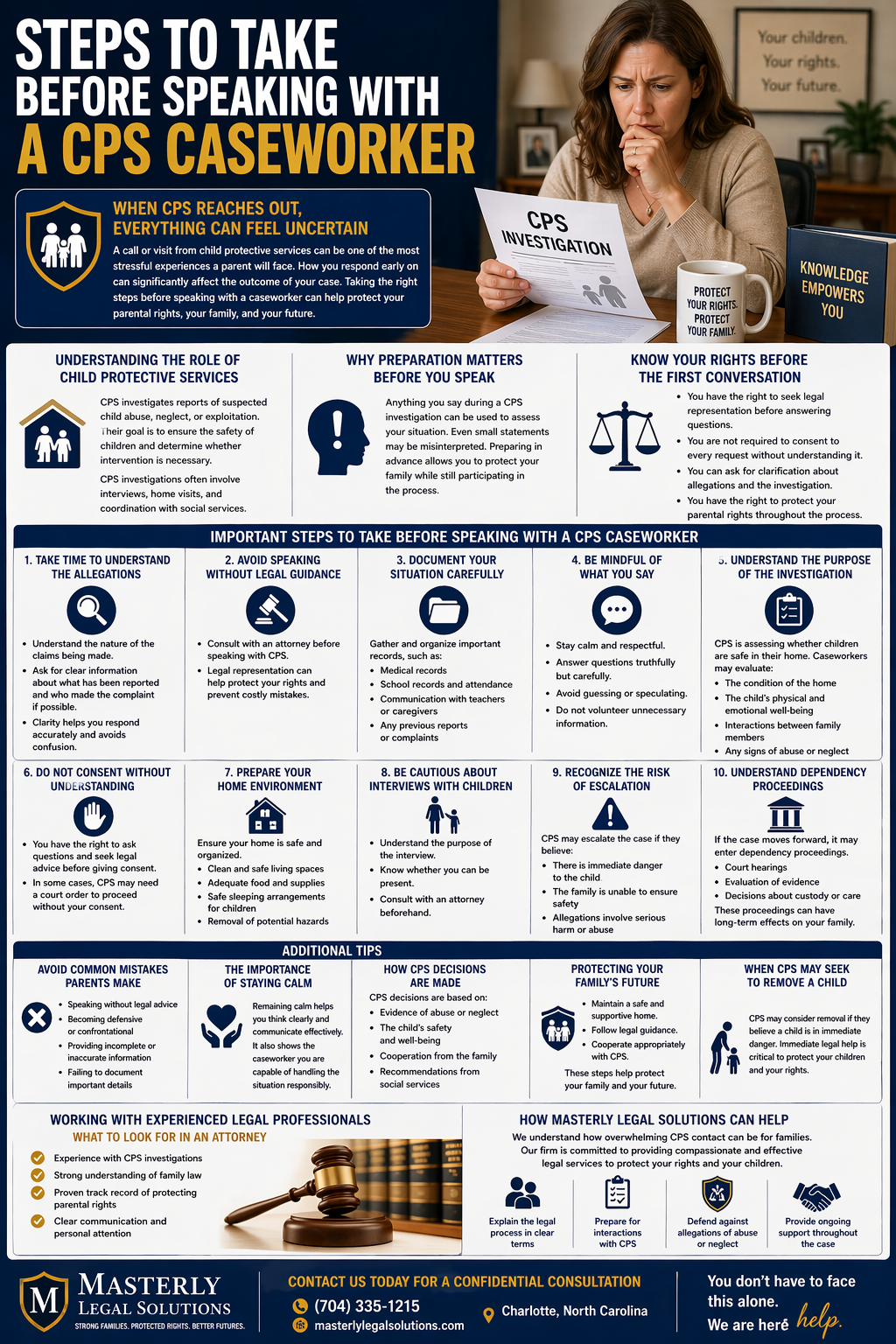
Steps to Take Before Speaking With a CPS Caseworker
When CPS Reaches Out, Everything Can Feel Uncertain
Getting a call or visit from child protective services can be one of the most stressful experiences a parent or guardian will face. In that moment, it may feel like your entire world is being questioned—your parenting, your home, and your ability to care for your children. Whether the contact comes from cps charlotte nc or another local office, the situation often moves quickly and can leave families feeling overwhelmed.
It is important to understand that a cps investigation does not automatically mean wrongdoing. However, how you respond early on can significantly affect the outcome of your case. Taking the right steps before speaking with a caseworker can help protect your parental rights, your family, and your future.
Understanding the Role of Child Protective Services
Child protective services exists to investigate reports of suspected child abuse, neglect, or exploitation. Their goal is to ensure the safety of children and determine whether intervention is necessary. While this mission is important, the process can sometimes feel invasive for families who are simply trying to do their best.
Cps investigations often involve multiple steps, including interviews, home visits, and coordination with social services. Once a report is filed, the department begins evaluating whether a child has been abused or is at risk of harm. Understanding this process helps parents approach the situation with clarity rather than fear.
Why Preparation Matters Before You Speak
Speaking with a cps caseworker without preparation can lead to misunderstandings. Many parents believe that cooperating immediately and answering every question will resolve the situation quickly. While cooperation is important, it should be informed and thoughtful.
The reality is that anything you say during a cps investigation can be used to assess your situation. Even small statements may be misinterpreted or taken out of context. Preparing in advance allows you to protect your family while still participating in the process.
Know Your Rights Before the First Conversation
Parents and guardians have legal rights during cps investigations. These rights exist to ensure fairness and prevent unnecessary intrusion into your home and family life.
Key Rights to Understand
Before speaking with cps, it is important to know that:
- You have the right to seek legal representation before answering questions
- You are not required to consent to every request without understanding it
- You can ask for clarification about allegations and the investigation
- You have the right to protect your parental rights throughout the process
Understanding these rights helps ensure that you do not unintentionally waive protections that could be critical to your case.
Take Time to Understand the Allegations
Before engaging in a detailed conversation with a caseworker, take time to understand the nature of the allegations. These claims may involve child abuse, neglect, or concerns about safety in the home.
Why Clarity Is Important
If you do not fully understand the allegations, you may respond in ways that create confusion. Ask for clear information about what has been reported and who made the complaint if possible. This allows you to prepare accurate and thoughtful responses.
In some cases, cps believes there is immediate danger to a child. In others, the concerns may be less urgent. Knowing the difference can help you approach the situation appropriately.
Avoid Speaking Without Legal Guidance
One of the most important steps you can take is consulting with an attorney before speaking with cps. Legal representation can provide valuable guidance and help you avoid common mistakes.
How an Attorney Can Help
An experienced attorney can:
- Explain the cps investigation process
- Help you prepare for questions
- Communicate with the caseworker on your behalf
- Defend your rights if the situation escalates
Having legal representation ensures that you are not navigating the process alone, which is especially critical for professionals such as educators who may also face education law issues and TEA license investigations.
Document Your Situation Carefully
Documentation can play a key role in protecting your family during cps investigations. Keeping accurate records can help you present a clear picture of your home environment and parenting practices.
What to Document
Consider gathering:
- Medical records showing your child’s care
- School records and attendance
- Communication with teachers or caregivers
- Any previous reports or complaints
This information can help demonstrate that your children are safe and well cared for.
Be Mindful of What You Say
When speaking with a cps caseworker, your words matter. Even well-intentioned statements can be misunderstood.
Tips for Communication
- Stay calm and respectful
- Answer questions truthfully but carefully
- Avoid guessing or speculating
- Do not volunteer unnecessary information
Being thoughtful in your responses helps prevent confusion and protects your position.
Understand the Purpose of the Investigation
A cps investigation is designed to determine whether children are safe in their home. This means the caseworker will assess multiple aspects of your family life.
What Caseworkers Look For
Caseworkers may evaluate:
- The condition of the home
- The child’s physical and emotional well-being
- Interactions between family members
- Any signs of abuse or neglect
Understanding these factors can help you prepare for what the caseworker may focus on during their visit.
Do Not Consent Without Understanding
Cps may ask for consent to enter your home, speak with your children, or review records. While cooperation can be helpful, it is important to understand what you are agreeing to.
Why Consent Matters
Providing consent without fully understanding the request can impact your case. You have the right to ask questions and seek legal advice before agreeing to anything.
In some situations, cps may need a court order to proceed without your consent. Knowing this distinction is important.
Prepare Your Home Environment
Your home environment will likely be a key focus during the investigation. Taking steps to ensure your home is safe and organized can make a positive impression.
Areas to Focus On
- Clean and safe living spaces
- Adequate food and supplies
- Safe sleeping arrangements for children
- Removal of any potential hazards
These steps help demonstrate that your children are not in danger and that you are providing proper care, while proactive estate planning and essential family legal documents can further support your family’s long-term stability.
Be Cautious About Allowing Interviews With Children
Caseworkers may request to speak directly with your children. While this is a common part of cps investigations, it is important to approach it carefully.
Protecting Your Child During Interviews
You may want to:
- Understand the purpose of the interview
- Know whether you can be present
- Consult with an attorney beforehand
Ensuring that your child feels safe and supported is essential during this process.
Recognize the Risk of Escalation
In some cases, cps investigations can escalate quickly. This may include involvement from the court or actions such as removal of a child from the home.
When Escalation Happens
Escalation may occur if cps believes:
- There is immediate danger to the child
- The family is unable to ensure safety
- The allegations involve serious harm or abuse
Taking early steps to prepare can help reduce the risk of escalation.
Understand Dependency Proceedings
If a case moves forward, it may enter dependency proceedings. This is a legal process where a judge reviews the situation and determines what actions are necessary.
What Happens in Dependency Cases
Dependency cases may involve:
- Court hearings
- Evaluation of evidence
- Decisions about custody or care
These proceedings can have long-term effects on your family, making preparation critical.
Avoid Common Mistakes Parents Make
Many parents unintentionally make mistakes during cps investigations. Being aware of these pitfalls can help you avoid them.
Common Errors to Avoid
- Speaking without legal advice
- Becoming defensive or confrontational
- Providing incomplete or inaccurate information
- Failing to document important details
Avoiding these mistakes can improve your chances of a favorable outcome.
The Importance of Staying Calm
Emotions can run high during cps contact, especially when children are involved. However, staying calm is one of the most important things you can do.
Why Calmness Matters
Remaining composed helps you think clearly and communicate effectively. It also demonstrates to the caseworker that you are capable of handling the situation responsibly.
How CPS Decisions Are Made
Cps decisions are based on the information gathered during the investigation. This includes interviews, observations, and documentation.
Factors That Influence Decisions
- Evidence of abuse or neglect
- The child’s safety and well-being
- Cooperation from the family
- Recommendations from social services
Understanding these factors can help you better navigate the process.
Protecting Your Family’s Future
The outcome of a cps investigation can have lasting effects on your family. Taking proactive steps early on can help protect your future.
Focus on Long-Term Stability
- Maintain a safe and supportive home
- Follow legal guidance
- Cooperate appropriately with cps
These actions help demonstrate your commitment to your children’s well-being, and pairing them with thoughtful trusts and estate planning services can further safeguard your family’s future.
Working With Experienced Legal Professionals
Choosing the right attorney can make a significant difference in your case. A knowledgeable legal team, such as Masterly Legal Solutions and its broad legal services, can guide you through every step of the process.
What to Look for in an Attorney
- Experience with cps investigations
- Strong understanding of family law
- Ability to defend your rights effectively
Working with professionals who have the right expertise ensures that you are well prepared, much like businesses that rely on comprehensive legal and consulting services to navigate complex challenges.
How Masterly Legal Solutions Can Help
At Masterly Legal Solutions, we understand how overwhelming cps contact can be for families. Our firm is committed to providing compassionate and effective legal services to protect your rights and your children.
Our Approach to CPS Cases
We work closely with clients to:
- Explain the legal process in clear terms
- Prepare for interactions with cps
- Defend against allegations of abuse or neglect
- Provide ongoing support throughout the case
Our goal is to help families navigate these challenges with confidence, supported by our broader client‑focused legal and business services.
The Role of Social Services During CPS Investigations
Social services plays a central role in how cps investigations are conducted and evaluated. When a report is made, these professionals often work alongside caseworkers to gather information, assess the home environment, and determine whether children are safe. During cps investigations, social services may review records, speak with family members, and coordinate with schools or medical providers to build a complete picture of the situation. Their findings can influence decisions about next steps, including whether additional monitoring or intervention is needed. Understanding how social services participates in cps investigations can help families prepare, respond appropriately, and protect their rights throughout the process.
CPS Charlotte NC and How Local Procedures May Affect Your Case
When dealing with cps charlotte nc, it is important to understand that local procedures and expectations can shape how your case moves forward. Each region may handle cps investigations with slightly different timelines, communication styles, and levels of involvement from social services. While the overall goal remains the same—to ensure the safety of children—the way information is gathered and evaluated can vary. Families should be aware that local agencies often coordinate closely with schools, medical providers, and other social services professionals during cps investigations. Being informed about how cps charlotte nc operates can help you respond more confidently and avoid unnecessary complications as your case progresses.
Understanding Child Protective Services CPS and What It Means for Your Case
When dealing with child protective services cps, it is important to approach every step with the right knowledge and preparation. Many families find themselves on this page of their lives unexpectedly, often unsure of what will happen next. Whether the matter involves dss or another agency, understanding how the system works can help you respond appropriately. In some situations, a case can escalate to a lawsuit or involve decisions about whether a child may be removed from the home. These outcomes can have long-term effects that last for years, which is why it is critical to take early action and stay informed. Before speaking with a caseworker, take the time to let them know that you intend to understand your rights and approach the situation carefully, ensuring that your family is protected every step of the way.
Speak With Our CPS Defense Team Today
If you have been contacted by child protective services or expect to speak with a caseworker soon, it is important to take the right steps now. At Masterly Legal Solutions, we are here to guide you through the process and help you protect your family and your future.
We offer a free consultation where we take the time to understand your situation, answer your questions, and provide clear direction. Whether you are dealing with cps charlotte nc or another agency, our experienced attorneys are ready to assist you, and you can find our office locations and contact information to connect with us directly.
Call us today at (972) 236-5051 to speak with a legal professional who can help you prepare before speaking with cps. Taking action early can make all the difference in your case.
Disclaimer: This article is for educational purposes only and does not constitute legal advice. Every situation is different, and you should consult with a qualified attorney to discuss your specific circumstances.



Looking for Legal & Business Solutions? Contact Us Now
Fill in the form or call us to set up a meeting