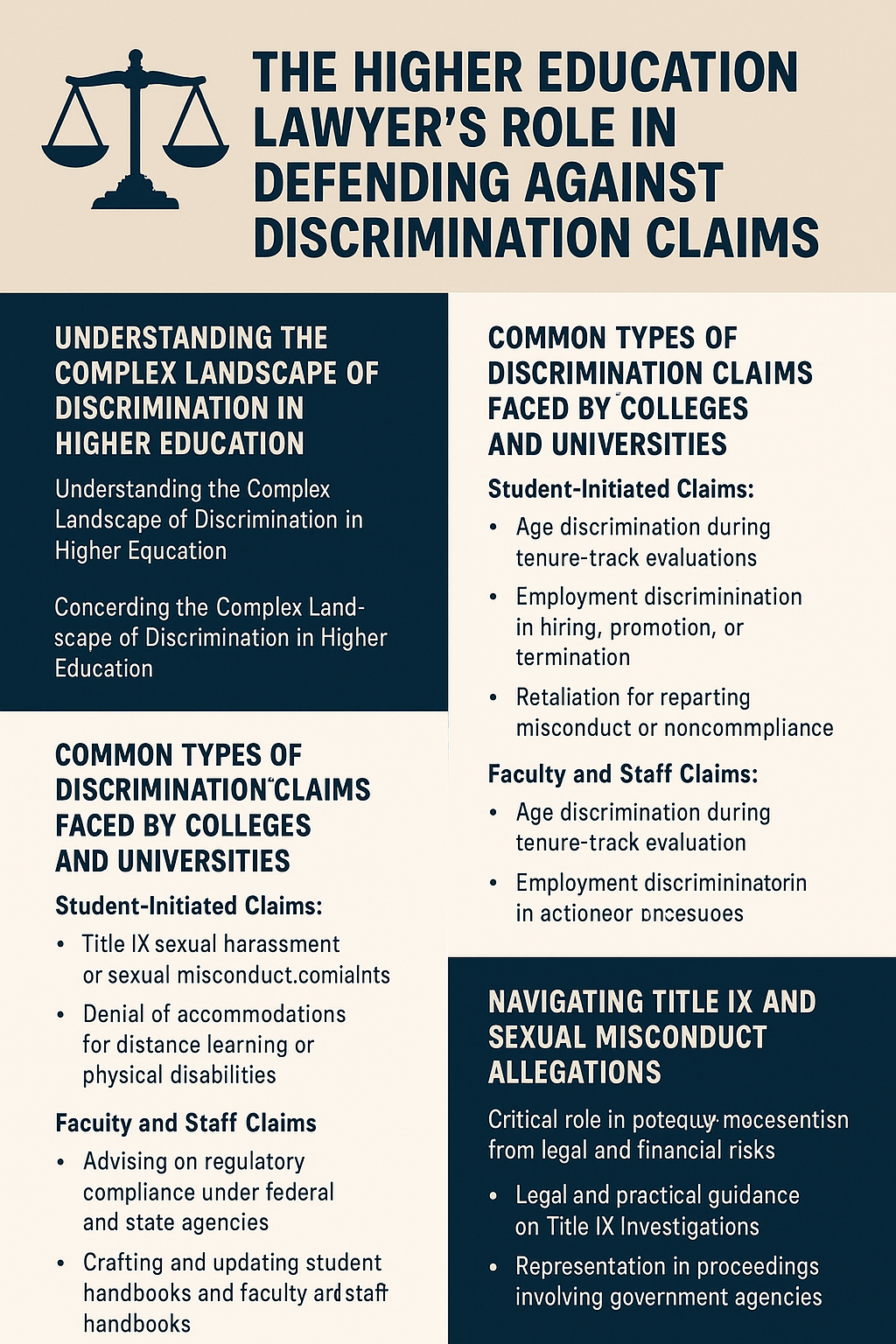
The Higher Education Lawyer’s Role in Defending Against Discrimination Claims
Understanding the Complex Landscape of Discrimination in Higher Education
Higher education institutions operate in a uniquely complex legal environment. From Title IX regulations to the Americans with Disabilities Act, compliance obligations stretch across multiple domains. Discrimination claims often arise from students, faculty, or staff and can include allegations of racial, gender, age, or disability-based bias.
Common Types of Discrimination Claims Faced by Colleges and Universities
Colleges and universities frequently encounter various types of discrimination claims. These may be brought forth by students, employees, or former students and can threaten both institutional reputation and financial standing.
Student-Initiated Claims:
- Title IX sexual harassment or sexual misconduct complaints
- Discrimination based on disability, race, or gender identity
- Denial of accommodations for distance learning or physical disabilities
Faculty and Staff Claims:
- Age discrimination during tenure-track evaluations
- Employment discrimination in hiring, promotion, or termination
- Retaliation for reporting misconduct or noncompliance
The Role of a Higher Education Lawyer in Risk Mitigation
Higher education lawyers play a critical role in protecting institutions from legal and financial risks. At Masterly Legal Solutions, our higher education attorneys assist institutions in proactively managing compliance and responding to claims effectively.
Legal Services Include:
- Advising on regulatory compliance under federal and state agencies
- Crafting and updating student handbooks and faculty and staff handbooks
- Providing legal guidance for crisis management and campus investigations
Navigating Title IX and Sexual Misconduct Allegations
Title IX compliance is a cornerstone of legal responsibilities for educational institutions. Allegations of sexual misconduct or sexual harassment must be handled with sensitivity and procedural accuracy.
Our higher education team provides:
- Legal and practical guidance on Title IX investigations
- Representation in proceedings involving government agencies
- Development of compliance programs to prevent future violations
Supporting Institutions Through Employment Discrimination Claims
Employment discrimination is one of the most frequent legal challenges in the higher education sector. Claims may include:
- Gender or racial bias in employment contracts
- Discrimination in faculty tenure decisions
- Retaliation or wrongful termination
Masterly Legal Solutions' education team helps institutional clients:
- Conduct internal investigations
- Counsel clients through mediation or litigation
- Draft clear employment contracts to reduce ambiguity
Representing Colleges in Claims Involving Disability Accommodations
Discrimination claims based on the Americans with Disabilities Act (ADA) are becoming more common, especially in distance learning environments.
Our attorneys work with colleges and universities to:
- Ensure ADA compliance in classrooms and online platforms
- Support institutions in responding to disability-based claims
- Advise on inclusive policies that align with campus culture
Civil Rights Allegations and Faculty Legal Issues
Civil rights claims often arise from academic misconduct cases or disputes around academic freedom. Our firm has extensive experience defending higher education clients from such legal issues.
Key Areas of Support:
- Addressing civil rights investigations by federal and state agencies
- Handling legal disputes over intellectual property or academic programs
- Defending against claims challenging faculty and staff rights
Collective Bargaining and Labor & Employment Law
For private colleges and universities, issues involving the National Labor Relations Board (NLRB) may intersect with collective bargaining or employee rights.
Our college and university attorneys help navigate:
- Faculty union negotiations
- Employee benefits and compensation structures
- Labor and employment law compliance in hiring practices
Legal Considerations in Student Safety and Student Affairs
Student safety is a legal priority. Discrimination claims often stem from incidents that impact mental health, safety, or access to academic resources.
We counsel higher education institutions on:
- Enhancing student safety policies
- Managing risk related to intercollegiate athletics and student affairs
- Conducting thorough legal reviews of school groups and activities
Litigation Support and Summary Judgment Strategies
When discrimination claims escalate to litigation, higher education lawyers at Masterly Legal Solutions provide aggressive legal representation. Our goal is to resolve disputes swiftly, either through summary judgment or negotiated settlements.
We bring experience in:
- Filing motions for summary judgment
- Representing clients in administrative hearings and civil trials
- Protecting institutional reputation through strategic defense
Academic Freedom, Free Speech, and Campus Culture
Legal challenges may also involve tensions between institutional rules and academic freedom. Higher education attorneys must balance legal compliance with respect for faculty rights and student expression.
Our legal practices include:
- Drafting policies that support academic freedom while ensuring compliance
- Advising institutions on free speech zones and public forums
- Managing conflicts involving controversial speakers or events
International Student Issues and Immigration Compliance
Discrimination claims can involve international students who face unique challenges in adapting to U.S. academic systems. Issues may include:
- Visa status complications
- Language and cultural barriers
- Alleged unequal treatment in academic programs
Masterly Legal Solutions assists colleges and universities in addressing these claims while maintaining compliance with education's office and immigration laws.
Intellectual Property and Unrelated Business Income Tax
Legal concerns in higher education extend to areas like intellectual property and unrelated business income tax (UBIT), particularly for institutions engaged in research or business ventures.
We advise institutions on:
- Protecting intellectual property rights of faculty and students
- Navigating UBIT risks associated with commercial partnerships
- Ensuring proper disclosures and tax reporting
Counsel for Faculty Tenure and Employment Contracts
Disputes over tenure and employment terms can lead to serious legal claims, especially when accusations of discrimination are involved. We represent college and university clients by:
- Reviewing and advising on employment contracts
- Addressing claims of bias in tenure evaluations
- Supporting institutions through arbitration or formal hearings
Crisis Management and Legal Challenges in Higher Education
A discrimination claim can quickly become a campus-wide crisis. Our higher education practice is skilled in providing rapid-response legal resources to minimize disruption.
Masterly Legal Solutions helps support institutions with:
- Crisis management planning
- Legal guidance during high-profile investigations
- Communications strategy for internal and external stakeholders
Collaboration with General Counsel and Education Teams
We often partner with general counsel and internal legal teams to provide seamless support across departments. This collaboration allows us to ensure that:
- Compliance initiatives are aligned with institutional goals
- Faculty and staff receive timely legal updates
- Policies reflect current best practices in higher education law
The Importance of Proactive Compliance Programs
The best defense against discrimination claims is prevention. Masterly Legal Solutions works closely with private institutions and community colleges to build compliance programs that reflect legal and cultural awareness.
Key compliance areas include:
- Title IX training and audits
- FERPA and Family Educational Rights policy updates
- Periodic reviews of employment and academic policies
Helping Institutions Adapt to Education Technology
As more schools implement education technology, institutions must anticipate legal and practical issues such as:
- Online platform accessibility
- Student data privacy and cybersecurity
- Faculty training on digital tools
Our higher education team ensures your institution remains compliant while embracing technological advancement.
Addressing Issues with Former Students
Former students may also bring forward claims of discrimination, especially regarding grade disputes, program dismissals, or allegations of unfair treatment.
We represent institutional clients in:
- Responding to legal demands from former students
- Navigating accreditation issues
- Resolving claims before they become lawsuits
Supporting Private Institutions and Community Colleges
Every academic institution, whether a large university or a private college, faces legal exposure. Community colleges, in particular, require tailored guidance to navigate limited resources while maintaining legal compliance.
Our firm provides:
- Scalable legal services for smaller institutions
- Flexible counsel for academic and operational decisions
- Affordable strategies to prevent litigation
How Masterly Legal Solutions Represents Your Best Interests
At Masterly Legal Solutions, we are dedicated to providing educational institutions with the strategic legal counsel they need to thrive. We understand the nuances of the higher education sector and offer actionable guidance to address discrimination claims and prevent future liabilities.
Whether you're facing a civil rights complaint, a Title IX investigation, or employment law dispute, our education attorneys are prepared to protect your institution.
Enhancing Institutional Resilience Through Strategic Legal Counsel
A successful higher education practice requires more than just legal know-how—it demands a comprehensive understanding of campus operations, employment structures, and evolving compliance standards. At Masterly Legal Solutions, our dedicated higher education team works closely with institutions to strengthen internal policies, ensure regulatory alignment, and improve critical areas such as employee benefits. From advising on equitable compensation plans to assisting with policy revisions that reduce legal risk, we provide end-to-end support tailored to the realities of academic environments.
Meeting Legal Demands Across Diverse Educational Settings
As regulations continue to evolve, many educational institutions—from private higher education institutions to public school districts—face increasing legal and compliance obligations. Whether addressing NCAA compliance in athletic departments or navigating complex financial challenges, these institutions must implement sound risk management strategies to remain protected. At Masterly Legal Solutions, our attorneys stay informed through active involvement in leading organizations such as the National Association for college legal professionals, ensuring our clients receive current, practical guidance. Our firm is proud to support institutions of all sizes with tailored legal counsel designed to safeguard operations and foster long-term success.
Partnering with a Higher Education Law Firm That Understands Your Institution
Choosing the right higher education law firm is essential for navigating the multifaceted legal environment faced by colleges and universities. At Masterly Legal Solutions, we bring a deep understanding of academic governance, compliance mandates, and institutional dynamics. Our team collaborates closely with administrators, general counsel, and leadership to provide clear, strategic guidance tailored to your school’s unique needs. Whether your institution is facing a discrimination claim, regulatory inquiry, or employment challenge, we’re the legal partner you can trust to deliver results.
Proactively Addressing Higher Education Legal Issues Before They Escalate
From student discrimination claims to employment disputes and regulatory audits, higher education legal issues require swift, informed, and strategic responses. Institutions that delay action risk not only financial penalties but also reputational harm. At Masterly Legal Solutions, we help colleges and universities identify vulnerabilities before they lead to litigation. Our legal team provides customized risk assessments, policy reviews, and ongoing counsel to ensure that your institution remains compliant and prepared for any legal challenge.
Trusted Higher Education Lawyer in Dallas for Institutional Legal Support
When legal issues threaten the stability of your academic institution, working with a knowledgeable higher education lawyer in Dallas can make a critical difference. At Masterly Legal Solutions, we serve as a strategic partner for colleges and universities across Texas, offering regionally grounded insight with national-level experience. Whether you're addressing Title IX investigations, employment disputes, or regulatory compliance, our firm provides the legal precision and local presence necessary to protect your institution’s mission and reputation.
The Vital Role of a Higher Education Employment Lawyer in Protecting Institutional Integrity
When faculty or staff bring forward discrimination or wrongful termination claims, a higher education employment lawyer becomes essential to an institution’s legal response. These attorneys specialize in the nuanced relationship between academic policies and employment law, offering targeted strategies for conflict resolution and legal defense. At Masterly Legal Solutions, our team ensures colleges and universities are not only compliant with labor laws but also equipped to handle disputes with professionalism and discretion. From contract reviews to litigation support, we help institutions navigate employment challenges with confidence.
How College and University Attorneys Strengthen Employee Protections Across the Higher Education Sector
In today's evolving legal landscape, higher education institutions face increasing scrutiny over employment policies, discrimination claims, and the equitable treatment of faculty and staff. To navigate these challenges, many rely on seasoned college and university attorneys who specialize in the higher education sector. These professionals are instrumental in developing policies that support fair hiring practices, defend against wrongful termination claims, and enhance employee benefits programs to foster a more inclusive workplace. At Masterly Legal Solutions, our higher education team brings deep experience and insight to every matter, offering institutions a robust higher education practice focused on reducing legal exposure while maintaining academic excellence.
Get in Touch with a Higher Education Lawyer
When it comes to defending your institution from discrimination claims, having a seasoned higher education lawyer by your side can make all the difference. At Masterly Legal Solutions, we provide practical and experienced legal support for colleges, universities, and other educational institutions. We help you resolve legal issues while preserving your institution’s values and goals.
Call us today at (972) 236-5051 for a free consultation to discuss your legal challenges and how we can support your higher education practice with integrity, precision, and care.
This article is not legal advice; rather, it is meant to be informative primarily. Please speak with an attorney for situation-specific legal advice.

Looking for Legal & Business Solutions? Contact Us Now
Fill in the form or call us to set up a meeting