The Difference Between an Allegation and a Career-Threatening Case
Understanding the Weight of a Workplace Accusation
An allegation in the workplace can feel overwhelming, even before any facts are confirmed. For many workers, a simple complaint or report can quickly shift how a supervisor, manager, or even coworkers view them. While not every allegation leads to serious consequences, some situations escalate into career-defining moments. Knowing the difference between a routine complaint and a case that could jeopardize your future is critical.
At Masterly Legal Solutions, we regularly see how quickly a workplace issue can evolve from a minor concern into something far more serious. What begins as a single report can trigger an investigation, lead to administrative leave, or even result in disciplinary action. Understanding this progression helps employees and employers protect their rights and respond appropriately.
What Is an Allegation in the Workplace?
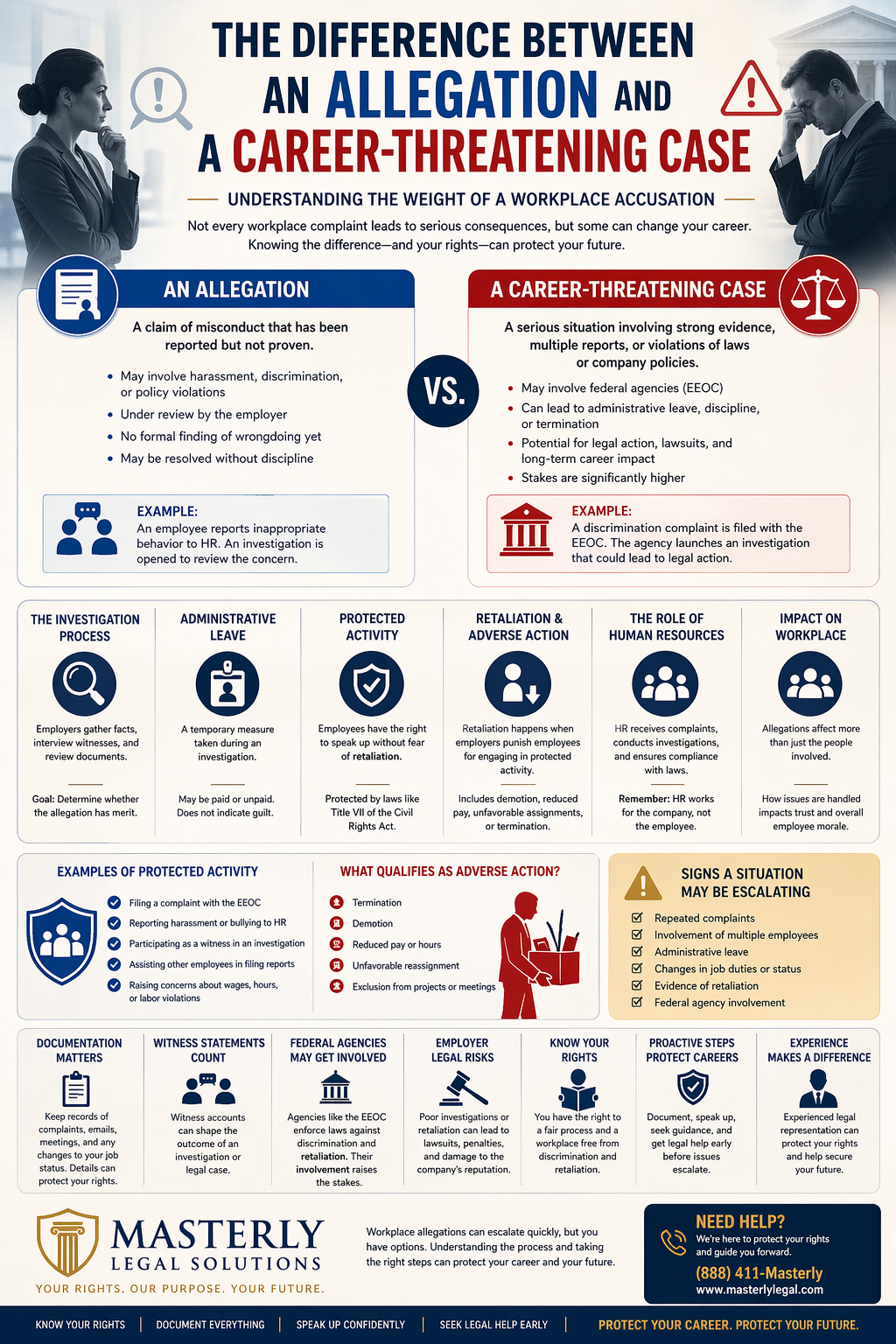
An allegation is simply a claim that someone has engaged in misconduct. It may involve harassment, discrimination, or a possible violation of company policy. At this stage, there is no formal finding of wrongdoing, and the situation is still under review.
For example, an employee may file a complaint with human resources claiming inappropriate behavior from a supervisor. The employer is then required to review the concern, often initiating an investigation. In many cases, the allegation remains unproven and does not escalate further.
When an Allegation Becomes a Serious Case
A career-threatening case goes far beyond a simple complaint. It often involves strong evidence, multiple reports, or findings that suggest a violation of laws or company regulations. These cases may involve federal agencies, such as the Equal Employment Opportunity Commission (EEOC), and can lead to long-term consequences.
When an allegation evolves into a formal case, the employer may take immediate action. This can include placing employees on administrative leave, adjusting roles, or initiating legal proceedings. The stakes become significantly higher, especially when discrimination claims or retaliation are involved.
The Role of Workplace Investigations
An investigation is a key step in determining whether an allegation has merit. Employers typically rely on human resources or an internal department to gather facts, interview witnesses, and review reports.
During this period, an employee may be placed on paid administrative leave or administrative leave to ensure a neutral environment. While this does not indicate guilt, it can create uncertainty and stress. The investigation process must follow established laws and regulations to ensure fairness.
Administrative Leave and Its Impact
Administrative leave is often misunderstood. It is a temporary measure used by an employer while reviewing a complaint. In some cases, employees are placed on paid leave, allowing them to maintain wages during the investigation period.
However, being placed on administrative leave can still carry a negative impact on employee morale and overall employee morale within the workplace. Coworkers may speculate, and false rumors can spread quickly, affecting reputations even before findings are finalized.
Recognizing Protected Activity
Protected activity refers to actions that employees have the legal right to engage in without fear of retaliation. This includes filing a complaint, participating in an investigation, or reporting discrimination—and, when necessary, working with an experienced retaliation lawyer for workplace claims.
Employees who engage in protected activity are safeguarded under federal laws such as Title VII. This protection ensures that an employer cannot take adverse action against an employee simply for exercising their rights.
Examples of Protected Activity
There are many forms of protected activity in the workplace. Some common examples include:
- Filing a complaint with the EEOC regarding discrimination
- Reporting harassment or workplace bullying to human resources
- Participating as a witness in an investigation
- Assisting other employees in filing reports
- Raising concerns about wages, hours, or labor violations
Each example demonstrates how employees can engage in actions designed to protect themselves and others.
Understanding Retaliation in the Workplace
When an employer treats a worker unfairly for participating in protected behavior, this is known as retaliation. This is one of the most common ways a situation escalates into a career-threatening case.
Retaliation can take many forms, including demotion, reduced pay, or placement in a less desirable position. In some circumstances, an employee may be moved away from a desirable position without a valid reason. These acts can significantly impact a worker’s career trajectory.
What Qualifies as Adverse Action
Adverse action refers to any decision that negatively affects an employee’s job status. This can include termination, reduced hours, or reassignment. Even subtle changes, such as exclusion from meetings or projects, may qualify depending on the circumstances.
A reasonable employee would likely view these actions as harmful or discouraging. This standard is often used by courts and federal agencies when evaluating retaliation claims.
Retaliation and Career Risk
Not all allegations involve retaliation, but when they do, the situation becomes far more serious. Retaliation cases are often investigated by federal agencies, including the EEOC. These cases can lead to lawsuits, financial penalties, and long-term damage to both the employee and employer.
Employees who believe they are experiencing retaliation should act quickly. Filing reports, gathering evidence, and seeking legal assistance are proactive steps that can protect their rights.
The Role of Human Resources
Human resources plays a central role in managing workplace complaints. The department is responsible for receiving reports, conducting investigations, and ensuring compliance with laws, often with the support of HR consulting and training services.
While HR aims to foster a fair workplace, its primary responsibility is to the employer. This is why employees should be cautious when providing statements or participating in interviews. Understanding your rights during this process is essential.
How Employers Respond to Allegations
Employers must take allegations seriously to avoid potential liability. This often involves immediate action, such as initiating an independent internal investigation or placing employees on administrative leave.
In some cases, employers may involve outside agencies or legal counsel. This is particularly common when allegations involve discrimination, harassment, or possible violations of federal laws.
The Importance of Documentation
Documentation is critical in any workplace dispute. Employees should keep records of complaints, communications, and any changes in their job status.
For example, if an employee files a complaint and later experiences adverse action, detailed records can help establish a connection. This is especially important in retaliation cases, where timing and context matter.
Witness Statements and Their Influence
Witness accounts can significantly impact the outcome of an investigation. A credible witness can confirm or challenge allegations, shaping how the employer or agency evaluates the case.
Employees asked to serve as a witness should provide honest and accurate information. Their statements may be reviewed by human resources, federal agencies, or even in a lawsuit.
The Impact on Employee Morale
Workplace allegations can affect more than just the individuals involved. They often influence overall employee morale and create tension among coworkers.
When workers see how an employer handles complaints, it can shape their willingness to report concerns. A fair and transparent process helps foster trust, while poor handling can lead to fear and dissatisfaction. Regular sexual harassment prevention training also supports a safer, more respectful environment.
Common Examples of Workplace Allegations
Workplace allegations come in many forms. Some examples include claims of harassment, discrimination, or unethical behavior.
An example might involve a manager accused of treating employees differently based on immigration status. Another example could involve reports of bullying or inappropriate comments. Each situation requires careful review to determine its validity.
From Complaint to Investigation
The transition from complaint to investigation marks a critical turning point. Once a report is filed, the employer must act promptly to assess the situation.
This process often includes interviews, document reviews, and coordination with human resources. In some cases, bringing in outside counsel for internal probes is appropriate, and federal agencies may become involved if the issue falls under their jurisdiction.
When Federal Agencies Get Involved
Certain allegations trigger involvement from federal agencies such as the EEOC. These agencies enforce laws related to discrimination, harassment, and retaliation.
When an agency becomes involved, the stakes increase significantly. The investigation may extend beyond the workplace, potentially leading to legal action.
The Role of the EEOC
The Equal Employment Opportunity Commission (EEOC) investigates discrimination claims and retaliation cases. Employees can file complaints directly with the EEOC if they believe their rights have been violated, and educators may also need guidance from an experienced education lawyer for school-related issues.
The agency reviews evidence, interviews witnesses, and determines whether a violation has occurred. This process can lead to mediation, settlements, or lawsuits.
Recognizing Signs of Escalation
Not every allegation escalates, but certain signs indicate increased risk. These include repeated complaints, involvement of multiple employees, or evidence of retaliation.
For example, if an employee reports harassment and is later reassigned to a less desirable position, this could signal retaliation. Recognizing these patterns early is essential.
The Importance of Proactive Steps
Taking proactive steps can make a significant difference in protecting your career. Employees should seek legal guidance, document incidents, and understand their rights.
Employers, on the other hand, must ensure compliance with laws and maintain fair processes. This helps prevent minor issues from becoming major legal disputes.
How Retaliation Occurs in Practice
Retaliation occurs in subtle and direct ways. Some employees experience reduced hours or negative performance reviews after filing a complaint. Others may face exclusion from opportunities or promotions.
In extreme cases, an employer may terminate an employee or take other adverse action. These actions can form the basis of a legal claim if linked to protected activity.
Workplace Dynamics and False Rumors
False rumors can spread quickly in a workplace, especially during an investigation. These rumors can damage reputations and create unnecessary conflict among coworkers.
Employers must take steps to protect confidentiality and prevent misinformation. Employees should also be mindful of their behavior and avoid contributing to speculation.
Balancing Fairness and Accountability
Employers must balance fairness with accountability when handling allegations. This involves protecting both the accused employee and the individual who filed the complaint.
A fair investigation process ensures that all parties are heard and that decisions are based on evidence. This approach helps maintain trust within the workplace.
Legal Risks for Employers
Employers face significant legal risks if they mishandle allegations. Failure to investigate properly or allowing retaliation can result in lawsuits and financial penalties, which is why many organizations rely on comprehensive employment law and investigation services.
Compliance with federal laws and regulations is essential. Employers must also train managers and supervisors to recognize and address workplace issues effectively.
Protecting Employees from Discrimination
Discrimination remains a major concern in many workplaces. Well-drafted employee handbooks and workplace policies and federal laws, including Title VII, are designed to protect employees from unfair treatment based on protected characteristics.
Employees who experience discrimination have the right to file complaints and seek assistance. Understanding these rights is key to navigating workplace challenges.
The Role of Managers and Supervisors
Managers and supervisors play a crucial role in shaping workplace culture. Their actions can either prevent or contribute to workplace issues.
Proper training helps managers recognize signs of harassment, discrimination, and retaliation. This enables them to respond appropriately and protect both employees and the organization.
Long-Term Consequences of Career-Threatening Cases
When an allegation escalates into a serious case, the consequences can be long-lasting. Employees may face damage to their reputation, loss of income, or difficulty finding new employment, making it all the more important to have essential legal documents and plans in place.
Employers may also suffer reputational harm and financial losses. This is why early intervention and proper handling are essential.
Seeking Legal Assistance Early
Employees should not wait until a situation worsens to seek help. Early legal assistance can provide clarity and guidance during uncertain times.
An experienced legal team can help evaluate the situation, identify risks, and develop a strategy to protect your career.
Protecting Your Rights in the Workplace
Understanding your rights is the first step in protecting yourself. Employees should be aware of laws that protect against retaliation, discrimination, and harassment.
Taking action when necessary can prevent minor issues from becoming major problems. This includes filing complaints, documenting incidents, and seeking guidance.
Creating a Safer Workplace Environment
A safe and respectful workplace benefits everyone. Employers should foster an environment where employees feel comfortable reporting concerns without fear of retaliation.
This includes clear policies, effective training, and consistent enforcement of rules. A positive workplace culture helps prevent issues from escalating.
Why Experience Matters in Legal Representation
Not all workplace cases are the same. Having experienced legal representation can make a significant difference in the outcome of a case.
At Masterly Legal Solutions, we understand the complexities of workplace disputes. Our team works to protect employees and guide them through challenging situations.
Taking Control of Your Situation
Facing an allegation or investigation can feel overwhelming, but you are not without options. Taking control of your situation involves understanding the process and seeking the right support.
Whether you are dealing with a complaint, administrative leave, or potential retaliation, informed decisions can protect your future.
Retaliation at Work in Private Sectors
Retaliation at work is a serious issue that affects employees across many industries, especially in private sectors where policies may vary widely. When an employee works in an environment where they feel punished for speaking up, it can create fear and uncertainty. Retaliation may occur after a complaint, participation in an investigation, or other related protected activity. In these situations, an employer cannot legally retaliate against a worker for exercising their rights, and doing so may lead to legal consequences.
Understanding Related Protected Activity and Legal Boundaries
Employees are protected when they engage in related protected activity, such as reporting misconduct, cooperating with an investigation, or providing a witness statement. Other related protected activity may include assisting coworkers, filing reports with a government agency, or raising concerns about workplace behavior. Laws generally protect these actions to ensure fairness and accountability. Employers who interfere with these rights or attempt to retaliate can face serious legal challenges.
When Law Enforcement or Government Agencies Are Involved
In some cases, workplace issues may escalate to the point where police or a government agency becomes involved. This can happen when allegations involve serious misconduct, criminal behavior, or significant violations of regulations. Employees may be asked to provide additional information or cooperate with authorities during an investigation. It is important for both employers and workers to respect the process and ensure that all actions are handled lawfully and professionally.
Workplace Protections and the Extent of Employee Rights
Workplace protections are designed to cover a wide range of situations, ensuring that employees are treated fairly regardless of the circumstances. These protections extend to actions taken in an office setting, remote environments, and other work locations. The extent of these rights depends on applicable laws and the specific facts of each case. Understanding what is covered can help employees recognize when their rights are being violated and take appropriate steps to protect themselves.
Contact Masterly Legal Solutions for Guidance
If you are dealing with a workplace allegation, investigation, or possible retaliation, you do not have to navigate it alone. At Masterly Legal Solutions, we help employees understand their rights, respond to workplace challenges, and protect their careers.
Our team is committed to providing clear, practical guidance tailored to your situation. Whether you are facing administrative leave, a discrimination claim, or concerns about adverse action, we are here to help. Contact us at (972) 236-5051 for a free consultation so we can answer your questions and help you move forward with confidence.
Disclaimer: This article is for educational purposes only and does not constitute legal advice. For guidance specific to your situation, please contact Masterly Legal Solutions directly.


Looking for Legal & Business Solutions? Contact Us Now
Fill in the form or call us to set up a meeting