

Warning Signs of Retaliation at Work After Reporting Misconduct in Schools
Speaking up about misconduct in a school setting takes courage. Teachers, administrators, aides, counselors, and other school workers often report concerns because they care deeply about students, safety, and fairness. Unfortunately, after a report is made, retaliation can quietly follow. At Masterly Legal Solutions, we regularly speak with workers who felt proud for doing the right thing, only to find their workplace suddenly turned against them.
Retaliation is not always loud or obvious. In many situations, it unfolds slowly through subtle changes that affect an employee’s role, reputation, or future. Understanding the warning signs helps protect your rights, your career, and your well-being before the damage becomes permanent.
Understanding Retaliation in School Workplaces
When an employer retaliates against a worker for participating in protected conduct, it is considered retaliation. In schools, this often follows reports involving discrimination, harassment, safety violations, or misuse of public funds. While school systems may promote transparency on paper, real-life responses can look very different once a complaint is made.
Many workers assume retaliation only means termination, but it can take many forms. Changes in duties, treatment, or opportunities may all qualify if they negatively affect a reasonable employee. These actions can violate work retaliation laws and may be prohibited under federal and state laws.
Why School Employees Face Unique Retaliation Risks
Schools operate under layered oversight from districts, boards, and state agencies. This structure can complicate accountability and make retaliation harder to recognize at first. An employer may hide adverse actions behind policy changes or administrative discretion.
Educators and school staff also rely heavily on performance reviews, recommendations, and contract renewals. Even subtle retaliation can threaten future employment, professional licenses, or long-term benefits. This makes early recognition especially important for individual employees.
What Counts as Protected Activity in Schools
Protected activity includes actions that the law shields from punishment. Reporting discrimination, harassment, or safety concerns often qualifies, even if the investigation does not confirm wrongdoing. Participation in an investigation, filing a complaint, or supporting a coworker can also be protected.
Examples of protected activity in schools may include:
- Reporting discrimination based on race, sex, age discrimination, disabilities, or immigration status
- Reporting harassment by a supervisor or coworker
- Raising concerns about occupational safety or physical harm to students or workers
- Taking administrative leave or job protected leave under the medical leave act or FMLA leave
- Cooperating with a state agency or the equal employment opportunity commission
How Retaliation Often Begins After a Report
Retaliation rarely starts the day after a report is filed. More often, it appears weeks or months later, once attention fades. Employers may believe time weakens the connection between the complaint and the adverse actions.
This delay can make workers doubt their instincts. However, patterns matter. When negative treatment begins after reporting misconduct or other related protected activity, it may signal a possible violation of the law.
Sudden Negative Changes in Job Duties
One of the most common warning signs is a sudden shift in responsibilities. An employee may be reassigned to tasks outside their normal role or stripped of meaningful duties altogether. In schools, this can include being moved from classroom instruction to administrative busywork without justification.
Being transferred to a less desirable position can qualify as retaliation when it causes a negative impact on career growth or job satisfaction. Even if pay stays the same, the change may still count as an adverse action under employment laws.
Unjustified Transfers or Reassignments
A move from a desirable position to a less desirable position often raises red flags. For example, a teacher might be reassigned to a grade level they are not certified for or moved away from leadership roles. Support staff may be relocated to isolated areas of the campus.
Employers sometimes claim these decisions are operational, but timing matters. When a transfer follows closely after reporting discrimination or misconduct, retaliation may be occurring.
Increased Scrutiny and Micromanagement
After a complaint, some employees notice their supervisor suddenly monitoring every detail of their work. Minor mistakes that were previously ignored now become documented issues. This heightened scrutiny can feel intimidating and exhausting.
While employers can evaluate performance, selective enforcement of rules may violate employment act protections. A reasonable employee may view this behavior as punitive, especially when it begins after protected activity.
Unfair or Inconsistent Performance Reviews
Performance reviews play a powerful role in school employment. Retaliation can appear through unexpected negative reviews that do not reflect past evaluations. These reviews may include vague criticisms or unsupported claims.
Such reviews can harm future employment, promotions, or contract renewals. When performance reviews shift dramatically after a complaint, they may serve as evidence in a retaliation complaint.
Exclusion From Meetings and Decisions
Being left out of meetings, committees, or planning sessions can isolate an employee. This exclusion often follows a report and signals a change in how the employer views the worker.
In schools, collaboration is essential. Exclusion can undermine an employee’s ability to perform and damage overall employee morale. Over time, it can also affect wages, benefits, and professional reputation.
Reduction in Work Hours or Pay
Another warning sign is a reduction in work hours or changes in pay. For hourly workers, losing overtime pay or scheduled shifts can cause immediate financial harm. Salaried employees may lose stipends or supplemental duties.
When these changes follow protected activity, they may qualify as adverse actions. Retaliation does not require termination to be unlawful under federal laws or state laws.
Denial of Promotions or Professional Opportunities
Schools often offer advancement through leadership roles, specialized programs, or training opportunities. Retaliation may appear as repeated denials of these opportunities without clear explanation.
When an employee is consistently passed over after reporting misconduct, it may suggest future discrimination or punishment for speaking up.
Hostile Treatment and Harassment After Reporting
Harassment can escalate after a complaint. Coworkers or supervisors may make hostile comments, spread rumors, or openly criticize the employee. This behavior may be encouraged or ignored by the employer.
Harassment does not have to be overt threats. Persistent hostility can create a hostile workplace and contribute to retaliation under civil rights act protections and Title VII, including issues related to workplace harassment.
Retaliation Through Disciplinary Actions
Unwarranted write-ups, suspensions, or disciplinary investigations may follow a report. These actions often rely on minor or exaggerated issues that were never enforced before.
When discipline lacks consistency or fairness, it may be evidence that retaliation occurs. Documentation becomes critical in these situations.
Isolation From Colleagues and Support Systems
Retaliation often includes social isolation. Coworkers may be discouraged from speaking with the employee, or the employee may be excluded from shared spaces. This can severely affect employee morale and overall employee morale.
Isolation is especially damaging in schools, where teamwork and communication are vital for student success and worker well-being.
Retaliation Linked to Leave or Medical Needs
Taking job protected leave, including FMLA leave or leave under the medical leave act, is protected activity. Retaliation may occur if an employer penalizes an employee for exercising these rights.
Signs include negative comments about absences, denial of benefits, or unfavorable schedule changes after returning from leave.
Immigration Status and Retaliation Risks
Some school workers fear retaliation tied to immigration status. Threats involving reporting to authorities or questioning eligibility to work can be unlawful.
Using immigration status as leverage after a complaint may violate federal and state laws designed to protect workers from coercion and discrimination.
Retaliation Against Federal Employees in Schools
Federal employees working in education-related roles may face retaliation under different rules. However, protections still exist for reporting misconduct or discrimination.
Federal employees should be aware that retaliation protections apply even when complaints involve internal department processes or federal investigations.
When Retaliation Leads to Wrongful Termination
Termination is the most obvious form of retaliation, but it often follows earlier warning signs. An employer may build a paper trail to justify firing an employee after protected activity.
Wrongful termination claims may arise when firing is linked to reporting discrimination, harassment, or safety issues. Legal protections exist to address these violations.
The Role of Employment Contracts
Employment contracts may outline specific procedures for discipline, transfers, or termination. Retaliation that ignores contract terms may strengthen a legal claim.
Reviewing employment contracts with employment lawyers can clarify whether the employer violated agreed-upon protections.
Why Documentation Matters Early
Keeping records is essential when retaliation is suspected. Emails, performance reviews, schedules, and witness statements can help establish patterns.
Potential witnesses, including coworkers who observed changes, may support a claim. Documentation often becomes critical during an investigation or lawsuit.
Internal Reporting and Human Resources
Many schools encourage internal reporting through human resources. While this can be helpful, it may also expose the employee to further retaliation if mishandled.
Filing internally does not eliminate legal protections. In some cases, external filing with a state agency or the equal employment opportunity commission may be appropriate.
Filing a Formal Retaliation Complaint
A retaliation complaint may be filed with a state agency or under federal laws, depending on the situation. Filing deadlines can be strict, making early action important.
Filing does not require certainty of wrongdoing. A good faith belief that retaliation occurred is often enough to begin the process.
The Investigation Process and What to Expect
An investigation may involve interviews, document review, and employer responses. This process can feel stressful, but it also creates a formal record.
Participating honestly and consistently is important. Retaliation for participating in an investigation is also prohibited under many laws.
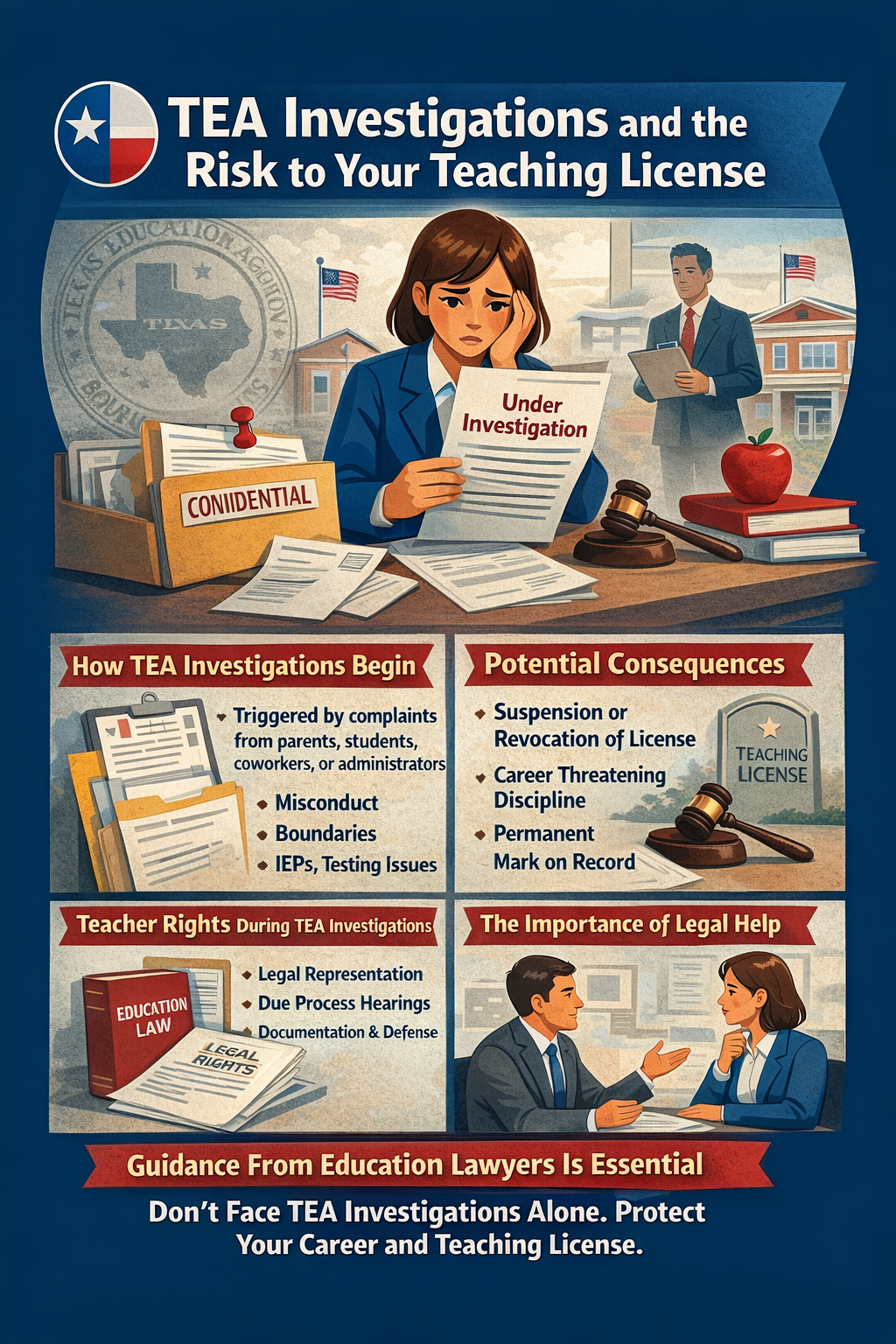
How Retaliation Affects the School Environment
Retaliation does not only harm the victim. It damages trust, discourages reporting, and lowers employee morale across the workplace. Students may also be indirectly affected when experienced workers are pushed out.
Protecting workers who speak up supports safer and more accountable school systems.
Legal Protections Available to School Workers
Legal protections come from multiple sources, including Title VII, the civil rights act, whistleblower laws, the disabilities act, and occupational safety regulations. These laws aim to protect workers from punishment for doing the right thing.
Understanding which laws apply depends on the facts, the employer, and whether federal or state laws govern the workplace.
Remedies and Potential Outcomes
Remedies may include reinstatement, back pay, compensation for lost wages and benefits, and punitive damages in some cases. The goal is to make the employee whole and discourage future violations.
Each case is unique, and outcomes depend on evidence, timing, and legal strategy.
Why Early Legal Guidance Matters
Speaking with labor and employment lawyers early can prevent mistakes and preserve evidence. An initial consultation helps clarify rights and next steps.
Employment lawyers can assess whether retaliation likely occurred and advise on filing, investigation, or settlement options.
How Masterly Legal Solutions Helps Workers
At Masterly Legal Solutions, we focus on protecting workers who face retaliation after reporting misconduct. We understand the pressures unique to school environments and the fear many employees experience.
Our lawyers work closely with clients to evaluate adverse actions, protect careers, and pursue accountability when employers cross the line.
Taking the First Step Toward Protection
If something feels wrong after you report misconduct, trust your instincts. Retaliation often starts quietly but grows over time.
Seeking advice early can help protect your rights, your livelihood, and your future in education.
Contact Masterly Legal Solutions for Support
If you believe retaliation has occurred after reporting misconduct in a school workplace, we encourage you to reach out. A confidential conversation can help you understand your options and determine whether your rights may have been violated under work retaliation laws.
At Masterly Legal Solutions, we offer a free consultation to discuss your situation, answer questions, and explain how employment and labor laws may apply to your case. Speaking with lawyers early can make a meaningful difference in protecting your career and financial stability. Call (972) 236-5051 to schedule your free consultation and learn how we can help you move forward with clarity and confidence.
Disclaimer: This article is for informational purposes only and does not constitute legal advice. Reading this article or contacting our firm does not create an attorney-client relationship. Laws change, and every situation is unique. For legal guidance specific to your circumstances, consult a qualified attorney. If you are seeking legal support for higher education institutions, learn more about trusted attorneys and education law compliance.


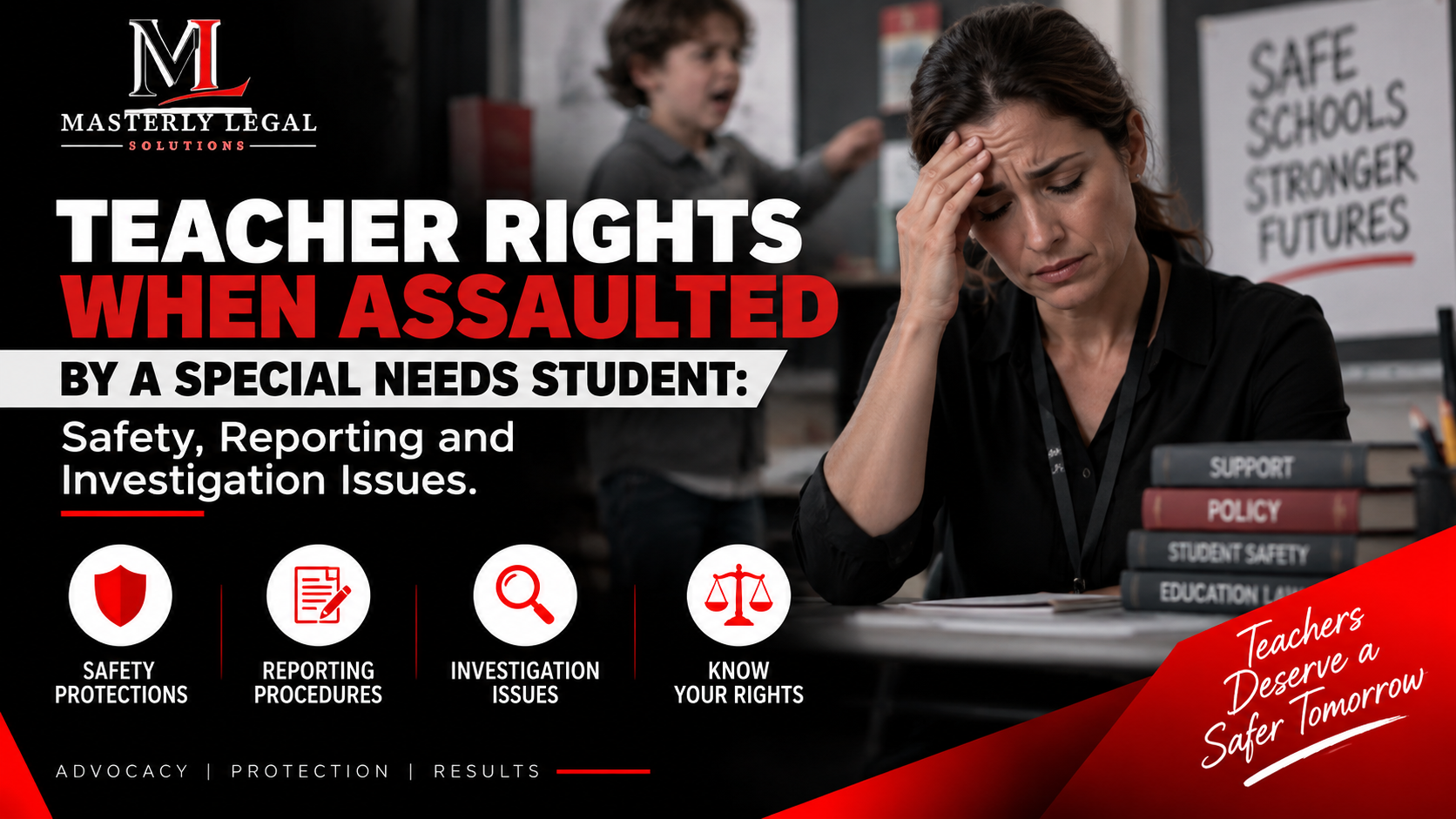
Teacher Rights When Assaulted by a Special Needs Student: Safety, Reporting and Investigation Issues


Looking for Legal & Business Solutions? Contact Us Now
Fill in the form or call us to set up a meeting





