What Physicians Should Know When Medical Staff Credentialing Attorney Is at Risk
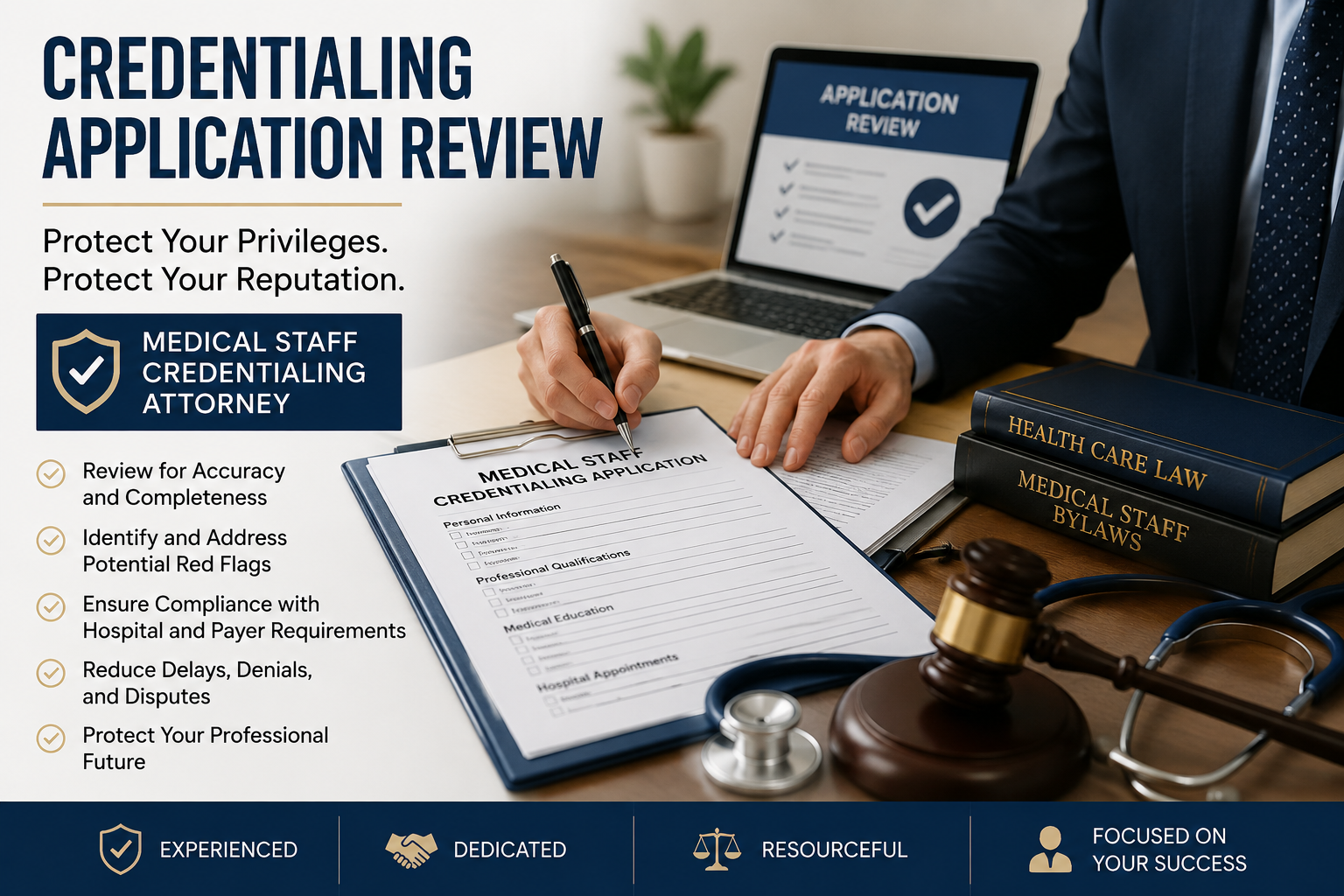
A delay, denial, or restriction during the credentialing process can affect much more than your ability to practice. It can interrupt patient care, delay income, create reporting concerns, and raise questions that follow you throughout your career. When the stakes are this high, working with an experienced medical staff credentialing attorney can help you protect your professional future before problems become harder to resolve.
At Masterly Legal Solutions, we help physicians address credentialing disputes, disclosure concerns, hospital privilege issues, and medical staff matters with a strategic, professional approach, supported by our broader legal services for corporations, nonprofits, and individuals. Every situation deserves careful review because the decisions made today may influence future employment opportunities, hospital relationships, and professional reputation.
Why Credentialing Problems Deserve Immediate Attention
A credentialing issue rarely stays limited to one application.
Hospitals, health systems, and other healthcare organizations often ask similar questions during every credentialing application and reappointment process. Information submitted today may need to be disclosed again in the future. Even a misunderstanding or incomplete response can create additional questions during future reviews.
Many physicians assume credentialing problems will resolve themselves with enough time. Unfortunately, delays often become more complicated if concerns are not addressed promptly and professionally.
A knowledgeable physician credentialing lawyer can help evaluate the situation, identify potential concerns, and prepare responses that support your professional goals while protecting your interests.
How a Medical Staff Credentialing Attorney Can Help Protect Your Career
Every credentialing matter is unique.
Sometimes the concern involves missing documentation. Other times, the hospital requests additional explanations about prior employment, licensing matters, peer review activity, or professional history. In some cases, physicians face restrictions affecting their medical staff privileges before the process is complete.
An experienced medical staff credentialing attorney understands how credentialing committees review applications and supporting materials. Legal guidance can help physicians:
- Review credentialing documents before submission.
- Respond to requests for additional information.
- Address concerns involving professional disclosure obligations.
- Prepare responses during committee review.
- Protect important procedural rights under applicable medical staff bylaws.
- Evaluate decisions affecting privileges or appointments.
- Assist with matters involving reappointment applications.
The goal is not simply to answer questions. The goal is to present complete, accurate, and well-supported information that reflects your professional qualifications.
Credentialing Delays Can Affect More Than Hospital Access
Many physicians focus on obtaining privileges as quickly as possible. However, credentialing issues often create broader business consequences, including delays in participation with health plans.
Delayed approvals may postpone:
- Employment start dates.
- Patient scheduling.
- Insurance participation.
- Revenue generation.
- Referral relationships.
- Professional opportunities.
For physicians joining a new practice, relocating to another hospital system, or transitioning within physician groups, these delays can create financial uncertainty and operational challenges.
Early involvement from a hospital privileges attorney may help identify solutions before delays become more significant.
Disclosure Questions Require Careful Review
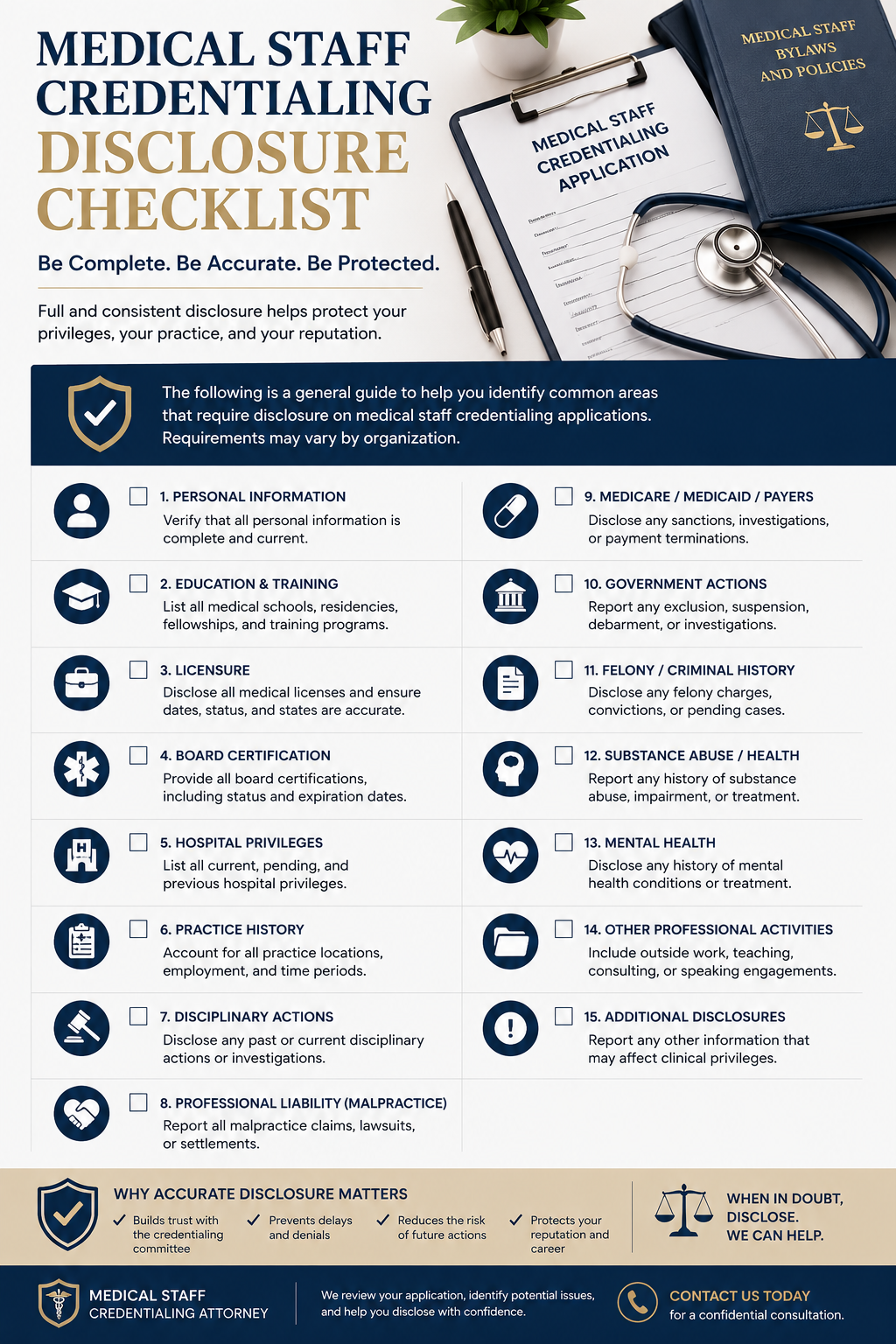
Many credentialing challenges begin with a single question asking whether a physician has experienced certain events during their career.
Disclosure requirements vary depending on the hospital, healthcare system, or medical group.
Examples may include questions regarding:
- Prior disciplinary actions.
- Previous investigations.
- Licensing matters.
- Employment separations.
- Privilege limitations.
- Professional reviews.
- Adverse actions.
Providing too little information may create credibility concerns.
Providing unnecessary information may introduce issues that were never required to be disclosed.
A medical staff credentialing attorney can review disclosure obligations carefully and help physicians provide accurate, complete responses that reflect the facts without creating avoidable misunderstandings under state law or hospital-specific requirements.
Medical Staff Privileges Are Essential to Your Practice
For many physicians, medical staff privileges are central to patient care and career growth.
Restrictions, delays, or denied membership can interrupt established referral relationships and affect long-term professional plans. Losing staff privileges can trigger mandatory reporting to the National Practitioner Data Bank.
Hospitals generally follow credentialing procedures outlined in their bylaws and internal policies. Compliance with National Practitioner Data Bank reporting obligations is also an important part of this framework. Understanding these procedures is important because physicians often have rights and responsibilities throughout the review process.
A hospital privileges attorney can evaluate whether proper procedures were followed and help physicians respond appropriately when questions arise.
Reappointment Reviews Can Raise New Issues
Credentialing does not end after the initial appointment.
Hospitals regularly conduct reappointment reviews to determine whether physicians continue meeting professional standards and institutional requirements, including ongoing licensure, board certification, and overall professional standing.
During reappointment, physicians may receive requests for updated information regarding:
- Clinical activity.
- Professional performance.
- Continuing education.
- Board certification status.
- Licensure status.
- Peer review matters.
- Disclosure updates.
- Hospital affiliations.
Peer review findings and certain credentialing outcomes may result in an NPDB report.
Questions that seem routine may become significant if responses are inconsistent with prior applications.
A physician credentialing lawyer can help ensure reappointment materials remain accurate, complete, and consistent with previous submissions whenever possible.
Every Credentialing Application Tells Your Professional Story
A credentialing application is more than paperwork.
It represents your professional history, experience, physician's education, training, and qualifications. Decision makers often rely heavily on written documentation when evaluating applicants. That review helps verify the provider's qualifications.
Well-prepared applications demonstrate professionalism, transparency, and attention to detail.
When concerns already exist, thoughtful preparation becomes even more important.
An experienced medical staff credentialing attorney helps physicians present information clearly while addressing concerns in an organized and professional manner.
Why Physicians Choose Legal Guidance Before Decisions Are Final
Many physicians seek legal help only after receiving an unfavorable decision.
In many situations, earlier involvement provides greater flexibility and can help protect due process before committee action.
Working with a physician credentialing lawyer before final committee action may help physicians:
- Clarify misunderstandings.
- Organize supporting documentation.
- Prepare written explanations.
- Respond effectively to committee requests.
- Prepare for a fair hearing if adverse review action is being considered.
- Reduce unnecessary delays.
- Protect future credentialing opportunities.
Hospitals must evaluate applicants fairly under Medicare Conditions of Participation, including when a hearing may affect privileges.
Taking proactive steps often creates better opportunities for a favorable review than responding after decisions have already been made.
Masterly Legal Solutions Helps Physicians Protect Their Professional Future
Credentialing concerns require more than general legal knowledge.
They require careful attention to healthcare regulations, compliance concerns in the healthcare field, medical staff procedures, professional reputation, and long-term career goals, similar to how businesses benefit from outsourced general counsel legal services.
At Masterly Legal Solutions, we understand how credentialing matters can affect physicians both professionally and financially. Whether you are responding to disclosure questions, facing delays, addressing concerns involving medical staff privileges, preparing for reappointment, or dealing with hospital privileges peer review or medical staff hearings, our team provides experienced legal guidance focused on protecting your interests. We represent physicians and healthcare providers in credentialing and related proceedings, including nurse practitioners and other medical professionals, as part of our broader Texas-based legal and business services practice.
Our approach emphasizes preparation, clear communication, and practical legal strategies designed around your specific circumstances.
You have worked hard to build your medical career. Credentialing challenges should be addressed with the same level of professionalism that brought you there.
Why Health Care Providers Need Legal Guidance During Credentialing Reviews
Credentialing concerns can affect all health care providers, including physicians seeking new hospital appointments or renewing existing privileges, just as employment disputes can impact organizations that rely on HR consulting and workplace training legal services. A delay or dispute may influence patient care, income, and future professional opportunities. Working with an experienced medical staff credentialing attorney helps physicians respond to concerns in a way that protects both their careers and their professional reputations.
Coordinating With Other Healthcare Providers Throughout the Process
Hospitals often communicate with other healthcare providers when reviewing credentialing records, professional history, and clinical experience. Accurate documentation and thoughtful responses are important because inconsistencies can raise additional questions. Legal guidance helps physicians present complete and reliable information during every stage of the review.
When an Administrative Law Judge May Become Part of the Process
Certain healthcare disputes may eventually be reviewed by an administrative law judge, depending on the facts and the legal issues involved, much like education matters that require TEA license defense and teacher legal representation. These proceedings can have lasting consequences for a physician's career if they are not handled carefully. Early legal representation helps physicians prepare for every stage of the process while protecting their professional interests.
Understanding How the Affordable Care Act Influences Credentialing
The Affordable Care Act has shaped many aspects of healthcare compliance and provider participation, just as evolving regulations affect our education law and business consulting services. While credentialing decisions remain unique to each healthcare organization, physicians should understand that changing regulations may influence review standards and documentation requirements. Legal guidance helps ensure credentialing matters are addressed with these broader considerations in mind.
Responding to Questions From a State Licensing Board
A matter involving a state licensing board can affect more than a physician's license. Hospitals frequently review licensing history when evaluating credentialing applications and reappointments. Addressing licensing concerns promptly and professionally can help reduce unnecessary complications during credentialing reviews.
Credentialing Decisions Can Affect Third Party Payers
Hospital credentialing often plays a role in enrollment with third party payers, including insurance networks and healthcare plans, similar to how colleges and universities must manage relationships with higher education compliance and NCAA regulatory counsel. Delays or unresolved concerns may affect reimbursement opportunities and participation with payer organizations. Addressing credentialing issues early helps physicians protect important aspects of their medical practice.
Licensing Board Matters Often Extend Beyond Licensing
A licensing board inquiry may also influence hospital credentialing, employment opportunities, and future applications. Even when a matter appears limited in scope, physicians should carefully evaluate how it may affect other professional responsibilities. Experienced legal counsel helps physicians address these situations strategically and professionally.
The Joint Commission Standards Can Influence Credentialing Reviews
Many hospitals develop credentialing procedures that align with standards established by The Joint Commission, much like colleges rely on legal guidance for FERPA and higher education regulations. These standards support quality care and consistent credentialing practices throughout healthcare organizations. Understanding how these expectations may affect the review process allows physicians to respond more effectively to credentialing concerns.
Preventing the Domino Effect of Credentialing Problems
One unresolved credentialing issue can create a domino effect that reaches future hospital applications, employment opportunities, payer enrollment, and professional relationships, just as colleges benefit from dedicated higher education attorneys to manage regulatory risks. Addressing concerns early often helps prevent additional challenges from developing later. Careful legal guidance allows physicians to take proactive steps before problems become more difficult to resolve.
Common Issues That Delay Medical Staff Credentialing
Several common issues can slow or complicate credentialing reviews, including incomplete applications, inconsistent disclosures, missing documentation, or requests for additional information. While every situation is different, responding carefully and accurately can improve the overall review process and reduce avoidable delays.
Protecting Relationships With Employers During Credentialing
Credentialing concerns can directly affect current and prospective employers, especially when hospital privileges are required for a physician's position. Delays or restrictions may influence employment timelines and professional opportunities. Legal guidance helps physicians address credentialing matters while protecting valuable career relationships.
Building a Strong Defense for Your Professional Reputation
Every physician deserves a thoughtful defense when credentialing concerns place professional opportunities at risk. A careful review of the facts, supporting documentation, and applicable procedures can make an important difference. Experienced legal representation helps physicians present their qualifications clearly and respond confidently to credentialing questions.
Our Clients Trust Us With High-Stakes Credentialing Matters
The clients who work with Masterly Legal Solutions understand the importance of protecting their medical careers and professional reputations, just as educators rely on our education lawyer services for teachers and schools. Whether addressing disclosure concerns, credentialing delays, or hospital privilege issues, every matter receives individualized attention and a strategy tailored to the physician's unique circumstances.
We Proudly Serve Physicians Facing Credentialing Challenges
Masterly Legal Solutions is proud to serve physicians and healthcare professionals navigating complex credentialing matters. Our team is committed to providing practical legal guidance that helps protect careers, preserve professional standing, and support long-term success within the healthcare community.
Frequently Asked Questions
When should I contact a medical staff credentialing attorney?
You should consider speaking with a medical staff credentialing attorney as soon as you receive requests for additional information, experience unusual delays, face concerns about disclosures, or learn that your application may be restricted or denied, and seek a confidential consultation when sensitive issues require private legal guidance.
What does a physician credentialing lawyer do?
A physician credentialing lawyer helps physicians evaluate credentialing issues, and medical credentialing attorneys review application materials, address disclosure questions, prepare responses, and protect their professional interests throughout the credentialing process. In these matters, attorneys guide physicians through the peer review process, licensing issues, and related credentialing disputes.
Can an attorney help with a credentialing application?
Yes. Legal guidance may help ensure your credentialing application is accurate, complete, and responsive to the hospital's requirements while reducing the risk of unnecessary complications. Applications often review specialty board status, and errors or omissions can affect a physician's ability to admit patients and practice medicine within the hospital.
What if I receive questions about a disclosure?
Disclosure questions should be answered carefully. They may ask about prior peer review committee activity or an adverse NPDB report. A medical staff credentialing attorney can review the circumstances and help prepare responses that accurately reflect your professional history.
Can a hospital privileges attorney assist with reappointment matters?
Yes. A hospital privileges attorney may assist physicians facing concerns during reappointment, including questions involving medical staff privileges, committee reviews, or additional documentation requests. Reappointment issues may also involve medicare enrollment process questions, medicaid audits, or participation in medicaid services billing.
Discuss a Physician Credentialing Matter
Credentialing concerns should be addressed before they create larger professional consequences affecting patients and health care quality. Whether you are facing delays, responding to disclosure questions, protecting your medical staff privileges, or preparing for reappointment, Masterly Legal Solutions is ready to provide experienced legal guidance tailored to your situation.
Contact Masterly Legal Solutions today to discuss your physician credentialing matter; the firm assists physicians, providers, and medical professionals facing credentialing or privileges concerns.
Masterly Legal Solutions
Website:https://www.masterlylegal.com/
Phone: (972) 236-5051





Teacher Rights When Assaulted by a Special Needs Student: Safety, Reporting and Investigation Issues
Looking for Legal & Business Solutions? Contact Us Now
Fill in the form or call us to set up a meeting