How Physicians Should Respond to a Hospital Peer Review Investigation
A hospital peer review investigation can affect far more than your current privileges. Questions about clinical performance, professional conduct, or patient care may influence your reputation, credentialing, and future practice opportunities. The first decisions you make after receiving notice of a review often shape what happens next. Working with an experienced physician peer review attorney early in the process can help you understand the issues, organize your response, and protect your professional interests.
Masterly Legal Solutions represents physicians facing hospital peer review matters, credentialing concerns, and administrative investigations. Our attorneys help physicians evaluate allegations, review governing policies, prepare supporting documentation, and respond strategically throughout the peer review process, drawing on the firm's broader legal services for corporations, nonprofits, and individuals.
When your professional standing and medical career are under review, experienced legal guidance can help you move forward with confidence.
Why You Should Contact a Physician Peer Review Attorney Early
Many physicians are surprised when they receive notice that a peer review committee has begun evaluating their care or conduct.
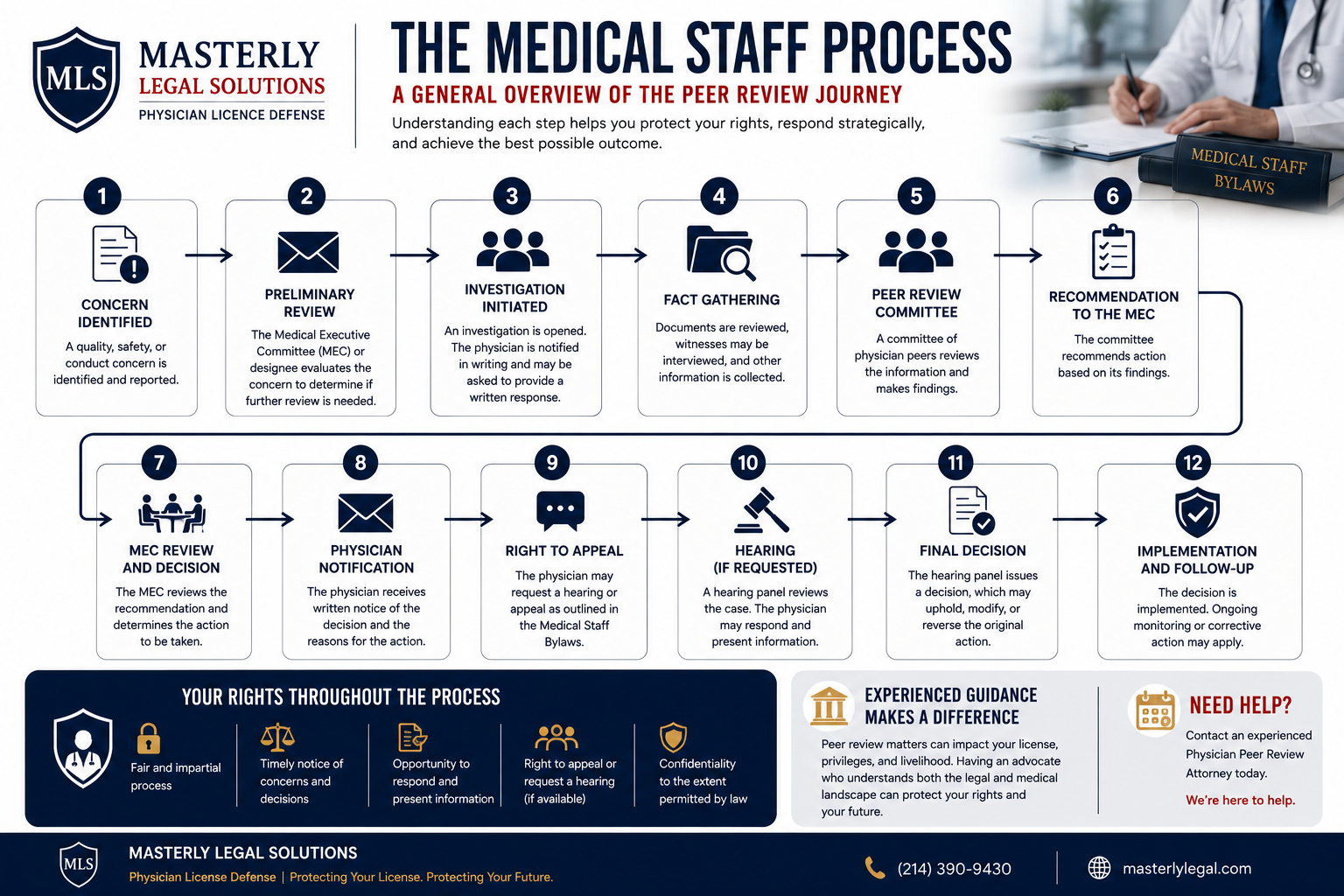
A review may begin after a patient complaint, an internal quality review, concerns raised by colleagues, or questions involving hospital policies. The medical peer review process is a formal and confidential process governed by hospital procedures as well as state and federal laws, including HCQIA, and the outcome may affect hospital privileges, credentialing, and future employment opportunities.
An experienced physician peer review attorney helps physicians understand those rules before responding to requests for interviews, written statements, or committee meetings.
Early preparation allows physicians to respond thoughtfully rather than react under pressure.
Understanding the Hospital Peer Review Process
Every hospital has procedures governing peer review, although the exact process differs among institutions, and a particular hospital follows its own bylaws and internal procedures in part to satisfy accreditation expectations, including requirements from The Joint Commission.
Committees and peer reviewers may examine medical records, interview physicians and staff, evaluate clinical documentation, and consider whether additional action is appropriate through a confidential process that is generally protected from discovery in lawsuits.
A hospital peer review lawyer helps physicians understand each stage of the process while ensuring that responses are organized, complete, and consistent with the applicable policies.
Every review deserves careful preparation.
Why Physician Credentialing May Be Affected
Peer review often extends beyond the immediate investigation.
Questions raised during a review may affect a physician's career by influencing credentialing decisions, clinical privileges, and reports to the National Practitioner Data Bank or the medical board.
Working with a physician credentialing attorney helps physicians understand how current proceedings may affect future credentialing matters and professional relationships, especially since hospitals must report adverse peer review actions to the NPDB and other credentialing entities may also see or rely on those outcomes.
Planning ahead helps physicians protect their long-term careers.
Reviewing Medical Staff Bylaws
Every hospital typically maintains medical staff bylaws and hospital bylaws that establish the procedures governing the hospital's medical staff, physician rights, privileges, and hearing procedures.
Understanding these bylaws is an important part of preparing an effective response. Physicians must receive fair procedures, including notice of charges and the right to appeal.
Masterly Legal Solutions carefully reviews applicable bylaws to identify procedural requirements, timelines, and opportunities for physicians to present information during the review. Counsel also checks whether the hospital and medical staff followed their own bylaws and provided adequate notice and other due process protections, similar to how our firm provides general counsel services for businesses needing ongoing legal oversight.
A thorough understanding of the governing documents helps physicians make informed decisions.
Preparing for a Fair Hearing
Some peer review matters may progress to a fair hearing depending on the recommendations made during the review process.
A hearing may allow the subject physician to present evidence, respond to peer review findings, and challenge recommendations affecting the physician's clinical privileges according to applicable hospital procedures.
Our attorneys help physicians prepare for hearings by preparing a written explanation, organizing witness or document support for physician disputes, and developing a strategy tailored to the circumstances of the matter.
Preparation helps physicians communicate effectively throughout the process.
Responding to an Adverse Recommendation
Following committee review, physicians may receive adverse actions affecting a physician's privileges, appointments, or other professional matters.
Receiving a recommendation does not automatically end the process, but some adverse outcomes can include restriction, suspension, or revocation of privileges, and hospitals must report peer review actions lasting more than 30 days to the NPDB under the applicable procedures.
Masterly Legal Solutions helps physicians understand the recommendation, evaluate supporting documentation, and prepare an appropriate response consistent with hospital policies.
Thoughtful legal guidance is valuable during every stage of the review.
Addressing Questions About Clinical Competence
Many peer review matters involve questions regarding clinical competence.
These reviews may begin after a poor patient outcome or other adverse outcome and often focus on the physician's performance in patient care, clinical decision making, documentation, and compliance with accepted standards of practice.
Our attorneys work closely with qualified physicians to organize the clinical record, review available evidence, and prepare clear responses when conclusions could affect privileges, including potential revocation.
Each matter should be evaluated individually.
Professional Conduct Matters Deserve Careful Attention
Peer review committees may also evaluate concerns involving professional conduct. In some matters, conduct allegations are raised in unfair peer review or sham peer review claims, including false allegations that improperly portray a doctor as a disruptive physician.
These issues may include workplace interactions, communication with colleagues, compliance with hospital policies, or other professional responsibilities.
Masterly Legal Solutions helps physicians understand the allegations, prepare supporting information, and respond in a professional manner that protects their long-term interests, supported by the firm's experience providing HR consulting services and workplace investigations in employment settings.
Professional reputation remains one of a physician's most valuable assets, and counsel can help identify when accusations of physician misconduct or other conduct-related concerns may be politically motivated or driven by personal vendettas rather than legitimate patient-safety concerns.
Protecting Your Professional Reputation
Hospital peer review investigations can influence far more than a current hospital appointment.
Professional reputation, referral relationships, leadership opportunities, and future credentialing decisions may all be affected by how a physician responds during the review process, including the ability to practice medicine at a particular hospital and in future settings.
Our attorneys help physicians navigate these matters with careful planning and experienced legal guidance, and can assess whether review activity reflects legitimate quality concerns or pressure from competing medical practices, including situations where sham peer review can be used to eliminate competition, drawing on insights from our business consulting services for organizational strategy and risk.
Every communication should support your long-term professional goals.
Why Physicians Choose Masterly Legal Solutions
Physicians trust Masterly Legal Solutions because we help physicians protect patient safety and quality health care while defending their rights in hospital peer review matters.
Our attorneys provide:
- Representation from an experienced physician peer review attorney
- Guidance from a knowledgeable hospital peer review lawyer
- Counsel from a physician credentialing attorney
- Review of applicable medical staff bylaws
- Preparation for a fair hearing
- Guidance following an adverse recommendation
- Assistance addressing questions involving clinical competence
- Representation concerning professional conduct
- Support from experienced legal counsel during hearings, investigations, and related proceedings
- Strategic legal planning throughout the peer review process
Every physician receives individualized legal guidance based on the specific facts, hospital procedures, and professional objectives involved, with coordinated representation from our experienced legal team, which also supports clients in other areas through our diverse legal services including estate planning and sports law.
Our Process
Every peer review matter begins with understanding the complete situation, in keeping with our broader approach of combining legal and business consulting for smart growth across practice areas.
Confidential Consultation
We review the notice, identify whether the matter may be addressed early through informal resolution or informal peer review proceedings, discuss your concerns, and explain the physician's perspective on the issues raised.
Investigation Review
Our attorneys evaluate committee communications, hospital policies, medical staff bylaws, and available documentation to determine whether the hospital peer review committee, any ad hoc committee, or other reviewers appear to be engaged in good faith peer review under HCQIA, which grants immunity to peer reviewers acting in good faith and generally protects peer reviewers from lawsuits unless bad faith is shown. Counsel also looks for signs of bad-faith or sham conduct when immunity issues may arise, including whether a physician can show unfairness to challenge that protection, applying the same risk-focused perspective emphasized in our legal business consulting for new and growing enterprises.
Strategic Response Planning
We develop a customized legal strategy based on the facts of your matter and the applicable procedures, including evaluating each peer review action for procedural fairness and whether the four fairness criteria for immunity, including required standards for notice, hearing, and reasoned review, were followed.
Ongoing Representation
We continue advising physicians throughout committee proceedings, hearings, credentialing matters, and related administrative issues, including matters before the hospital's governing board, the Texas Medical Board, and related reporting issues affecting healthcare providers or other healthcare providers, supported by the firm's broad, client-focused legal services across Texas. We also advise when peer review consequences overlap with continued practice rights, an employment contract, or reporting obligations, including when HCQIA requires hospitals to report adverse actions to NPDB.
Preparing for a Peer Review Hearing With Experienced Legal Guidance
A peer review hearing requires careful preparation and a clear understanding of the hospital's procedures. Physicians should make every reasonable effort to organize relevant medical records, supporting documentation, and other information before submitting written responses or participating in committee proceedings. Thoughtfully prepared responses can help ensure that important facts are presented accurately and professionally. Working with experienced counsel allows physicians to evaluate the issues under review, understand applicable medical staff bylaws, and develop a strategy that protects their professional reputation and long-term career interests throughout the peer review process.
Frequently Asked Questions
Why should I hire a physician peer review attorney?
A physician peer review attorney helps physicians understand hospital procedures, prepare responses, review governing documents, and protect their professional interests throughout the peer review process. A physician peer review lawyer can also help a doctor navigate each step of a formal investigation, respond before the matter affects long-term professional opportunities, and protect the physician's ability to continue practicing.
What does a hospital peer review lawyer do?
A hospital peer review lawyer advises physicians during committee investigations, prepares responses, reviews evidence, and provides representation throughout hospital administrative proceedings.
Why would I need a physician credentialing attorney?
A physician credentialing attorney helps physicians understand how peer review matters may affect credentialing decisions, hospital privileges, and future professional opportunities.
What are medical staff bylaws?
Medical staff bylaws are the governing rules for the organized medical staff and its committees, establishing peer review procedures, physician rights, committee responsibilities, and hearing processes within a hospital.
What is a fair hearing?
A fair hearing is a formal process that may allow a physician to respond to certain recommendations or actions according to the hospital's governing procedures.
What is an adverse recommendation?
An adverse recommendation is a committee recommendation that may affect privileges, appointments, or other professional matters and should be reviewed carefully with legal counsel.
What does clinical competence mean in peer review?
Clinical competence generally refers to a physician's ability to provide safe, appropriate, and effective patient care consistent with applicable professional standards. In some cases, concerns may be addressed early through counseling or a performance improvement plan before more serious action is considered.
Why is professional conduct reviewed?
Hospitals may review professional conduct when concerns arise regarding workplace behavior, communication, policy compliance, or other professional responsibilities. These reviews can involve medical professionals accused of behavior issues and may affect how they continue working within the medical staff.
Request a Confidential Physician Peer Review Consultation
Hospital peer review proceedings deserve careful legal attention from the beginning. The decisions you make during an investigation may affect your privileges, credentialing, professional reputation, physician's career, ability to practice, and ongoing opportunities within a hospital or health system.
Masterly Legal Solutions represents physicians with an experienced legal team working alongside an experienced physician peer review attorney during hospital administrative proceedings. Our attorneys serve as a hospital peer review lawyer and physician credentialing attorney, review medical staff bylaws, prepare physicians for a fair hearing, respond to an adverse recommendation, address related medical board or reporting issues, address concerns involving clinical competence, and provide strategic guidance regarding professional conduct throughout the peer review process.
Masterly Legal Solutions
Website: https://www.masterlylegal.com/
Phone: (972) 236-5051



Teacher Rights When Assaulted by a Special Needs Student: Safety, Reporting and Investigation Issues

Looking for Legal & Business Solutions? Contact Us Now
Fill in the form or call us to set up a meeting