

Wills vs. Trusts: Which Is Best for Your Family?
Families often reach a moment in life when they begin thinking more seriously about the future—about their assets, their loved ones, and what they want to happen if an emergency occurs. For many people, choosing between wills and trusts feels overwhelming because both legal documents play important but different roles. When your family includes minor children, aging parents, or property you want to protect, understanding these key differences becomes even more important. This guide breaks down the options in a clear and approachable way, helping you move forward with confidence and proper planning.
Many families begin exploring estate planning with questions rather than answers: Should I create a last will? Do I need revocable living trusts? Will probate court slow things down for my beneficiaries? These are common concerns, and the right attorney can help you determine which legal arrangement fits your personal goals. At Masterly Legal Solutions, our experienced attorneys work closely with clients to make sure their estate planning needs are addressed with clarity, care, and guidance every step of the process.
Understanding the Foundation of Estate Planning
Estate planning helps ensure that your estate, your wishes, and your property are handled exactly as you intend. Whether you choose wills or trusts, the goal is to have your assets distributed properly and avoid unnecessary disputes. Many people begin this journey because they want to protect loved ones or safeguard their financial affairs for the future. With the help of a trust attorney or estate planning attorney, families can create customized documents that reflect their unique wishes.
Estate planning services allow you to create a comprehensive estate plan that can address everything from tax planning to medical care decisions. This becomes especially helpful for families with complex estates or blended family dynamics. While online forms and online estate planning may seem convenient, they often fail to meet the specific requirements of state laws. Working with legal experts increases the likelihood of avoiding mistakes that could later become time consuming or costly.
What a Last Will Does for Your Family
A last will is a foundational legal document that explains how you want your assets distributed after your life ends. Wills are especially helpful for naming guardians for minor children, choosing beneficiaries, and giving instructions for personal property. Many families prefer wills because they are simple to create, flexible, and recognized by every probate court across the country.
Although wills are powerful tools, they do go through probate. Probate can delay access to funds and may require court oversight before the estate is closed. In some situations, probate can become time consuming depending on the estate’s size, the number of beneficiaries, and whether any disputes arise. Families who want to avoid probate altogether often choose trusts instead. Still, for many people, wills remain an essential part of proper planning and offer peace of mind.
When a Trust May Be the Better Choice
Trusts offer privacy, control, and flexibility during life and after death. With revocable living trusts, you can manage your estate while alive and revise the terms at any time. Trusts allow you to protect assets, avoid probate, and ensure your beneficiaries receive property efficiently. A trust is a legal arrangement that places your property under the control of a trustee, who handles the administration on your behalf and for the benefit of designated beneficiaries.
Trusts are especially beneficial for families wishing to avoid court delays, reduce estate taxes, or provide long-term support for loved ones. A trust attorney can help you structure the trust to match your personal goals and future wishes. Trust administration typically occurs outside of probate law, which helps streamline the process for your trustee and beneficiaries. Families with real estate, investments, or multiple properties often find that trusts create smoother transitions.
Key Differences Between Wills and Trusts
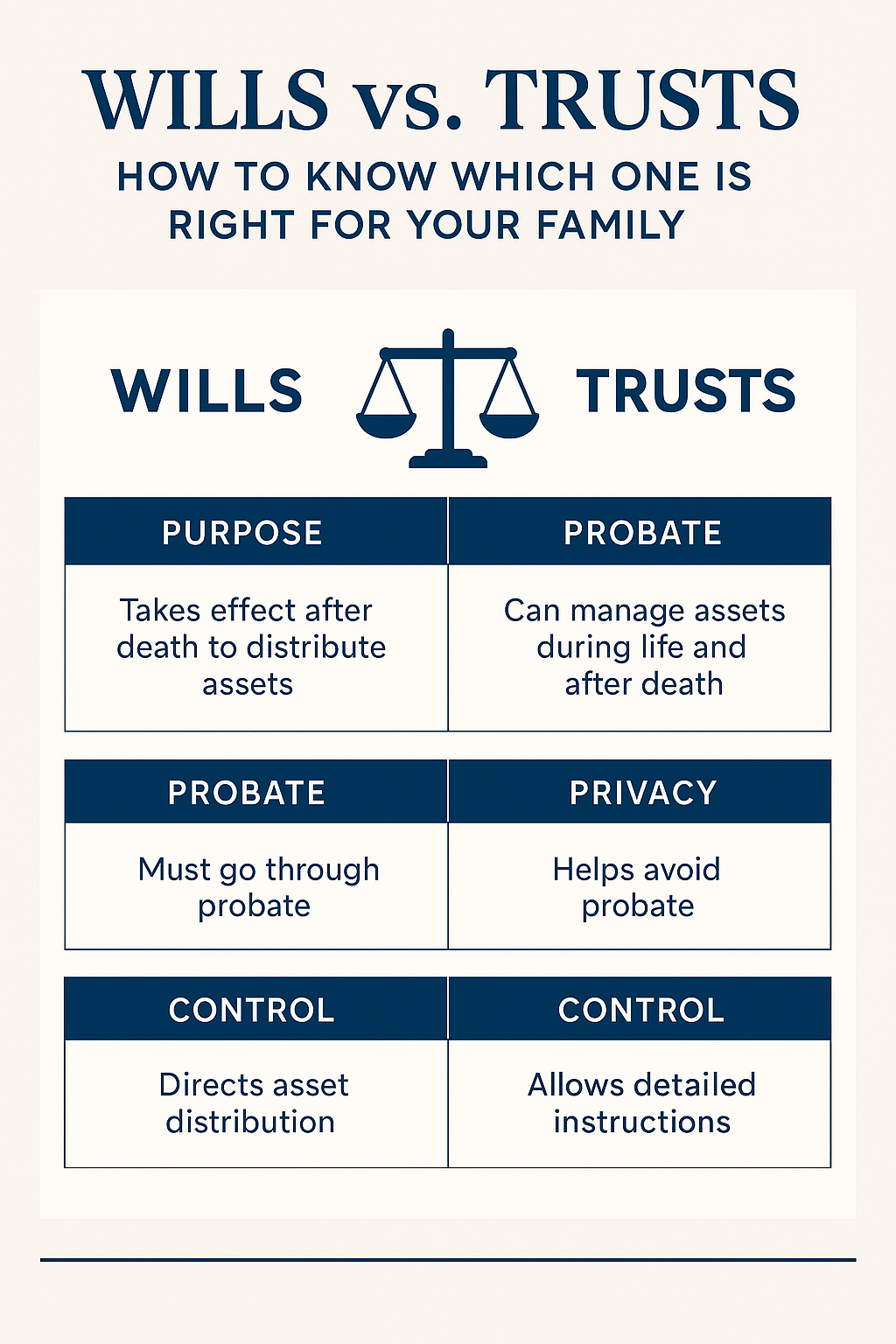
Understanding the key differences between wills and trusts helps you make an informed decision about which option better fits your needs. Wills take effect after death, while trusts can begin operating immediately once you sign the documents. A will must go through probate, but trusts help avoid probate, giving families faster access to assets.
Another major difference involves privacy. Wills become public record once filed in court, while trusts remain private. This protects sensitive financial affairs and shields family members from unwanted attention. Trusts also offer more control over how assets are managed and when funds should be released, making them ideal for minor children or loved ones needing long-term financial protection.
How Estate Planning Protects Loved Ones
Estate planning is not just about money; it is about protecting loved ones and ensuring your wishes are respected. Whether you choose wills or trusts, the right attorney can help you create a plan that includes healthcare directives, asset distribution rules, and tax planning strategies. When families plan ahead, they reduce stress for beneficiaries and simplify the responsibilities of the trustee.
Healthcare directives such as an advance healthcare directive guide your medical care decisions when you cannot speak for yourself. These documents help avoid disputes among family members and ensure your voice is honored. Many families overlook these important documents, but proper planning ensures every part of your estate is addressed.
The Importance of Avoiding Probate
Probate is the court-supervised process of validating a will and settling the estate. Although probate is normal, many families prefer to avoid probate because it can be expensive and time consuming. Probate can also delay when assets are distributed, which may create hardships for beneficiaries who rely on funds.
Trusts help avoid probate and ensure assets are passed quickly and privately. A trust attorney can help you structure a plan that minimizes court involvement and protects your estate from unnecessary delays. Avoiding probate does not eliminate the need for proper planning, but it does streamline the process for your trustee and family members.
Choosing the Right Attorney for Your Estate
Finding the right attorney is one of the most important steps in the estate planning process. A good attorney will listen to your needs, help you evaluate estate planning costs, and guide you toward the documents that best suit your family. Estate attorneys help you navigate complex estates, tax issues, and probate procedures, ensuring nothing is overlooked.
Many individuals feel unsure where to begin, especially when dealing with personal legal matters or financial affairs. A board certified attorney or experienced estate planning attorney can provide the advice needed to protect your assets. Whether you choose wills or trusts, the attorney’s role is to help you create a plan that reflects your values and long-term goals.
How Trusts Benefit Families with Minor Children
Families with minor children often face unique challenges when planning ahead. Trusts allow parents to determine when and how money will be used on behalf of their children. A trustee manages the funds responsibly, ensuring the children’s needs are met until they reach adulthood.
A trust can outline instructions for education, healthcare, and other essential expenses, which provides parents with peace of mind. Wills, while helpful, cannot offer the same level of ongoing guidance. Many families choose trusts specifically to protect minor children and ensure their financial futures are secure.
Estate Taxes and How Planning Helps Reduce Them
Estate taxes can significantly reduce the amount of property your beneficiaries receive. Proper planning with trusts may help minimize tax liabilities and preserve more money for loved ones. Tax planning becomes especially important for families with investments, businesses, or substantial assets.
Estate planning attorneys understand how state laws apply and can help reduce unnecessary tax burdens. While not all families face estate taxes, planning ahead ensures your estate is structured to benefit your beneficiaries as much as possible.
Why Online Forms Are Not Enough
Online forms and online questionnaires may appear convenient, but they rarely offer the protection that families with real assets require. Many of these documents fail to meet state laws or include key provisions needed for complex estates. Without legal guidance, families risk signing documents that do not accomplish their intended purpose.
Estate planning involves legal services that require accuracy, customization, and professional oversight. While online estate planning tools may offer templates, they cannot replace the expertise of attorneys who understand the nuances of probate court and trust administration.
How to Protect Your Property and Financial Affairs
Whether you choose wills or trusts, the primary goal is to protect your property and financial affairs. Families often accumulate assets such as homes, savings, and investments over many years, and protecting these resources becomes essential. Trusts provide ongoing management, while wills offer clear instructions for asset distribution.
The right attorney can help ensure your assets are handled responsibly according to your wishes. Proper planning prevents unnecessary disputes, strengthens your estate, and creates a smoother transition for beneficiaries.
Conditions That Make Trusts More Favorable
Trusts are especially helpful when families want to avoid probate, manage long-term support, or handle complex estates. They are also ideal for situations where beneficiaries may need help managing money or require financial protection. A trust attorney can help you create terms tailored to your family’s needs.
Families caring for aging parents or relatives with disabilities often find trusts useful. They provide structured management of funds without involving the court, giving families more flexibility and control.
When Wills Are the Better Option
Wills are useful when families want a simple approach to estate planning. They are ideal for outlining guardianship for minor children, listing property, and expressing final wishes. Wills are often preferred by individuals with smaller estates or straightforward financial structures.
Even with trusts, many families still include wills as part of their overall plan. A will can serve as a backup legal document to address anything not covered by the trust. This ensures your estate is fully protected regardless of unexpected changes.
How Healthcare Directives Support Your Estate Plan
Healthcare directives are essential components of a comprehensive estate plan. These documents ensure your medical care preferences are respected and help loved ones make informed decisions during emergencies. Without healthcare directives, families may face difficult decisions that could lead to disputes.
Adding an advance healthcare directive to your estate planning services can help protect your dignity and maintain control over your life decisions. Whether used with wills or trusts, healthcare directives bring clarity to an already emotional time.
How Proper Planning Helps Resolve Conflicts
Disputes often arise when families lack clear instructions or proper planning. Having well-written documents reduces confusion, protects beneficiaries, and helps resolve conflicts before they escalate. Trusts provide structure and prevent disagreements about asset distribution.
When families understand the process and have strong legal guidance, they are less likely to face court battles or disagreements. Working with legal experts ensures every part of your estate is addressed correctly, giving you confidence that your wishes will be honored.
Understanding How Assets Are Distributed
One of the most important parts of estate planning involves determining how your assets will be distributed. Wills give direct instructions, while trusts allow for controlled distribution over time. The method you choose depends on your beneficiaries’ needs and your own personal preferences.
Some families prefer immediate distribution, while others want their trustee to manage funds carefully. With the right attorney, you can create a plan that ensures the best benefit for your beneficiaries and aligns with your long-term goals.
Planning Ahead Gives Your Family Peace of Mind
Planning ahead brings comfort and stability, especially when preparing for the unexpected. Families often feel relieved knowing their estate, property, and personal goals are clearly documented. Trusts and wills both serve important roles in protecting your family and ensuring your wishes are honored.
Estate planning also prevents time consuming court delays and financial challenges for loved ones. When a family has a well-prepared plan, they can focus on healing, supporting one another, and celebrating your life rather than navigating complicated procedures.
How a Law Firm Supports Your Estate Planning Journey
Working with a law firm ensures you have access to experienced attorneys who understand state laws, probate procedures, and trust administration. A firm familiar with estate planning law can help you create documents that reflect your values, protect your property, and ensure your beneficiaries receive what you intend.
Legal services vary, but effective estate planning requires accuracy, personalization, and a commitment to serving clients’ best interests. Whether you are beginning your plan or updating existing documents, having the right legal support makes the process far more manageable.
Additional Planning That Strengthens Your Estate
Beyond wills and trusts, families often benefit from additional planning tools that support long-term goals. These may include healthcare directives, powers of attorney, or specialized trusts for certain assets. Even small additions can significantly strengthen your estate and simplify administration.
An estate planning attorney can help you understand which tools are most effective for your circumstances. When your documents work together, your estate planning costs become more efficient, and your beneficiaries gain greater clarity.
When Complex Estates Require Extra Attention
Some estates contain businesses, multiple properties, or investments that require additional planning. Families with complex estates often use trusts to streamline transitions and provide ongoing management. Trusts also help reduce risks associated with taxes, disputes, or market changes.
With the guidance of a good attorney, you can address complicated assets with confidence. Trust administration ensures these assets are handled smoothly, protecting your estate from unnecessary challenges.
Why Families Choose to Create Both Wills and Trusts
Many families use both wills and trusts to strengthen their estate planning strategy. A trust controls major assets, while the will handles anything not included in the trust. This two-part approach gives families the flexibility and control they need to protect their loved ones.
Wills and trusts work together to ensure nothing is overlooked. With the support of a trust attorney, your plan remains thorough and aligned with your long-term intentions.
How to Sign Documents with Confidence
Understanding your documents before you sign them is essential. A trust attorney will review each legal document with you and explain how it works. Knowing that your plan reflects your wishes helps ensure that your estate is managed responsibly.
Families who sign documents without legal guidance may unintentionally create problems down the road. Working with legal experts ensures your estate is protected from common mistakes.
Humanized Final Thoughts
Planning for the future can feel emotional, especially when it involves protecting the people who matter most. Many families hesitate to talk about wills or trusts because the topics feel heavy, but taking the time now can protect your loved ones when they need it most. Whether you are caring for aging parents, raising minor children, or planning for the life you’ve worked hard to build, having a strong estate plan brings comfort and clarity. Your family deserves a plan that truly reflects your wishes, your values, and the legacy you want to leave behind.
Speak With a Trust Attorney Today
If you’re ready to explore wills, trusts, or your broader estate planning needs, our team at Masterly Legal Solutions is here to help you move forward with clarity and confidence. We offer personalized estate planning services designed to protect your assets, answer questions, and guide your family through every step of the process. Whether you’re creating your first plan or updating legal documents already in place, our experienced attorneys will help ensure your wishes are honored with care.
Contact us at (972) 236-5051 to schedule a free consultation and speak with a trust attorney who understands the importance of planning ahead. We are committed to giving you the guidance your family deserves.
This article is for educational purposes only and does not constitute legal advice. For advice tailored to your specific situation, please consult directly with an attorney.







Looking for Legal & Business Solutions? Contact Us Now
Fill in the form or call us to set up a meeting





