
How to Appeal a TEA Decision That Affects Your Teaching License
When a TEA Decision Puts Your Teaching Career at Risk
For many teachers, a career in education represents years of dedication to students, schools, and communities across Texas. Educators spend years completing degrees, professional training, and classroom experience so they can contribute to the public school system, college, or university environments. When the Texas Education Agency issues a disciplinary ruling that affects a teaching license, the emotional and professional impact can be overwhelming.
A TEA decision may affect an educator’s ability to continue working in schools, school districts, or even charter schools. Some educators find themselves suddenly facing suspension, disciplinary action, or restrictions that threaten their job and long-term future in education. In other cases, allegations related to student discipline, workplace harassment, or claims involving physical or sexual abuse can trigger an investigation that leads to serious consequences.
Understanding the appeal process is critical for educators who want to defend their professional reputation. Education law provides procedures that allow teachers to challenge unfavorable decisions and protect their rights. Working with experienced attorneys who understand education law and TEA investigations can make a meaningful difference when appealing a TEA ruling.
Understanding the Authority of the Texas Education Agency
The Texas Education Agency regulates educator certification and professional standards throughout the state. This department monitors licensing rules, investigates complaints involving teachers, and enforces disciplinary actions within school districts, charter schools, and other educational institutions. The agency works with administrators, compliance officers, and other professionals to maintain standards across Texas schools.
These regulatory responsibilities exist to protect students, maintain safe learning environments, and ensure ethical behavior among educators. However, the investigative process can sometimes produce outcomes that educators believe are incomplete or unfair. Because education law allows teachers to challenge administrative decisions, the appeal process becomes a crucial tool for defending professional rights.
When an educator believes a decision was made incorrectly, appealing through the proper legal channels allows the situation to be reviewed. A knowledgeable lawyer with extensive experience in education law and teacher license defense can help identify potential weaknesses in the agency’s findings and develop a strategy to challenge the ruling.
Why Teachers May Need to Appeal a TEA Decision
A TEA decision may involve disciplinary findings that affect a teacher’s certification or ability to continue working in education. These rulings can involve allegations related to classroom management, student discipline, professional conduct, or workplace disputes involving schools.
Some cases involve allegations connected to Title IX, workplace harassment, or disputes related to civil rights protections within educational institutions, where Texas education lawyers can help educators navigate overlapping civil rights and licensing issues. Other cases may involve misunderstandings about classroom discipline, disagreements with administrators, or issues connected to special education responsibilities.
Educators who believe the decision was based on incomplete information often choose to appeal. The appeal process allows them to present evidence, challenge investigative findings, and demonstrate compliance with professional practices expected within schools and universities.
The Importance of Education Law in Teacher Appeals
The process for challenging a TEA ruling is governed by education law. This area of law combines administrative regulations, employment standards, and professional conduct rules that apply to teachers working in schools, college, or university settings.
Attorneys who focus on education law understand how the regulatory system operates and how appeals must be filed. Texas education lawyers regularly work with clients who are dealing with investigations, disciplinary actions, and certification disputes.
Because education law intersects with areas such as civil rights, labor law, and sometimes family law, the legal issues involved in teacher appeals can become complex, often requiring support from an experienced education lawyer in Texas. Skilled attorneys with extensive experience in education law can help educators understand their options and defend their professional standing.
Reviewing the TEA Investigation Findings
Before an appeal begins, it is essential to review the investigation report carefully. The agency may gather information from students, parents, administrators, and other professionals connected to the case. These reports may include classroom records, documentation related to student discipline, and references to policies outlined in school staff handbooks.
In some situations, the investigation may include allegations involving sexual abuse, claims of inappropriate conduct, or disputes involving special education law. The report may also reference communications with parents, compliance procedures followed by the school, and statements from witnesses.
A qualified lawyer can review these documents and help identify areas where the investigation may have overlooked evidence or misinterpreted facts, and an education law attorney can also explain how those findings affect certification and employment.
Step One: Understanding the Notice of Decision
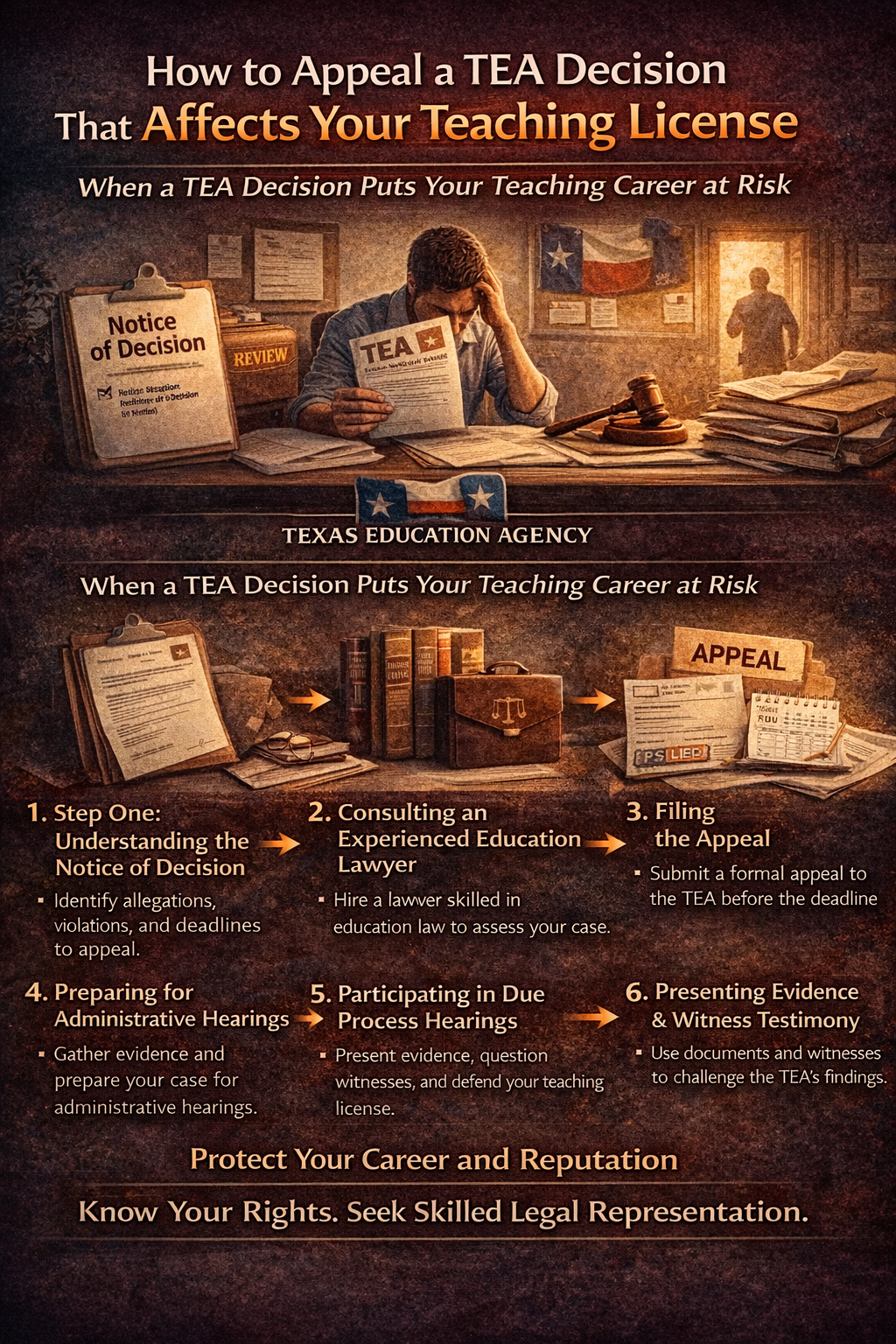
When TEA issues a disciplinary ruling, educators receive formal notification explaining the agency’s decision. This notice outlines the disciplinary action and the educator’s right to appeal. Understanding the details of this notice is the first step toward challenging the ruling.
The document typically explains the alleged violations of education law or professional standards. It may reference specific incidents involving student discipline, professional conduct, or compliance with school policies. In some cases, the allegations may involve Title IX concerns, discrimination, or alleged violations of civil rights.
Teachers who receive such a notice should consult with Texas education lawyers as soon as possible. Early legal counsel can help clarify the next steps and ensure deadlines are met.
Step Two: Consulting an Experienced Education Lawyer
Appealing a TEA decision without legal assistance can be difficult. Administrative procedures require careful documentation, formal filings, and presentation of evidence during hearings. Working with experienced education lawyers for teachers and schools ensures that the appeal is prepared properly.
A knowledgeable lawyer can evaluate the circumstances of the case and determine the best strategy moving forward. Attorneys often review investigative reports, interview witnesses, and examine compliance with education law standards.
Working with a law firm that focuses on representing educators provides valuable legal services and guidance throughout the process.
Step Three: Filing the Appeal
Once the educator decides to challenge the ruling, the next step is filing the appeal according to TEA procedures. This filing begins the formal administrative review process.
The appeal typically includes a written request explaining why the decision should be reconsidered. Attorneys may include supporting documentation such as classroom records, communication logs, or policies from staff handbooks that demonstrate compliance with school practices.
Because strict deadlines apply, filing the appeal promptly is critical, and many educators benefit from guidance provided by Texas education law attorneys for teachers when preparing this filing.
Step Four: Preparing for Administrative Hearings
Many TEA appeals involve administrative hearings where educators can present their case. During these proceedings, the educator’s attorneys present evidence, question witnesses, and explain why the disciplinary decision should be reversed.
Administrative hearings may resemble court proceedings but follow specialized procedures within education law. These hearings allow educators to challenge the agency’s conclusions and present alternative interpretations of the evidence.
Experienced education lawyers for teachers in Texas understand how to navigate these proceedings effectively.
Step Five: Participating in Due Process Hearings
Some cases involve due process hearings, which provide educators the opportunity to defend their professional actions. During these process hearings, educators may testify, present documentation, and respond to allegations raised by investigators.
These hearings can involve detailed discussions about classroom discipline, compliance with school policies, and professional responsibilities. Evidence presented during the hearing may influence whether the disciplinary action is upheld or reversed.
Having a knowledgeable lawyer present during due process hearings can significantly strengthen an educator’s case.
Step Six: Presenting Evidence and Witness Testimony
A strong appeal often depends on presenting compelling evidence. Educators may provide documentation such as lesson plans, communication records, and documentation related to special education accommodations.
Witness testimony may also be important. Statements from colleagues, administrators, or parents may help clarify the circumstances surrounding the allegations. These statements can help demonstrate that the educator followed appropriate professional practices.
Attorneys use this information to build a persuasive argument supporting the appeal.
When Appeals Move Into Litigation
If administrative remedies do not resolve the dispute, educators may consider additional legal options. Some appeals may proceed to district court or even federal court, particularly if the case involves civil rights, Title IX, or constitutional issues.
This stage may involve formal litigation, where attorneys present arguments before a judge. Cases involving discrimination, employment disputes, or violations of federal law may require further legal action.
Experienced attorneys can guide educators through these complex proceedings.
The Importance of Choosing the Right Legal Team
Selecting the right legal representation can significantly influence the outcome of a TEA appeal. The best lawyers in this area of practice understand the unique challenges faced by teachers, schools, and educational institutions.
A qualified law firm should have extensive experience representing educators and handling complex legal matters related to certification disputes. Skilled attorneys understand how investigations affect schools, students, and professional reputations.
Working with the best lawyers increases the chances of presenting a strong appeal.
Protecting Your Career and Professional Reputation
For many educators, a TEA disciplinary ruling threatens not only their current job but also their entire professional future. Losing certification may prevent teachers from working in schools, college, or university environments.
Appealing the decision gives educators the opportunity to defend their reputation and demonstrate compliance with professional standards. Strong legal representation helps ensure that the appeal process is handled correctly.
Protecting a teaching career often requires experienced legal counsel.
When Personal Injury Allegations Arise in Education Settings
Occasionally, disputes involving education law may also touch on issues related to personal injury. For example, a complaint involving classroom supervision, playground incidents, or disciplinary actions may lead to questions about whether a student was physically harmed. When these situations occur in schools, investigators may examine policies, witness statements, and safety procedures to determine what happened. These matters can become complicated because they involve the safety of children, school liability, and professional conduct by teachers. Experienced attorneys who understand education law can help evaluate whether the case involves professional discipline, liability concerns, or other legal implications, and firms offering broader education law legal services can address related employment and organizational issues.
Accessing Legal Resources During a TEA Appeal
Educators who receive disciplinary notices often have many legal questions about their rights and the next steps. Access to reliable legal resources can make a major difference when preparing an appeal. These resources may include policy manuals, guidance from experienced education lawyers, and documentation explaining how the appeal process works. Teachers who understand available resources are better prepared to respond to investigations and administrative hearings. Having strong legal resources also helps educators make informed decisions about their professional future.
The Role of Government Agencies in Education Law
Many aspects of the education system are regulated by government agencies responsible for enforcing standards and policies. Agencies such as the Texas Education Agency monitor certification requirements, investigate complaints, and enforce disciplinary actions when necessary. These agencies work closely with school districts, charter schools, and other educational institutions to ensure compliance with professional standards. Their oversight helps protect students, maintain accountability, and ensure fairness across the public school system.
How Higher Education Institutions Are Also Affected by Education Law
While TEA primarily oversees K–12 schools, the principles of education law extend into higher education as well. Colleges and universities must follow policies that protect students rights, address discrimination, and maintain safe learning environments. Faculty members in college and university settings may face similar disciplinary procedures when disputes arise. Understanding how education law applies across both K–12 and higher education institutions helps educators see the broader legal landscape that governs their profession.
Understanding Students Rights in Educational Environments
Protecting students rights is a central principle within education law. Policies governing discipline, safety, and academic fairness are designed to ensure that students receive equal treatment in schools and universities. Teachers and administrators must follow established procedures when managing classroom discipline or responding to complaints. When disputes arise, investigators often evaluate whether actions taken by educators respected students rights under state and federal regulations.
Employment Matters That Affect Educators
Many TEA investigations stem from employment matters within school districts or educational institutions. These issues may involve disagreements about professional responsibilities, compliance with school policies, or disciplinary procedures. Employment disputes can affect a teacher’s certification, reputation, and future opportunities in education. Understanding how employment matters interact with education law can help educators prepare for investigations and appeals.
How New Laws Shape Education Policy
Changes in new laws and regulations frequently influence the education system. Legislatures regularly update rules affecting teacher certification, classroom practices, and student protections. Educators must stay informed about these new laws to ensure compliance with evolving policies. Attorneys who focus on education law monitor these legal developments so they can guide teachers through complex regulatory changes.
Supporting Students With Disabilities in Schools
Education law includes important protections for students with disabilities. Schools must follow federal and state regulations that ensure these students receive appropriate educational opportunities. Teachers working in special education settings must carefully follow procedures designed to support students with disabilities. When disputes arise involving accommodations or compliance with special education law, legal guidance may become necessary, and many teachers turn to experienced education law attorneys to protect their rights and careers.
Protecting Children in Educational Environments
Education law is designed to safeguard the well-being of children within schools and other educational environments. Policies addressing classroom safety, discipline, and professional conduct exist to prevent harm and promote healthy learning conditions. Teachers and administrators play a vital role in maintaining these protections. When allegations arise, investigators examine whether actions taken by educators met the standards expected for protecting children.
The Importance of Having a Strong Legal Advocate
When educators face disciplinary action, having a skilled advocate can be extremely valuable. An advocate helps present the educator’s perspective and challenge conclusions that may not reflect the full context of a situation. Experienced attorneys who practice education law serve as advocates for teachers navigating administrative hearings and appeals. Their role is to protect the educator’s professional reputation and ensure fair treatment throughout the legal process.
Addressing Concerns Before They Escalate
Many disputes begin when concerns are raised by parents, students, or administrators about classroom practices. Taking time to address these concerns early can sometimes prevent misunderstandings from escalating into formal complaints. Clear communication between teachers, school leaders, and families often helps resolve issues before they become legal disputes. However, when concerns do lead to investigations, legal guidance may be necessary.
Educational Resources That Help Teachers Stay Informed
Teachers benefit from having access to professional resources that explain school policies, disciplinary procedures, and legal expectations. These resources may include policy manuals, professional development programs, and guidance from education law professionals. Staying informed about legal requirements can help educators avoid situations that might lead to investigations. Access to reliable resources also supports better decision-making in challenging situations.
Understanding the Business Side of Educational Institutions
Although schools focus on teaching and learning, they also operate as organizations with a business structure. School districts must manage budgets, staffing decisions, compliance procedures, and operational policies. These business responsibilities can influence how investigations and disciplinary actions are handled. Understanding the organizational side of educational institutions can help educators navigate workplace dynamics more effectively.
Protecting Professional Interests During Appeals
When a teacher appeals a TEA decision, protecting professional interests becomes a priority. Educators have invested years of effort in building their careers in education. An unfavorable ruling can affect employment opportunities, reputation, and long-term career goals. Experienced attorneys help educators defend their interests by presenting evidence and ensuring the appeal process follows proper procedures.
Academic Milestones and Graduation Requirements
Policies related to graduation requirements are another area where disputes occasionally arise within schools. Teachers and administrators must ensure that academic standards are applied fairly and consistently. When disagreements occur regarding grading, discipline, or eligibility for graduation, investigations may follow. These disputes highlight how education law influences many aspects of academic life.
Free Speech and the Role of Speech in Education
Questions about speech rights sometimes arise in disputes involving educators and students. Education law attempts to balance free speech protections with the need for professional conduct and safe learning environments. Teachers must consider how classroom discussions, public statements, or online communication may affect their professional responsibilities. Understanding how speech rights apply in educational settings helps educators avoid conflicts that could lead to disciplinary action.
Contact Masterly Legal Solutions for Legal Guidance
If you are a teacher facing disciplinary action or considering an appeal, you do not have to navigate the process alone. At Masterly Legal Solutions, our team understands the complex legal challenges that educators face when dealing with TEA investigations and certification disputes.
Our law firm provides dedicated legal services for teachers, educators, and professionals working in schools, college, and university settings across Texas. Our attorneys focus on education law and have extensive experience handling cases involving student discipline, workplace disputes, and certification issues.
Our team works closely with clients to review investigative findings, develop appeal strategies, and represent educators during hearings and litigation when necessary. As experienced lawyers for teachers, we are committed to protecting the rights and professional reputations of those who serve students and communities.
If you have received notice of a TEA disciplinary action or have questions about the appeal process, we encourage you to speak with our legal team. Call (972) 236-5051 today to schedule a free consultation and discuss your situation with attorneys who understand the complexities of education law.
Disclaimer: This article is intended for informational purposes only and does not constitute legal advice. Reading this content does not create an attorney-client relationship with Masterly Legal Solutions. Education law procedures and TEA regulations may change, and each case involves unique facts. Teachers facing disciplinary actions or certification disputes should consult a qualified lawyer for guidance specific to their circumstances.




Looking for Legal & Business Solutions? Contact Us Now
Fill in the form or call us to set up a meeting