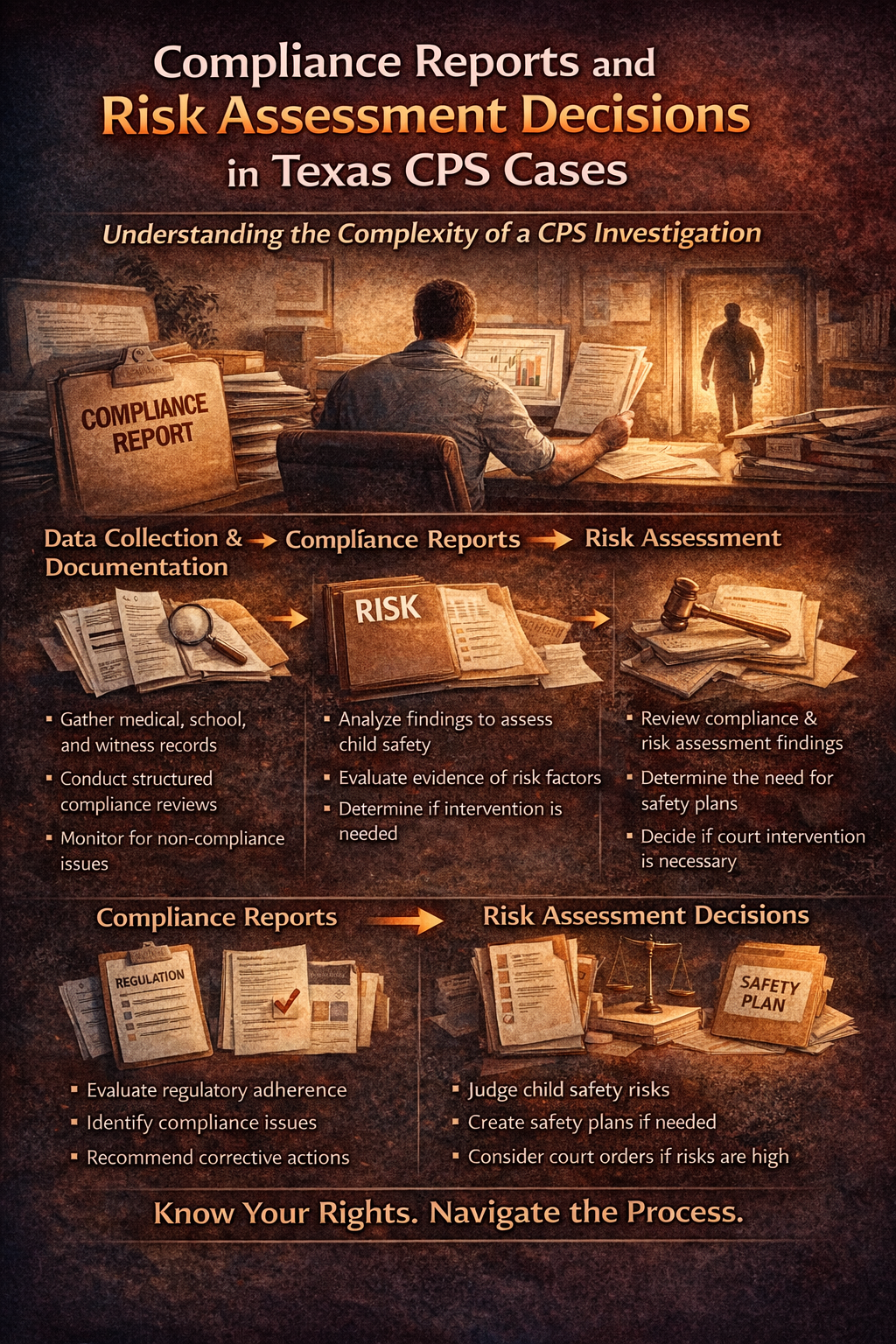
Compliance Reports and Risk Assessment Decisions in Texas CPS Cases
Understanding the Complexity of a CPS Investigation
When a cps investigation begins, families often feel overwhelmed and uncertain about what will happen next. Many parents assume that the process will be brief, but the reality is that a cps investigation can involve several stages of documentation, interviews, and compliance reviews. These steps are designed to determine whether child abuse or abuse or neglect may have occurred and whether a child’s living environment is safe.
During this process, child protective services reviews multiple forms of evidence and documentation. Much of this review centers on structured compliance reporting that evaluates how well individuals and institutions follow state regulatory requirements designed to protect children.
Understanding how compliance reporting works and how risk assessment decisions are made can help families navigate the system more confidently.
Why Compliance Reporting Matters in CPS Cases
In many investigations, compliance reporting plays a central role in determining whether the situation meets legal standards for intervention. These reports allow investigators to analyze documentation and determine if the organization’s compliance posture meets the standards established by state and federal regulatory bodies.
The compliance reporting process involves collecting and analyzing information about safety conditions, supervision, and care provided to children. These reports provide a comprehensive overview of the circumstances surrounding the allegations.
Through structured compliance reporting, investigators gain valuable insights into whether abuse or neglect may have occurred and whether immediate action is necessary.
How a CPS Investigation Begins
When a cps investigation begins, it typically starts with a report made to child protective services cps. The report may come from teachers, medical providers, or other professionals who suspect possible child abuse.
Once the report is received, investigators begin reviewing relevant data related to the family and child involved. The cps investigation process may include interviews with family members, review of medical records, and examination of school reports or other documentation.
This stage of the investigation process focuses on determining whether the initial complaint requires deeper examination.
The Role of Compliance Reporting in CPS Investigations
During a cps investigation, caseworkers rely heavily on structured compliance reporting to evaluate the situation. These reports help determine whether individuals or organizations are meeting regulatory requirements designed to protect children.
The compliance reporting process also helps identify non compliance issues that may have contributed to potential harm. Investigators often rely on detailed compliance reports to analyze patterns of behavior or documentation gaps.
In many cases, effective compliance reporting becomes the foundation for key decisions regarding intervention or support services.
Risk Assessment and Child Safety Decisions
One of the most critical steps in a cps investigation is conducting a formal risk assessment. This evaluation helps investigators determine whether the child faces immediate danger or ongoing safety concerns.
Risk assessments consider several risk factors, including the home environment, supervision practices, and prior reports involving the family. The goal is to determine whether intervention is needed to protect the child's safety.
These evaluations often lead to the development of a structured safety plan designed to reduce risks while the investigation continues.
The Importance of Safety Plans
A safety plan is a structured agreement designed to address immediate concerns identified during a cps investigation. These plans are designed to ensure the child's safety while allowing the investigation to continue.
A typical safety plan may include supervision requirements, temporary living arrangements, or participation in supportive services. The plan may also identify responsible parties who will help monitor the situation, and some families choose to establish powers of attorney for their children to ensure trusted adults can make critical decisions when needed.
When implemented correctly, a safety plan helps reduce the likelihood of harm while protecting parental rights.
The Compliance Reporting Process Explained
The compliance reporting process involves several stages of documentation and analysis. Investigators gather relevant data, evaluate records, and compile findings into a comprehensive compliance report.
These reports evaluate whether organizations and individuals are following established regulatory requirements. Compliance reports also analyze whether any non compliance issues may have contributed to the situation under review.
Through structured compliance reporting, investigators can ensure regulatory adherence while maintaining fairness throughout the cps investigation.
Data Collection During CPS Investigations
A significant portion of a cps investigation focuses on data collection. Investigators gather information from multiple sources to build a complete picture of the situation.
Examples of information collected may include:
- Medical records documenting injuries or health conditions
- School reports indicating behavioral or attendance concerns
- Statements from family members and other witnesses
- Previous reports involving the family
This data collection process supports both risk management decisions and compliance reporting evaluations.
Data Protection and Privacy Considerations
Handling sensitive family information requires strict data protection protocols. During a cps investigation, agencies must comply with data protection laws designed to safeguard personal information.
These protections ensure that records gathered during the investigation remain secure and confidential. Data privacy reports may be generated to confirm that investigators are following data privacy standards, and some organizations rely on outside counsel for internal investigations to help ensure confidentiality and regulatory compliance.
Maintaining strong data security practices helps prevent data breaches and protects families involved in sensitive investigations.
Internal Controls in CPS Investigations
Strong internal controls help ensure that investigations follow proper procedures. These controls are part of a broader compliance program used by agencies responsible for child welfare.
Internal review systems allow supervisors and compliance managers to monitor investigation decisions. These systems help ensure regulatory adherence and reduce human error during the reporting process.
By maintaining effective internal controls, agencies strengthen their overall compliance posture.
The Role of Compliance Teams
Many organizations maintain a dedicated compliance team responsible for overseeing investigation procedures and documentation. These professionals work closely with investigators to verify the accuracy of compliance reporting.
The compliance team may review documentation, analyze audit findings, and evaluate whether procedures meet regulatory requirements. Their work helps ensure ensuring accountability across all stages of the cps investigation.
Through coordinated compliance efforts, the team helps maintain transparency in the investigation process.
Financial and Operational Compliance Reports
In some cases, investigators may also review financial compliance reports and operational compliance reports related to organizations involved in child welfare cases. These reports may reveal whether business operations supporting child care services follow established regulations.
For example, compliance reports may analyze financial reporting practices for programs providing child welfare services. These reviews help ensure that programs serving vulnerable children meet both operational and financial standards.
Compliance Reporting and Regulatory Bodies
Government agencies responsible for child protective services must maintain strong relationships with regulatory bodies that oversee child welfare systems. These authorities establish reporting requirements and conduct periodic reviews of agency practices.
Through structured compliance reporting, agencies demonstrate their commitment to regulatory adherence and public accountability. Compliance documentation helps regulators monitor whether agencies are fulfilling their responsibilities to protect children.
Addressing Non Compliance Issues
During a cps investigation, investigators may discover non compliance issues related to caregiving practices or program administration. These findings can influence the direction of the investigation.
When non compliance issues are identified, agencies may implement corrective actions or additional monitoring. These actions are part of broader risk management strategies designed to protect children from potential harm, and many agencies and organizations turn to experienced legal counsel for compliance and internal investigations to structure these responses.
Risk Management in CPS Cases
Effective risk management helps agencies respond to potential threats to child's safety. Risk management strategies include monitoring safety conditions, evaluating compliance records, and implementing safety interventions when necessary, much like businesses rely on outside general counsel services for ongoing risk management.
In many cases, risk management decisions are guided by compliance reporting and risk assessment findings. These tools help investigators determine whether a court order or additional protective measures may be required.
When Court Orders Become Necessary
If investigators believe a child remains at risk, they may request a court order from a judge. This order may require parents to follow specific conditions designed to protect the child, similar to how schools and universities must follow detailed procedures during a Title IX investigation process to safeguard students while ensuring due process.
A court order may include temporary placement with relatives, participation in counseling, or supervision by social workers. In more serious cases, a court may order temporary placement in foster care.
The Role of Courts in CPS Cases
When a court hearing is scheduled, the judge reviews evidence gathered during the cps investigation. The court evaluates the safety plan, investigative findings, and documentation from compliance reporting.
Judges must determine whether the proposed actions protect the child’s well being while respecting parental rights. The outcome of a court hearing may shape the next stage of the cps investigation timeline.
The Importance of Established Protocols
Child welfare agencies rely on established protocols to ensure investigations remain fair and consistent. These protocols guide investigators through every stage of the cps investigation process.
Following structured procedures helps reduce human error and ensures that compliance reporting remains accurate. Adhering to established protocols also helps agencies maintain public trust.
How Compliance Reporting Supports Accountability
Accurate compliance reporting plays a major role in ensuring accountability within child welfare systems. Reports provide documentation showing how investigators evaluated evidence and reached decisions.
By documenting the investigation thoroughly, agencies can demonstrate their organization's adherence to legal standards. These records also help identify areas where regulatory changes may be necessary.
Regulatory Changes and Compliance Updates
Child welfare regulations evolve over time as governments respond to emerging risks and policy priorities. Agencies must regularly adjust their compliance program to reflect these regulatory changes.
Updated policies may affect data protection, reporting requirements, and investigative procedures. Staying current with regulatory changes helps agencies maintain a strong compliance posture.
Learning From CPS Investigation Timeline Examples
While this article focuses on Texas cases, examining processes such as the cps investigation timeline california can provide useful comparisons. Each state follows its own legal framework, but many procedures remain similar.
Understanding these timelines can help families gain a comprehensive understanding of how investigations unfold and what steps may occur next.
When Legal Guidance Becomes Important
Facing a cps investigation can be overwhelming, especially when families are unsure how to respond. In many cases, seeking legal counsel early in the process can help families protect their rights, and working with a full-service law firm like Masterly Legal Solutions ensures access to guidance across related legal issues.
An experienced attorney can review compliance documentation, analyze the safety plan, and identify potential procedural errors. This guidance may help families navigate the investigation with greater confidence, especially when working with a Texas-based law firm offering broad legal services.
Monitoring Compliance Status During a CPS Investigation
During a cps investigation, agencies closely review the compliance status of individuals, programs, and institutions involved in the child’s care. Evaluating the compliance status helps investigators determine whether established safety rules and regulatory requirements are being followed. When investigators examine the compliance status, they review documentation, safety plans, and other records that may indicate whether appropriate care standards are being met. A clear understanding of the compliance status allows authorities to decide whether corrective actions or additional monitoring may be necessary.
The Role of Relevant Stakeholders in Compliance Reviews
Throughout a child welfare investigation, several relevant stakeholders may become involved in reviewing information and providing input. These relevant stakeholders can include investigators, caseworkers, medical professionals, and legal advisors who assist with evaluating the situation. Their combined perspectives help ensure that decisions are made based on reliable information and professional expertise. By working together, these stakeholders support a balanced evaluation of the child’s environment and safety needs.
Evaluating the Organization's Compliance Status
When an investigation involves programs or institutions that provide services to children, investigators may review the organization's compliance status. This evaluation helps determine whether the organization is meeting its legal responsibilities and following established safety standards. Reviewing the organization's compliance status may include analyzing internal records, reviewing staff training documentation, and examining incident reports. These reviews help confirm whether the organization maintains appropriate safeguards for children.
The Importance of Compliance Initiatives in Child Welfare Systems
Government agencies and service providers often implement compliance initiatives to strengthen oversight and reduce risks to children. These initiatives may include updated training programs, improved documentation procedures, and stronger review systems. Through proactive compliance initiatives, organizations can identify potential concerns before they become serious safety issues. These efforts also help ensure that employees understand and follow appropriate child protection procedures, just as families use trust-based estate planning services to proactively safeguard assets and provide for children.
Understanding Compliance Obligations in CPS Cases
Organizations that work with children must follow specific compliance obligations designed to protect vulnerable individuals. These obligations often include maintaining accurate records, reporting suspected abuse, and cooperating fully with investigations. Fulfilling these compliance obligations demonstrates that the organization is committed to maintaining safe environments for children. When compliance obligations are ignored, the risk of harm increases and additional oversight may be required, much like families who neglect essential legal documents such as wills and powers of attorney may face greater legal and financial risks.
Strengthening Compliance Processes in Child Protection Systems
Effective compliance processes help agencies manage investigations and document their findings accurately. These processes may include structured reporting systems, evidence review procedures, and formal documentation protocols. Strong compliance processes also help investigators track progress and verify that each stage of the investigation meets legal standards. When these systems operate effectively, they support accountability and transparency in child welfare decisions.
When Legal Representation May Become Important
Families involved in a CPS investigation sometimes seek legal representation to better understand their rights and responsibilities. An attorney can review case documents, evaluate the investigation procedures, and explain how compliance findings may affect the outcome. Legal representation may also help families prepare for potential court involvement or administrative reviews. Having professional guidance can provide reassurance during a stressful and uncertain process.
Determining Whether Neglect Occurred
One of the central questions during a child welfare investigation is whether neglect occurred. Investigators review records, interview witnesses, and analyze documentation to determine whether the child’s basic needs were adequately met. If investigators conclude that neglect occurred, additional protective measures or services may be recommended. These findings can influence the next steps in the investigation and may lead to court involvement if the situation is serious.
The Role of Risk Managers in Complex Cases
In some large organizations or institutions, risk managers help evaluate potential safety concerns that arise during investigations. These professionals assess documentation, review incident reports, and help identify areas where improvements may be needed. Risk managers work alongside investigators and compliance teams to strengthen protective measures. Their role helps organizations reduce potential risks and maintain safe environments for children.
Understanding Investigations as an Ongoing Process
A child welfare investigation is often an ongoing process that evolves as new information becomes available. Investigators may gather additional records, conduct follow-up interviews, and reassess safety conditions over time. Because the process is ongoing, families may experience several stages of review before a final decision is reached. Maintaining communication with investigators and documenting events can help families navigate this ongoing process more effectively.
Conducting a Thorough Investigation to Protect Children
A thorough investigation is essential to ensure that decisions are based on accurate information. Investigators carefully review evidence, interview individuals involved in the child’s care, and analyze available documentation. A thorough investigation helps confirm whether allegations are supported by facts or whether concerns may have been misunderstood. By conducting a careful review, authorities aim to protect children while also respecting the rights of families.
Protecting Sensitive Information During Investigations
Investigations often involve personal details about children and families, which makes protecting sensitive information extremely important. Agencies must follow strict procedures to ensure that confidential records remain secure. Protecting sensitive information helps maintain trust in the investigation process and prevents unauthorized access to private data. Proper handling of sensitive records also ensures compliance with privacy regulations.
Voluntary Services That Support Families
In many cases, agencies offer voluntary services to help families address concerns identified during an investigation. These services may include parenting education, counseling, or referrals to community programs, while educators facing related scrutiny may need legal defense for educator misconduct investigations to protect their professional licenses. Voluntary services are designed to strengthen family stability while improving child safety. Participation in supportive services can often help resolve concerns without requiring court intervention.
Collaboration Across Various Departments
Large child welfare investigations often require cooperation among various departments within an agency. These departments may include investigative units, compliance teams, and administrative offices responsible for documentation. By coordinating efforts across various departments, agencies can share information and ensure that the investigation proceeds efficiently. Collaboration also helps prevent delays and improves the accuracy of investigative findings.
Addressing Immediate Safety Concerns
In certain cases, investigators must respond quickly to immediate safety concerns affecting a child. When such concerns arise, agencies may implement temporary safety measures or supervision arrangements. Addressing immediate safety concerns helps protect children while investigators gather additional information. These urgent responses ensure that potential risks are addressed without delay.
Compliance Transparency and Investor Confidence
Although child welfare agencies focus primarily on safety, transparency in compliance practices can also influence investor confidence in organizations that provide social services. Demonstrating a strong compliance framework and reliable reporting systems reassures stakeholders that the organization operates responsibly. Maintaining transparency helps strengthen investor confidence and supports long-term stability in programs that serve children.
Understanding the Investigation Stage in CPS Cases
Every CPS case progresses through multiple phases, and each investigation stage serves a specific purpose. During an investigation stage, caseworkers gather evidence, review documentation, and assess whether the child faces potential risks. The information collected during each stage contributes to the final determination regarding the child’s safety. Understanding the investigation stage can help families anticipate what may happen next in the process.
Contact Masterly Legal Solutions for Guidance
A cps investigation timeline can involve multiple stages of documentation, interviews, compliance reviews, and potential court involvement. When families receive notice that an investigation has started, many questions arise about what will happen next and how decisions will be made.
At Masterly Legal Solutions, we help families understand the cps investigation process and their rights throughout each stage. Our team works with parents who are navigating safety plans, compliance documentation, and potential court proceedings related to child welfare cases.
If you are facing a cps investigation and are unsure how to respond, speaking with an experienced attorney can provide clarity and peace of mind. We offer consultations to review your situation, discuss possible next steps, and explain how the investigation timeline may affect your family.
To learn more about protecting your rights during a CPS investigation, contact Masterly Legal Solutions today. Call (972) 236-5051 to schedule a free consultation and speak with a legal professional who understands the complexities of these cases.
Disclaimer: This article is provided for informational purposes only and does not constitute legal advice. Reading this content does not create an attorney-client relationship with Masterly Legal Solutions. Laws and procedures involving child protective services investigations and compliance reporting may change and vary depending on the circumstances of each case. If you are facing a CPS investigation or legal matter involving child welfare, consult with a qualified attorney for guidance specific to your situation.


Looking for Legal & Business Solutions? Contact Us Now
Fill in the form or call us to set up a meeting