
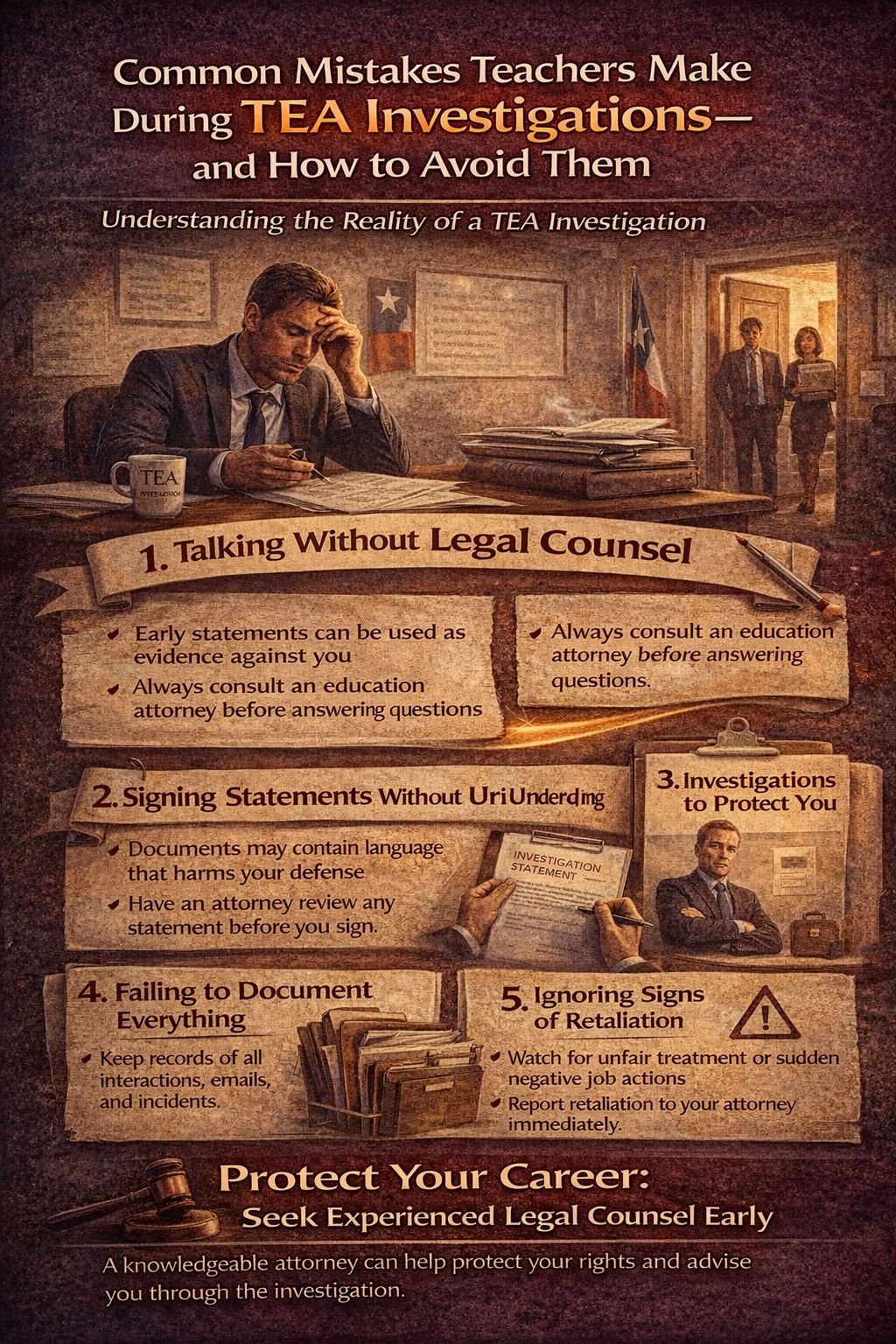
Common Mistakes Teachers Make During TEA Investigations—and How to Avoid Them
Understanding the Reality of a TEA Investigation
For many educators, the moment they learn about a professional investigation involving their license can feel overwhelming. Teachers often assume the situation will resolve quickly or that their employer will guide them through the process fairly. However, the reality is that TEA investigations can carry serious consequences that affect an educator’s career, reputation, and future opportunities.
In many cases, teachers do not realize that an investigation can lead to disciplinary action, a formal complaint, or even a recommendation for termination, especially when the TEA is examining issues like inappropriate relationships, social media misuse, or special education mismanagement as outlined in common reasons for TEA investigations. The stakes can be extremely high, especially when allegations involve workplace discrimination, harassment, or other forms of alleged misconduct. Educators may suddenly find themselves navigating complicated legal and administrative rules.
Understanding the risks and knowing how to respond can help protect a teacher’s career. Taking proactive steps early in the process can prevent mistakes that often make the situation worse.
Why Teachers Must Take Investigations Seriously
Many educators initially believe the school district will handle the situation internally. Unfortunately, once a complaint reaches the Texas Education Agency, the issue can escalate into a formal legal matter.
Investigations can involve allegations related to sexual harassment, misconduct with students, or workplace conflicts, and educators should be aware of the common causes of TEA investigations and teacher protections that may apply to their situation. Sometimes claims arise from misunderstandings, personal disputes, or false rumors spread among co workers. Regardless of the source, the allegations must be treated seriously because the TEA has authority to impose penalties affecting an educator’s certification.
Teachers who fail to understand the seriousness of the process may unintentionally damage their case, particularly if they do not seek guidance from resources that explain Texas TEA investigations and teacher certification help.
The First Critical Mistake: Talking Without Counsel
One of the most common errors educators make during an investigation is speaking to administrators or investigators without legal representation. Teachers often believe that explaining the situation clearly will solve the problem.
However, statements made early in the process can later be used as evidence. Even well-intentioned explanations can be misunderstood or taken out of context. School administrators and investigators are trained to collect statements that may later be used during formal proceedings.
Before answering questions, educators should understand their legal protections under both state laws and federal law, including how experienced counsel can help Texas educators survive a TEA investigation and protect their license.
Why Early Statements Can Be Risky
When teachers speak without legal guidance, they may unknowingly provide information that complicates the case. Investigators may interpret statements differently than the teacher intended.
For example, an educator attempting to clarify a classroom interaction might inadvertently suggest policy violations. Once statements are documented, correcting them becomes difficult.
Legal counsel can help educators prepare responses that accurately represent the facts.
Signing Statements Without Fully Understanding Them
Another frequent mistake occurs when teachers sign written statements prepared by administrators or investigators. These statements often summarize conversations or events related to the complaint.
Educators sometimes feel pressure to sign documents quickly because they believe cooperation will demonstrate honesty. Unfortunately, these documents may contain wording that does not fully reflect what actually occurred.
Signing inaccurate statements can severely impact an educator’s defense.
Why Written Statements Matter
Written statements become part of the official record. If a case progresses to a formal hearing or disciplinary review, these documents may be used as evidence.
Even small differences in wording can change how investigators interpret the events. Teachers should carefully review any document before signing it and seek advice from a law firm experienced in education matters, especially one that explains immediate steps after a TEA investigation notice.
Trusting the District to Protect the Teacher
Another mistake occurs when teachers assume the school district will protect them during an investigation. While many administrators strive to support their staff, the district’s primary responsibility is to the company or institution itself.
In legal terms, the employer represents the interests of the organization. When complaints arise, the district must prioritize institutional risk management.
This means the teacher and the district may not share the same legal interests.
Understanding Workplace Retaliation in Education
Some teachers who report misconduct or file complaints later experience workplace retaliation, and consulting resources on a dedicated retaliation lawyer for workplace and employment attorney help can clarify what conduct may be unlawful. Retaliation can occur when an employee faces negative treatment after engaging in a protected activity, such as reporting misconduct or participating in an investigation.
Examples of workplace retaliation may include:
- Unfair disciplinary measures
- Loss of promotional opportunities
- Sudden negative evaluations
- Changes in assignments or responsibilities
These actions may violate federal law, state laws, and local laws designed to protect workers, and in some situations may justify retaliation and labor complaints filed with the Department of Labor.
What Counts as Protected Activity
Under employment laws, certain actions are considered protected activity. These actions involve exercising legal rights or reporting misconduct.
Examples include:
- Filing a complaint regarding workplace discrimination
- Reporting sexual harassment
- Participating in an investigation involving harassment
- Requesting reasonable accommodations for a disability
If retaliation occurs after such actions, the situation may violate employment laws designed to protect workers.
How Workplace Discrimination Complaints Develop
Many TEA investigations originate from allegations related to workplace discrimination. Discrimination claims may involve treatment based on race, gender, religion, national origin, or other protected categories.
Federal statutes such as the civil rights act and title vii provide legal standards governing these cases. These laws aim to ensure that the workplace remains fair and free from discrimination.
Teachers accused of discrimination must understand the legal definition of these allegations and respond carefully.
The Role of the Equal Employment Opportunity Commission
In some cases, workplace issues extend beyond the TEA and involve federal authorities. The equal employment opportunity commission and the employment opportunity commission eeoc investigate workplace discrimination complaints.
The eeoc enforces federal employment laws and ensures employees are treated fairly. Complaints involving sexual harassment, age discrimination, or violations of the disabilities act may fall under the jurisdiction of the eeoc.
Understanding how the equal employment opportunity commission operates can help educators recognize when legal counsel is necessary.
When Retaliation Occurs in the Workplace
Workplace retaliation can take many forms, and it often appears subtle at first. For example, an educator who reports misconduct may suddenly receive negative performance reviews or be excluded from key opportunities.
In some situations, teachers who report sexual advances, harassment refusing, or discrimination resisting sexual advances may later experience retaliatory treatment.
When retaliation occurs, the affected employee may have grounds for legal action under employment laws.
Recognizing Retaliatory Behavior
Examples of retaliatory behavior may include reassignment, exclusion from meetings, or unjustified disciplinary action. These actions may occur after an educator files a complaint or cooperates with an investigation.
Teachers who believe they are experiencing retaliation should document every incident carefully. Detailed records can become valuable evidence if the case escalates.
Proper documentation is one of the most important protective steps.
Federal and State Laws That Protect Employees
Various laws exist to protect teachers and other workers from retaliation and discrimination. Federal statutes such as title vii, the civil rights act, and disability protections prohibit certain forms of misconduct in the workplace.
In addition, state laws and local laws may provide additional safeguards. These regulations apply to many public institutions, including local governments and school districts.
Together, these laws aim to create a fair playing field for employees.
The Importance of Documentation
When facing allegations or workplace conflict, documentation becomes critical. Teachers should keep records of emails, messages, and conversations related to the complaint.
These records can help demonstrate patterns of behavior or provide evidence that contradicts allegations. Documentation is particularly important when retaliation or discrimination claims arise.
Proper records can strengthen a teacher’s defense.
Filing Complaints and EEOC Involvement
If workplace discrimination or retaliation becomes severe, teachers may consider filing a complaint with the eeoc. The employment opportunity commission eeoc investigates allegations involving discrimination based on protected characteristics.
The eeoc may review evidence, interview witnesses, and determine whether federal laws were violated, much like how the TEA reviews allegations that could affect a teacher’s license during Texas educator TEA investigation defense. In some cases, these investigations may lead to mediation or settlement negotiations.
If violations are confirmed, the situation may escalate into a lawsuit.
Protecting Your Career During Investigations
Teachers facing investigations should take proactive steps to protect their careers. This includes seeking legal advice early and avoiding statements that could be misinterpreted.
Educators should also understand their rights under employment laws and maintain professionalism throughout the process. Responding carefully can help prevent further complications.
Taking the right steps early can make a significant difference in the outcome.
The Role of Legal Representation
When an investigation begins, consulting a law firm experienced in education and employment matters can provide critical support. Legal professionals understand how these cases develop and how to respond effectively.
A knowledgeable attorney can review documents, prepare responses, and protect the educator’s rights throughout the investigation.
Legal guidance also helps ensure that educators do not unintentionally harm their case.
Why Early Legal Advice Matters
Seeking legal counsel early allows educators to develop a strategy before the situation escalates. Attorneys can explain how the investigation works and what actions should be avoided.
Early advice may prevent mistakes such as signing inaccurate documents or making statements that complicate the case.
The earlier an attorney becomes involved, the better the chances of protecting the educator’s career.
Understanding Discrimination Claims in the Workplace
Educators and other professionals sometimes face situations where discrimination claims arise during workplace conflicts or formal investigations. These claims may involve allegations related to unfair treatment, harassment, or unequal opportunities within a professional environment. When these situations occur, employees should understand that various legal protections exist under federal and state law, and that specialized education law legal insights for teachers and education professionals can help them navigate complex disputes. These protections ensure that workers are treated fairly regardless of background or personal circumstances. If a claim escalates into a formal dispute, consulting a knowledgeable law firm can help individuals understand their rights and options, particularly one that offers broad education law attorney legal services tailored to educators.
The Role of Federal Agencies in Enforcing Employment Laws
Several federal agencies are responsible for enforcing workplace laws and ensuring employers follow fair employment practices. These agencies investigate complaints related to discrimination and workplace misconduct. In cases involving issues such as age discrimination or bias based on national origin, these organizations may review evidence and determine whether employment laws were violated. Federal oversight helps ensure that workplaces remain fair and that employees have avenues to report misconduct. Understanding the role of federal agencies can help workers recognize when a situation may require formal action.
Workplace Protections Regardless of Immigration Status
Employment laws generally protect workers regardless of immigration status, especially when discrimination or harassment is involved. These protections ensure that individuals are not unfairly targeted or treated differently because of their background. Additionally, some laws address situations involving workplace policies that affect family responsibilities, such as caring for children or other family obligations. When employees believe their rights have been violated, they may be able to seek assistance through enforcement agencies or legal representation. These protections exist to maintain fairness and accountability in professional environments.
Filing Complaints Through the Employment Opportunity Commission EEOC
The employment opportunity commission eeoc is a federal body responsible for reviewing workplace discrimination complaints. Employees who believe they have been treated unfairly may submit claims to the EEOC, which will evaluate whether the case falls under federal employment law. Many complaints involve violations of Title VII, a key provision that prohibits discrimination based on race, religion, gender, or national origin. Through investigations and mediation, the EEOC helps ensure employers follow fair workplace practices. Understanding this process can help employees determine the appropriate steps if discrimination occurs.
Understanding Retaliation at Work and Why It Matters
Retaliation at work occurs when an employee experiences negative consequences after reporting misconduct, participating in an investigation, or engaging in a protected activity. Many workplace laws, including provisions under federal statutes and the employment act, are designed to prohibit retaliation and protect workers who report wrongdoing. Teachers and other professionals must understand that retaliation is taken seriously under state and local laws as well as federal regulations. If an educator believes they have suffered retaliation, it is important to document the situation carefully and seek legal advice. Knowing how retaliation is defined under the law helps individuals recognize when workplace behavior crosses into unlawful territory.
Protections for Federal Employees and Workers in Public Institutions
Employment protections extend to many individuals working in public institutions, including federal employees and educators employed by government-run school systems. Various federal agencies enforce laws designed to prevent discrimination and retaliation in the workplace. These laws aim to ensure that employees can report misconduct without fear of punishment. The protections apply to individuals regardless of background, including issues related to immigration status or other protected characteristics. When employees understand these protections, they are better equipped to defend themselves if workplace misconduct occurs.
Recognizing Unlawful Behavior in the Workplace
Workplace disputes sometimes escalate into unlawful behavior, particularly when employees are punished for reporting misconduct. Under employment regulations, certain forms of retaliation or discrimination are considered unlawful and may even be illegal if they violate federal or state laws. For example, if a teacher raises concerns about workplace practices and the manager responds with discipline or unfair treatment, that response may be examined closely. These situations often involve questions about whether the employer acted appropriately or engaged in behavior that violates employment protections. Understanding the line between normal workplace conflict and unlawful conduct is essential for protecting one’s rights.
When Job Security and Career Opportunities Are Threatened
In some cases, retaliation affects an educator’s ability to continue performing his or her job effectively. A supervisor or manager might reduce responsibilities, deny opportunities, or create conditions that make it difficult for the employee to remain in the position. These actions may involve an adverse action such as demotion, reassignment, or loss of professional opportunities. When workplace treatment begins to threaten a person’s career or reputation, it is important to evaluate whether those actions violate employment laws. Protecting one’s job often requires understanding the legal framework that governs employer behavior.
How Hiring and Job Opportunities Can Be Affected
Workplace discrimination can also appear during the hiring process or when individuals apply for new roles. In some cases, job applicants may be discriminated against because of protected characteristics such as disability, genetic information, or national origin. Employment laws exist to prevent these types of practices and to ensure that hiring decisions are made fairly. Employers who engage in discriminatory hiring practices may face serious legal consequences. These rules apply to both public and private workplaces.
Workplace Decisions That Affect Families and Personal Responsibilities
Employment disputes sometimes arise when workplace policies conflict with family responsibilities. For example, an employee might need time off to care for a family member or attend to personal obligations. Laws in many jurisdictions recognize that employees must balance professional duties with family responsibilities. Employers who penalize employees unfairly in these situations may face scrutiny under employment laws. Understanding these protections helps workers maintain balance between their careers and personal lives.
The Importance of Leadership and Accountability in the Office
Leadership decisions made by a supervisor or manager can shape the entire workplace environment. When leaders handle complaints responsibly, they help ensure fairness and maintain professionalism in the office. However, when leadership fails to respond appropriately, problems can escalate and create legal risks for the organization. Managers must understand that retaliation, discrimination, and other forms of misconduct are not only unethical but potentially unlawful. Responsible leadership promotes accountability and protects both employees and the organization.
Pursuing Justice When Workplace Rights Are Violated
When employees experience retaliation or discrimination, they may consider seeking justice through formal complaints or legal action. Employment laws provide mechanisms that allow individuals to challenge misconduct and hold employers accountable. In some situations, resolving a dispute may involve mediation, administrative complaints, or litigation. While these processes can be complex, they exist to protect workers from unfair treatment. Understanding these legal avenues helps employees make informed decisions when workplace rights are violated.
Contact Masterly Legal Solutions for Guidance
If you are facing a TEA investigation or believe you have experienced workplace retaliation, it is critical to seek professional guidance as soon as possible. At Masterly Legal Solutions, our law firm works with educators who need experienced representation when their professional reputation and career are at stake.
Our team understands how workplace discrimination, retaliation, and employment disputes can affect teachers and other workers. We assist individual employees who are dealing with investigations, administrative complaints, or potential disciplinary action. Whether you are concerned about retaliation, harassment, or other employment issues, our firm can help you understand your options.
We offer confidential consultations to review your situation and help you determine the best course of action. Contact Masterly Legal Solutions at (972) 236-5051 for a free consultation.
Disclaimer: This article is for educational purposes only and does not constitute legal advice. Each case is different, and individuals should consult with a qualified attorney regarding their specific situation.





Looking for Legal & Business Solutions? Contact Us Now
Fill in the form or call us to set up a meeting