

Sudden Write-Ups, Reassignments, and Bad Evaluations: Is This Retaliation?
When Teachers Feel Something Isn’t Right
Many educators sense when something has changed in their professional environment. A teacher who previously received strong feedback may suddenly face harsh criticism, negative evaluations, or unexpected disciplinary scrutiny. While occasional workplace conflict is common, repeated negative actions can raise questions about workplace retaliation.
Teachers often contact our law firm because they feel something is wrong but cannot clearly identify the cause. A sudden change in treatment by a supervisor or manager may indicate retaliation, especially if the teacher recently engaged in a protected activity such as reporting discrimination or raising concerns about misconduct. In many situations, what begins as a workplace disagreement evolves into a serious legal matter.
Understanding the signs of retaliation can help educators determine whether they should consult an employment lawyer, especially one focused on workplace retaliation and employment law.
What Workplace Retaliation Means for Educators
Workplace retaliation occurs when an employer punishes an employee for exercising rights protected under employment law. Many federal and state statutes recognize that employees should be able to report wrongdoing without fear of punishment.
Under federal law and the Texas Labor Code, retaliation may occur after an employee engaged in conduct such as reporting discrimination, participating in an investigation, or requesting a reasonable accommodation for a disability, which can also give rise to retaliation and labor complaints before agencies like the Department of Labor. These protections exist because many employees have legitimate fears about retaliation if they speak up.
When retaliation occurs, it may violate anti discrimination law and other legal protections.
Recognizing Sudden Changes in Workplace Treatment
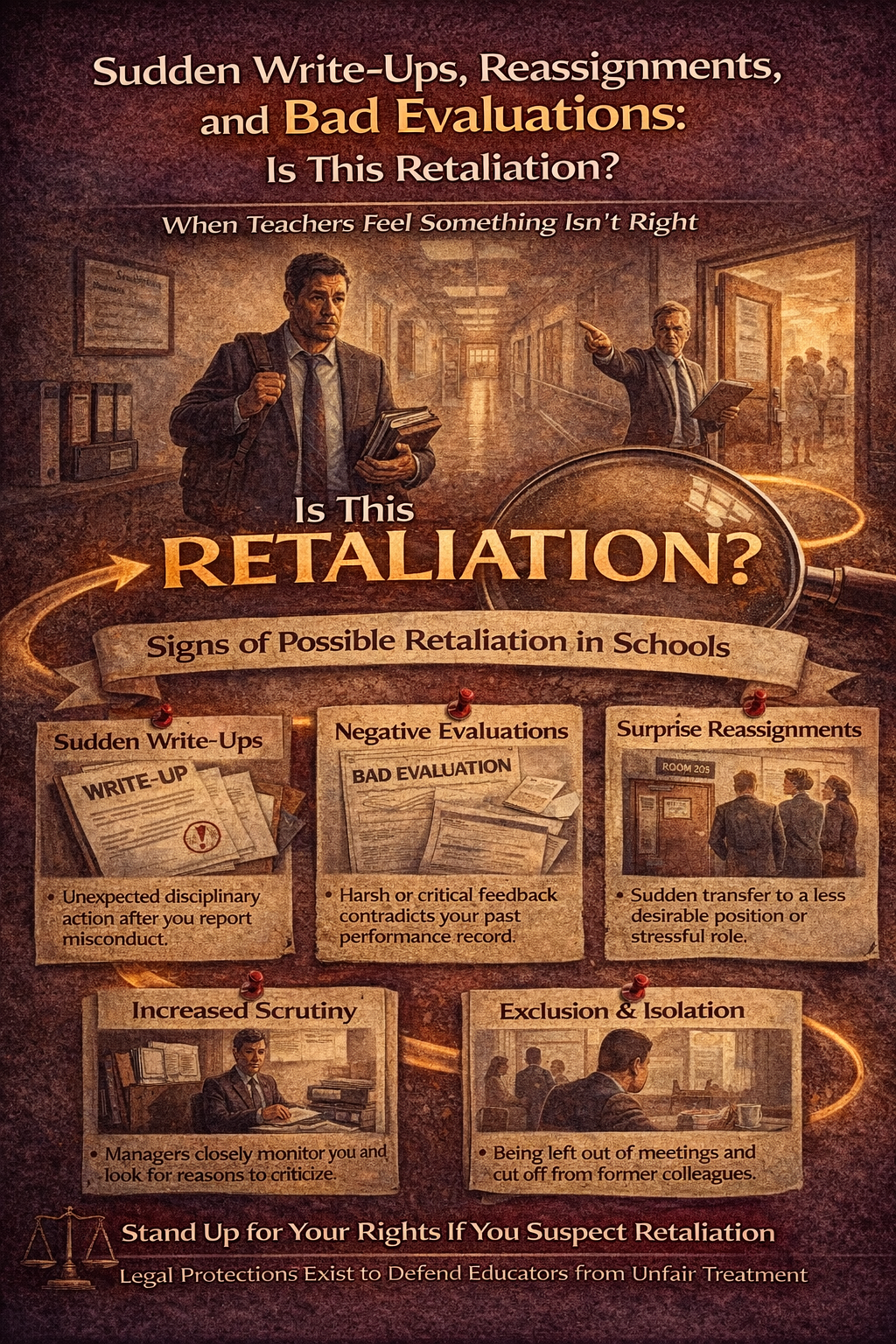
Teachers often notice retaliation through subtle but troubling changes in their workplace experience. The issue rarely begins with termination. Instead, it often starts with small decisions that slowly create pressure.
Common examples include:
- Unexpected disciplinary action after years of positive evaluations
- Sudden negative feedback regarding job performance
- Removal from leadership opportunities
- Increased scrutiny by a manager or administrator
- A sudden job reassignment to a less desirable position
These actions may appear minor individually but together may indicate a pattern of retaliation.
Understanding Adverse Employment Action
For a retaliation case to exist, the employee must typically experience an adverse employment action. This term refers to decisions made by an employer that significantly affect an employee’s professional status or working conditions.
Examples of adverse employment action may include:
- Demotion or reassignment
- Negative performance evaluations
- Loss of promotional opportunities
- Reduction in responsibilities
- Wrongful termination
When these actions occur after an employee's protected activity, they may support a legal claim for retaliation.
Protected Activity: The Key Element in Retaliation Cases
One of the most important elements in retaliation cases is the concept of protected activity. Employment laws protect workers who report misconduct or cooperate with investigations.
Examples of protected activity include:
- Reporting discrimination to a supervisor or human resources representative
- Participating in an internal workplace investigation
- Filing complaints with the equal employment opportunity commission
- Requesting medical leave under the medical leave act
- Reporting sexual harassment or workplace misconduct
If an employee engaged in these actions and later experienced retaliation, legal protections may apply.
Reporting Discrimination and the Risk of Retaliation
Many teachers who report workplace discrimination expect their concerns to be addressed fairly. Unfortunately, some employees experience retaliation after reporting misconduct.
For example, an educator may report sexual harassment, age discrimination, or discrimination based on national origin. After the complaint is made, the employer may begin scrutinizing the teacher’s performance more closely.
This type of employer retaliation can create serious professional stress and uncertainty.
Why Some Employers Retaliate
Retaliation can occur for several reasons. Some organizations fear legal liability if misconduct is confirmed. Others may attempt to discourage additional complaints from similarly situated employees.
When an employer retaliated against a teacher who raised concerns, the organization may attempt to justify its actions by claiming poor performance or workplace policy violations. However, these explanations must be carefully examined.
An experienced workplace retaliation lawyer can evaluate whether the employer’s explanation is legitimate or a pretext for retaliation.
Examples of Retaliatory Behavior in Schools
Retaliation can take many forms within school systems. The actions may not always appear dramatic, but they can significantly impact a teacher’s career.
Examples include:
- Increased monitoring by a supervisor, which may require legal protection for teachers when linked to prior complaints
- Negative evaluations that contradict past reviews
- Assignment to undesirable duties
- Exclusion from committees or leadership opportunities
- Spreading false rumors among staff
When these actions follow a protected activity, they may be evidence of retaliation.
The Role of Federal and State Laws
Several legal frameworks protect employees from retaliation. Key protections exist under federal law, including provisions within the civil rights act and other federal statutes.
The Texas Labor Code also prohibits certain retaliatory actions by employers. Additionally, agencies such as the Texas Workforce Commission and the equal employment opportunity commission review complaints involving retaliation and discrimination, which can intersect with TEA complaint and investigation processes for Texas educators.
These laws exist to protect employees who act in good faith to report wrongdoing.
Proving Unlawful Retaliation
Proving unlawful retaliation requires evidence showing that the employer’s actions were connected to the employee’s protected activity. Courts and investigators often examine several factors.
The following factors may be considered:
- Whether the employee engaged in a protected activity
- Whether the employer took an adverse action
- Whether a connection exists between the two events
If evidence supports these elements, the employee may have a viable retaliation claim.
The Importance of Good Faith Belief
Employees who report misconduct must have a good faith belief that the behavior violated workplace rules or laws. Even if the claim ultimately cannot be proven, the employee may still be protected.
For example, a teacher who reports suspected sexual harassment or unlawful discrimination may still receive protection if the complaint was made honestly and in good faith.
The law recognizes that employees should not be punished simply for raising concerns.
Documentation Is Critical Evidence
Teachers who believe they are experiencing retaliation should begin documenting events immediately. Records can become important evidence if a claim is filed, particularly when working with a retaliation lawyer and workplace law attorney.
Helpful documentation may include:
- Copies of emails and written communications
- Performance evaluations
- Notes about conversations with administrators
- Documentation of schedule changes or job reassignment
These records can help demonstrate patterns of retaliation.
When Retaliation Leads to Termination
In severe cases, retaliation can escalate into wrongful termination. Teachers who are fired shortly after filing complaints or participating in investigations may have grounds for legal action.
Termination may be especially suspicious when it follows closely after an employee’s protected activity.
An experienced employment lawyer can analyze whether the termination violates employment law, including whether the situation amounts to a forced resignation or constructive quit.
Legal Options for Dallas Teachers
Teachers in the Dallas Fort Worth Metroplex who suspect retaliation should understand that legal deadlines may apply and that early education law guidance for teachers and education professionals can be critical. Some retaliation claims must be filed within very short deadlines after the retaliatory action occurs.
Agencies such as the Texas Workforce Commission or the equal employment opportunity commission may review these claims. In some cases, employees may pursue additional remedies through the courts.
Seeking legal advice early can protect important rights.
Why Teachers Should Consult a Retaliation Lawyer
A knowledgeable retaliation lawyer can help educators understand their options and evaluate whether a claim exists. Legal professionals analyze workplace records, review employer actions, and determine whether retaliation occurred.
An experienced employment lawyer can also help protect the teacher during ongoing workplace conflicts, much like an education law attorney guiding teachers through investigations. This guidance may prevent additional harm to the teacher’s career.
Legal representation can be especially important when proving unlawful retaliation.
The Value of an Experienced Employment Attorney
Working with an experienced employment attorney allows educators to understand their legal rights before taking action. Attorneys experienced in retaliation cases know how employers defend these claims and how to challenge those arguments.
A strong legal strategy may involve reviewing personnel records, interviewing witnesses, and identifying patterns of adverse employment decisions.
This preparation can strengthen the employee’s case.
Protecting Dallas Workers From Employer Retaliation
Teachers and other Dallas workers deserve workplaces free from retaliation and discrimination, including those placed on leave who may need legal steps for Texas teachers on administrative leave. When an employer participating in retaliation attempts to silence complaints, legal protections exist to restore fairness.
Workers should not be punished for raising concerns about illegal acts, unsafe conditions, or violations of workplace policies.
Legal guidance helps employees defend their rights.
When to Contact a Retaliation Lawyer Dallas Teachers Trust
Teachers who suspect retaliation should consider seeking legal advice as soon as possible. Waiting too long can allow evidence to disappear or deadlines to expire.
If you believe your employer retaliated after you reported discrimination, harassment, or misconduct, consulting a retaliation lawyer Dallas educators trust may help clarify your situation.
Early legal advice can make a significant difference in the outcome of a case.
How Discrimination Claims Often Connect to Retaliation
In many workplace disputes, discrimination claims are closely tied to allegations of retaliation. An employee may report unfair treatment and later experience negative actions from the employer, such as discipline or reassignment. Laws such as the employment act and other workplace statutes exist to ensure employees can report misconduct without fear of punishment. These laws work together with provisions like the disabilities act, which protects individuals facing discrimination because of a disability. Because of these protections, discrimination claims are taken seriously and can form the foundation of a legal case when retaliation occurs.
How Federal Agencies Review Workplace Complaints
When discrimination or retaliation allegations arise, several federal agencies may become involved in reviewing the situation. These organizations investigate complaints and determine whether workplace laws were violated. For example, federal employees and many other workers are protected under federal statutes designed to promote fairness. These agencies examine evidence, interview witnesses, and evaluate whether the employer’s conduct violated workplace protections. Their role helps ensure that employees have access to a process that addresses potential misconduct.
Proving Retaliation in a Workplace Case
To prove retaliation, a worker must demonstrate that the employer’s actions were connected to a protected complaint or report. Courts and investigators often examine whether the employee engaged in a protected activity and whether negative consequences followed soon afterward. Evidence such as emails, performance reviews, or witness testimony may help establish a pattern. In many cases, attorneys look for proof that the employer’s actions were motivated by the employee’s complaint rather than legitimate performance concerns. Successfully proving retaliation often requires careful documentation and legal analysis.
When Employer’s Discrimination Leads to Legal Action
Sometimes retaliation stems from an initial incident involving employer's discrimination. For example, a teacher who reports unfair treatment may later face disciplinary scrutiny or other workplace challenges. When discrimination is followed by retaliation, the legal situation becomes more complex and may require professional representation. These cases often involve careful examination of workplace policies and internal communications. If discrimination and retaliation are both present, the employee may have a stronger legal claim.
Why Anti-Discrimination Laws Matter
Many workplace protections exist because most anti discrimination laws recognize the importance of fairness in employment. These laws are designed to prevent discrimination based on characteristics such as disability, race, or national origin. They also protect employees who report misconduct or participate in investigations. By enforcing these standards, the law helps create safer and more respectful workplaces. When employers ignore these obligations, employees may have grounds to pursue legal remedies.
The Importance of Employee Participation in Investigations
Workplace investigations often rely on an employee's participation to determine what truly occurred. Employees who provide information or cooperate with internal reviews are typically protected from retaliation. These protections encourage workers to speak honestly without fear of negative consequences. In many cases, the participation of employees helps investigators uncover patterns of misconduct or workplace policy violations. Because of these protections, employees should understand their rights before responding to investigative requests.
When Complaints Involve Medical Care Institutions
Certain workplaces, including medical care institutions, operate under additional regulatory oversight due to the sensitive nature of their work. Employees in these environments may report concerns related to patient care, safety, or professional conduct. When these reports lead to retaliation, the situation may involve both employment law and healthcare regulations. Protecting workers who raise concerns in medical care institutions is important for maintaining accountability and public safety. These cases often require careful legal review.
The Risk of Waiting Too Long to Act
One of the most common problems in retaliation cases occurs when an employee waits too long to seek legal advice. Many employment claims must be filed within strict deadlines set by law. If a complaint is delayed, the employee may lose the ability to pursue legal remedies. Acting promptly allows workers to preserve evidence and protect their rights. Early action also allows attorneys to evaluate the case more effectively.
How Retaliation Affects Full-Time Employees
Retaliation can affect many different workers, including full time employees in professional and educational environments. These employees often rely on stable employment for financial security and career development, similar to university faculty who must understand legal steps to take when facing university job termination. When retaliation disrupts their work environment, the impact can extend beyond the workplace into their personal lives. Because of this, employment laws provide protections designed to prevent unfair treatment. Understanding these protections is essential for workers who believe their rights have been violated.
Why Acting Sooner Can Protect Your Rights
When retaliation or discrimination occurs, it is often best to seek legal guidance dallas sooner rather than later. Early consultation with an attorney allows employees to understand their rights and develop a strategy for addressing the situation. Acting quickly also ensures important evidence is preserved before records are lost or altered. Employees who seek legal advice sooner are often in a stronger position to protect their careers. Prompt action can make a significant difference in the outcome of a case.
When a Co Worker Becomes Involved in a Complaint
Workplace disputes sometimes involve more than one individual, particularly when a co worker witnesses misconduct or becomes part of the complaint process. A coworker’s testimony can play a significant role in confirming events or clarifying what occurred. However, coworkers may also feel pressure or fear retaliation themselves. Because of this, legal protections often extend to individuals who participate in workplace investigations. These safeguards help ensure witnesses can speak honestly without facing negative consequences.
When Retaliation Is Linked to a Complaint-Based Investigation
In many cases, retaliation begins after a complaint based investigation is initiated within the organization. Once a complaint is filed, the employer may begin reviewing workplace conduct or policies. Unfortunately, some employees experience negative treatment after raising concerns. When retaliation follows a complaint-based investigation, the situation may require legal analysis to determine whether employment laws were violated. Understanding this connection helps employees recognize when workplace actions may be unlawful.
Speak With a Dallas Workplace Retaliation Lawyer
If you believe you are experiencing retaliation, it is important to understand your rights. At Masterly Legal Solutions, our law firm helps educators and employees throughout the Dallas Fort Worth Metroplex who are facing workplace retaliation or discrimination.
Our attorneys work with employees who believe their employer has taken retaliatory action after a protected complaint. Whether you are dealing with unfair evaluations, job reassignment, termination, or other adverse employment action, our team can review your situation.
If you are searching for a workplace retaliation attorney or retaliation lawyer Dallas professionals trust, we invite you to speak with our team. We provide an initial consultation to discuss your situation and help you understand your legal options.
Call (972) 236-5051 to speak with a Dallas workplace retaliation lawyer today.
Disclaimer: This article is provided for educational purposes only and does not constitute legal advice. Every legal matter is unique, and individuals should consult with a qualified attorney regarding their specific circumstances.






Looking for Legal & Business Solutions? Contact Us Now
Fill in the form or call us to set up a meeting