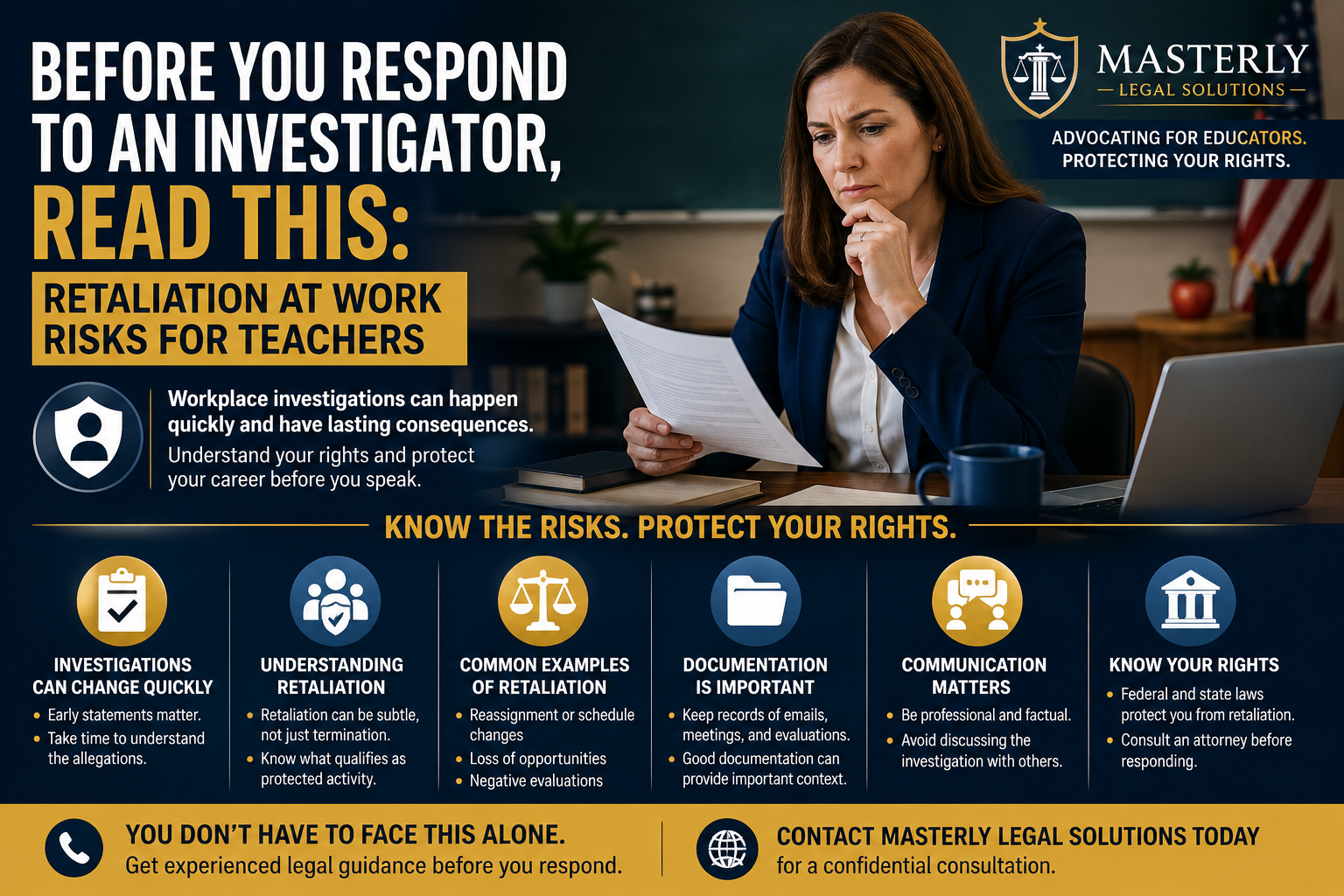
Before You Respond to an Investigator, Read This: Retaliation at Work Risks for Teachers
For many educators, receiving notice of a workplace investigation can feel overwhelming. Whether the issue involves a student complaint, an internal personnel matter, or an allegation raised by a coworker, the first instinct is often to respond immediately and explain everything. While being cooperative is important, responding without understanding your rights and responsibilities can create unnecessary risks. Before speaking with an investigator, teachers should take time to understand how retaliation issues can arise and what steps may help protect both their careers and their professional reputations.
At Masterly Legal Solutions, we regularly work with educators facing difficult employment situations within Dallas Fort Worth school districts. Teachers, administrators, and other school employees often find themselves navigating investigations involving workplace complaints, allegations of misconduct, policy violations, or employment disputes. Every situation is different, but one common concern is whether an employer's actions could lead to unlawful retaliation.
Retaliation cases are rarely as simple as many people assume. An employee may believe they are being treated unfairly after reporting misconduct, participating in an investigation, or raising concerns about workplace conditions.
On the other hand, a school district may argue that its employment decisions were based on legitimate business or educational reasons. Understanding the difference is critical before making statements, responding to investigators, or deciding how to move forward.
This article explains common retaliation risks teachers should recognize, how investigations often unfold, and why obtaining experienced legal guidance before responding may help protect your interests. While every case depends on its specific facts and applicable law, being informed allows educators to make more confident decisions during a stressful process.
Workplace Investigations Can Change Quickly
A workplace investigation often begins with very little information. A teacher may receive a meeting request, an email from human resources, or notice that an administrator wants to discuss an incident. In some situations, the employee is told only that a complaint has been made, without receiving detailed information about the allegation.
Although these conversations may appear routine, they can have lasting professional consequences. Statements made during the earliest stages of an investigation sometimes become important later if employment decisions are challenged.
Do Not Assume the Matter Is Minor
Many teachers initially believe they can quickly resolve misunderstandings by answering questions immediately. While cooperation is generally expected, responding without preparation may unintentionally create confusion or inconsistencies.
Taking time to understand the purpose of the investigation allows an employee to provide thoughtful and accurate information rather than reacting emotionally.
Every Investigation Has Its Own Circumstances
No two workplace investigations are identical. Some involve allegations of policy violations, while others concern harassment, discrimination, student safety, or employment conflicts.
The specific circumstances surrounding each matter determine how investigators gather information and evaluate evidence.
Understanding What Retaliation Means
When an employer treats an employee unfairly because they participated in activities that are covered by relevant employment laws or rules, this is known as retaliation. The focus is often not only on what happened but also on why an employment decision was made.
Many educators are familiar with discrimination laws but may not realize that retaliation claims often involve different legal standards.
Protected Activity Matters
Certain actions may qualify as protected activity, including reporting unlawful discrimination, participating in workplace investigations, cooperating with government agencies, or engaging in other related protected activity recognized under applicable law.
Employees who participate in these activities may have legal protections against certain forms of retaliation.
Retaliation Can Take Many Forms
Retaliation does not always involve immediate termination. Instead, it may appear through subtle employment actions that negatively affect an employee's work environment or career opportunities.
Examples may include reduced responsibilities, reassignment to a less desirable position, denial of opportunities, scheduling changes, or other actions that could have a negative impact on employment.
Teachers Often Face Unique Workplace Challenges
Schools present employment environments unlike many private workplaces. Teachers interact with students, parents, administrators, support staff, and government agencies while balancing educational responsibilities and legal obligations.
As a result, investigations within school districts often involve multiple departments and several individuals participating in the review process, and some districts or organizations may rely on outside counsel that provides HR consulting services and training to support compliance and fair procedures.
School Policies May Differ
Individual school districts maintain policies governing investigations, reporting procedures, employee conduct, and disciplinary actions.
Understanding these procedures can help educators respond appropriately while protecting their professional interests.
Communication Matters
During an investigation, teachers should remain professional when communicating with administrators, coworkers, students, and parents.
Informal conversations may later become part of the investigation or influence how facts are interpreted.
Reporting Concerns Should Not Automatically Lead to Retaliation
Employees should generally feel comfortable reporting workplace concerns through appropriate channels without fear of unlawful retaliation, and understanding the protections available with help from a retaliation-focused employment attorney can clarify when legal intervention may be appropriate.
Federal and state employment laws recognize that individuals sometimes need to report discrimination, harassment, safety concerns, wage issues, or other legal violations.
Reporting Is Different From Proving
Filing a complaint does not necessarily mean the allegation will ultimately be substantiated.
Instead, investigators gather information to determine whether policies or laws may have been violated.
Honest Participation Is Important
Employees should answer questions truthfully while avoiding speculation.
Providing accurate information helps investigators evaluate the facts fairly.
Adverse Employment Actions Are Not Always Obvious
Many employees believe retaliation exists only when someone loses their job. In reality, employment actions may be much more subtle.
Changes in assignments, responsibilities, schedules, evaluations, or advancement opportunities may sometimes become relevant depending on the surrounding facts.
Examples May Include
Potential employment actions sometimes discussed in retaliation matters include:
- Reassignment to a less desirable classroom.
- Removal from leadership responsibilities.
- Exclusion from committees.
- Loss of professional development opportunities.
- Negative evaluations without consistent justification.
- Changes affecting future advancement.
Whether any action qualifies legally depends on the complete factual circumstances.
Context Always Matters
Employment decisions rarely exist in isolation.
Investigators and legal professionals often evaluate timing, documentation, prior performance, workplace history, and employer explanations before reaching conclusions.
Human Resources Plays an Important Role
Most school districts rely on human resources professionals during investigations involving employee complaints.
Their responsibilities may include gathering documents, interviewing witnesses, reviewing policies, and coordinating investigative procedures.
Human Resources Represents the Employer
Employees sometimes assume human resources serves as their personal advocate.
While HR professionals often strive for fairness, they generally represent the interests of the employer during employment matters.
Documentation Can Be Important
Maintaining organized records of communications, performance evaluations, meeting notices, and employment documents may become valuable if questions arise later.
Accurate documentation often provides important context throughout an investigation.
Retaliation Claims Require Careful Analysis
Not every unfavorable workplace decision becomes a valid retaliation claim.
Courts and investigators generally evaluate several factors before determining whether unlawful retaliation may have occurred.
Timing Alone Is Not Always Enough
Employees sometimes believe that any negative event following a complaint automatically establishes retaliation.
Although timing may be relevant, investigators typically examine additional evidence before drawing conclusions.
Multiple Facts Are Considered
Decision-makers often evaluate:
- Whether the employee engaged in protected activity.
- Whether an adverse employment action occurred.
- Whether evidence suggests a connection between the two.
- Employer explanations for its decisions.
- Available documentation and witness statements.
Each factor contributes to the overall legal analysis.
Investigations May Involve More Than One Allegation
Some investigations begin with one complaint but later expand into additional issues.
Investigators may interview supervisors, administrators, coworkers, students, or other witnesses while reviewing emails, personnel records, security footage, or policy documents.
Separate Issues May Develop
For example, an investigation initially involving workplace conflict could later include questions about reporting procedures, documentation practices, or policy compliance.
Each additional issue may require separate evaluation.
Remain Professional Throughout the Process
Professional conduct remains important regardless of the allegations involved.
Remaining respectful, cooperative, and factual often helps protect both the investigation process and the employee's professional reputation.
Understanding Your Rights Before Workplace Decisions Are Made
Every reasonable employee should understand that workplace investigations can involve many legal and procedural issues beyond the original complaint. An employer should not retaliate against an employee for engaging in protected activity, regardless of factors such as immigration status, because employment laws may provide protections based on the specific circumstances. During an investigation, workers should continue performing their job professionally while avoiding unnecessary conflict with a manager or other members of management. If an incident involves potential criminal conduct, the matter may also be reported to the police or other appropriate authorities, depending on the facts. Some disputes may eventually result in a lawsuit, while others are resolved internally after investigators gather additional information and review the relevant policies.
Employment decisions should be based on applicable labor laws, district policies, and the facts of each case rather than assumptions or personal opinions. Employees who are asserting their legal rights should remember that every act taken during an investigation can receive careful scrutiny, making it important to communicate thoughtfully and preserve documentation. Allegations involving illegal conduct, retaliation, or any other type of workplace misconduct deserve a fair and impartial review. When someone believes they have become a victim of retaliation or wrongful dismissal, seeking experienced legal guidance may help them better understand their options. At Masterly Legal Solutions, we strive to foster informed decision-making by helping educators understand the investigative process and how employment actions may affect their careers. If you need more information about your situation, we encourage you to contact our site so we can discuss your concerns during a confidential consultation.
Avoid Emotional Reactions During an Investigation
Learning that you are part of an investigation can create anxiety, frustration, or even fear. Those emotions are understandable, but responding impulsively may complicate an already difficult situation. Taking a measured approach allows you to think more clearly and avoid statements that could later be misunderstood.
Remaining calm also demonstrates professionalism. Investigators often evaluate not only the facts surrounding an incident but also how individuals conduct themselves throughout the process.
Separate Facts From Assumptions
It is natural to wonder why an allegation was made or who reported a concern. However, making assumptions before all the facts are known can create unnecessary conflict.
Focus on providing accurate information rather than speculating about motives or outcomes.
Be Careful With Workplace Conversations
Discussing an ongoing investigation with coworkers may unintentionally create additional issues. Casual conversations can lead to misunderstandings, false rumors, or claims that someone attempted to influence witnesses.
When possible, keep conversations professional and allow the investigative process to move forward without unnecessary distractions.
Retaliation Can Affect More Than Employment Status
Many people associate retaliation only with termination, but employment decisions can have broader consequences. A teacher who experiences significant changes in responsibilities or opportunities may feel the effects long before any formal employment action occurs.
Understanding how retaliation may appear helps employees recognize concerns while avoiding unnecessary assumptions.
Changes May Influence Career Growth
Assignments to a desirable position may suddenly change following a complaint or participation in an investigation. In some situations, opportunities for leadership roles, mentoring programs, or specialized teaching assignments may also be affected.
Whether these actions constitute retaliation depends on the surrounding facts and the employer's reasons for the decision.
Employee Morale Matters
Retaliation concerns can affect more than one individual. Workplace disputes sometimes reduce employee morale and even impact overall employee morale across an entire campus or department, which is why some educators consult a retaliation lawyer experienced in workplace claims to assess how employment actions may be challenged.
When employees lose confidence in reporting procedures, organizations may struggle to maintain a positive workplace culture.
School Leaders Must Balance Multiple Responsibilities
Administrators often face difficult decisions during workplace investigations. They have responsibilities to students, employees, school policies, and legal requirements while attempting to resolve concerns fairly.
That balancing process can become especially challenging when multiple allegations arise at the same time.
Administrators Must Review Available Evidence
Before making employment decisions, administrators often gather documentation, interview witnesses, and review applicable policies.
Their objective is generally to determine whether a possible violation occurred and whether additional action is appropriate.
Fair Investigations Benefit Everyone
A thorough investigation helps protect employees, students, and school districts alike. Careful fact-finding promotes confidence in the process and reduces unnecessary misunderstandings, and many school employees rely on an education lawyer for teachers and schools to help them navigate these investigations.
Federal Employment Laws Provide Important Protections
Several federal employment laws address retaliation and discrimination in the workplace. Depending on the facts, teachers may have legal protections when reporting unlawful conduct or participating in protected activities, and some situations may also involve retaliation and labor complaints filed with the Department of Labor or similar agencies.
Understanding these protections can help employees recognize when additional legal guidance may be appropriate.
The EEOC Addresses Certain Workplace Complaints
The Equal Employment Opportunity Commission (EEOC) investigates certain complaints involving discrimination and retaliation under federal law. In appropriate situations, employees may file charges alleging violations of laws enforced by the agency.
These laws generally prohibit retaliation against employees who engage in protected activities recognized by applicable law.
Legal Standards Can Be Complex
Every retaliation matter depends on its unique facts. Employment decisions, documentation, witness testimony, and applicable statutes all influence how legal claims are evaluated.
Because each case is different, professional legal advice is often valuable before making important decisions.
Workplace Conduct May Involve Several Different Issues
Investigations are not always limited to one allegation. A complaint may include claims involving discrimination, workplace bullying, verbal or physical abuse, inappropriate conduct, or other policy concerns, and an education law attorney guiding teachers through investigations can help address each issue carefully.
Each allegation deserves careful review before conclusions are reached, especially when educator conduct could trigger a Texas Education Agency (TEA) license investigation and defense process.
Harassment Allegations Require Careful Review
Claims involving sexual advances, hostile work environments, or inappropriate workplace behavior are typically investigated seriously.
Employers often have legal obligations to investigate complaints promptly while taking reasonable steps to address substantiated concerns.
Every Allegation Should Be Evaluated Individually
An allegation alone does not establish wrongdoing. Investigators generally seek evidence that helps determine what occurred before recommending employment action.
Fairness requires evaluating all available information rather than relying on assumptions.
Documentation Can Help Protect Your Interests
Accurate records often become valuable during employment disputes. Keeping copies of emails, evaluations, meeting notices, policy documents, and other communications may provide important context if questions arise later.
Good documentation does not guarantee a particular outcome, but it may help clarify events and timelines and support educators who later need experienced education law legal services to respond to agency inquiries or employment disputes.
Organize Information Carefully
Consider maintaining records that include:
- Dates of meetings.
- Copies of written communications.
- Performance evaluations.
- Witness names when appropriate.
- Notes regarding significant workplace events.
Keeping information organized may make it easier to explain events if questions arise later.
Preserve Professional Communications
Avoid altering documents or deleting communications related to an investigation. Preserving records accurately helps ensure that information remains available if needed.
Legal Guidance May Help Before Responding
One of the most common mistakes employees make is waiting until after important meetings to seek legal advice. By then, statements may already have been documented, and opportunities to prepare thoughtfully may have passed.
Speaking with an employment attorney before responding to significant workplace allegations can help you better understand the process and your options, especially when that counsel comes from a firm focused on protecting educators’ licenses and careers.
Preparation Supports Better Decisions
Legal guidance allows employees to ask questions, understand investigation procedures, and prepare for interviews with greater confidence.
Being prepared is very different from refusing to cooperate. Preparation simply helps ensure your responses are accurate, complete, and thoughtful.
Every Situation Is Different
No article can address every factual situation that may arise within schools or other workplaces. Employment laws continue to evolve, and individual circumstances may significantly affect available legal options.
Protecting Your Career Starts With Being Informed
Teaching is a profession built on trust, responsibility, and service to others. When an investigation begins, it is easy to feel uncertain about what comes next. While every situation is different, taking time to understand the process before responding can help you approach each conversation with greater confidence and professionalism.
Retaliation claims often involve complicated factual and legal questions that deserve careful evaluation. Rather than relying on assumptions or reacting under pressure, educators benefit from gathering information, preserving documentation, and seeking experienced legal guidance when appropriate. These proactive steps may help reduce unnecessary risk while protecting both professional relationships and future career opportunities.
At Masterly Legal Solutions, we understand how stressful workplace investigations can become for teachers and school employees. Our goal is to provide thoughtful guidance that helps clients navigate difficult employment issues with clarity and confidence. When important career decisions are at stake, informed preparation is often one of the strongest tools available, including early consultation with counsel experienced in North Carolina educator misconduct defense and license protection.
Contact Masterly Legal Solutions for a Free Consultation
If you are a teacher, administrator, or school employee facing an investigation or concerned about possible retaliation within Dallas Fort Worth school districts, you do not have to navigate the situation alone. Workplace investigations often involve important employment decisions that may affect your career, reputation, and future opportunities. Understanding your rights before responding can make a meaningful difference.
At Masterly Legal Solutions, we assist educators and school employees facing workplace investigations, retaliation concerns, discrimination complaints, and other employment-related matters.
We take the time to understand your circumstances, explain the investigative process, and answer your questions so you can make informed decisions about your next steps.
Whether you believe you have experienced retaliation after filing a complaint, participating in an investigation, or engaging in another protected activity, our team is available to discuss your concerns. We proudly serve clients throughout the Dallas–Fort Worth area and understand the unique challenges educators face within public and private school systems.
Contact Masterly Legal Solutions today at (972) 236-5051 for a free consultation. We are ready to discuss your situation, answer your questions, and help you better understand the legal issues that may affect your employment.
Legal Disclaimer: This article is provided for general informational purposes only and should not be interpreted as legal advice, legal guidance, or a substitute for consulting with a qualified attorney. Every employment matter involves unique facts and legal considerations that may affect your rights and obligations. Reading this article does not create an attorney-client relationship with Masterly Legal Solutions. If you have questions about a workplace investigation, retaliation, or another employment-related issue, you should consult with a qualified attorney regarding your specific circumstances.






Looking for Legal & Business Solutions? Contact Us Now
Fill in the form or call us to set up a meeting