

Behavior Intervention Plan in Texas: What Parents Should Know
Author: Andrew Rhoden, Masterly Legal Solutions
Behavior Intervention Plan: The Short Answer
A behavior intervention plan (BIP) is a written plan that addresses a student's behavioral needs through positive supports, individualized strategies, and progress monitoring. In Texas schools, a BIP may become part of a student's individualized education program (IEP) when behavioral concerns interfere with the student's learning or the learning of others.
Receiving a call from your child's school about behavioral concerns can be stressful. You may wonder whether the school understands your child's disability, whether appropriate support is being provided, or whether disciplinary action could affect your child's education.
When a school proposes a behavior intervention plan, parents deserve to understand its purpose, how decisions are made, and what rights they have throughout the process.
Masterly Legal Solutions helps Texas families navigate special education concerns, review educational plans, and address disagreements involving school districts and behavioral support services.
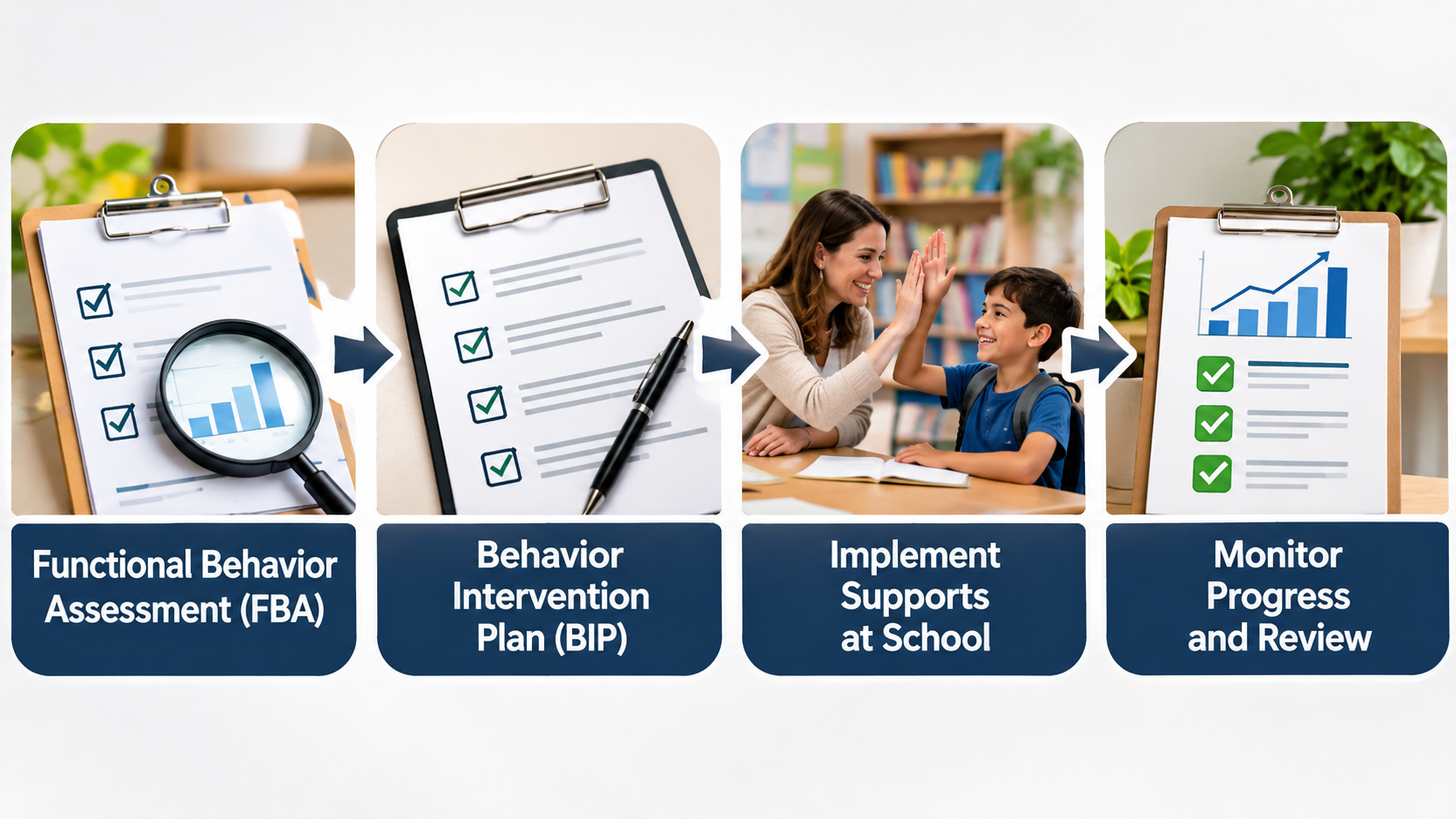
How a Functional Behavior Assessment Leads to a BIP
A functional behavior assessment (FBA), also called a functional behavioral assessment, is a process used by qualified school professionals and should be conducted by a qualified professional to gather information about a student's behavior and the circumstances surrounding it.
Rather than focusing only on disciplinary incidents, an FBA examines information that may help the educational team understand why a behavior occurs, its function, and the student's underlying educational needs.
The assessment may include observing the student multiple times in class, along with educational records, teacher feedback, parent input, and information about the student's learning environment.
Understanding Federal Special Education Requirements
Under the Individuals with Disabilities Education Act (IDEA), specifically 34 CFR 300.324(a)(2)(i), the IEP team must consider positive behavioral interventions, supports, and other appropriate strategies when a student's behavior interferes with learning.
This federal requirement does not automatically mean every student with behavioral concerns must receive an FBA or a formal behavior intervention plan. The need for additional assessment and support depends on the student's individual circumstances and applicable legal requirements.
In certain disciplinary situations, separate federal requirements under 34 CFR 300.530 may require a functional behavioral assessment, implementation of a BIP, or review of an existing plan.
The Relationship Between an FBA and a Behavior Intervention Plan
Although an FBA and a BIP are closely related, they serve different purposes.
An FBA gathers and evaluates information about behavior. In the bip process, that information helps identify the child's problem behaviors and the supports to include. A BIP documents the individualized supports and responsibilities that the school plans to implement, and the child's IEP team typically develops that plan.
[CONFIRM] According to Texas Education Agency guidance, a functional behavior assessment can help the Admission, Review, and Dismissal (ARD) committee identify a student's educational needs and determine appropriate behavioral supports.
Parents who believe an assessment overlooks important information may have concerns about whether the resulting plan adequately addresses their child's educational needs, including whether the child's IEP team properly developed it.
Legal guidance can help families understand whether the school has followed applicable evaluation and special education procedures.
What a Behavior Intervention Plan Usually Contains and How Progress Is Reviewed
A behavior intervention plan should reflect the individual needs of the student rather than rely solely on general classroom rules or school disciplinary policies.
The document may identify the target behavior or behaviors, relevant assessment findings, school responsibilities, and the supports tied to the student's individual needs.
A BIP may contain the following components:
- A description of each target behavior, with plans usually focusing on no more than four or five behaviors at a time.
- Relevant findings from a functional behavior assessment.
- Individualized behavioral goals and educational supports.
- Prevention strategies matched to the student's needs.
- Replacement behaviors for the specific behaviors being addressed.
- Positive reinforcement systems designed to increase positive behavior.
- Responsibilities assigned to teachers and school staff.
- Methods for documenting and monitoring student progress.
- Procedures for reviewing and updating the plan.
Replacement behaviors should serve the same function as the behavior being addressed.
The specific contents depend on the student's circumstances, evaluation findings, and educational needs. A BIP outlines practical supports, and BIPs aim to help the student succeed more consistently across settings. Behavioral goals are often written for success in roughly 80 percent to 90 percent of opportunities, depending on the student's needs.
Behavior Intervention Plan Examples in School Settings
Parents searching for behavior intervention plan examples may encounter different documents depending on the student's age, disability, classroom environment, educational program, and skill deficits or support needs.
For example, a plan for a student experiencing difficulty during classroom transitions may contain different provisions from a plan for a writing task in which the student engages in repeated interruptions during instructional activities.
Another student's plan may address concerns involving participation in group activities, communication difficulties, or leaving assigned classroom areas.
These examples illustrate why a BIP should be individualized. A plan developed for another student may not reflect your child's educational needs, because individualized supports should focus on skill building and promoting adaptive behaviors.
School professionals are responsible for determining appropriate behavioral interventions. An education attorney's role is to review the legal and procedural aspects of the plan, not to prescribe clinical or behavioral treatment.
How Schools Review Behavioral Progress
Progress monitoring helps the educational team use data to understand whether the behavioral supports described in the plan are being implemented and whether the student's progress is improving.
Parents may receive information through progress reports, school communications, educational records, and meetings with the student's team.
Schools may be collecting data on target behaviors and replacement behaviors daily and review it regularly, such as monthly, when evaluating whether the plan is working.
If there is no improvement after several weeks, the team may need to reassess the supports and consider whether the student needs more support, and the professional who developed the plan should observe the child regularly again.
[CONFIRM] Under Texas special education requirements, when a behavioral intervention plan is included in a student's IEP, the ARD committee must review it at least annually and more frequently when appropriate to address changing circumstances.
If behavioral incidents continue or the student's educational needs change, reviewing the existing plan may become particularly important.
How Parents Can Take Part in a BIP School Meeting
Parents are important participants in special education decisions. Their knowledge of their child's strengths, challenges, disability, and educational history can provide valuable context as behavioral supports are discussed with parents, educators, and relevant specialists.
Understanding your role can be especially important when the school introduces a behavior intervention plan following repeated disciplinary incidents or concerns about classroom participation.
[CONFIRM] In Texas, parents are members of their child's ARD committee, which makes decisions concerning special education eligibility, services, and individualized educational programming.
When the committee considers a BIP, parents have an opportunity to participate in discussions and communicate concerns about the proposed plan, which can help the adults involved stay on the same page about how it will be followed across settings.
Questions Parents May Want Addressed by the School Team
During discussions involving behavioral support, families may have questions about:
- What information supports the school's behavioral concerns?
- Has a functional behavior assessment been completed or considered?
- Did a school psychologist or other qualified professional help develop the plan?
- How does the proposed plan address the student's disability-related educational needs?
- Which school staff members are responsible for implementing the plan, and will all adults working with the child follow it consistently?
- How will progress be documented and communicated to parents, including what the team will be collecting data on and who is responsible for it?
- When will the team consider reviewing the plan?
- How does the BIP relate to the student's existing IEP?
These questions can help clarify the purpose of the plan and the responsibilities of the educational team.
When parents and school officials disagree about evaluation findings, educational services, or the adequacy of behavioral supports, legal representation may help families understand their rights and available options.
Understanding the Relationship Between Behavioral Support and School Discipline
A behavior intervention plan is not the same as a disciplinary placement or a punishment.
Its purpose is to address behavioral needs through individualized educational support, not discipline alone, with proactive behavior supports and reactive strategies set out in a written plan and implemented consistently by all adults who work with the child. However, behavioral concerns may also lead to disciplinary proceedings in certain circumstances.
When disciplinary action involves a student with a disability, additional legal protections may apply.
Our article on manifestation determination reviews explains how schools examine the relationship between a student's disability and conduct in qualifying disciplinary situations.
Families facing a possible alternative educational placement can also learn more about DAEP in Texas and the legal considerations surrounding placement decisions.
When Families Talk With an Education Attorney About a Behavior Intervention Plan
Parents may feel overwhelmed when ongoing challenging behaviors continue despite an existing support plan. Repeated disciplinary notices, missed classroom instruction, and disagreements with school officials can create uncertainty about a child's educational future.
An education attorney can help families understand whether the school district's decisions raise concerns under federal or Texas special education law.
Legal assistance may be particularly valuable when a school has not adequately considered behavioral support, parents disagree with assessment findings, an existing plan is not being implemented, or behavioral concerns result in repeated removals from the classroom. It may also help to review whether a behavior intervention plan reflects behavior analysis principles and whether it was created and implemented with input from trained professionals in behavioral psychology when appropriate.
How Masterly Legal Solutions Helps Texas Families
Masterly Legal Solutions provides legal guidance to families navigating special education disputes and concerns involving behavioral intervention plans.
Depending on the circumstances, legal services may include:
- Reviewing behavior intervention plans and assessment records.
- Evaluating special education procedural compliance.
- Reviewing individualized education programs and related documentation.
- Helping parents communicate legal concerns to school districts.
- Providing legal guidance regarding ARD committee meetings.
- Evaluating disputes involving behavioral supports and disciplinary decisions.
- Providing legal representation when appropriate.
Our firm focuses on the legal issues surrounding your child's education while respecting the role of qualified educational and behavioral professionals.
Every student's circumstances are different. Understanding the applicable legal protections can help families make informed decisions about their child's educational needs.
Frequently Asked Questions About Behavior Intervention Plans
Is a Behavior Intervention Plan the Same as an IEP?
No. An individualized education program (IEP) is a broader educational document that identifies a student's special education goals, services, accommodations, and other supports.
A behavior intervention plan specifically addresses behavioral needs and related interventions, and it may include behavioral goals and IEP goals, but the plan and the IEP are not the same document.
[CONFIRM] In Texas, when the ARD committee determines that a BIP is appropriate for a student receiving special education services, the BIP is the written plan for behavior-related supports within the broader individualized education program and must be included as part of the student's IEP.
For more information about educational support programs, read our article on IEP vs. 504 plans.
Can Parents Ask the School to Review a Behavior Intervention Plan?
Yes. Parents can communicate concerns and request that the educational team review an existing behavior intervention plan.
A review may be appropriate when a child’s BIP is not improving behavior, when the student may need more support, or when parents question whether the documented supports are being implemented, and parents can ask whether the plan should be updated based on current progress data.
A request does not automatically require the school to adopt every proposed change. An education attorney can help parents understand applicable procedures and options when disagreements arise.
Does a Student Need a Behavior Assessment Before a BIP?
Not in every circumstance under federal law. A functional behavioral assessment FBA can help identify problem behaviors, why behavior occurs, and, with input from parents, teachers, and other adults who know the child, provide important information before developing individualized behavioral supports, but 34 CFR 300.324(a)(2)(i) does not impose a universal FBA requirement before every BIP.
Certain disciplinary circumstances may trigger specific assessment and intervention requirements under IDEA.
The student's educational history, existing evaluations, and applicable regulations should be considered when determining whether additional assessment is legally required, including whether it should examine antecedents, consequences, and other environmental factors affecting the student's behavior.
Request a confidential consultation with Masterly Legal Solutions
When a behavior intervention plan does not adequately address your child's educational needs, or disagreements with the school district become difficult to resolve, professional legal guidance can help you understand your rights and available options.
Masterly Legal Solutions assists Texas families with behavior intervention plan reviews, functional behavior assessment concerns, special education disputes, and school district procedural requirements. Our firm provides personalized legal support focused on your child's educational needs and rights.
Call (972) 236-5051 to discuss your child's behavior intervention plan and available legal options.








Looking for Legal & Business Solutions? Contact Us Now
Fill in the form or call us to set up a meeting