
Guardianship in Texas: How It Works and What Families Should Consider First
Author: Andrew Rhoden, Masterly Legal Solutions
Guardianship in Texas is a court appointed arrangement in which a court appoints someone to make certain personal, medical, or financial decisions for an individual who cannot adequately manage those responsibilities. Families often consider guardianship when an elderly parent or relative experiences diminished capacity and less restrictive legal alternatives cannot adequately address their needs.
Watching a loved one who is unable to manage finances, medical appointments, or everyday responsibilities can be difficult. Unpaid bills, financial exploitation, declining memory, and concerns about personal safety may leave families uncertain about what to do next.
Although family members may want to help, being an adult child does not automatically provide legal authority over a parent's affairs.
Masterly Legal Solutions helps Texas families understand guardianship requirements, evaluate available alternatives, and navigate the guardianship process while respecting the loved one's dignity and independence.
What a Guardian Can and Cannot Do Under Texas Law
Guardianship involves significant legal responsibilities. It is not simply an arrangement in which a family member takes control of another person's life or property.
Under Chapter 1151 of the Texas Estates Code, a guardian's authority depends on the responsibilities granted by the court. An individual under guardianship retains rights that have not been removed through the court's order.
Texas law recognizes different forms of guardianship depending on the individual's personal and financial needs.
Guardianship of the Person
Under Texas Estates Code Section 1151.051, a guardian of the person may be responsible for decisions involving an individual's care, personal care, living arrangements, medical treatment, and daily needs, subject to applicable legal restrictions and the court's order.
These responsibilities may involve arranging appropriate housing, coordinating healthcare, supporting medical care, and addressing concerns about personal welfare.
For families considering guardianship of an elderly parent, this arrangement may be relevant when declining capacity affects an incapacitated adult's ability to make informed decisions about important personal matters.
Guardianship of the Estate
Under Texas Estates Code Section 1151.101, a guardian of the estate may receive authority to manage an individual's property, financial affairs, and other financial matters.
Responsibilities may include managing assets, paying expenses, protecting property, and maintaining financial records.
A guardian of the estate does not become the owner of the individual's assets. Financial decisions must comply with applicable legal duties and court requirements.
Understanding the Limits of a Guardian's Authority
Texas courts may establish limited guardianship when an individual can continue making certain decisions independently. Guardians cannot automatically exercise authority beyond the powers granted to them.
This distinction is particularly important for families who want to protect an elderly parent without unnecessarily restricting their independence.
Legal guidance can help families understand which responsibilities may require court authorization and whether restrictive alternatives are appropriate before seeking guardianship.
Guardianship vs Power of Attorney and Other Alternatives
Guardianship is not always the first or most appropriate option when an elderly parent needs assistance. Existing legal documents, financial arrangements, and available support services may provide alternatives without requiring a guardianship proceeding.
Under Texas Estates Code Section 1002.0015, Texas law recognizes several alternatives to guardianship. Courts must consider whether appropriate alternatives and available support services can address an individual's needs before appointing a guardian.
Guardianship vs Power of Attorney
The primary difference between guardianship and power of attorney is how legal authority is established.
Guardianship involves a court appointment, substantial court involvement, and ongoing oversight. A power of attorney may help avoid court involvement when it is signed in advance while the person still has capacity to authorize someone to act on their behalf.
A durable power of attorney may continue to provide financial decision-making authority after an individual becomes incapacitated, depending on the document's terms and applicable law.
A medical power of attorney may authorize another person to make certain healthcare decisions when the applicable conditions are met, but these documents generally must be created while the person is mentally competent.
However, when an elderly parent no longer has the legal capacity required to execute these documents, guardianship may need to be considered.
Families can learn more about these alternatives in our articles on power of attorney for an elderly parent and durable power of attorney in Texas when planning ahead for a loved one before capacity is lost.
Other Alternatives to Guardianship in Texas
Depending on the individual's circumstances, courts must consider less restrictive alternatives before a guardianship petition is filed, and other legally recognized options may include:
- Supported decision-making agreements.
- Representative payee arrangements.
- Management trusts.
- Special needs trusts.
- Advance healthcare directives.
- Person-centered decision-making arrangements.
Under Chapter 1357 of the Texas Estates Code, supported decision-making agreements allow eligible adults with disabilities to receive assistance with decisions while retaining their decision-making authority.
Not every alternative provides the same legal protections or authority. An attorney can review the family's circumstances and determine which arrangements may be appropriate.
How the Texas Guardianship Court Process Works
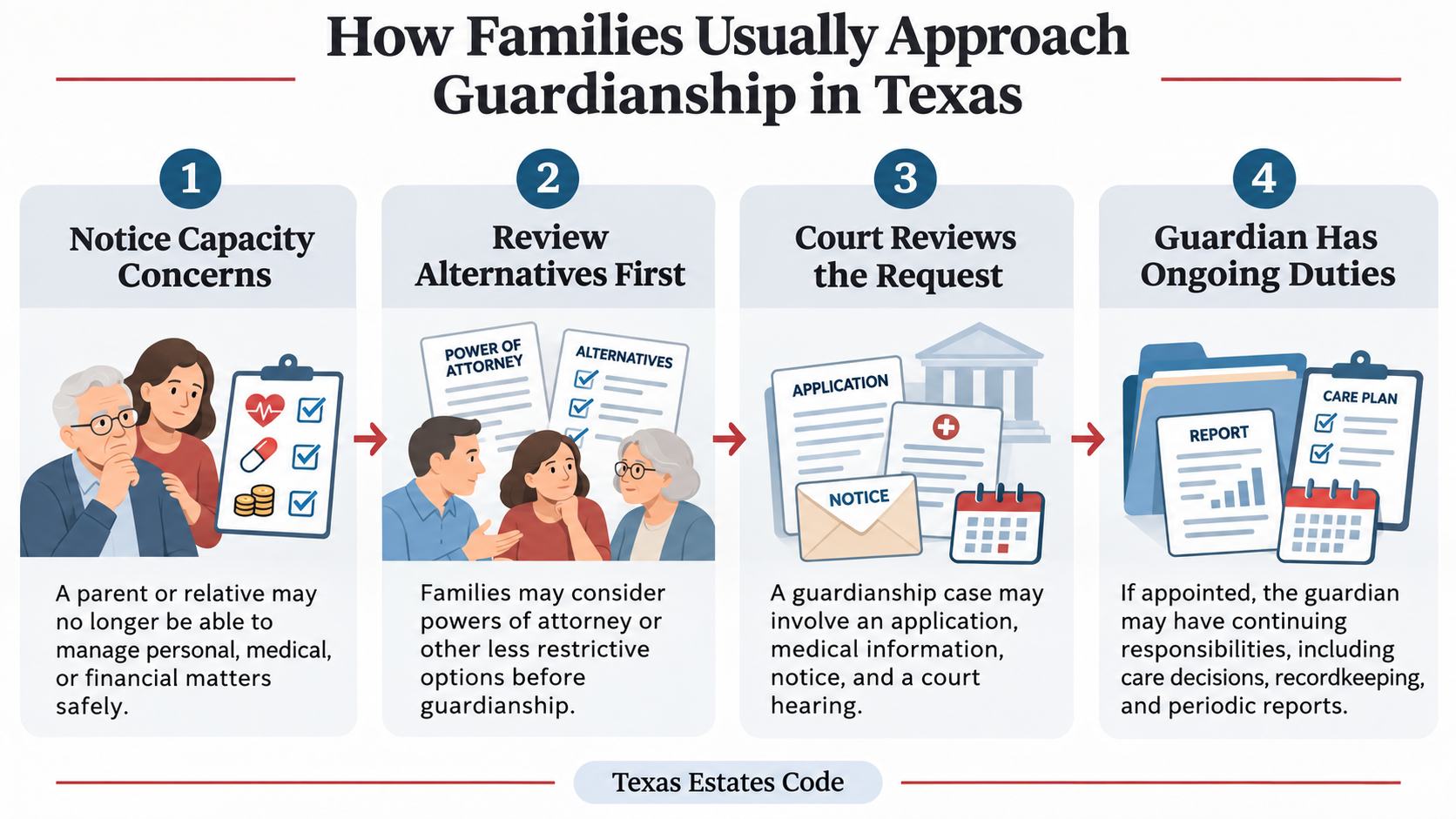
Families searching for information about how to get guardianship of a parent in Texas may be surprised by the legal responsibilities involved, so this section serves as a step by step guide to the Texas guardianship process. Guardianship proceedings require careful consideration of an individual's capacity, personal rights, financial circumstances, and available alternatives.
Guardianship Petition, Application, and Evidence of Incapacity
Under Chapter 1101 of the Texas Estates Code, guardianship proceedings generally begin by filing a guardianship petition with the appropriate court that has jurisdiction.
The petition identifies the proposed guardian, the type of guardianship requested, the circumstances supporting the request, and information about available alternatives.
Section 1101.103 generally requires appropriate medical examination documentation for adult incapacity proceedings, subject to statutory exceptions.
A licensed physician must evaluate the incapacitated person before guardianship is granted, and medical reports are typically submitted with the guardianship petition. A medical diagnosis alone does not automatically establish the need for guardianship, and the judge must evaluate the evidence under applicable legal standards.
Notification of Family Members and Interested Parties
Under Chapter 1051 of the Texas Estates Code, certain individuals must receive formal citation or notice of a guardianship application.
Depending on the circumstances, these individuals may include the proposed ward, spouse, parents, adult children, adult siblings, existing guardians, known holders of powers of attorney, and other interested parties.
Notification requirements vary depending on the individual's circumstances and relationship to the proposed ward.
Legal Representation and the Court Hearing
Under Texas Estates Code Section 1054.001, the court must appoint an attorney ad litem to represent the proposed ward's interests, including their expressed wishes, in proceedings for the appointment of a guardian. After the guardianship petition is filed, the court schedules a hearing before the judge reviews the evidence.
Under Section 1101.101, the court must make specific findings concerning incapacity, whether guardianship is in the person's best interests, the protection of their rights or property, and the feasibility of alternatives before appointing a guardian.
The court may grant limited or broader authority depending on the evidence and applicable legal requirements, and both require court approval. If the judge approves the petition, letters of guardianship are issued reflecting the authority granted.
Continuing Responsibilities After Appointment
Guardianship may involve ongoing reporting, financial accounting, and court supervision.
Under Chapter 1201 of the Texas Estates Code, courts conduct periodic oversight, including an annual examination of the individual's well-being.
Families should understand these continuing obligations before accepting guardianship responsibilities.
When Families Talk With a Guardianship Attorney in Texas
Decisions involving an elderly parent's independence, personal welfare, and financial security can become emotionally challenging. Family members may disagree about the need for guardianship, who should serve as guardian, or how an individual's assets should be managed, and family disputes are a common reason families seek legal guidance.
Professional legal guidance can help families understand their responsibilities and evaluate options before pursuing court proceedings.
Legal assistance may be particularly valuable when an elderly parent is experiencing declining capacity, existing legal documents are insufficient, financial exploitation is suspected, a loved one is unable to make medical decisions or manage important affairs, or relatives disagree about important care decisions.
How Masterly Legal Solutions Helps Families With Guardianship Matters
Masterly Legal Solutions provides legal guidance to Texas families navigating guardianship concerns, incapacity planning, and related estate planning matters.
Depending on the circumstances, our legal services may include:
- Evaluating whether guardianship is appropriate for an incapacitated adult or a minor child, along with available alternatives.
- Reviewing existing powers of attorney and estate planning documents.
- Preparing and filing the guardianship petition and related legal documents.
- Providing court representation during guardianship proceedings.
- Addressing disputes involving proposed guardians.
- Explaining guardianship responsibilities and ongoing court requirements, including guidance on court approval requirements after appointment.
Our firm focuses on helping families understand the legal implications of their decisions while respecting their loved one's dignity, preferences, and individual circumstances.
Families may also benefit from our comprehensive estate planning services, particularly when preparing for future incapacity or reviewing existing legal arrangements.
Understanding Guardianship Authority and Ongoing Legal Responsibilities
When an elderly parent can no longer manage their own affairs, guardianship may provide a legal arrangement to address their personal and financial needs. A Texas court grants authority to a qualified guardian based on the individual's circumstances, supporting evidence, and medical evaluations. Adult guardianship differs from matters involving parental rights, as its primary purpose is to protect an incapacitated adult while preserving as much independence as possible.
Appointed guardians may be required to submit periodic reports, maintain accurate financial records, and comply with ongoing court supervision. Masterly Legal Solutions helps families understand these legal responsibilities, navigate guardianship proceedings, and address concerns involving a loved one's care, property, and financial interests.
Frequently Asked Questions About Guardianship in Texas
What Is the Difference Between Guardianship and Power of Attorney?
Guardianship involves a court-appointed individual who receives specific legal authority over another person's affairs. A power of attorney allows an individual with the required legal capacity to authorize an agent to act on their behalf.
A power of attorney may be a less restrictive alternative when it provides sufficient authority to address the individual's needs.
Does Guardianship Go Through a Texas Court?
Yes. Establishing guardianship in Texas generally requires a court proceeding, supporting evidence, applicable notifications, and judicial findings.
The court determines whether guardianship is necessary and establishes the scope of the guardian's authority.
Are There Alternatives to Guardianship in Texas?
Yes. Texas law recognizes several alternatives, including durable powers of attorney, medical powers of attorney, supported decision-making agreements, and certain financial management arrangements.
The appropriate alternative depends on the individual's capacity, existing legal documents, and personal or financial needs.
Request a confidential consultation with Masterly Legal Solutions
When an elderly parent or family member can no longer manage important personal or financial responsibilities, understanding the available legal options becomes increasingly important. In Texas, these matters may involve an incapacitated adult and, in some cases, a child under 18.
Masterly Legal Solutions assists Texas families with guardianship proceedings, guardianship alternatives, incapacity planning, and related estate planning concerns. Our firm provides personalized legal guidance focused on your family's circumstances and your loved one's rights, including whether a permanent arrangement may be needed for the remainder of the ward's life.
In emergencies, temporary guardianship can serve as a short term measure for situations lasting up to 60 days until a permanent solution is found. Call (972) 236-5051 to discuss guardianship in Texas and the legal options available to your family.
This article is provided for general informational and educational purposes only and does not constitute legal advice. Guardianship laws in Texas may change, and legal requirements may vary depending on individual circumstances. Reading this article does not establish an attorney-client relationship with Masterly Legal Solutions. Families considering guardianship, power of attorney, or other alternatives should consult a qualified Texas attorney for legal guidance specific to their situation. No particular legal outcome is promised.








Looking for Legal & Business Solutions? Contact Us Now
Fill in the form or call us to set up a meeting