

Can a Teacher Be Fired During a TEA Investigation
Teachers devote years of training and dedication to shaping the lives of students. When allegations arise and a Texas Education Agency (TEA) investigation begins, many educators immediately worry about their job security, their reputation, and their future in education. The uncertainty surrounding an investigation can be overwhelming, especially when a teacher fears the possibility of retaliation, harassment, or wrongful termination by an employer.
A common question educators ask is whether a school district or employer can terminate them during a TEA investigation. The answer depends on several factors, including federal and state laws, the nature of the allegations, the teacher’s contract, and whether the employer follows proper procedures. Educators must also understand their legal protections if they believe retaliation or discrimination played a role in disciplinary action.
This article explains how TEA investigations work, when termination may occur, and how teachers can protect their rights. Understanding these legal protections is essential for employees in the education field who may be facing allegations, retaliation claims, or workplace harassment.
Understanding the Texas Education Agency Investigation Process
A TEA investigation typically begins when a complaint is filed against a teacher or school employee, often based on issues such as inappropriate relationships, social media misuse, or mismanagement of special education services that can put a teacher’s license at risk, as explained in common causes of TEA investigations and teacher protections.
During this process, the employer and the Texas Education Agency review evidence, conduct interviews, and determine whether disciplinary action is necessary. While the investigation is ongoing, teachers often continue working unless the allegations involve serious safety concerns.
However, some employers may take administrative leave or other actions while the investigation proceeds. These actions are not always a sign of guilt but are sometimes used to maintain a safe work environment.
When an Employer May Terminate a Teacher During an Investigation
A teacher can sometimes be terminated during a TEA investigation, but this does not happen automatically. The employer must follow contractual obligations and comply with federal law and state laws governing employment.
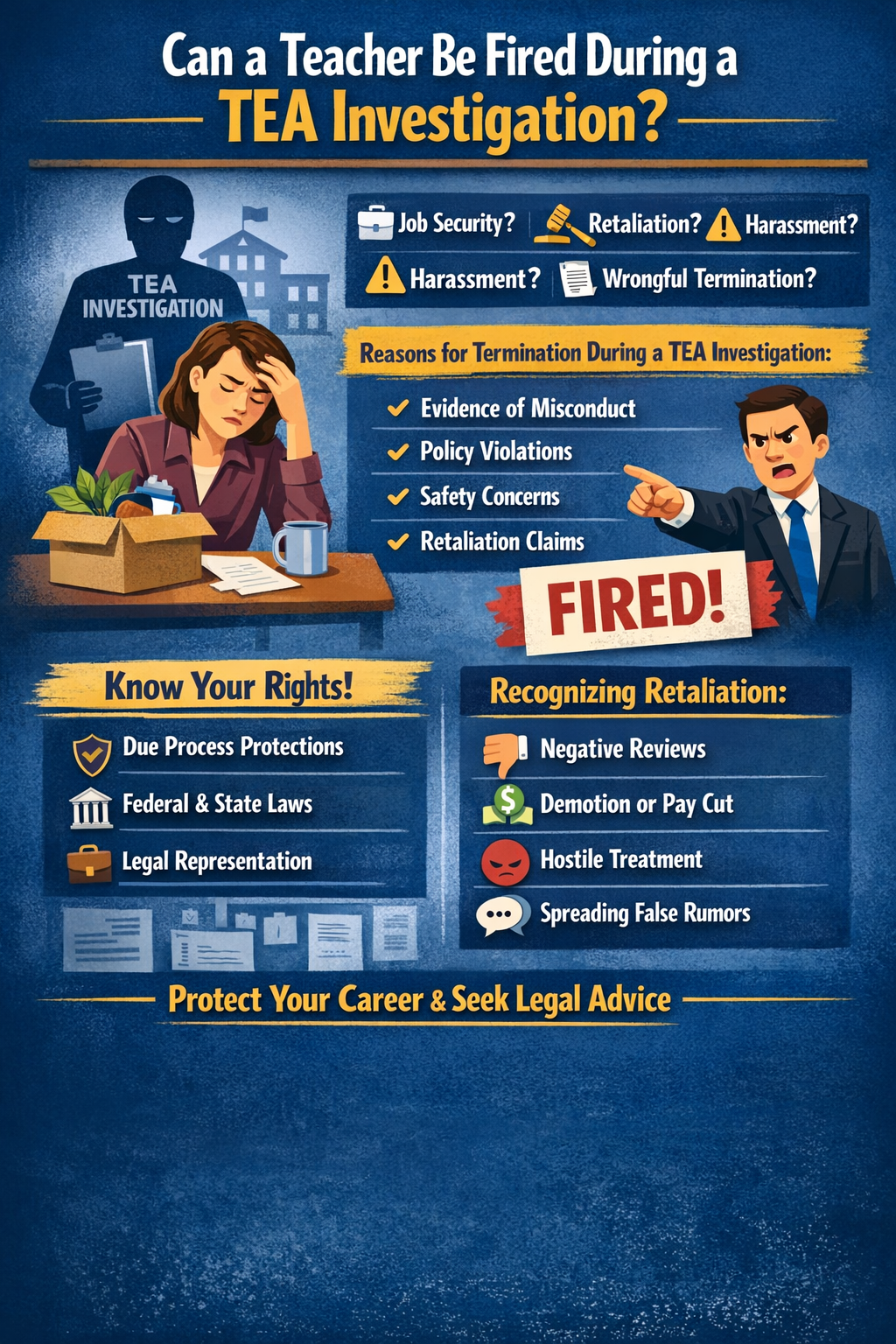
Termination may occur if:
- The investigation reveals clear evidence of misconduct.
- The teacher violated district policies outlined in the employee handbook.
- Student safety or workplace safety is at risk.
- The employer determines immediate disciplinary action is necessary.
Even when termination occurs, teachers may have the right to challenge the decision. If the termination is linked to retaliation, discrimination, or harassment, legal action may be possible.
The Importance of Due Process for Teachers
Teachers often have contractual protections that provide due process before termination. These protections may require the employer to conduct a formal investigation and give the teacher an opportunity to respond to allegations.
Due process helps protect employees from unfair treatment, retaliation claims, or discrimination. Without proper procedures, an employer may face legal consequences, including a lawsuit for wrongful termination.
For educators facing serious allegations, consulting employment lawyers or labor and employment lawyers early in the process can be critical, especially those experienced in helping Texas educators survive TEA investigations and protect their licenses.
Recognizing Retaliation in the Workplace
Retaliation is one of the most common issues teachers face during investigations. Retaliation occurs when an employer takes adverse actions against employees because they engaged in a protected activity, and understanding TEA investigations, common causes, and teacher protections can help educators recognize when adverse actions may be unlawful.
Protected activity includes actions such as:
- Reporting harassment
- Filing a discrimination claim
- Participating in a workplace investigation
- Filing a retaliation complaint
- Requesting reasonable accommodations
Federal and state laws prohibit retaliation against employees who exercise their rights.
If retaliation occurs, teachers may have grounds to file a complaint with the employment opportunity commission EEOC or pursue a lawsuit.
Examples of Retaliation Against Teachers
Retaliation can take many forms in a workplace. In schools, retaliation may appear as sudden changes in treatment or unfair discipline after a teacher reports misconduct.
Examples include:
- A negative performance review shortly after reporting harassment
- Lower pay or reduced work hours
- Removal from leadership roles
- False rumors spread by co workers
- Being treated differently by the employer
When retaliation occurs, it often discourages employees from reporting harassment or discrimination.
Federal Laws Protecting Teachers From Retaliation
Several federal laws protect employees from retaliation and discrimination in the workplace.
One of the most important is Title VII of the Civil Rights Act, which prohibits discrimination based on a person's race, national origin, gender identity, or religion.
Federal law also protects employees from retaliation if they report harassment or discrimination.
Other federal protections include:
- The Disabilities Act, which protects employees with a disability
- The Medical Leave Act, which provides job protected leave
- Laws protecting federal employees and other workers from retaliation
These laws help ensure employees can report misconduct without fear of losing their jobs.
The Role of the Equal Employment Opportunity Commission
The federal legislation pertaining to workplace discrimination is enforced by the Equal Employment Opportunity Commission.
Teachers who believe they have experienced retaliation or discrimination may file a complaint with the equal employment opportunity commission.
The employment opportunity commission eeoc investigates complaints involving:
- Workplace discrimination
- Sexual harassment
- Retaliation claims
- Age discrimination
- Discrimination based on genetic information
- Discrimination based on national origin
The equal employment opportunity commission may investigate whether an employer violated federal law.
Filing a Complaint With the EEOC
If teachers believe their rights were violated, they may file a complaint with the employment opportunity commission eeoc, and they may also wish to consult Texas education lawyers for expert legal help to understand how EEOC findings can affect their certification and employment.
The filing process typically includes:
- Documenting incidents of harassment or discrimination
- Reporting harassment internally to the human resources department
- Submitting a formal complaint to the EEOC
- Participating in the EEOC investigation
Filing early is important because strict deadlines apply when filing a discrimination claim.
Sexual Harassment and Retaliation in Schools
Sexual harassment is another serious issue that may arise during a TEA investigation.
Sexual harassment may involve:
- Unwanted sexual advances
- Requests for sexual favors
- Harassment refusing sexual advances
- Discrimination resisting sexual advances
Teachers who reject sexual advances should never face retaliation from their employer.
Federal and state laws prohibit retaliation against employees who report sexual harassment.
Reporting Harassment in a School District
Teachers who experience harassment should follow internal procedures before pursuing legal action, while also considering the immediate steps educators should take after receiving a TEA investigation notice so they do not inadvertently harm their case.
The first step often involves reporting harassment to the human resources department or school administration.
Reporting harassment creates a record of the complaint and may trigger an internal investigation.
If the employer fails to act, teachers may consider filing with the employment opportunity commission eeoc.
The Importance of Documenting Workplace Issues
Proper documentation can be crucial during a TEA investigation, especially when working with attorneys who focus on defending Texas educators in TEA investigations and license proceedings.
Teachers should document incidents involving harassment, retaliation, or discrimination in the workplace.
Documentation may include:
- Emails
- Witness statements
- Written reports to human resources
- Copies of any formal complaint
These records can strengthen retaliation claims or a discrimination claim.
Protected Activity and Legal Protections
A protected activity refers to actions employees take to assert their rights under federal and state laws.
Examples of protected activity include:
- Filing a complaint with the equal employment opportunity commission
- Reporting harassment internally
- Participating in an investigation
- Requesting reasonable accommodations for a disability
Employers cannot punish employees for engaging in protected activity.
If they do, retaliation claims may arise.
Discrimination and Workplace Harassment
Discrimination in the workplace occurs when an employer treats employees unfairly due to protected characteristics.
Examples include discrimination based on:
- National origin
- Gender identity
- Age discrimination
- Disability
- A person's race
- Genetic information
Workplace discrimination can create a hostile work environment and may lead to legal action.
Understanding Workplace Harassment
Harassment in the workplace can involve repeated behavior that creates an intimidating or hostile work environment.
Harassment may include:
- Offensive remarks
- Threats
- Unwanted physical contact
- False rumors
- Humiliation in front of co workers
Employers must address harassment promptly.
Failure to act may result in retaliation claims or lawsuits.
When Retaliation Claims Lead to a Lawsuit
If an employer ignores complaints or retaliates against employees, legal action may follow.
Teachers may file a lawsuit alleging:
- Wrongful termination
- Workplace discrimination
- Sexual harassment
- Retaliation
In some cases, punitive damages may be awarded if the employer acted intentionally.
How School District Policies Affect Investigations
Many school districts outline disciplinary procedures in their employee handbook.
The employee handbook may include policies on:
- Workplace harassment
- Reporting harassment
- Investigations
- Disciplinary action
Understanding these policies helps employees navigate the investigation process.
Job Security During an Investigation
Teachers often worry about job security when a TEA investigation begins.
While termination is possible, many investigations conclude without termination.
Employers must ensure their actions comply with federal law and state laws governing employment.
If an employee is unfairly fired, legal remedies may exist.
Retaliation Against Whistleblowers
Whistleblower laws also provide protections for employees who report misconduct.
These laws protect teachers who report illegal activities, including financial misconduct or violations involving local governments.
When retaliation occurs against whistleblowers, legal action may follow.
Medical Leave and Workplace Rights
Teachers may also have protections under the medical leave act.
Eligible employees may take FMLA leave for medical conditions or family needs.
This job protected leave helps ensure employees can address health concerns without losing employment.
Addressing Disability Discrimination
Teachers with a disability have rights under the Disabilities Act.
Employers must provide reasonable accommodations unless doing so creates an undue hardship.
Examples of reasonable accommodations may include modified work hours or adjustments to job duties.
Failure to provide reasonable accommodations may lead to discrimination claims.
Preventing Retaliation in the Workplace
Employers should take proactive steps to prevent retaliation.
These steps may include:
- Training human resources staff
- Encouraging reporting harassment
- Investigating complaints promptly
- Protecting employees who file a complaint
Preventing retaliation helps maintain a safe work environment.
Workplace Investigations and Teacher Rights
Teachers have the right to participate in investigations without fear of retaliation, and an education law attorney providing expert legal guidance for teachers can help ensure those rights are respected throughout the process.
Participation in a workplace investigation is considered protected activity.
If an employer retaliates against employees who cooperate in an investigation, retaliation claims may arise.
False Allegations and Teacher Reputation
False allegations can severely impact a teacher’s career.
When false rumors spread in a workplace, teachers may experience emotional stress, reputational damage, and threats to job security.
Legal representation may be necessary to protect their professional future.
Houston ISD Admits It Violated Procurement Policy
Investigations within school districts can sometimes reveal broader systemic issues. For example, headlines such as houston isd admits it violated procurement policy highlight how internal compliance problems can lead to extensive investigations.
When districts face scrutiny over policy violations, employees may find themselves involved in investigations even if they were not responsible for the alleged misconduct. Understanding employee rights during these situations is critical.
The Importance of Legal Representation
Teachers facing TEA investigations should consider consulting employment lawyers who understand education law, such as firms that offer comprehensive education law and teacher license defense legal services.
Experienced labor and employment lawyers can evaluate whether the employer followed proper procedures and determine whether retaliation or discrimination played a role in disciplinary action.
Legal representation can also help teachers prepare for interviews and respond to allegations.
Protecting Your Career During an Investigation
Teachers should take several steps if they are under investigation:
- Document all communication with the employer
- Avoid discussing the investigation with co workers
- Consult employment lawyers if retaliation or harassment occurs
- Keep records of all complaints and reports
Taking these steps can help protect educators from unfair treatment.
Rights of an Employee or Job Applicant During a School Investigation
Both an employee or job applicant in a school system has legal rights under federal and state employment laws. If a teacher is under investigation or applying for a new role while facing allegations, the employer must still follow rules that protect workers from employment discrimination and unfair hiring practices. Laws such as the employment act and other federal regulations ensure that job applicants cannot be rejected solely because they participated in a complaint, investigation, or other protected activity. School districts must evaluate applicants based on qualifications and experience rather than rumors, retaliation, or bias. When these rules are violated, the educator may have the right to file a complaint or pursue legal action to address unfair treatment.
Protection From Harmful Workplace Conduct and Retaliation
Teachers and other employees should never face threats, intimidation, or physical harm in the workplace because they reported misconduct or participated in an investigation. In some cases, retaliation may appear in subtle ways, such as scheduling problems, denial of overtime pay, or attempts to discourage educators from speaking up. These actions can create fear among staff and may discourage job applicants from pursuing positions in districts where retaliation appears common. Teachers who report wrongdoing may also worry about whether the situation could affect a family member who works in the same district or school system. Federal and state laws exist to prevent these situations and help protect educators from retaliation or future discrimination when they stand up for their rights.
Contact Masterly Legal Solutions for a Free Consultation
Facing a TEA investigation can be one of the most stressful moments in a teacher’s career. Questions about job security, retaliation, harassment, and discrimination often leave educators unsure about their rights or what steps they should take next. When an employer begins disciplinary action or when workplace complaints escalate into formal investigations, having knowledgeable legal guidance can make a significant difference.
At Masterly Legal Solutions, our team understands how complex education law and employment law can be. We assist teachers and other employees who believe they are experiencing retaliation, workplace harassment, discrimination, or wrongful termination during investigations. Whether the issue involves reporting harassment, filing a complaint, responding to allegations, or protecting your professional reputation, experienced employment lawyers can help you navigate the process.
If you are a teacher facing a TEA investigation or believe your employer has taken unfair action against you, it may be time to speak with a legal professional who understands the laws that protect educators.
Call (972) 236-5051 to schedule a free consultation. We can answer your questions, explain your rights, and help you understand the options available to protect your career and your future in education.
Disclaimer: This article is provided for educational and informational purposes only and should not be considered legal advice. Reading this article does not create an attorney-client relationship with Masterly Legal Solutions. Every situation is different, and individuals facing legal concerns should consult with a qualified attorney for guidance regarding their specific circumstances.






Looking for Legal & Business Solutions? Contact Us Now
Fill in the form or call us to set up a meeting