

How Retaliation Shows Up During a TEA Investigation (Even When They Deny It)
Teachers dedicate their careers to educating students and supporting their communities. When a TEA investigation begins, however, many educators quickly realize the situation is not only about the allegations being reviewed. In some cases, the most difficult challenge becomes dealing with subtle or direct retaliation in the workplace after speaking up, cooperating with investigators, or reporting misconduct.
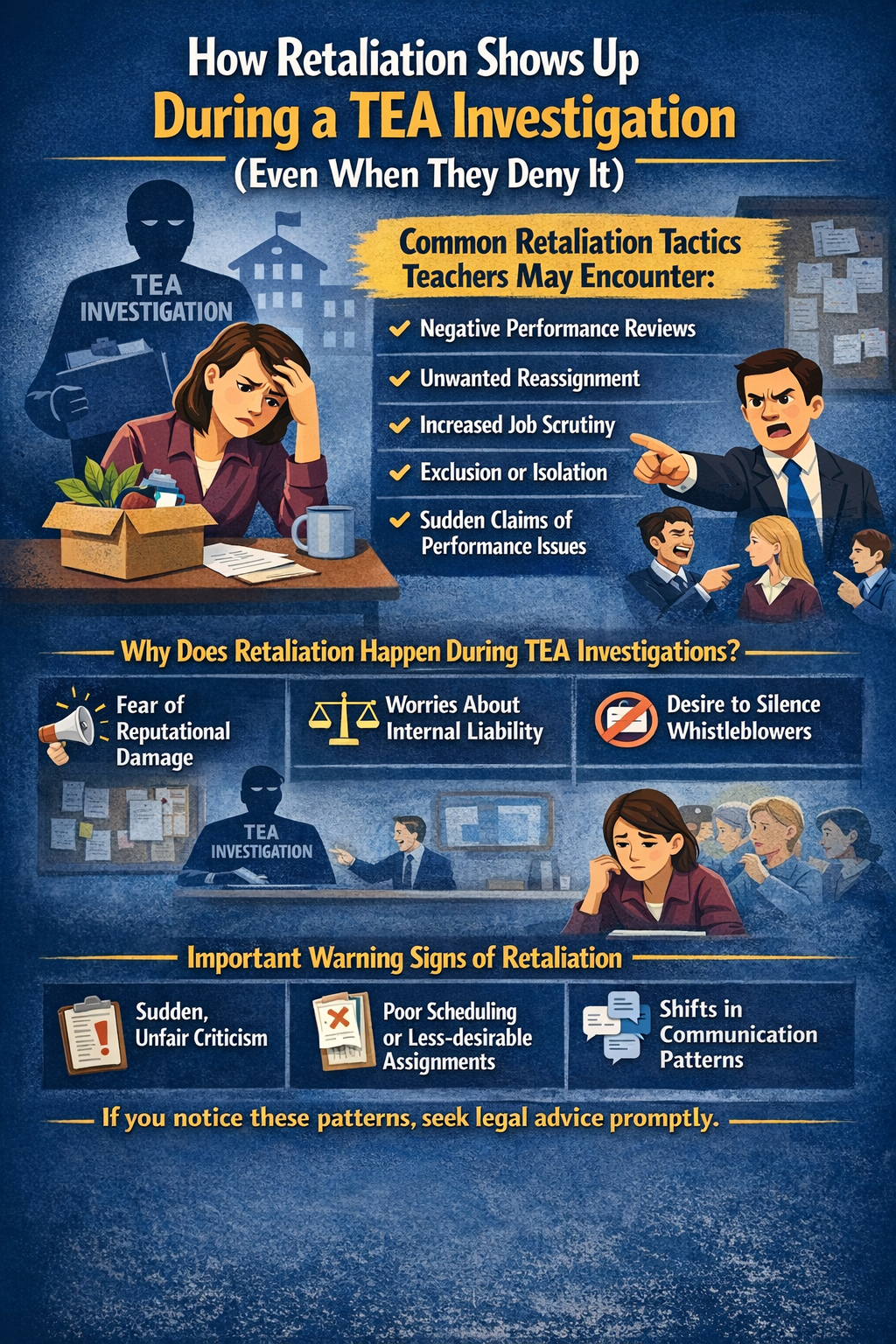
School districts and administrators rarely admit that workplace retaliation is happening. Instead, the situation may be explained away as routine management decisions, concerns about job performance, or administrative restructuring. Yet teachers often notice sudden changes in their working conditions, assignments, and evaluations soon after they engage in a protected activity, such as filing a complaint or participating in an investigation.
Understanding how unlawful retaliation can appear during a TEA investigation is critical for protecting your rights. In many cases, educators may not realize they have grounds for retaliation claims until the damage to their careers has already begun. With guidance from an experienced employment lawyer familiar with employment law, teachers can recognize these warning signs early and take steps to protect themselves.
What Counts as Retaliation in the Workplace?
Under federal law and anti discrimination laws, retaliation occurs when an employer punishes an employee for engaging in a protected activity. This protection exists because lawmakers recognized that workers would hesitate to report wrongdoing if they feared retaliation from their employer.
Examples of protected activity include:
- Reporting workplace discrimination or sexual harassment
- Participating in a school district investigation
- Reporting discrimination or harassment to human resources
- Requesting a reasonable accommodation for a disability
- Taking fmla leave or other legally protected medical leave
- Filing a complaint with a government agency
If an employee engaged in any of these activities and then experienced negative treatment, the employer retaliated may become a central issue in a legal claim.
Why Retaliation Often Happens During TEA Investigations
TEA investigations can expose serious issues inside a school district. When allegations of misconduct arise, administrators may worry about reputational damage, liability, or internal policy violations.
In these situations, an employer may respond by attempting to silence concerns or discourage other employees from participating in the investigation. This environment can lead to workplace retaliation, especially when a teacher’s employee's participation in the process threatens leadership or exposes possible illegal acts.
Retaliation may not be obvious at first. Instead, the employer may take subtle steps that gradually change the teacher’s professional situation.
The Legal Foundation for Retaliation Protection
The right to report wrongdoing without fear of retaliation is deeply rooted in American employment law. Several statutes protect employees who speak up about misconduct or discrimination.
One of the most significant is Title VII of the Civil Rights Act, which prohibits unlawful discrimination and retaliation related to discrimination based on characteristics such as race, gender, religion, or sexual orientation.
Other important protections include:
- The employment act governing workplace rights
- The disabilities act, which protects workers with a disability
- The medical leave act, which protects employees taking fmla leave
- State-level protections enforced by the texas workforce commission
These laws ensure that an employee's protected activity cannot legally trigger retaliation from an employer.
Recognizing Subtle Forms of Workplace Retaliation
Retaliation is not always obvious. While some cases involve wrongful termination, many begin with subtle changes in the workplace.
Teachers may initially notice changes such as:
- Increased scrutiny of job performance
- Unusual classroom observations
- Sudden criticism from supervisors
- Changes in communication patterns
Although each issue alone may appear minor, a pattern of retaliatory acts can signal unlawful retaliation.
Reassignment After Reporting Misconduct
One common form of workplace retaliation involves reassignment. After an employee's protected activity, a teacher may suddenly be moved to a different role, classroom, or campus.
The employer may describe the change as administrative restructuring, but it may actually be an adverse employment action.
Examples include:
- Removal from leadership roles
- Transfer to less desirable assignments
- Loss of specialized programs
- Reduced teaching opportunities
These adverse employment decisions can significantly impact a teacher’s career and reputation.
Sudden Negative Performance Evaluations
Another common sign of employer retaliation is a sudden shift in performance evaluations. Teachers who previously received positive reviews may suddenly receive a negative performance review shortly after participating in an investigation.
This pattern often raises questions about whether the evaluation reflects genuine concerns or retaliation for the employee's participation.
A negative evaluation can become evidence when proving unlawful retaliation.
Isolation From Colleagues
Retaliation can also take the form of professional isolation. An employee may find themselves excluded from meetings, professional development opportunities, or collaborative discussions.
Isolation may also involve distancing from a co worker who previously worked closely with the teacher. These actions can create a hostile work environment, which may violate federal law.
Over time, isolation can damage morale and professional standing.
Sudden Claims of Performance Problems
Teachers facing retaliation often report that administrators suddenly raise concerns about job performance.
These concerns may include:
- Classroom management criticisms
- Documentation requirements
- Increased disciplinary action
While feedback is normal in education, a sudden surge of complaints after a protected activity may indicate unlawful retaliation.
The Role of Adverse Employment Actions
An adverse employment action refers to a significant negative change in employment status or conditions.
Examples may include:
- Demotion
- Reduction in responsibilities
- Pay changes below minimum wage standards
- Suspension
- Termination
These actions can form the foundation of retaliation claims.
When Retaliation Escalates to Termination
In more severe situations, retaliation may lead to termination. If a teacher is fired after engaging in protected activity, it may constitute wrongful termination under employment law.
The following factors often determine whether termination may be unlawful:
- Timing between the protected activity and termination
- Evidence of inconsistent discipline
- Treatment of similarly situated employees
- Documentation of the employee's protected activity
These details can become critical evidence in a legal claim.
The Importance of Protected Activity
Understanding protected activity is essential when evaluating retaliation. A protected activity may involve reporting harassment, filing a complaint, or cooperating in an investigation.
Examples include:
- Reporting sexual harassment
- Requesting a reasonable accommodation for a disability
- Taking medical leave for a medical condition
- Reporting workplace discrimination
- Participating in internal disciplinary reviews
Each of these actions may qualify as employee's protected activity under federal law.
Retaliation Related to Medical Leave
Teachers who take medical leave or fmla leave sometimes face retaliation after returning to work.
The medical leave act protects employees who take leave for serious health issues or family needs. However, some employers respond with negative scheduling changes, unfavorable assignments, or criticism of job performance.
These actions may constitute unlawful retaliation.
Disability Rights and Workplace Retaliation
Teachers with a disability are protected by the disabilities act. When an educator requests a reasonable accommodation, such as schedule adjustments or accessibility modifications, the employer must evaluate the request in good faith.
If an employer retaliated against an employee for requesting accommodations, it may create grounds for a legal claim.
Sexual Harassment Complaints and Retaliation
Retaliation often follows sexual harassment complaints. Teachers who report harassment may experience hostility, social exclusion, or increased scrutiny.
Federal protections under the civil rights act prohibit retaliation against employees who report harassment or discrimination.
When retaliation follows a harassment complaint, it may strengthen retaliation claims.
The Role of Federal Agencies
Several federal agencies enforce workplace protections, including the equal employment opportunity commission.
Teachers may file a complaint with the EEOC if they believe they experienced unlawful retaliation or employment discrimination.
Additionally, the texas workforce commission may investigate certain employment issues involving dallas workers and educators across the state.
Filing a Retaliation Claim
Teachers who suspect retaliation may consider filing a formal claim.
This process often involves:
- Documenting communications such as e mail
- Recording incidents of harassment or discrimination
- Gathering witness statements
- Submitting a complaint to the appropriate agency
Because there are short deadlines for filing, it is important to act quickly.
Proving Unlawful Retaliation
Proving unlawful retaliation requires demonstrating a clear link between the protected activity and the adverse action.
Courts often evaluate:
- Whether the employee engaged in a protected activity
- Whether the employer took an adverse action
- Whether the timing suggests retaliation
Strong documentation can make a significant difference when proving unlawful retaliation.
Hostile Work Environments After Complaints
Retaliation sometimes appears as a hostile work environment. Instead of immediate discipline, an employee may face daily hostility from supervisors or colleagues.
These actions may include:
- Public criticism
- Increased monitoring
- Social isolation
Such treatment may violate anti discrimination laws if it follows a protected activity.
How Employers Attempt to Justify Retaliation
Many employers deny retaliation by claiming their decisions were based on legitimate concerns. They may cite workplace policies, performance issues, or organizational changes.
However, when the evidence shows a pattern of negative treatment after a protected activity, the explanation may not hold up under legal scrutiny.
An experienced employment lawyer can evaluate these situations.
The Impact of Retaliation on Teachers
Retaliation can have devastating effects on educators. Teachers may face stress, reputational damage, and uncertainty about their careers.
In severe cases, retaliation may push talented educators out of the profession entirely.
These consequences highlight the importance of legal protections and professional advocacy.
How a Law Firm Can Help Protect Your Rights
Navigating employment law matters during a TEA investigation can be overwhelming. Teachers often feel isolated and unsure about how to respond when an employer retaliated against them.
A knowledgeable law firm can evaluate the situation, explain legal options, and help build a strategy to protect your rights.
With several decades of combined experience handling employment disputes, attorneys understand how retaliation cases develop and how to pursue legal remedies when necessary.
Guidance for Dallas Workers Facing Retaliation
Educators across Texas frequently seek legal help when retaliation occurs. Dallas employment cases often involve complex questions about employment law, discrimination, and employee rights.
Teachers, administrators, and full time employees in school districts may all face retaliation after speaking up about misconduct.
Legal guidance can help dallas workers understand their options.
Understanding Discrimination Claims in Education Workplaces
Teachers and other employees may pursue discrimination claims when they believe they were treated unfairly because of protected characteristics under federal law. These claims can involve issues such as age discrimination, bias related to gender, or unequal treatment connected to race, disability, or other protected categories. In some situations, an educator may notice patterns of employer's discrimination after raising concerns or reporting misconduct. When the employer participating in an internal investigation fails to address those concerns or dismisses them without proper review, it may strengthen the teacher’s legal claim. Employment laws exist to help protect educators from discriminatory practices and ensure that schools maintain fair and lawful workplace standards.
When Reporting Misconduct Is Based on a Good Faith Belief
Many teachers report misconduct because they have a good faith belief that a violation of policy or law has occurred. This belief does not require absolute proof; rather, it reflects a reasonable concern that wrongdoing may be happening. For example, educators working in schools connected with medical care institutions, special education programs, or other regulated environments may feel obligated to report safety concerns or compliance issues. In some cases, similar protections apply to federal employees and other public sector workers who report violations or unethical behavior. When a teacher acts in good faith and raises concerns about misconduct, employment laws generally protect them from retaliation or unfair treatment in the workplace.
Contact Masterly Legal Solutions for Help With Retaliation Claims
Facing retaliation during a TEA investigation can leave educators feeling isolated, confused, and uncertain about what steps to take next. Many teachers notice changes in their assignments, evaluations, or working conditions shortly after engaging in a protected activity, yet school districts often deny that workplace retaliation is occurring. When these situations arise, having experienced legal guidance can make a significant difference.
At Masterly Legal Solutions, our law firm represents educators and other employees dealing with retaliation, harassment, discrimination, and complex employment law disputes. If you believe your employer has taken an adverse employment action after you reported misconduct, filed a complaint, or participated in an investigation, you may have grounds to pursue a legal claim. Our attorneys understand the unique challenges teachers face when school districts attempt to justify retaliation through performance reviews, reassignment, or disciplinary actions.
If you are searching for a retaliation attorney dallas tx, our team can evaluate your situation and explain your rights. We provide an initial consultation to help educators understand their options, whether the issue involves unlawful retaliation, employment discrimination, or other employment law matters.
Call (972) 236-5051 today to schedule a free consultation and discuss how we can help protect your career and your rights in the workplace.
Disclaimer: This article is intended for informational purposes only and does not constitute legal advice. Reading this content does not create an attorney-client relationship with Masterly Legal Solutions. Every employment situation is unique, and individuals should consult with a qualified attorney regarding their specific circumstances before taking legal action.






Looking for Legal & Business Solutions? Contact Us Now
Fill in the form or call us to set up a meeting