

Child Find in Texas: How Schools Identify Students Who May Need Special Education
By Andrew Rhoden, Masterly Legal Solutions
Child Find is a federal requirement that directs Texas schools to identify, locate, and evaluate children with suspected disabilities who may need special education and related services. Under the Individuals with Disabilities Education Act (IDEA), schools must recognize potential educational needs, even when children are passing their classes.
Watching your child struggle in school can be stressful, especially when teachers or school officials dismiss your concerns. Your child may have trouble reading, communicating, following instructions, or keeping up with classmates without receiving the support they need.
Parents should not have to wait until their child fails a class before educational concerns receive attention. Schools have legal responsibilities when there is reason to suspect a disability that may require special education.
Masterly Legal Solutions helps Texas families understand these responsibilities, address evaluation concerns, and protect their children's educational rights.
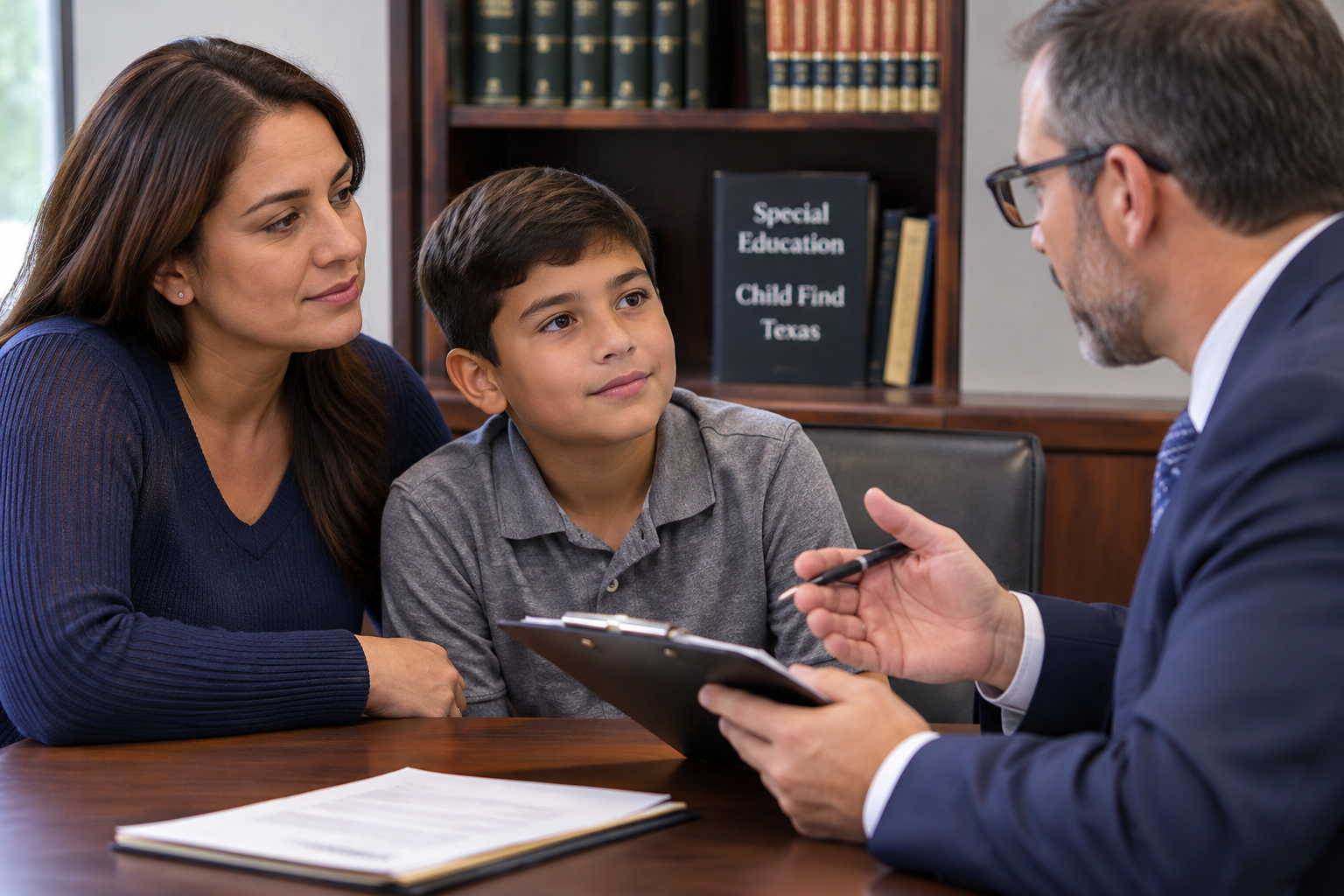
What the Child Find Duty Covers
The Individuals with Disabilities Education Act establishes legal duties for states and local educational agencies to identify children who may need special education services.
Under 34 CFR 300.111, states must maintain policies and procedures for identifying, locating, and evaluating children with disabilities who need special education, regardless of the severity of their disabilities.
Child Find law covers a wide range of children, including:
- Students attending public schools and public charter schools.
- Children attending private schools.
- Children experiencing homelessness.
- Children who are wards of the state.
- Highly mobile children, including migrant children.
- Students progressing from grade to grade despite suspected disabilities.
The school's responsibility is ongoing. It does not begin only when a parent submits a formal request or provides a medical diagnosis.
The School's Responsibility to Identify Suspected Disabilities
A teacher, parents, or other professionals may notice signs that a student needs additional support and have the child referred for evaluation.
These concerns may involve academics, behavior, communication, or a child's development, and may appear through assessments, classroom observations, reports, developmental delays, or communication with parents.
When available information gives a school reason to suspect that a child has a disability and may need special education, the school must respond appropriately.
A failure to recognize or address these concerns within a reasonable time may raise questions about compliance with Child Find requirements.
Child Find and Special Education Services Eligibility
The Child Find process focuses on recognizing potential disabilities and evaluating educational needs, but it does not automatically determine whether a student qualifies for services.
An evaluation helps determine whether a child meets applicable eligibility requirements, generally by fitting one of IDEA’s 14 disability categories and needing specially designed instruction.
Some children may qualify for an Individualized Education Program (IEP), while others may benefit from accommodations under Section 504.
Our article on IEP vs. 504 plans and what parents and students should know explains the differences between these educational protections.
Signs a Parent May Want to Request an Evaluation
Children develop and learn at different rates. However, persistent difficulties may indicate that a child needs a more detailed evaluation.
Parents and caregivers who are concerned about a child’s development or learning can seek a Child Find evaluation and may want to discuss an evaluation when their child experiences:
- Ongoing difficulties with reading, writing, or mathematics.
- Speech and language delays.
- Difficulty concentrating or following classroom instructions.
- Frequent emotional distress or behavioral problems.
- Challenges with social interaction or communication.
- Limited academic progress despite additional classroom support.
- Hearing, vision, physical, or developmental concerns.
- Repeated disciplinary incidents that may be connected to an unidentified disability.
These signs do not necessarily mean a child has a disability. They may, however, provide reasons for further assessment.
For example, a student may earn passing grades but require several hours of additional help at home to complete assignments. Another student may understand classroom lessons but struggle to communicate their knowledge through written work.
Without an appropriate evaluation, the reasons behind these challenges may remain unclear.
When Classroom Interventions and the Student Support Team Are Not Enough
Schools often provide additional academic or behavioral support through Response to Intervention (RTI) or a Multi-Tiered System of Supports (MTSS) to support children who are experiencing difficulties.
These programs may help students improve their classroom performance, and interventions are typically planned with the classroom teacher and a student support team. However, federal guidance states that intervention programs cannot be used to improperly delay or deny an evaluation when a disability is suspected, and the school team must decide whether an evaluation should move forward.
The U.S. Department of Education's guidance on Response to Intervention addresses this responsibility.
Families who experience repeated delays or receive unclear explanations from school officials may benefit from having an education attorney review their circumstances.
How to Ask for an Evaluation in Writing and What Happens Next
Texas parents have the right to request a Full Individual and Initial Evaluation (FIIE) when they suspect their child has a disability that affects learning.
A written request may be submitted to the district's director of special education or an administrative employee, such as a campus principal.
The request should clearly communicate the parent's concerns about the child's educational, developmental, or behavioral difficulties and request an initial special education evaluation.
Parents are not required to obtain a private medical diagnosis before making this request.
When families are concerned about how the school may respond, Masterly Legal Solutions can provide legal assistance with reviewing educational records, preparing written communications, and addressing the school's evaluation responsibilities.
How Long Does a Texas School Have to Respond?
[CONFIRM] Under Texas law, a school district or open-enrollment charter school must respond within 15 school days after receiving a qualifying written request for an initial special education evaluation.
The school must provide written notice explaining whether it agrees to conduct or refuses the evaluation. Parents must also receive information about their procedural rights.
If the school agrees to evaluate the student, it must provide parents with an opportunity to give written consent.
Although parents may request an evaluation verbally, the same 15-school-day response deadline does not apply to verbal requests.
Texas Special Education Evaluation Timelines
Several important deadlines apply during the Child Find and initial special education evaluation process in Texas.
- School response to a written request: The school district generally has 15 school days to respond after receiving a qualifying written request for an initial special education evaluation. [CONFIRM]
- Completion of the initial evaluation and report: The school generally has 45 school days to complete the initial evaluation and written report after receiving written parental consent. [CONFIRM]
- Providing parents with the evaluation report: Parents must generally receive a copy of the evaluation report at least five school days before the initial Admission, Review, and Dismissal (ARD) committee meeting. [CONFIRM]
Exceptions may apply depending on student absences, the timing of parental consent near the end of the school year, and other circumstances under Texas law.
Understanding these timelines can help families recognize potential delays and determine when legal assistance may be appropriate.
What Happens During a Special Education Evaluation?
A special education evaluation helps create a tailored understanding of the child's strengths, difficulties, and individual educational needs.
Depending on the suspected disability, an evaluation may examine academic performance, communication skills, behavior, physical abilities, and social or emotional development.
Qualified professionals may review screenings, classroom observations, educational records, parent concerns, and assessment results.
After the evaluation, the Admission, Review, and Dismissal (ARD) committee reviews the evaluation results and determines whether the child qualifies for special education and related services.
Parents are part of this decision-making team and help determine supports designed to help the child succeed in school and life.
Our article on ARD meetings in Texas explains what families can expect during these important educational meetings.
What If the School Refuses to Evaluate Your Child?
A school district may determine that an initial evaluation is not necessary. However, it must provide prior written notice explaining its decision.
A refusal does not automatically establish a Child Find violation. The circumstances surrounding the decision, the available educational records, and the school's knowledge of the student's difficulties must be considered.
Masterly Legal Solutions can review the school's response and explain the legal options available to the family.
When an evaluation has already been completed but parents disagree with its findings, different legal rights may apply. Our article on independent educational evaluations in Texas addresses those concerns.
When Families Talk With an Education Attorney
Parents may feel overwhelmed when their child's educational needs remain unresolved despite repeated conversations with teachers and administrators.
Delays in identifying a disability can affect academic progress, classroom participation, emotional well-being, and a child's confidence. Families may also face additional expenses for private tutoring, assessments, or other educational support.
An education attorney can help families understand whether the school has met its Child Find responsibilities and what legal options may be available.
Masterly Legal Solutions provides legal assistance involving:
- Concerns about potential Child Find violations.
- Delayed or denied special education evaluations.
- Review of educational records and school correspondence.
- Preparation of written communications with school districts.
- Evaluation of procedural requirements and applicable deadlines.
- Special education disputes and available resolution options.
Every child's educational circumstances are different. Legal guidance can help parents make informed decisions based on their child's needs, the school's actions, and applicable federal and Texas laws.
Child Find Resources for Children With Learning Disabilities and Developmental Needs
Child Find helps families access evaluations and community resources for children with suspected learning disabilities, developmental delays, and other educational needs. From birth to age three, eligible children may receive early intervention services through Texas Early Childhood Intervention (ECI) programs. Older kids may qualify for special education services, including assistive technology, based on their individual educational needs.
School districts are responsible for identifying eligible children, including those who are homeschooled or enrolled in private schools, under applicable Child Find requirements. Educational professionals may provide information about available resources, document parental concerns, review assessment data, and consider evaluation referrals.
Parents who are aware of persistent learning difficulties may pursue an evaluation without personally identifying a specific disability. When families struggle to receive clear answers from school officials, Masterly Legal Solutions can review their concerns, explain the applicable legal requirements, and help them understand their available options.
Frequently Asked Questions About Child Find in Texas
Does Child Find Apply to Students Who Are Passing Their Classes?
Yes. Federal Child Find requirements apply to students with suspected disabilities even when they advance from one grade to the next.
Under 34 CFR 300.111(c)(1), passing grades do not remove a school's responsibility to identify and evaluate students who may need special education.
Academic performance is only one factor. A child's communication, behavior, development, and ability to participate in school may also be relevant.
Can a Parent Ask for a Special Education Evaluation at Any Time?
Yes. Texas parents may request a special education evaluation whenever they have concerns about a suspected disability.
Parents do not have to wait until the end of the school year, receive a medical diagnosis, or complete an intervention program before requesting an evaluation.
However, requesting an evaluation does not automatically establish eligibility for special education services.
Does Child Find Cover Children in Private School or Not Yet in School?
Yes. Child Find responsibilities extend beyond children enrolled in public schools.
Under 34 CFR 300.131, the local educational agency where a private school is located generally has responsibility for identifying and evaluating children with suspected disabilities who attend that school.
However, private school students do not necessarily have the same individual entitlement to special education services as students enrolled in public schools.
Preschool-aged children may also qualify for evaluations and special education services. Texas Early Childhood Intervention (ECI) programs provide support for eligible infants and toddlers younger than three.
Protect Your Child's Educational Rights With Masterly Legal Solutions
Your child's educational difficulties deserve careful attention. When a school delays an evaluation, dismisses a suspected disability, or refuses to address ongoing concerns, professional legal guidance may help clarify your family's rights and options.
Masterly Legal Solutions provides personalized legal assistance to Texas parents facing Child Find concerns and special education disputes. Our firm can review your circumstances, explain the school's legal obligations, and provide representation based on your family's individual needs.
For more information about our special education legal services, contact Masterly Legal Solutions at (972) 236-5051.
This article is for general informational purposes only and does not constitute legal advice or establish an attorney-client relationship. Every case is unique, and legal outcomes depend on individual circumstances and applicable laws.







Looking for Legal & Business Solutions? Contact Us Now
Fill in the form or call us to set up a meeting