Child Protection Services Contact and the First Steps Texas Families Should Take

January 7, 2026

When a family first receives contact from child protection services, the moment can feel unreal. Parents often replay every recent decision in their minds, wondering what triggered the call and what will happen next. The beginning of CPS involvement is emotionally charged, but it is also a time when clear thinking matters most. The early steps a family takes can influence not only the investigation, but also long-term outcomes affecting children and family stability.


At Masterly Legal Solutions, we work exclusively with Texas CPS cases and guide families through this difficult beginning with clarity and preparation. Our approach is administrative and investigation-focused, not fear-driven or litigation-heavy. Understanding how CPS contact unfolds and knowing how to respond helps families protect children, preserve parental rights, and avoid unnecessary escalation.


Understanding Child Protective Services in Texas

Child protective services operates under the Texas Department of Family and Protective Services, a state department responsible for responding to reports involving children. The department’s authority comes from a combination of Texas laws and federal laws that shape the child welfare system. CPS is tasked with investigating reports of abuse or neglect and determining whether intervention is necessary to protect children.


Although the mission is to promote safety and well being, the process can feel overwhelming. Families often do not realize how much authority CPS has at the investigation stage. Understanding this structure helps parents approach the situation with informed caution rather than panic.


What Triggers CPS Contact With Families

Most CPS cases begin with a report made to a hotline or local department. Reports may come from teachers, medical providers, social services professionals, neighbors, or even family members. Many reports involve suspected child abuse or concerns about neglect, supervision, or safety.


A report does not mean abuse has occurred. CPS is required to investigate certain allegations under state and federal regulations, even when information is limited.


The Importance of the First Response

The first response to CPS contact often shapes the direction of the entire investigation. CPS workers document not only facts, but also how parents conduct themselves during early interactions. Tone, responsiveness, and clarity all matter.


Families who rush to answer every question without understanding the process may unintentionally create confusion. Taking time to respond thoughtfully can help ensure the investigation remains focused and fair.


Initial Contact From CPS Workers

Initial CPS contact may occur through a phone call, a visit to a child’s school, or an unannounced home visit. CPS workers may say they simply want to “check on the situation” or “follow up on a report.” Despite the informal language, this contact is part of a formal investigation.


Anything said or done may be included in the official record. Parents should treat all interactions as important and documented.


Understanding the Scope of a CPS Investigation

A CPS investigation rarely stays limited to one narrow issue. Investigators may review the child’s living environment, supervision practices, education, and access to medical care. They may also ask about other children in the household.


Investigations can expand if new information arises. Consistency and preparation help families navigate this broader scope without unnecessary complications.


Allegations of Child Abuse or Neglect

Many CPS cases involve allegations of child abuse or neglect. Abuse may include physical abuse, sexual abuse, or emotional harm, while neglect often involves inadequate supervision, lack of adequate food, or failure to provide medical care. These allegations are evaluated under a specific legal definition set by state laws.

Allegations alone do not establish guilt. CPS must investigate to determine whether child abuse or neglect occurred under administrative standards.


Understanding Suspected Child Abuse Reports

Suspected child abuse reports are based on concern rather than proof. Mandatory reporters are legally required to report suspicions even when they are uncertain. This requirement is designed to protect children, but it can also result in investigations where no abuse is found.


Families should remember that the investigation process exists to gather information, not to presume wrongdoing.


The Legal Framework Governing CPS Actions

CPS authority is shaped by multiple layers of legislation. Federal statutes such as the Social Security Act, the Child Abuse Prevention and Treatment Act, the Prevention Services Act, and the Safe Families Act influence how states respond to maltreatment. These acts emphasize safety, family preservation, and appropriate services.

Texas laws further define procedures, timelines, and jurisdiction. Understanding this framework explains why CPS takes certain steps during an investigation.


Federal Laws and Child Welfare Policy

Federal laws affect funding, programs, and minimum standards across the country. The Indian Child Welfare Act, for example, establishes special protections when Native American children are involved. Other federal legislation guides how states balance child safety with family unity.


These laws are intended to protect children while supporting families. Their complexity often leaves parents uncertain without guidance.


Jurisdiction and CPS Authority

Jurisdiction determines which local department has authority over a case. Jurisdiction is usually based on where the child lives, but it can become complicated if families move or multiple institutions are involved.


Understanding jurisdiction helps families know which department is responsible and how decisions are made.


The Focus on Safety and Well Being

CPS evaluates whether children are safe in their current environment. Safety concerns may relate to supervision, housing conditions, or caregiver conduct. CPS also considers emotional and physical well being.


Demonstrating attention to safety and stability helps clarify misunderstandings. Parents who focus on children’s needs often help keep the investigation balanced.


Common Areas CPS Evaluates

During an investigation, CPS often evaluates several factors together:

  • Adequate food and housing
  • Access to education and medical care
  • Supervision appropriate to a child’s age
  • Emotional support and stability
  • Absence of physical or sexual abuse


These factors help CPS determine whether intervention is necessary.


The Role of Social Services and Support

CPS frequently works alongside social services and child welfare programs. These programs are designed to provide support and prevent abuse, not simply punish families. Services may include counseling, parenting education, or referrals to community resources.

Accepting support does not mean admitting abuse. It may reflect CPS efforts to stabilize a family.


Providing Services During an Investigation

CPS may begin providing services early in the investigation. These services aim to address perceived risk factors and prevent further concerns. Parents may feel pressure to agree quickly.


Understanding the purpose and implications of services allows families to make informed decisions rather than reacting out of fear.


Parental Rights During CPS Contact

Parents retain parental rights throughout a CPS investigation unless a court orders otherwise. These rights include understanding allegations, participating in planning, and seeking legal guidance. Many parents are unaware of these rights or feel intimidated.


Knowing your rights helps you engage confidently and appropriately with CPS.


When to Seek Legal Guidance

Legal guidance can be valuable as soon as CPS makes contact. A lawyer can help parents understand what information to share, how to respond to requests, and how to protect their interests. Early guidance often prevents escalation.


Seeking legal support is a proactive step, not an admission of wrongdoing.


Conduct and Communication Matter

CPS evaluates not only facts but also conduct during interactions. How a parent communicates, responds to questions, and manages stress can influence perceptions. Emotional reactions are understandable, but they may be misinterpreted.


Clear, respectful communication helps keep the focus on resolving concerns rather than creating new ones.


The Importance of Accurate Information

CPS decisions are based on the information available at the time. Providing accurate and consistent information helps investigators determine the child’s situation more fairly. Guessing or speculating can create confusion.


If you are unsure how to answer a question, it is appropriate to ask for clarification or time.


Evidence and CPS Investigations

Evidence in CPS cases may include medical records, school reports, photographs, or witness statements. Evidence helps determine whether abuse, neglect, or abandonment occurred. CPS uses evidence alongside observations and reports.


Understanding what evidence CPS may review helps families prepare appropriately.


Understanding Maltreatment Allegations

Maltreatment is a broad term that includes abuse, neglect, and abandonment. CPS uses this term when categorizing reports and findings. Not all maltreatment allegations lead to formal action.


Understanding CPS terminology helps families follow the process more clearly.


Impact on the Family Unit

CPS involvement affects the entire family, not just the child named in the report. Stress, uncertainty, and fear can disrupt daily life. Other children in the home may also feel the impact.


Support systems and clear guidance can help families navigate this period with greater stability.


Support and Community Resources

Families may be offered various resources during CPS involvement. These resources may include counseling, education programs, or community support services. They are intended to reduce risk and promote success.


Using resources wisely can demonstrate responsibility and commitment to child safety.


Adoption, Placement, and Long-Term Outcomes

In some cases, CPS involvement leads to discussions about placement or adoption. These outcomes are considered when safety cannot be ensured otherwise. Early steps taken by parents can influence whether such outcomes are pursued.


Understanding this possibility underscores the importance of early action.

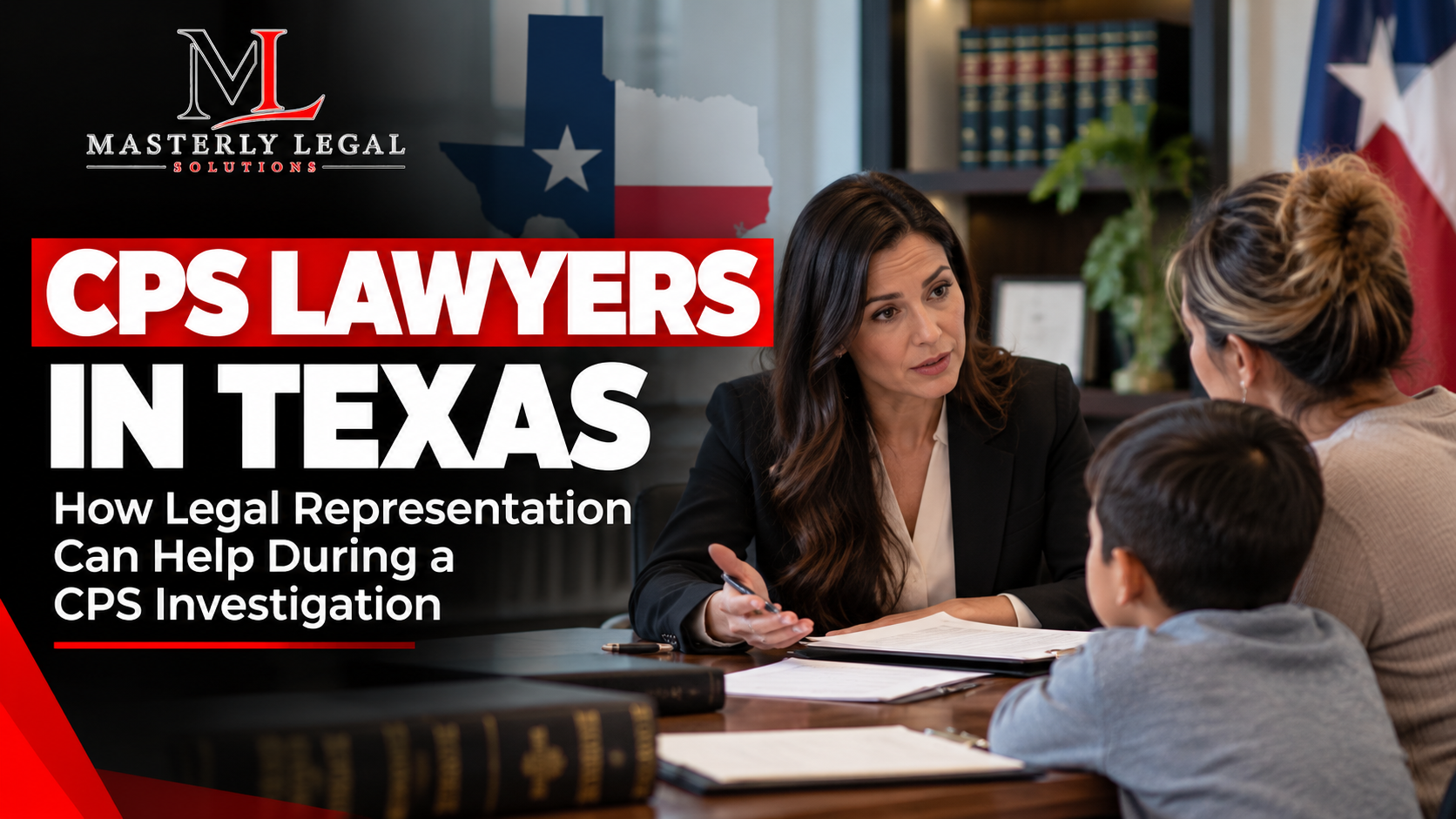
Child Protection Services Contact and the First Steps Texas Families Should Take” showing a CPS worker speaking with parents at their home and outlining early steps such as staying calm, confirming CPS worker identification, understanding allegations, documenting interactions, seeking legal guidance, and cooperating carefully to protect parental rights, branded with Masterly Legal Solutions.


Statistics and the Reality of CPS Cases

Statistics show that many CPS investigations do not result in removal or court action. However, the investigation itself can still have lasting effects. Reports and records may remain for years.


Being informed helps families navigate the system more effectively.


Professionals and CPS Contact

Professionals such as teachers, healthcare providers, and childcare workers may face CPS involvement related to their work. Allegations can affect careers and reputations. Understanding responsibilities and rights is essential.


Professional guidance can help protect both personal and professional interests.


Dealing With Stress and Uncertainty

CPS involvement is stressful for parents and children alike. Anxiety and fear are natural reactions. Maintaining perspective and seeking support can help families cope.

Clear information often reduces fear more effectively than speculation.


Responsibility Without Accepting Fault

Parents may feel pressure to accept responsibility even when they disagree with allegations. Responsibility for cooperation does not mean accepting fault for abuse or neglect. Understanding this distinction helps families navigate conversations with CPS.


The Role of the Court if CPS Escalates

If CPS believes court involvement is necessary, hearings may be scheduled. Courts rely heavily on CPS reports and assessments. Early actions can influence how the court views the family.


Avoiding unnecessary escalation is often a key goal.


Success Through Preparation and Clarity

Families who approach CPS contact with preparation and clarity often experience better outcomes. Understanding the process, knowing your rights, and responding thoughtfully can reduce long-term impact. Success is measured by family stability and children’s well being.


How Masterly Legal Solutions Supports Families

Masterly Legal Solutions provides strategic CPS defense and administrative appeal representation exclusively for Texas cases. Our approach focuses on preparation, investigation awareness, and protecting legal interests without unnecessary litigation.

We guide parents, caregivers, and professionals through CPS involvement with clarity and professionalism.


Contact Masterly Legal Solutions for Guidance

If your family has been contacted by CPS in Texas, early assistance matters. Masterly Legal Solutions offers a free consultation to help you understand what CPS contact means and what steps to take next. We are here to answer questions and help you respond appropriately before decisions are made.

Call (972) 236-5051 to speak with our team and discuss your situation in confidence.


Disclaimer: This article is for informational purposes only and does not constitute legal guidance or legal advice. Reading this content does not create an attorney-client relationship. For advice specific to your situation, consult a qualified Texas CPS or education attorney.
(972) 236-5051
Employee retaliation at work illustration.
January 7, 2026
Learn how retaliation in the workplace violates federal law, how employers retaliate at work, EEOC review options, and how law provides to protect your rights.
Washington County CPS child protective services office
January 7, 2026
Find Washington County child protective services for abuse reports, CPS department services, and how to contact local child protective services in Washington.
CPS attorney representing a family in court
January 7, 2026
Experienced CPS attorney and lawyer provide child protective services defense, CPS case support, parental rights protection, and CPS lawyers near you to help.
TEA educator certification license document.
January 7, 2026
Learn about Texas education certification, TEA requirements, certificate options, and steps educators must take to maintain compliance and licensure statewide.
Lawyer handling CPS cases for families.
January 7, 2026
A CPS lawyer and attorney provide defense during a CPS investigation, guide your case, and protect your rights with experienced law office support available.
January 7, 2026
Early Mistakes Educators Make During TEA Investigations Facing an investigation by the Texas Education Agency can feel overwhelming for teachers and administrators alike. In an educational setting built on trust, professionalism, and accountability, a sudden inquiry can disrupt careers, reputations, and personal lives. Many educators assume that cooperating fully and quickly will resolve concerns, but early missteps often make situations far worse. Understanding these mistakes is essential for protecting teachers’ rights, students’ rights, and long-term employment in the education system. At Masterly Legal Solutions, we routinely work with teachers, administrators, and staff members across Texas education environments. We see patterns emerge in how investigations escalate, especially when educators act without guidance. This article explains the most common early mistakes educators make during TEA and UIL investigations and how an experienced education lawyer can make all the difference. Understanding the Role of TEA in Education Oversight The Texas Education Agency oversees public education to ensure compliance with state law, professional standards, and civil rights obligations. When allegations arise, TEA investigations can involve employment issues, student safety, special education services, or Title IX compliance. These investigations are not informal conversations; they are structured legal matters with serious consequences. Educators working in a public school, private school, charter schools, or higher education institutions are all subject to different layers of oversight. TEA inquiries may involve school administrators, school districts, or even the state board. Understanding this structure helps educators avoid decisions that unintentionally worsen their legal position. Mistake One: Treating the Investigation as Informal One of the earliest mistakes teachers make is assuming a TEA inquiry is simply a routine administrative matter. Investigations often begin with emails or phone calls that appear conversational, which can create a false sense of security. In reality, statements made early can become evidence in disciplinary proceedings or administrative hearings. Educators should understand that investigators are gathering information to determine whether law or policy violations occurred. This includes potential employment law implications, civil rights concerns, or allegations involving students. Treating the process casually can lead to inconsistencies that harm credibility. Mistake Two: Speaking Without an Education Attorney Many educators believe hiring an education attorney signals guilt. In truth, legal representation is a protective measure, not an admission of wrongdoing. An experienced education attorney for teachers understands education law matters and helps educators navigate complex legal issues before irreversible mistakes occur. Without legal professionals advising them, teachers may provide unnecessary details or speculate about events. An education lawyer ensures communications are accurate, measured, and aligned with the educator’s best interests. Early legal representation can prevent misunderstandings that escalate investigations. Mistake Three: Not Understanding Teachers’ Rights Teachers’ rights exist to protect fairness in the education system, but they are often misunderstood or overlooked. During a TEA investigation, educators may have rights related to due process hearings, disciplinary hearings, or grievance hearings depending on their employment status. Failing to assert these rights early can limit options later. An education law firm with extensive experience helps educators understand when and how to assert protections afforded under Texas education law. This knowledge can significantly affect outcomes. Mistake Four: Overlooking Employment Implications A TEA investigation often overlaps with employment issues within a school district or school system. Teachers sometimes focus only on certification concerns while ignoring employment consequences such as suspension, termination, or contract nonrenewal. Employment law intersects with education law in complex ways. Statements made to administrators or investigators can influence employment decisions. An education attorney helps educators protect both their professional license and their employment status simultaneously . Mistake Five: Failing to Document Early Events Documentation is critical in any legal matter, especially in education-related investigations. Teachers often assume records will be maintained by the school or investigators, but personal documentation can be vital. Emails, lesson plans, incident reports, and timelines can all support an educator’s account. Without documentation, educators may struggle to recall details accurately months later. Legal professionals often rely on early documentation to build strong defenses in disciplinary proceedings or administrative matters. Mistake Six: Ignoring the Impact on Students TEA investigations frequently involve students, particularly in cases related to special education, disabilities, or Title IX. Educators may unintentionally minimize the importance of how decisions affect children and their rights. This can be problematic when investigators assess compliance with education law and civil rights obligations. Understanding students’ rights and a child’s rights is central to many investigations. Education lawyers experienced in representing students and representing teachers help educators frame actions within lawful educational objectives. Mistake Seven: Mishandling Special Education Issues Special education cases require heightened care due to strict legal standards. Mistakes during investigations involving special education services, IEP meetings, or special needs children can carry severe consequences. Educators may not realize how technical special education law can be. Failure to ensure compliance with special education requirements can lead to allegations of denying services or violating civil rights. An education attorney familiar with special education law helps educators understand obligations and defend decisions appropriately. Mistake Eight: Assuming Administrators Will Protect Them Teachers often trust school administrators to advocate on their behalf. While administrators may be supportive, their responsibilities are to the school system and educational institutions as a whole. Conflicts of interest can arise quickly during investigations. Relying solely on administrators without independent legal representation can leave educators vulnerable. An education lawyer serves as an advocate focused exclusively on the educator’s interests. Mistake Nine: Delaying Legal Help Time is critical in TEA investigations. Delaying consultation with an education attorney can limit defensive strategies. Early intervention allows attorneys to address issues before formal disciplinary hearings or administrative hearings occur. Texas education lawyers understand procedural deadlines and investigative timelines. Prompt legal services can prevent small issues from becoming career-threatening legal issues. Mistake Ten: Misunderstanding Title IX Obligations Title IX investigations involve sensitive allegations, including sexual harassment or sexual abuse. Educators sometimes underestimate the seriousness of these claims or assume internal processes will resolve them quietly. Title IX matters often involve overlapping TEA and school district procedures. An education law firm experienced in Title IX cases helps educators navigate these complex issues while protecting due process rights. Mishandling Title IX allegations can result in severe disciplinary proceedings and long-term consequences. Mistake Eleven: Inconsistent Statements Consistency matters greatly in legal investigations. Teachers may unintentionally provide differing accounts when speaking with administrators, investigators, or colleagues. These inconsistencies can be interpreted as dishonesty even when unintentional. Education lawyers help educators prepare clear, consistent narratives supported by documentation. This preparation reduces risk during interviews and written responses. Mistake Twelve: Discussing the Case Publicly Educators may seek emotional support by discussing investigations with colleagues, parents, or on social media. Unfortunately, these conversations can be misinterpreted or used against them. Public discussions can complicate legal matters and damage reputations. Legal professionals advise educators on appropriate communication boundaries. Protecting confidentiality is often crucial in maintaining a strong defense. Mistake Thirteen: Ignoring Civil Rights Considerations Civil rights are central to education law, especially when investigations involve discrimination, disabilities, or unequal treatment. Educators may not recognize how everyday decisions intersect with civil rights law. Education attorneys provide guidance on how civil rights standards apply within schools and universities. This understanding helps educators respond appropriately to allegations and demonstrate lawful intent. Mistake Fourteen: Underestimating the Scope of Investigations TEA investigations can expand beyond initial allegations. What begins as a narrow inquiry may grow to include additional legal issues, employment concerns, or policy violations. Educators who assume the scope is limited may be unprepared for broader scrutiny. An education lawyer anticipates potential expansion and prepares educators accordingly. This proactive approach often improves outcomes. Mistake Fifteen: Not Preparing for Disciplinary Proceedings Disciplinary proceedings can follow TEA investigations, including disciplinary hearings before the state board. Educators sometimes assume matters will resolve before reaching this stage, leaving them unprepared. Preparation includes understanding procedures, evidence standards, and potential outcomes. Skilled lawyers with extensive experience guide educators through these processes with clarity. Mistake Sixteen: Overlooking Higher Education Implications Educators working in universities or community colleges face unique challenges. Higher education institutions have additional policies and contractual obligations that affect investigations. University faculty may also face academic freedom concerns. Education lawyers familiar with higher education law help educators navigate these layered responsibilities. This ensures compliance while protecting professional interests. Mistake Seventeen: Confusing Administrative and Criminal Issues Some investigations involve allegations of physical or sexual abuse or sexual harassment. While TEA investigations are administrative, they may overlap with criminal inquiries. Educators sometimes confuse these processes and make statements that affect both. An education attorney helps distinguish between administrative matters and potential criminal exposure. This guidance is essential when allegations involve students or children . Mistake Eighteen: Failing to Advocate for Themselves Educators are advocates by profession, yet many hesitate to advocate for themselves during investigations. Fear of retaliation or appearing defensive can silence important perspectives. Legal representation empowers educators to advocate appropriately within legal boundaries. Attorneys provide strategies that balance cooperation with protection. Mistake Nineteen: Assuming Outcomes Are Predetermined Some teachers believe TEA investigations are biased or predetermined. This belief can lead to disengagement or resignation. In reality, outcomes depend heavily on evidence, procedure, and representation. Education lawyers know how to present facts effectively and challenge assumptions. Active participation often changes outcomes significantly. Mistake Twenty: Not Understanding Long-Term Consequences TEA findings can affect future employment, certifications, and professional reputation. Educators may focus only on immediate stress without considering long-term impacts on their careers within the education system. An education attorney helps educators assess both short-term and long-term consequences. Strategic decisions early can protect future opportunities. The Value of Tailored Legal Services in Education Law Every TEA investigation is unique. Tailored legal services address the specific circumstances of each educator, school district, and educational institution. A law firm experienced in education law understands the nuances of public education, private education, and charter schools. At Masterly Legal Solutions, our attorneys provide legal representation grounded in extensive experience and deep knowledge of Texas education law. We focus on protecting educators while ensuring compliance with applicable law. How Skilled Lawyers Support Educators Through Investigations Skilled lawyers do more than respond to allegations. They advise on documentation, communication, and strategy. They prepare educators for interviews, administrative hearings, and potential litigation services if necessary.  Attorneys provide clarity during uncertain times, helping educators navigate new challenges and complex issues with confidence.
Retaliation attorneys handling workplace retaliation claims.
January 7, 2026
Retaliation lawyer and attorney for workplace retaliation claims, protecting employees from employer retaliation, discrimination, and unlawful workplace practices.
California CPS investigation process overview.
January 7, 2026
CPS investigations explained, covering the CPS investigation process, state timelines, CPS investigator roles, law enforcement involvement, and assessments.

Looking for Legal & Business Solutions? Contact Us Now

Fill in the form or call us to set up a meeting

(972) 236-5051
A black and white drawing of a straight line on a white background.