

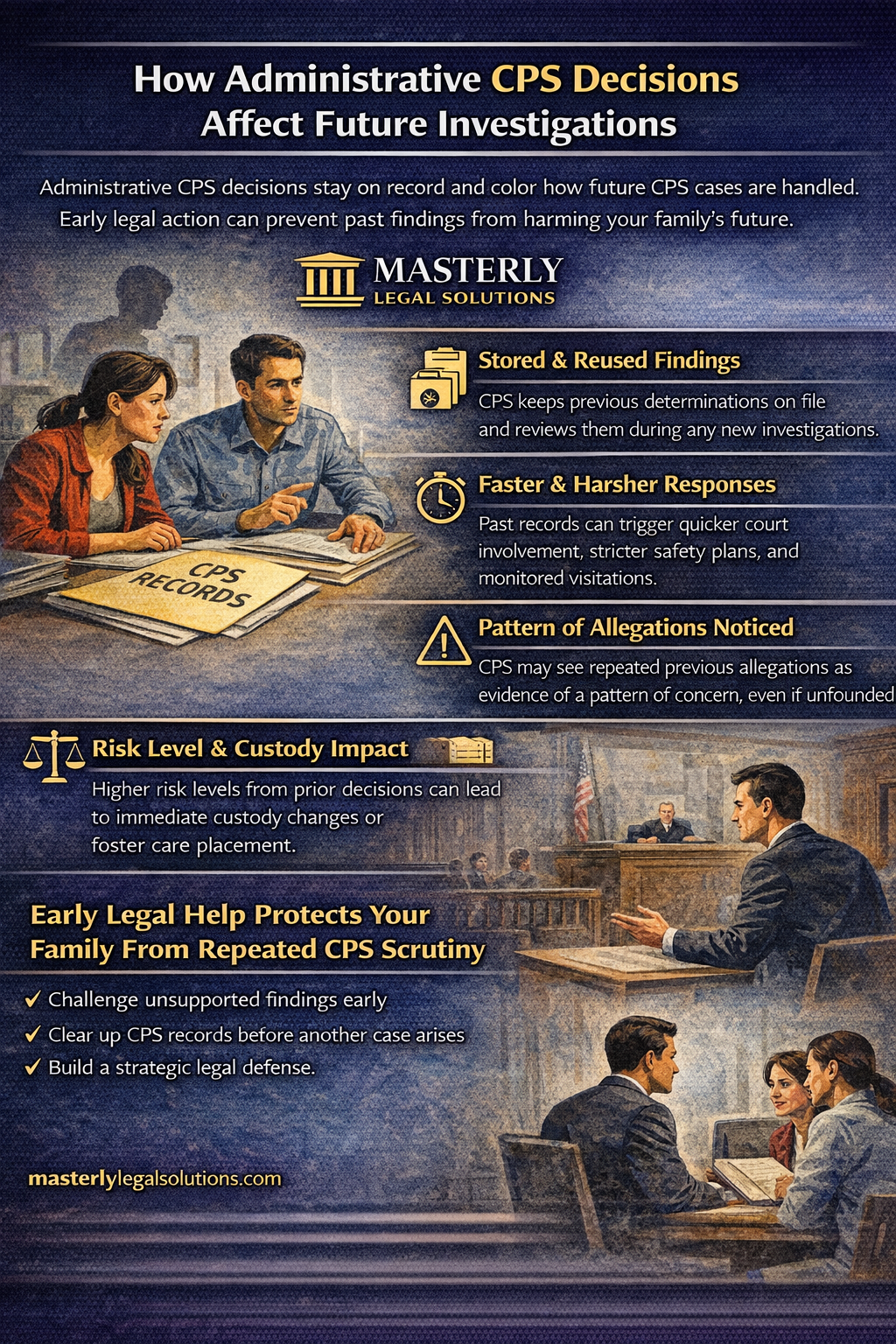
How Administrative CPS Decisions Affect Future Investigations
Families often believe that once a CPS investigation ends, the matter is behind them. Unfortunately, administrative CPS decisions rarely disappear quietly. These determinations can shape how future investigations unfold, how CPS workers approach a family, and how quickly court involvement escalates. At Masterly Legal Solutions, we help parents understand how early CPS decisions can follow them and why proactive legal action matters.
When child protective services becomes involved, the outcome of even a single investigation can influence future scrutiny. Administrative findings are stored, referenced, and reused, often without families realizing the long-term consequences. Understanding this process is critical for protecting your family, your parental rights, and your child’s well being.
What Administrative CPS Decisions Really Mean
Administrative CPS decisions are internal determinations made by child protective services CPS after an investigation. These findings often conclude whether allegations of abuse or neglect are substantiated, ruled out, or left unresolved. While these decisions may not immediately involve court hearings, they carry significant weight.
Once entered into CPS systems, these records can influence future investigations. CPS determines risk levels, response urgency, and recommended services based on prior history. Parents may be unaware that a closed case still affects how CPS views their family.
Why CPS History Matters in Future Investigations
CPS does not approach every investigation as a blank slate. When a new report is filed, CPS workers review prior CPS cases involving the family. Even old or unproven allegations can influence how a cps caseworker interprets new information.
This history may lead to faster court intervention, stricter safety plans, or immediate supervised visitation. Administrative decisions often act as a lens through which future allegations are evaluated.
How CPS Investigations Build on Past Findings
Each CPS investigation builds on existing records. Child protective services relies heavily on documented history when assessing safety concerns. Even when a parent believes a prior investigation was resolved fairly, CPS may still treat it as a risk factor.
This layered approach can result in escalating responses over time. Understanding how these patterns develop allows families to prepare and respond strategically.
The Role of CPS Workers in Administrative Decisions
CPS workers play a central role in shaping administrative outcomes. Their observations, notes, and conclusions become part of the official record. While many cps workers act in good faith, heavy caseloads and limited time can lead to incomplete assessments.
Once recorded, these impressions can be difficult to challenge without legal representation. A cps defense attorney focuses on correcting the record before it causes long-term harm.
Administrative Decisions Versus Court Rulings
Administrative CPS decisions are not the same as court orders, but they can lead to them. Courts often rely on CPS findings when determining custody, services, or removal. Judges may assume these findings are accurate unless challenged.
This is why early CPS defense matters. Addressing issues at the administrative level can reduce the likelihood of adverse court proceedings later.
How Child Abuse Allegations Carry Forward
Allegations involving child abuse are taken especially seriously. Even when allegations are unproven, their presence in CPS records can raise red flags in future investigations. CPS may treat subsequent reports as confirmation of a pattern rather than isolated incidents.
A defense attorney helps parents address these accusations before they harden into permanent assumptions. Challenging unsupported findings protects the family’s future.
Child Neglect Findings and Ongoing Scrutiny
Child neglect findings are among the most common administrative outcomes. Neglect may involve housing issues, supervision concerns, or access to services. Often, these findings reflect temporary hardship rather than intentional harm.
Despite this, neglect findings can lead CPS to impose stricter conditions in later cases. Legal guidance helps ensure context is documented and misunderstandings are corrected.
Juvenile Dependency and Administrative History
Juvenile dependency cases rely heavily on administrative CPS records. When a case reaches family court proceedings, prior CPS determinations often shape judicial expectations. Judges consider whether a family has a history of abuse or neglect.
Defense attorneys work to ensure that administrative records do not unfairly prejudice the court. Early intervention can change how future proceedings unfold.
How Administrative Findings Affect Custody Decisions
Custody decisions are deeply influenced by CPS history. Administrative findings may be used to justify removal, foster care placement, or ongoing supervision. Even when parents have complied with services, prior findings may still weigh against them.
Protecting custody requires addressing administrative decisions before they become barriers. A cps defense attorney focuses on preserving family unity whenever possible.
Safety Plans and Their Long-Term Impact
Safety plans are often imposed following administrative decisions. While they are presented as temporary, they can affect future investigations. CPS may view prior safety plans as evidence of ongoing risk.
Understanding how safety plans are recorded and referenced is essential. Legal counsel helps parents navigate these requirements without reinforcing negative assumptions.
Supervised Visitation and Repeated Restrictions
Administrative decisions often lead to supervised visitation arrangements. These restrictions can persist or reappear in later investigations. CPS may argue that prior supervision demonstrates unresolved concerns.
Defense attorneys challenge whether continued restrictions truly serve the best interest of the child. Advocacy helps prevent temporary measures from becoming permanent.
Foster Care Decisions Influenced by Past Cases
Past CPS decisions can influence whether foster care is considered in future cases. Even when children were never removed, prior findings may tip the balance toward removal. CPS may act faster when history exists.
Early legal action can reduce the likelihood of unnecessary foster care placement. Protecting family stability requires addressing administrative history head-on.
CPS Defense and the Importance of Early Strategy
CPS defense is not just about reacting to allegations. It involves proactive planning to protect against future investigations. A cps defense attorney evaluates how current decisions may affect later cases.
At Masterly Legal Solutions, we focus on long-term protection, not just immediate outcomes. Strategic defense helps families avoid repeated CPS involvement.
How CPS Determines Risk Based on History
CPS determines risk levels by reviewing past investigations, services, and compliance. Even completed counseling or services can be framed as evidence of prior problems. This risk assessment influences how aggressively CPS responds.
Defense attorneys challenge inflated risk assessments and demand accurate evaluations. Ensuring fairness protects parents and children alike.
The Role of Protective Services Databases
Protective services maintain extensive databases of administrative findings. These records are accessible to CPS across counties and sometimes across state lines. Families may not realize how widely their information is shared.
Correcting records early limits future exposure. Legal expertise is essential when dealing with these systems.
County Practices and Regional Differences
CPS practices vary by county, including regions like Orange County and other parts of Southern California. Some counties escalate cases faster based on administrative history. Others rely more heavily on prior findings.
A law firm familiar with county-level practices offers stronger representation. Local knowledge helps anticipate how decisions will be interpreted.
Government Agency Authority and Oversight
CPS operates as a government agency with broad authority. However, that authority is governed by law and due process requirements. Administrative decisions must follow established procedures.
Defense attorneys ensure that CPS conduct stays within legal limits. Challenging overreach protects families from unjust outcomes.
When Criminal Charges Overlap With CPS Findings
Administrative CPS decisions can influence criminal investigations. Allegations of abuse or neglect may be shared with law enforcement. Statements made during CPS investigations can later be used in criminal cases.
Coordinated legal defense is critical in these situations. An experienced attorney protects parents on both fronts.
The Impact on Family Services and Requirements
Administrative findings often lead to mandatory family services. While services may support healing, they can also reinforce CPS narratives. Participation may be portrayed as admission rather than cooperation.
Legal guidance helps parents navigate services strategically. Protecting rights while complying is a delicate balance.
Counseling and Its Role in Administrative Records
Counseling is commonly required following CPS involvement. Records from counseling may become part of administrative files. These records can influence future determinations.
A lawyer helps parents understand confidentiality limits and reporting obligations. Informed participation protects against unintended consequences.
How Schools Factor Into CPS History
Schools often interact with CPS during investigations. Reports from school personnel may appear in administrative records. Future school-related concerns may trigger renewed scrutiny.
Understanding how school involvement intersects with CPS history helps parents prepare. Legal counsel ensures that school-related information is fairly represented.
Challenging Administrative Decisions Through Filing
Administrative decisions can sometimes be challenged through formal filing and appeals. These filings must meet strict deadlines and procedural rules. Missing a filing deadline can lock in damaging findings.
Defense attorneys manage the filing process to protect rights. Timely action preserves options for the future.
Court Hearings and Administrative Records
When cases reach court, administrative records play a central role. Judges often rely on CPS history when making decisions. Unchallenged records can heavily influence outcomes.
A defense attorney presents compelling arguments to contextualize or rebut administrative findings. Effective advocacy can shift the court’s perspective.
How Parents Can Expect CPS to Respond Later
Parents with CPS history should expect heightened scrutiny during future investigations. CPS may investigate more quickly and impose stricter measures. Knowing what to expect reduces shock and fear.
Preparation and legal support make a significant difference. Families who understand the process are better positioned to respond calmly and effectively.
The Importance of Proven Legal Expertise
Administrative CPS issues require specialized expertise. A proven track record matters when defending families against repeated scrutiny. Experience allows attorneys to anticipate CPS strategies.
At Masterly Legal Solutions, our firm brings focused expertise to every case. We understand how administrative decisions echo forward.
Why Families Should Not Face CPS Alone
Dealing with CPS without a lawyer places families at a disadvantage. CPS has authority, resources, and institutional memory. Parents need strong advocacy to protect their interests.
Hiring a cps defense lawyer levels the playing field. Legal representation ensures that families are heard and protected.
How Masterly Legal Solutions Helps Protect Families
Masterly Legal Solutions is a law firm dedicated to CPS defense and family protection. Our attorneys provide comprehensive legal services focused on long-term outcomes. We work to correct records, challenge unfair decisions, and defend parental rights.
Our clients benefit from personalized strategies and experienced advocacy. We focus on protecting children while preserving family integrity.
Child Protection Services and the Role of Coordinated Oversight
Child protection services work alongside other agencies to investigate concerns involving the safety of a child. While their role is meant to safeguard children, their involvement can quickly expand into ongoing oversight that affects daily family life. Reports and findings generated by child protection services are often shared with courts and other authorities, increasing their long-term impact. Understanding how these systems interact helps families respond thoughtfully and protect their rights.
How a Law Office Supports Families During CPS Matters
A dedicated law office provides structure, clarity, and advocacy when families are navigating CPS involvement. Unlike informal advice, legal guidance from an experienced team ensures that every decision is made with long-term consequences in mind. A law office focused on CPS defense helps families organize records, respond to inquiries, and prepare for possible court proceedings. This level of support can be critical when administrative decisions begin to affect future investigations.
Addressing Sexual Abuse Allegations With Care and Precision
Allegations involving sexual abuse are among the most serious claims handled by CPS. These cases require careful legal strategy because even unproven accusations can follow a family for years. Families must respond in a way that protects the child while also safeguarding parental rights. Legal guidance ensures that responses are measured, accurate, and grounded in evidence rather than fear.
Social Services and Their Influence on CPS Decisions
Social services often work closely with CPS during investigations and follow-up monitoring. Recommendations from social services may influence safety plans, counseling requirements, and future assessments. While these services can be supportive, their reports may also shape administrative records. Understanding this influence allows families to participate constructively without unintentionally reinforcing negative conclusions.
When a Family Member Becomes Part of the Investigation
A family member may play a role in a CPS case as a reporter, witness, or temporary caregiver. Their involvement can affect how allegations are evaluated and how future decisions are made. Even well-meaning actions can be misinterpreted during an investigation. Legal guidance helps families manage these dynamics and ensure that all perspectives are properly considered.
Facing Allegations and Protecting Your Rights
Families facing allegations often feel isolated and overwhelmed by the process. Allegations alone can trigger administrative actions that affect custody, visitation, and reputation. Responding without guidance can increase risk, even when claims are unfounded. Legal support helps families respond strategically and preserve their rights throughout the process.
Understanding Child Abuse or Neglect Findings
Findings of child abuse or neglect carry significant legal and personal consequences. These determinations may be based on limited information or misunderstood circumstances. Once recorded, they can influence future CPS investigations and court decisions. Early legal involvement helps ensure that findings accurately reflect reality and do not unfairly define a family’s history.
Contact Masterly Legal Solutions for a Free Consultation
If you are dealing with CPS involvement or worried about how past administrative decisions may affect future investigations, now is the time to act. Early legal guidance can prevent repeated scrutiny and protect your family’s future. Speaking with a knowledgeable cps defense attorney can help you understand your options and next steps.
Contact Masterly Legal Solutions at (972) 236-5051 for a free consultation. We are here to answer your questions, explain the process, and fight to protect what matters most to you.
Disclaimer: This article is for informational purposes only and does not constitute legal advice. Reading this content does not create an attorney-client relationship. For advice specific to your situation, consult a qualified attorney.


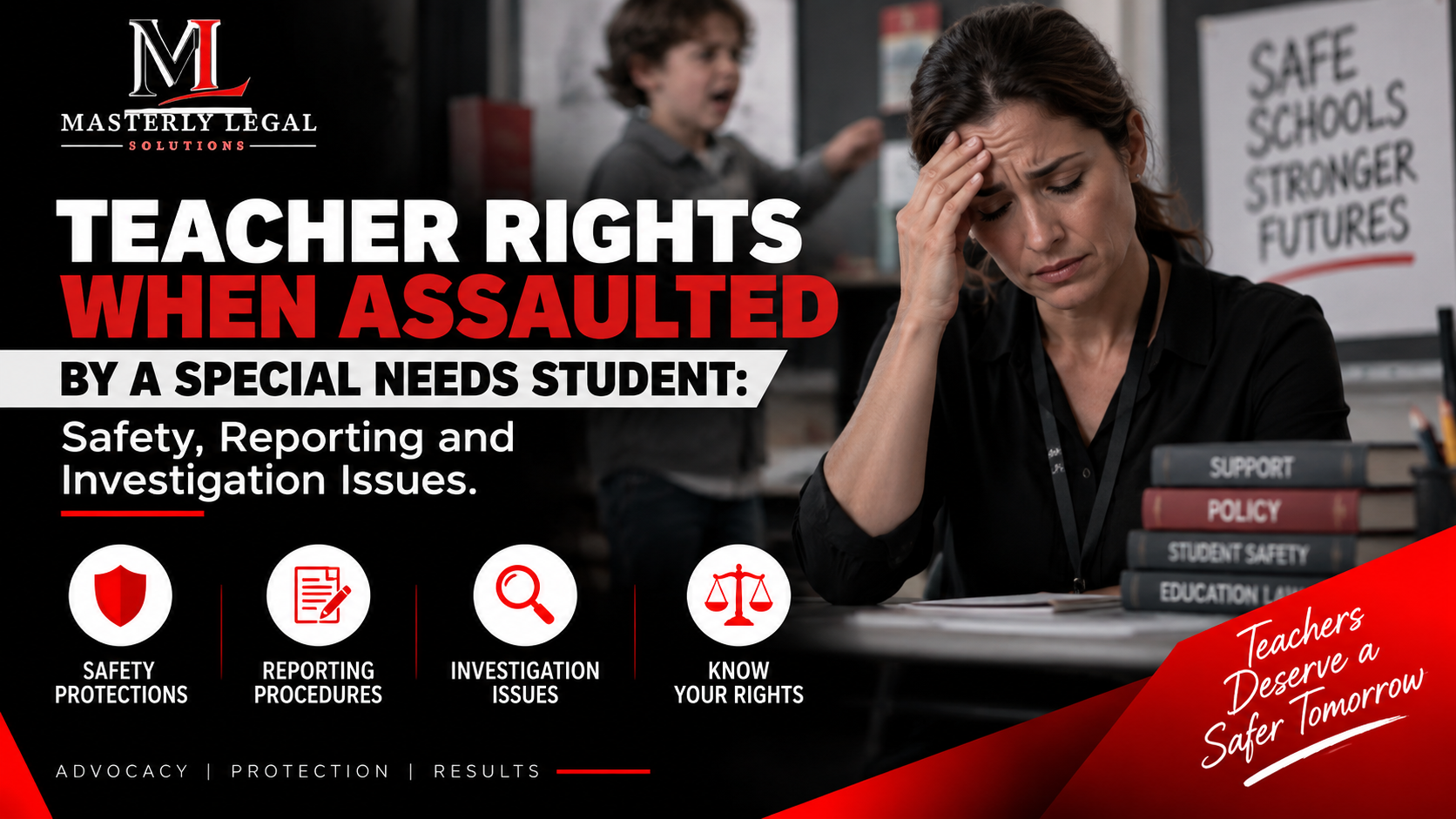
Teacher Rights When Assaulted by a Special Needs Student: Safety, Reporting and Investigation Issues


Looking for Legal & Business Solutions? Contact Us Now
Fill in the form or call us to set up a meeting





