

Complaints Against Teachers: When Should Schools Involve an Education Attorney for Teachers?
Understanding How Teacher Complaints Can Escalate Quickly
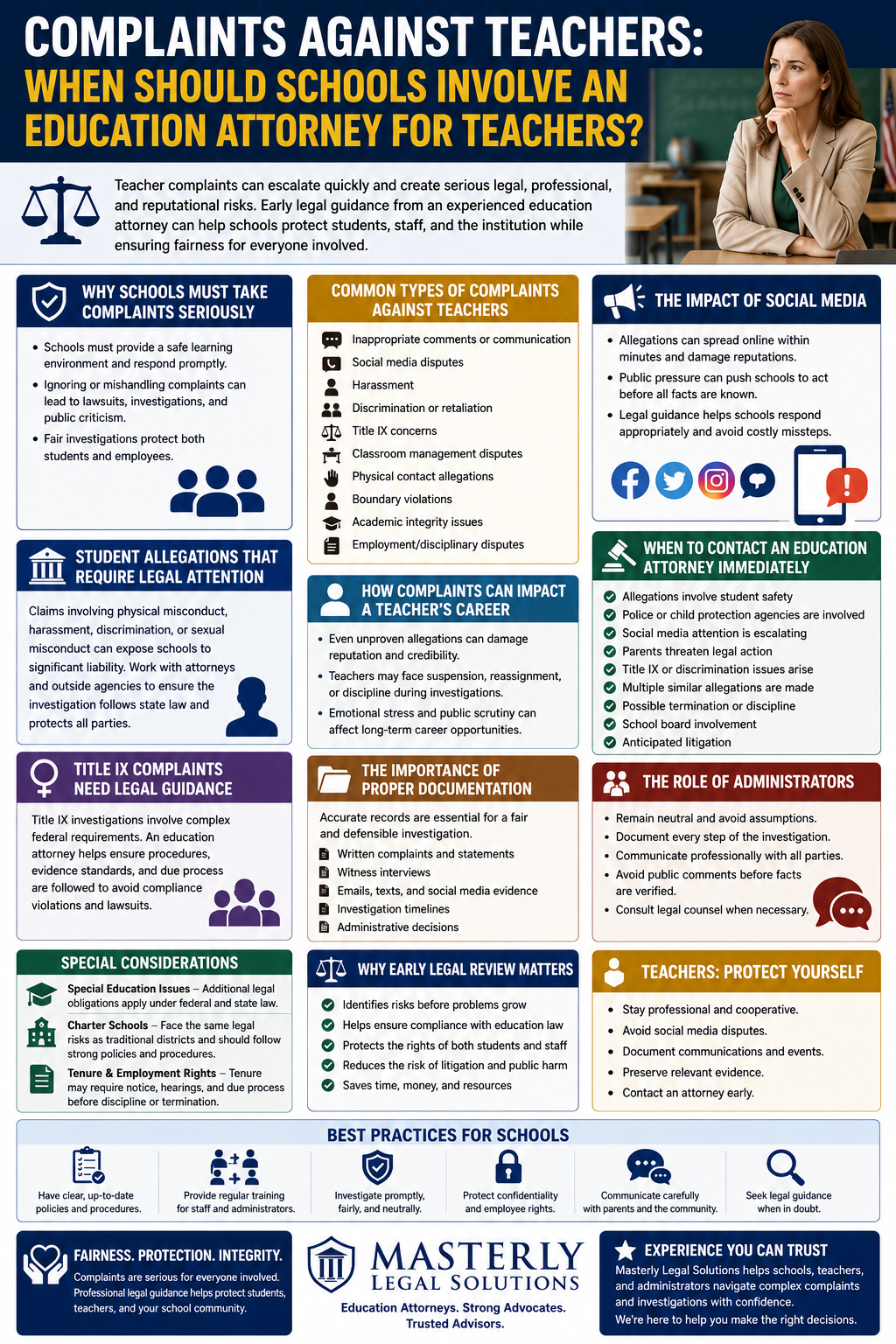
Complaints involving teachers can develop faster than many people realize. What may begin as a misunderstanding between a student and a teacher can quickly turn into a serious investigation involving administrators, school boards, parents, and outside agencies. In today’s educational climate, even allegations that are eventually proven false can create long-term damage to a teacher’s reputation, career, and emotional well-being.
Many educational institutions now face intense pressure to respond immediately when concerns are raised about employee conduct. Social media, community attention, and public scrutiny can push a school district into acting before all facts are carefully reviewed. When legal issues arise involving misconduct allegations, Title IX concerns, or disciplinary matters, schools often need guidance from an experienced education lawyer to avoid costly mistakes.
At Masterly Legal Solutions, we understand how difficult these situations can become for teachers, administrators, and school personnel. Complaints involving education professionals require careful handling because the outcome can affect employment, tenure rights, professional licenses, and future career opportunities. Knowing when to involve a school law attorney can help protect everyone involved while reducing unnecessary legal exposure.
Why Schools Must Take Complaints Seriously
Schools have a legal and ethical duty to maintain a safe learning environment for students, staff, and the broader community. When allegations involve inappropriate conduct, harassment, discrimination, or possible misconduct, administrators must act quickly and responsibly.
Ignoring complaints or delaying investigations can expose school districts and charter schools to serious legal matters, including litigation, public criticism, and compliance violations. Educational institutions are expected to investigate concerns fairly while protecting the rights of both the accuser and the accused employee.
At the same time, schools must avoid rushing to judgment. Teachers deserve fair treatment, proper review of evidence, and opportunities to respond before disciplinary action occurs. This balance is one of the main reasons legal representation often becomes necessary during complex investigations.
Common Types of Complaints Against Teachers
Complaints involving teachers may range from minor classroom concerns to allegations involving criminal conduct. Some situations can be resolved internally, while others require immediate involvement from attorneys and outside investigators.
Common complaints may include:
- Student allegations involving inappropriate comments
- Social media disputes involving students or parents
- Harassment complaints
- Claims involving discrimination or retaliation
- Title IX concerns
- Classroom management disputes
- Alleged misconduct involving physical contact
- Boundary violations with students
- Academic integrity concerns
- Employment disputes involving discipline or tenure
Every complaint should be evaluated carefully because even minor allegations can grow into major legal issues if handled improperly.
The Growing Impact of Social Media Complaints
Social media has changed the way complaints against teachers develop and spread. Years ago, concerns were usually handled privately between administrators and parents. Today, allegations may appear online before a school even begins an internal investigation.
A single post, screenshot, or video clip can damage a teacher’s professional standing within hours. Parents, students, and community members often form opinions long before all facts are reviewed. This pressure can place administrators in difficult positions as they try to balance transparency, student safety, and employee rights.
Schools should strongly consider involving an education attorney early when social media allegations begin attracting widespread attention. An experienced lawyer can help protect the institution, ensure compliance with education law, and reduce the risk of public missteps.
When Student Allegations Require Immediate Legal Attention
Certain student allegations require schools to involve attorneys immediately. Claims involving physical misconduct, inappropriate communication, discrimination, harassment, or sexual misconduct can expose educational institutions to significant liability.
Administrators should not assume a complaint is false simply because the teacher has an excellent reputation or many years of service. At the same time, schools should avoid assuming guilt before completing a fair investigation. Both students and teachers deserve respectful treatment throughout the process.
When allegations involve possible criminal conduct, police or child protection agencies may also become involved. In these situations, school districts should work closely with legal counsel to ensure investigations follow state law and protect all parties involved.
Why Title IX Complaints Often Require Legal Guidance
Title IX investigations can become extremely complicated for schools, universities, and charter schools. Complaints involving sexual harassment, discrimination, or gender-based misconduct carry serious legal responsibilities for educational institutions.
Federal law requires schools to investigate Title IX complaints promptly and fairly. Failing to follow proper procedures may expose a district or university to lawsuits, federal investigations, or compliance penalties.
An education lawyer can help administrators understand procedural requirements, evidence standards, and due process concerns connected to Title IX matters. Legal guidance may also help schools avoid procedural mistakes that could later become problems during litigation or administrative hearings.
How Complaints Can Affect a Teacher’s Career
Even allegations that are never proven can affect a teacher’s life and career. Teachers often spend many years building trust with students, parents, and the local community. A single complaint can threaten that reputation overnight.
Some teachers face suspension, reassignment, or disciplinary action while investigations are ongoing. Others may experience emotional stress, damage to professional relationships, or difficulty finding future employment opportunities.
This is why schools must handle investigations carefully and fairly. Improper handling can create unnecessary harm for both the employee and the institution.
Signs a School Should Contact an Education Attorney Immediately
Not every complaint requires outside legal counsel. However, certain situations create high legal risk and should prompt immediate consultation with attorneys familiar with education law.
Schools should strongly consider contacting an education lawyer when:
- Allegations involve student safety
- Police become involved
- Social media attention escalates rapidly
- Parents threaten a lawsuit
- Title IX issues arise
- Multiple students make similar allegations
- The complaint involves possible discrimination
- Employment termination is being considered
- School boards become involved
- The district anticipates litigation
Early legal guidance often prevents mistakes that become far more costly later.
The Role of Administrators During Investigations
Administrators play a critical role during teacher investigations. Their actions often shape how the situation develops both legally and publicly.
School administrators should remain neutral, avoid emotional assumptions, and carefully document all investigative steps. It is important for school personnel to communicate professionally with teachers, students, and parents throughout the process.
Administrators should also avoid making public comments before facts are verified. In some situations, statements made too early can create legal exposure for the district or damage the integrity of the investigation.
Why Teachers Need Fair Representation
Teachers accused of misconduct often feel isolated and overwhelmed. Many educators fear losing their jobs, professional licenses, or standing within the education community.
Fair representation matters because allegations alone should not determine the outcome of an investigation. An attorney can help ensure that teachers receive appropriate procedural protections and opportunities to respond.
Legal representation may also help protect teachers from unfair discipline, procedural errors, or violations of employment rights. Schools that fail to provide fair processes may face additional legal challenges later.
Complaints Involving Student Boundaries
Boundary-related allegations have become increasingly common in schools and universities. These complaints may involve texting students, social media interactions, private meetings, or allegations involving favoritism.
Sometimes the conduct may violate district policy without rising to criminal misconduct. Other situations may involve serious allegations requiring police investigation and legal intervention.
Educational institutions should carefully review these matters because unclear boundaries can quickly escalate into larger legal issues. Consulting an education lawyer early may help schools determine appropriate investigative steps and reduce liability risks.
The Importance of Proper Documentation
Documentation is one of the most important aspects of handling complaints against teachers. Poor recordkeeping can weaken investigations and create confusion during administrative hearings or court proceedings.
Schools should carefully preserve:
- Written complaints
- Student statements
- Witness interviews
- Social media evidence
- Emails and text messages
- Personnel records
- Investigation timelines
- Administrative decisions
Clear documentation helps educational institutions demonstrate fairness, consistency, and compliance with legal obligations.
How Parents Influence School Investigations
Parents often play a major role in school complaints involving teachers. Some parents seek answers and transparency, while others may become highly emotional during investigations involving their children.
Administrators should listen carefully to concerns while avoiding promises or conclusions before the review process is complete. Strong communication can help reduce misunderstandings and maintain trust within the community.
At the same time, schools must protect confidential personnel information and avoid violating employee rights during discussions with parents. Legal counsel may help districts navigate these sensitive conversations appropriately.
When Complaints Involve Special Education Issues
Complaints involving students with disabilities may create additional legal complications for schools. Educational institutions must comply with federal and state requirements involving accommodations, student services, and disability protections.
Parents sometimes allege discrimination, failure to accommodate, or inappropriate discipline involving students with disabilities. These situations may involve education law, compliance concerns, and possible litigation.
An experienced education attorney can help districts review policies, investigate complaints, and determine whether legal obligations were met under applicable law.
Why Charter Schools Face Similar Legal Risks
Many people assume charter schools operate differently from traditional public school systems regarding teacher complaints. However, charter schools still face significant legal obligations involving investigations, employment matters, and student safety.
Complaints involving educators at charter schools may trigger Title IX reviews, administrative hearings, or litigation just like cases involving traditional districts. Charter school administrators should take allegations seriously and seek legal guidance when necessary.
Strong policies and proper training can help charter schools reduce risks while maintaining compliance with applicable regulations.
Understanding Employment Rights for Teachers
Teachers often have important employment protections under contracts, tenure systems, collective agreements, or state law. These protections may affect how investigations and discipline procedures must be handled.
For example, some educators have rights involving notice, hearings, appeals, or representation before disciplinary action becomes final. College professors and university faculty may also have tenure protections that create additional procedural requirements.
Schools that ignore these protections may expose themselves to lawsuits or administrative disputes. Legal review can help ensure procedures follow applicable employment standards.
How Tenure Can Affect Investigations
Tenure rights may significantly influence how schools handle complaints against teachers. In some situations, districts must follow very specific procedures before removing or disciplining tenured employees.
Tenure does not prevent investigations into misconduct or policy violations. However, it may require schools to provide formal notice, hearings, or opportunities for defense before taking final action.
Failure to respect tenure rights can create major legal issues for educational institutions and school boards. An experienced education lawyer can help ensure the process follows applicable requirements.
The Role of School Boards in Serious Complaints
School boards often become involved when complaints attract public attention or involve possible termination decisions. Board members may review investigation findings, approve disciplinary recommendations, or participate in hearings involving employment matters.
Because these situations involve complex legal issues, school boards frequently rely on attorneys for guidance. Legal counsel may help board members understand procedural requirements, confidentiality obligations, and risk management concerns.
Boards should also remain cautious about discussing investigations publicly before all facts are reviewed. Public statements may affect litigation risks or damage trust within the community.
Why Internal Investigations Must Remain Neutral
Neutral investigations are critical for protecting both students and teachers. If administrators appear biased, the credibility of the entire process may become questionable.
Investigators should review all available evidence, interview witnesses fairly, and avoid predetermined conclusions. Schools should not treat allegations as proven facts before the investigation is completed.
At the same time, districts must still respond promptly to protect students and maintain safety. Balancing fairness with urgency often requires careful legal oversight.
Complaints Involving Social Media and Online Conduct
Social media complaints continue to increase across educational institutions. Teachers may face allegations involving inappropriate posts, private messages, political commentary, or online interactions with students.
Even personal social media activity can affect employment when it impacts the school environment or raises concerns about professionalism. Districts often struggle to determine where employee privacy rights end and institutional concerns begin.
An education attorney can help schools review social media complaints while considering employment rights, free speech protections, and policy compliance.
How Public Attention Can Pressure School Districts
When allegations become public, school districts often face enormous pressure from media outlets, parents, and community organizations. Administrators may feel pushed to act quickly to reassure the public.
Unfortunately, rushing investigations can create mistakes that later harm both the district and the accused employee. Public pressure should never replace careful factual review and fair procedures.
Schools should work closely with attorneys during high-profile cases to ensure communications remain professional and legally appropriate.
Why Early Legal Review Can Prevent Larger Problems
One of the biggest mistakes schools make is waiting too long before seeking legal assistance. Administrators sometimes believe they can manage investigations internally until problems become overwhelming.
Early review by an education lawyer may help identify legal risks before they grow into larger disputes. Attorneys can review policies, evaluate investigative procedures, and help administrators avoid actions that could later trigger litigation.
Proactive legal guidance often saves educational institutions time, money, and reputational harm in the long run.
The Emotional Impact on Teachers and Families
Complaints against teachers affect far more than employment records. They can deeply impact families, careers, emotional health, and professional confidence.
Many teachers dedicate their entire adult life to education and student success. Being accused of misconduct can feel humiliating and emotionally devastating even when allegations are unproven.
Schools should remember that fair treatment matters not only for legal reasons but also for preserving trust and professionalism within the education community.
Why Educational Institutions Need Strong Policies
Clear policies help schools respond consistently and fairly when complaints arise. Educational institutions should regularly review policies involving investigations, social media, Title IX, student interactions, and employee conduct.
Policies should be understandable, consistently enforced, and compliant with current legislation and state requirements. Administrators and personnel should also receive regular training on complaint procedures and investigative responsibilities.
Strong policies protect students, support educators, and reduce confusion during difficult situations.
How Administrative Hearings May Become Necessary
Some teacher complaints eventually lead to administrative hearings involving employment disputes, certification issues, or disciplinary recommendations. These proceedings may determine whether a teacher keeps employment, certification, or tenure rights.
Administrative hearings often involve witness testimony, documentary evidence, and legal arguments. Schools and teachers alike benefit from experienced representation during these proceedings.
An education lawyer familiar with administrative hearings can help educational institutions prepare evidence, follow procedures, and protect institutional interests effectively.
The Importance of Compliance in School Investigations
Compliance failures can expose schools to major legal and financial risks. Educational institutions must follow federal and state obligations involving discrimination, Title IX, student rights, and employment law.
Failure to maintain compliance may result in lawsuits, investigations, funding issues, or public criticism. Schools should regularly review policies and procedures to ensure they align with current legal standards.
Attorneys familiar with education law can help districts evaluate compliance concerns and address weaknesses before problems arise.
Why Communication Matters During Investigations
Communication plays a major role in how investigations unfold. Poor communication often increases confusion, frustration, and mistrust among teachers, parents, and students.
Administrators should communicate carefully, professionally, and consistently throughout the process. They should avoid speculation while still acknowledging concerns raised by the community.
Legal counsel may assist with communication strategies during high-risk investigations involving media attention or sensitive allegations.
How Teachers Can Protect Themselves During Complaints
Teachers facing complaints should remain professional and cooperative while protecting their rights. Emotional reactions, social media arguments, or confrontations with parents can worsen already difficult situations.
Educators should document important communications, preserve evidence, and seek legal guidance before making major decisions. An attorney can help teachers understand investigation procedures and avoid unnecessary risks.
Early legal assistance may also help teachers protect employment rights, certification status, and professional reputations during investigations.
Why Schools Should Avoid Rushed Discipline Decisions
Schools sometimes feel pressured to impose immediate discipline before completing investigations. While urgent safety concerns may require temporary action, premature conclusions can create legal problems later.
Discipline decisions should be based on verified evidence rather than assumptions or public pressure. Rushed decisions may expose districts to lawsuits, appeals, or reputational damage.
Careful review and proper legal guidance can help schools make informed decisions that protect both students and employee rights.
The Role of Experienced Attorneys in Education Matters
Education-related disputes often involve highly specialized legal issues. Attorneys familiar with education law understand how employment regulations, student protections, Title IX requirements, and administrative procedures interact.
Experienced attorneys can represent schools, teachers, administrators, and educational organizations during investigations, hearings, litigation, and compliance reviews. They may also provide guidance involving personnel decisions, employment disputes, and policy development.
Having attorneys with extensive experience in education matters can make a significant difference when complicated legal challenges arise.
Protecting the Reputation of Educational Institutions
Public trust matters greatly for schools, universities, and educational organizations. Mishandling complaints can damage relationships with parents, students, employees, and the broader community.
Educational institutions should demonstrate fairness, professionalism, and accountability throughout investigations. Transparent procedures and lawful practices help build confidence among stakeholders.
Legal review can also help schools reduce reputational risks while protecting the interests of students, employees, and the institution itself.
How Masterly Legal Solutions Assists Schools and Teachers
At Masterly Legal Solutions, we understand how stressful and complicated teacher complaints can become for everyone involved. Our firm works with teachers, administrators, school districts, charter schools, and educational institutions facing difficult legal issues connected to investigations, employment disputes, and student allegations.
We are committed to helping clients navigate education law matters with professionalism, careful strategy, and personalized attention. Whether the issue involves Title IX complaints, social media concerns, disciplinary action, administrative hearings, or litigation, our attorneys work to protect the rights and interests of those we represent.
Our team understands the unique challenges facing educators and educational organizations throughout Texas. We know how quickly complaints can escalate and how important it is to respond carefully from the beginning.
Speak With a School Law Attorney About Your Situation
Complaints involving teachers, administrators, or school personnel should never be taken lightly. Even allegations that appear minor at first can quickly grow into complex legal matters affecting careers, reputations, and educational institutions.
If you are dealing with a school investigation, student allegations, Title IX concerns, employment disputes, or questions involving discipline and compliance, Masterly Legal Solutions is here to help. Our attorneys are committed to providing experienced legal services tailored to the unique challenges facing schools, educators, and educational organizations.
Contact Masterly Legal Solutions at (972) 236-5051 for a free consultation. Our team can review your situation, answer your questions, and help you better understand your options when dealing with investigations, school complaints, and other education-related legal issues involving a school law attorney.
Disclaimer: This article is provided for educational and informational purposes only and should not be considered legal advice. Reading this content does not create an attorney-client relationship with Masterly Legal Solutions. Every situation is different, and outcomes depend on specific facts, laws, and circumstances. Individuals and educational institutions dealing with complaints, investigations, employment disputes, or other legal matters should speak directly with a qualified attorney regarding their specific situation.

Teacher Rights When Assaulted by a Special Needs Student: Safety, Reporting and Investigation Issues

Looking for Legal & Business Solutions? Contact Us Now
Fill in the form or call us to set up a meeting





