
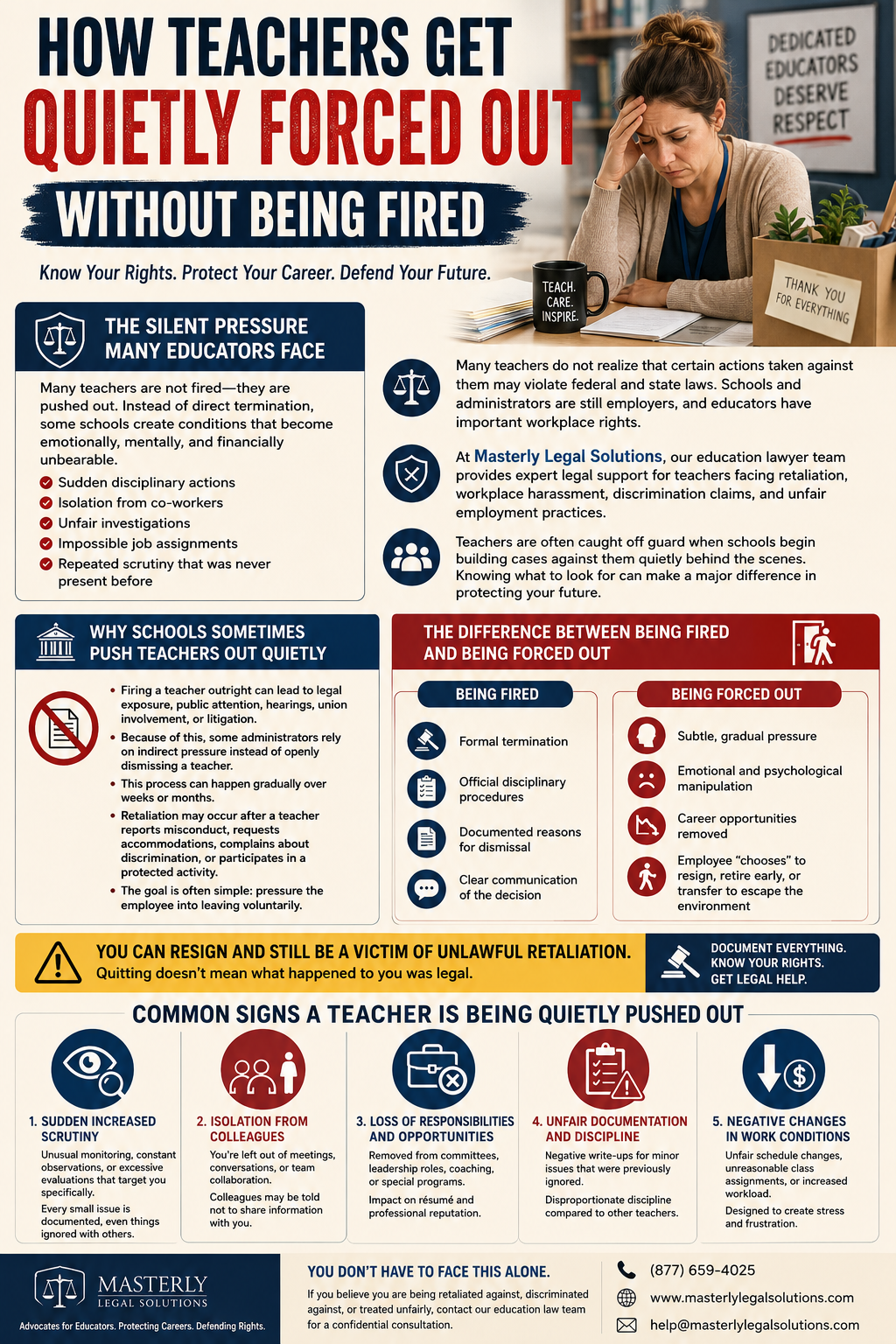
How Teachers Get Quietly Forced Out Without Being Fired
The Silent Pressure Many Educators Face
Teaching is often described as a calling rather than just a profession. Many educators spend years investing in students, building classroom communities, and supporting families beyond the school day. Unfortunately, some teachers discover that loyalty and dedication do not always protect them from unfair treatment in the workplace. In many school districts, educators are pressured to resign or retire long before any formal termination occurs.
Instead of directly firing a teacher, some employers create an environment that becomes emotionally, mentally, and financially unbearable. These situations can involve sudden disciplinary actions, isolation from co workers, unfair investigations, impossible job assignments, or repeated scrutiny that was never present before. The goal is often simple: pressure the employee into leaving voluntarily.
Many teachers do not realize that certain actions taken against them may violate federal and state laws. Schools and administrators are still employers, and educators have important workplace rights. Understanding these rights can help teachers recognize warning signs early and protect both their careers and reputations.
At Masterly Legal Solutions, our education lawyer team provides expert legal support for teachers and schools facing retaliation cases, workplace harassment, discrimination claims, and unfair employment practices. Teachers are often caught off guard when schools begin building cases against them quietly behind the scenes. Knowing what to look for can make a major difference in protecting your future.
Why Schools Sometimes Push Teachers Out Quietly
School districts often understand that firing an employee outright can lead to legal exposure. A direct termination may result in employment discrimination cases, public attention, hearings, union involvement, or litigation. Because of this, some administrators rely on indirect pressure instead of openly dismissing a teacher.
This process can happen gradually over weeks or months. A teacher who once received praise may suddenly receive a negative performance review without explanation. Administrators may begin documenting minor issues that were previously ignored. Human resources may become involved unexpectedly, even when no serious misconduct exists.
In some situations, retaliation occurs after a teacher reports misconduct, requests accommodations, complains about discrimination based on protected categories, or participates in a protected activity. Instead of openly punishing the employee, the district may slowly create conditions that damage morale and confidence.
These situations can leave educators feeling trapped. Many teachers worry about their licenses, future employment opportunities, and financial stability. Some resign simply to avoid further stress or public embarrassment.
The Difference Between Being Fired and Being Forced Out
A formal termination usually involves official disciplinary procedures and documented reasons for dismissal. Being forced out is often more subtle. The employee may technically resign, retire early, or transfer because continuing in the environment becomes impossible.
Schools sometimes use tactics designed to pressure an employee emotionally. Administrators may remove leadership opportunities, assign difficult schedules, or increase scrutiny on classroom management. These actions may appear small individually, but together they can create unbearable working conditions.
Teachers may also experience changes in employment decisions that negatively impact their careers. A respected educator may suddenly lose committee assignments, coaching responsibilities, or advanced placement classes. These changes can damage professional reputation and create severe stress.
In some cases, unlawful retaliation can occur after teachers file a formal complaint involving workplace discrimination, sexual harassment, wage violations, or concerns about student safety. Even when schools deny wrongdoing, patterns of conduct may reveal retaliation law violations.
Common Signs a Teacher Is Being Quietly Pushed Out
Sudden Increased Scrutiny
One of the earliest warning signs involves unusual monitoring from administrators. A teacher who previously worked independently may suddenly face constant classroom observations or excessive evaluations.
Administrators may begin documenting every small issue, even matters routinely overlooked with other staff members. This can include lesson pacing, classroom decorations, attendance procedures, or minor policy concerns.
When this behavior targets one employee specifically, it may indicate retaliation claims or discriminatory treatment. Documentation patterns often become important evidence later in retaliation cases.
Isolation From Other Staff
Some educators notice changes in how administrators and co workers interact with them. They may stop receiving invitations to meetings, professional opportunities, or collaborative projects.
Isolation can be intentional. Schools sometimes attempt to weaken employee morale by making teachers feel disconnected from colleagues and support systems. This strategy may also discourage witnesses from speaking up.
An employee who suddenly feels excluded after reporting concerns to human resources should take the situation seriously. Isolation often follows reports involving discrimination claims or workplace harassment.
Negative Evaluations After Protected Activity
A protected activity can include reporting discrimination, requesting reasonable accommodations, participating in investigations, or opposing illegal conduct. Federal law protects employees from retaliation after engaging in these activities.
Teachers sometimes receive excellent evaluations for years before suddenly receiving harsh criticism immediately after filing complaints. Timing matters in retaliation law cases.
For example, an educator who reports gender discrimination or sex discrimination may suddenly face accusations involving professionalism or classroom management shortly afterward. These changes may not be coincidental.
Unreasonable Job Assignments
Some schools intentionally assign overwhelming responsibilities to targeted teachers. This may involve larger classes, difficult schedules, extra supervision duties, or last-minute changes.
An employee may also be reassigned to unfamiliar grade levels or subjects without adequate preparation. These tactics can increase stress and reduce performance success.
When schools intentionally create conditions that interfere with an employee’s ability to succeed, the conduct may support retaliation claims or discrimination allegations.
How Retaliation Happens in Schools
Retaliation cases are more common in education than many people realize. Teachers often speak up about issues involving student safety, policy violations, testing concerns, or discrimination. Unfortunately, schools do not always respond appropriately.
Retaliation occurs when an employer punishes an employee for engaging in legally protected conduct. The punishment may be obvious or subtle. Schools may deny promotions, reduce responsibilities, or create hostile working environments, which is why many educators turn to an experienced retaliation lawyer for workplace law and employment help.
Under title vii and other federal and state laws, schools cannot legally punish employees for reporting discrimination or participating in investigations. These laws protect employees from retaliation connected to complaints involving race, national origin, sexual orientation, gender identity, religion, disabilities, and other protected categories.
Retaliation can also involve whistleblower laws when educators report misconduct involving public funds, student welfare, or policy violations. Federal agencies and state laws often provide protections for teachers who report illegal conduct.
Teachers Often Fear Reporting Problems
Many educators hesitate to speak up because they fear damaging their careers. Schools are tightly connected professional communities, and reputations matter greatly.
Teachers may worry that reporting misconduct will result in:
- Transfers to less desirable campuses
- Reduced leadership opportunities
- Increased disciplinary scrutiny
- Loss of coaching or extracurricular duties
- Negative references
- Damage to job security
These fears are not always unfounded. Some administrators react defensively when complaints arise. Instead of addressing concerns properly, they may target the employee who reported the issue.
This is one reason why early legal guidance matters. A strong legal team can help educators understand their rights before situations escalate further.
Workplace Discrimination in Educational Settings
Workplace discrimination can appear in many forms within schools. Some teachers experience discrimination based on age, race, gender, disabilities, pregnancy, sexual orientation, or national origin.
Schools may attempt to hide discriminatory motives behind vague explanations involving “culture fit” or “performance concerns.” However, patterns often reveal unfair treatment.
Examples of workplace discrimination may include:
- Older teachers pushed toward retirement
- Female educators denied leadership opportunities
- Unequal discipline between employees
- Failure to provide reasonable accommodations
- Harassment involving national origin or immigration status
- Different treatment involving family responsibilities
Employment discrimination does not always involve openly offensive statements. Sometimes the discrimination is subtle and develops gradually over time.
The Role of Human Resources in Teacher Complaints
Many teachers assume human resources exists primarily to protect employees. In reality, the human resources department often focuses on protecting the employer from liability.
This does not mean every HR representative acts improperly. However, educators should understand that statements made during internal investigations can later affect employment discrimination cases or retaliation claims.
Before signing documents or making detailed statements, teachers should consider speaking with an education law attorney for teachers and administrators experienced in education-related matters. Internal investigations may create records that become important evidence later.
Teachers should also keep copies of:
- Emails
- Performance evaluations
- Disciplinary notices
- Witness communications
- Meeting summaries
- Policy documents
- The employee handbook
Documentation can become critical when proving retaliation cases or discrimination claims.
Paid Administrative Leave Can Be Used Strategically
Paid administrative leave sounds harmless on the surface. Some educators even assume it means the district believes they did nothing wrong. Unfortunately, this is not always the case.
Schools sometimes place an employee on leave while quietly building a disciplinary case. During this time, rumors may spread among parents, students, and staff members.
The emotional impact can be devastating. Teachers may experience anxiety, embarrassment, depression, and severe damage to professional reputation. Some educators eventually resign simply to escape the stress.
Paid leave situations may also involve retaliation law concerns when the leave occurs shortly after protected activity or complaints involving workplace discrimination.
Harassment and Hostile Work Environments
Workplace harassment in schools can come from administrators, co workers, parents, or even outside contractors. Harassment becomes especially serious when it targets protected characteristics.
Examples may involve:
- Sexual harassment
- Offensive comments about national origin
- Mocking disabilities
- Comments involving age discrimination
- Gender discrimination
- Retaliation after rejecting sexual advances
Harassment refusing improper conduct should never place an employee’s career at risk. Yet many educators experience retaliation after rejecting inappropriate behavior or reporting misconduct.
The civil rights act and other federal law protections prohibit these forms of discriminatory treatment. Schools that ignore harassment complaints may face significant legal exposure.
Family Responsibilities Can Trigger Unfair Treatment
Teachers balancing caregiving responsibilities sometimes face discrimination based on assumptions about their availability or commitment.
An employee caring for a family member may suddenly experience reduced opportunities or criticism regarding attendance. Educators returning from maternity leave or job protected leave sometimes report hostile treatment afterward, making legal protection for teachers who need to know their rights and options especially important.
Schools cannot legally punish employees because of family responsibilities or protected leave usage. Federal and state laws provide important protections for eligible employees in these situations.
Unfortunately, some administrators view caregiving obligations as inconveniences rather than lawful rights.
Disability Issues and Accommodation Requests
Teachers with medical conditions may request reasonable accommodations under applicable laws, including the disabilities act, and some ultimately file retaliation and labor complaints with the Department of Labor when schools punish them for seeking support.
Schools are generally required to provide reasonable accommodations unless doing so creates an undue hardship. These accommodations might include schedule modifications, equipment changes, or other workplace adjustments.
Problems arise when schools respond negatively to accommodation requests. Some employees suddenly face discipline or increased scrutiny after requesting support.
Retaliation claims connected to disability accommodations are increasingly common. An employee should never face punishment simply for requesting assistance protected under federal law.
The Emotional Impact on Teachers
Being quietly pushed out of a profession can create serious emotional distress damages. Many educators dedicate decades to their careers and build strong emotional connections with students and communities.
When schools suddenly turn against them, teachers often feel betrayed and isolated. Stress may affect sleep, relationships, finances, and mental health.
Some educators experience:
- Anxiety attacks
- Depression
- Fear about future employment
- Loss of confidence
- Physical harm caused by stress
- Damage to family relationships
The emotional toll can be overwhelming, especially when schools publicly question a teacher’s professionalism or integrity.
How Schools Sometimes Manipulate Investigations
Internal investigations are not always neutral processes. Some schools selectively gather evidence that supports predetermined conclusions.
An employee may be interviewed without receiving full details regarding allegations. Witnesses favorable to the teacher may be ignored, while complaints from others receive greater attention.
Schools sometimes pressure teachers into signing resignation agreements before allowing them to fully respond to accusations. Administrators may suggest resignation is the “best option” even when evidence is weak.
Teachers should remember that they have rights during investigations. An education law attorney offering expert legal guidance for teachers can help protect employees from unfair tactics during these proceedings.
Federal Employees and Public School Systems
Certain educators working within federally connected educational systems may have additional protections as federal employees. Different federal agencies may oversee aspects of employment rights, discrimination complaints, and retaliation law enforcement.
The equal employment opportunity commission investigates many complaints involving employment discrimination and retaliation claims. Teachers should understand filing requirements and strict deadlines when pursuing legal action, and may benefit from working with an expert education lawyer for legal support for schools and teachers.
The employment opportunity commission eeoc may review cases involving:
- Sex discrimination
- Age discrimination
- Disability discrimination
- Retaliation
- Religious discrimination
- National origin discrimination
Missing filing deadlines can damage potential claims significantly.
Title VII Protections for Teachers
Title vii of the Civil Rights Act prohibits discrimination involving protected characteristics in the workplace. These protections apply to many educational institutions and employers.
Under title vii, schools cannot engage in:
- Direct discrimination
- Retaliation against protected activity
- Hostile work environments
- Unequal treatment based on protected categories
Title vii protections are especially important in retaliation cases involving discrimination complaints. Schools cannot legally punish an employee for reporting unlawful conduct.
Educators should also understand that education law and why every teacher needs a lawyer for legal protection are closely tied to these safeguards, and that retaliation law protects workers even if the original complaint is ultimately unproven, provided the complaint was made in good faith.
Retaliation After Reporting Safety Concerns
Teachers sometimes report safety concerns involving students, facilities, or misconduct. These reports may qualify as protected activity under whistleblower laws or related protections.
Instead of addressing the concern, some employers retaliate against the reporting employee. Adverse action may include demotions, investigations, transfers, or hostile treatment.
Federal agencies and state laws often prohibit retaliation connected to good-faith reporting. Schools cannot legally punish educators for raising legitimate concerns regarding safety or compliance issues.
How Immigration Status and National Origin Issues Appear in Schools
Some educators experience discrimination based on national origin or perceived immigration status. These situations may involve stereotypes, exclusion, offensive comments, or unequal discipline.
Schools should not make employment decisions based on assumptions tied to ethnicity, accents, or cultural backgrounds. Federal law provides protections against these forms of discrimination.
An employee facing discriminatory treatment related to immigration status or national origin should document incidents carefully and seek legal guidance promptly.
When Performance Reviews Become Weapons
A negative performance review can significantly affect a teacher’s career. Poor evaluations may impact contract renewals, certifications, promotions, and future job opportunities.
Unfortunately, some administrators weaponize evaluations after conflicts arise. A teacher who previously received strong evaluations may suddenly face criticism after filing complaints or participating in investigations.
These patterns often appear in retaliation cases. Courts and investigators sometimes review timing, past evaluations, and comparative treatment involving other employees.
Performance evaluations should reflect genuine professional concerns rather than retaliation or unfair treatment.
Social Pressure Inside School Systems
School environments are highly relationship-driven workplaces. Administrators sometimes rely on social pressure rather than formal discipline to force employees out.
An employee may experience:
- Exclusion from meetings
- Gossip among co workers
- Public criticism
- Reduced communication
- Unfair classroom coverage
- Loss of mentoring support
These tactics can damage employee morale and create severe emotional stress. Teachers may feel that remaining employed is no longer emotionally sustainable.
Teachers Often Feel Trapped Financially
Many educators remain in difficult environments because they fear losing retirement benefits, healthcare, or income stability.
Schools sometimes exploit these fears. Administrators may assume an employee cannot afford to challenge unfair treatment.
However, laws protect employees from retaliation and discriminatory conduct. In some employment discrimination cases, educators may recover lost wages, punitive damages, or other compensation depending on the facts involved.
Legal options vary based on circumstances, but early intervention can often strengthen a teacher’s position significantly.
How Documentation Protects Educators
Strong documentation can become one of the most valuable tools in retaliation claims and discrimination cases.
Teachers should consider keeping records involving:
- Emails from administrators
- Evaluation history
- Meeting notes
- Schedule changes
- Witness information
- Policy inconsistencies
- Communications with human resources
Documentation may help establish patterns showing adverse employment actions connected to protected activity.
Teachers should avoid storing confidential student records improperly, but maintaining lawful employment-related documentation is often extremely important.
What Teachers Should Avoid Doing
Educators under stress sometimes make decisions that unintentionally damage their cases. Emotional reactions can later be used against the employee.
Teachers should avoid:
- Resigning impulsively
- Posting about disputes online
- Destroying evidence
- Confronting administrators aggressively
- Violating school policies
- Ignoring investigation notices
Instead, employees should remain professional and seek experienced legal guidance before making major decisions involving their careers.
The Importance of Early Legal Guidance
Many educators wait too long before speaking with employment lawyers. By the time they seek help, important deadlines may have already passed.
An initial consultation with experienced retaliation attorneys may help teachers understand:
- Whether retaliation claims exist
- What evidence matters most
- How federal and state laws apply
- Filing requirements with the equal employment opportunity commission
- Risks involving resignation agreements
- Strategies for protecting teaching licenses
Early legal advice may also help prevent future discrimination or additional retaliatory conduct.
Retaliation Cases Often Involve Multiple Issues
Many retaliation cases involve more than one legal concern. A teacher may experience retaliation connected to complaints about:
- Sexual harassment
- Wage violations
- Overtime pay
- Unsafe conditions
- Discrimination based on protected categories
- Harassment from co workers
- Violations of the employee handbook
Schools sometimes assume employees will not recognize overlapping legal violations. A thorough legal review can identify additional protections that may apply.
Schools Cannot Ignore Legal Protections
Schools have obligations under federal and state laws to maintain lawful employment environments. Administrators cannot simply target individual employees because conflicts arise.
Laws protect employees who:
- Report discrimination
- Participate in investigations
- Request accommodations
- Oppose unlawful conduct
- Exercise protected rights
When employers ignore these protections, legal action may become necessary to hold employers accountable.
Understanding Constructive Discharge
Constructive discharge occurs when working conditions become so intolerable that a reasonable employee feels forced to resign.
Although the employer technically did not fire the employee, the environment effectively leaves the worker with little real choice.
Examples may include:
- Constant harassment
- Severe retaliation
- Public humiliation
- Impossible job duties
- Threats to certification or career reputation
Courts sometimes recognize constructive discharge claims when evidence shows intentional efforts to force an employee out, raising questions like whether an employer can force you to resign or quit your job.
The Personal Cost of Staying Silent
Many teachers remain silent because they hope situations will improve. Unfortunately, silence sometimes allows unfair conduct to continue unchecked.
Educators may lose confidence in themselves and begin questioning their abilities even when they did nothing wrong. Some leave the profession entirely because of hostile treatment.
The impact often extends beyond the employee alone. Family responsibilities, financial obligations, and emotional wellbeing can all suffer significantly.
No teacher should feel pressured to sacrifice dignity or career stability because administrators misuse authority.
Why Experienced Representation Matters
Education-related employment disputes involve unique legal and professional concerns. Teachers face risks involving certifications, reputations, contracts, and public scrutiny.
An experienced legal team understands how school systems operate and how retaliation cases develop over time. Legal guidance from a firm that focuses on legal support for educators, TEA license defense, and school investigations can help employees protect records, respond strategically, and avoid common mistakes.
Employment lawyers handling education matters also understand the importance of confidentiality and professional reputation management.
The earlier an educator seeks advice, the more opportunities may exist to protect both career and future opportunities.
Protecting Your Career Before It Is Too Late
Many teachers recognize warning signs only after situations become severe. A sudden investigation, transfer, or disciplinary action may not be random.
Patterns matter. Timing matters. Documentation matters.
If you believe you are experiencing retaliation, workplace discrimination, unfair treatment, or hostile conduct, taking action early may help preserve important evidence and legal rights.
Educators dedicate their lives to helping students succeed. They deserve workplaces that respect fairness, dignity, and the rule of law.
Understanding the Legal Definition of Constructive Pressure in Schools
The legal definition of being forced out without formal termination often falls under what courts describe as “constructive discharge.” This happens when working conditions become so difficult, hostile, or emotionally exhausting that a reasonable employee feels they have no realistic option except to resign from his or her job. In many school systems, administrators may attempt to avoid direct termination by increasing pressure through investigations, schedule changes, isolation, or repeated disciplinary actions. Under the employment act and other federal and state protections, educators still have rights even if they technically resign. Some retaliation cases eventually move into federal court when an employer denies wrongdoing despite clear evidence showing patterns of unfair treatment. These situations are not always obvious, which is why employee based documentation, emails, evaluations, and witness statements can become extremely important when proving unlawful conduct.
When Schools Cross the Line Between Professional Oversight and Personal Attacks
Teachers should not have to fear that their personal life will become a target simply because workplace conflicts arise. Unfortunately, some administrators attempt to pressure an employee by spreading rumors, questioning outside relationships, or creating scrutiny that extends far beyond normal professional expectations. In certain cases, schools may investigate matters unrelated to classroom performance in hopes of damaging credibility or encouraging resignation. This type of conduct can affect not only an educator’s emotional wellbeing, but also his or her job security and future career opportunities. When an employer denies that retaliation or discrimination occurred, the evidence often comes down to patterns of conduct and whether the school treated the employee differently after complaints, reports, or protected activity took place. Educators facing these situations should understand that legal protections may still apply even when the pressure appears subtle rather than openly hostile.
Speak With Masterly Legal Solutions About Your Rights
At Masterly Legal Solutions, we understand how devastating it can feel when a school district begins quietly forcing an employee out without openly firing them. Teachers often spend years building careers, relationships, and reputations only to suddenly face investigations, retaliation, isolation, or unfair scrutiny from administrators.
Our firm works with educators facing retaliation claims, workplace discrimination, harassment, employment disputes, and paid administrative leave concerns. Whether you are dealing with a hostile work environment, unfair discipline, or pressure to resign, our legal team is prepared to help you understand your options and protect your rights.
Every situation is different, and many teachers are unaware that federal law, state laws, whistleblower laws, and other legal protections may apply to their circumstances. Speaking with experienced retaliation attorneys early may help you avoid mistakes that could affect your future career opportunities or legal claims.
Contact Masterly Legal Solutions at (972) 236-5051 for a free consultation. We can answer your questions, review your situation, and help you better understand the legal protections available to educators facing unfair treatment in the workplace.
Disclaimer: This article is provided for educational and informational purposes only. It is not legal advice and does not create an attorney-client relationship. Every employment situation is different, and readers should consult directly with an attorney regarding their specific circumstances.


Teacher Rights When Assaulted by a Special Needs Student: Safety, Reporting and Investigation Issues




Looking for Legal & Business Solutions? Contact Us Now
Fill in the form or call us to set up a meeting