

CPS Allegations Against Foster Parents: What Happens After a Report Is Made?
Understanding the Fear and Uncertainty After a CPS Report
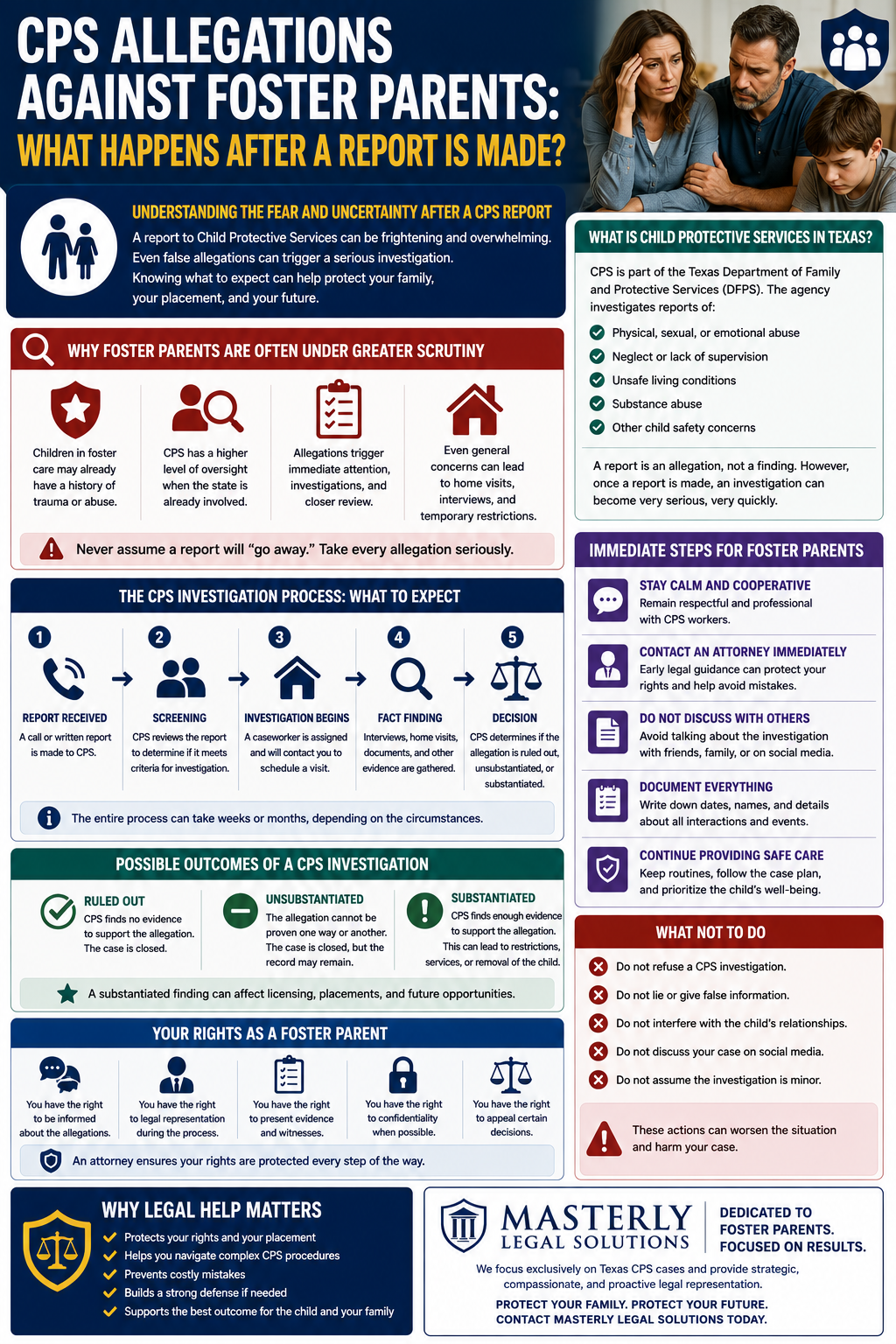
Few situations are more stressful for foster parents than learning a report has been made to Child Protective Services. Many foster families dedicate their lives to helping vulnerable children, providing stability, structure, and emotional support during difficult times. When allegations suddenly arise, foster parents often feel shocked, confused, and deeply worried about what may happen next.
A CPS investigation of foster parents can move quickly, especially when allegations involve abuse or neglect, safety concerns, or possible child safety issues. Even when the allegations are false, the investigation itself can place enormous pressure on the entire family. Foster parents may fear losing placements, damaging their reputations, or facing long-term consequences involving licensing or future opportunities in foster care.
At Masterly Legal Solutions, we understand how overwhelming CPS cases can become for foster families. Our firm focuses exclusively on Texas CPS matters involving strategic administrative representation, investigation guidance, and proactive legal support. Understanding the CPS investigation process early can help foster parents avoid mistakes that may affect both the child and the future of the placement.
What Is Child Protective Services in Texas?
Child Protective Services CPS is part of the Texas Department of Family and Protective Services, a state agency responsible for investigating allegations involving child abuse or neglect. The agency receives reports from schools, medical professionals, neighbors, law enforcement officers, social workers, and other individuals who believe a child may be at risk.
The Texas Department of Family and Protective Services has authority to investigate reports involving physical abuse, sexual abuse, emotional abuse, neglect, unsafe living conditions, substance abuse, and other child safety issues. CPS workers are responsible for investigating allegations and determining whether the child faces an immediate risk or ongoing safety concerns.
Many people mistakenly believe that a report automatically means someone is guilty. In reality, CPS investigations begin with allegations, not findings. However, once a report is made, the investigation process can become very serious very quickly.
Why Foster Parents Are Often Under Greater Scrutiny
Foster parents are held to extremely high standards because they are caring for children placed through state systems. Since these children may already have histories involving trauma, abuse, neglect, or emotional challenges, allegations involving foster homes often receive immediate attention from protective services.
CPS workers may respond aggressively because the state already has direct involvement in the child’s care and placement decisions. Foster parents may face increased scrutiny regarding discipline methods, supervision practices, medical care, emotional interactions, and household safety.
Even general allegations can trigger formal CPS investigations involving home visits, interviews, documentation requests, and temporary restrictions. Foster families should never assume a report will “go away on its own” without consequences.
How Reports Against Foster Parents Are Made
Reports involving foster parents can come from many different sources. Sometimes the report involves a misunderstanding, while other situations involve concerns raised during routine observations or conversations.
Common reporting sources include:
- Teachers and school staff, including those who may need legal support for educators facing investigations
- Medical providers
- Therapists or counselors
- Biological parents
- Other family members
- Foster children
- Neighbors
- Law enforcement officers
- Child and family services personnel
The report may involve suspected child abuse, allegations of neglect, inappropriate discipline, unsafe living conditions, or concerns involving the child’s emotional well-being. In some cases, the allegations may also involve possible criminal conduct.
What Happens Immediately After a CPS Report Is Filed?
Once Child Protective Services receives a report, the agency evaluates the allegations to determine the level of urgency. If CPS believes the child faces immediate danger or immediate risk, investigators may respond within hours. Other reports may receive lower priority depending on the allegations and available information.
The agency begins the investigation stage by reviewing prior CPS cases, speaking with relevant individuals, and gathering background information about the foster home. CPS workers may also review prior allegations, criminal history, or previous involvement with protective services.
Many foster parents are surprised by how quickly investigators may arrive at the child’s home after a report is made. Early decisions during this period can significantly affect the direction of the investigation.
The Initial Contact With Foster Parents
The first interaction with a CPS caseworker is often emotional and stressful. Foster parents may feel defensive, shocked, or uncertain about their rights and responsibilities. However, the way foster parents respond during these early conversations can have a major impact on the investigation.
CPS workers may ask questions about the child’s care, supervision, discipline methods, medical treatment, household members, and daily routines. They may also request interviews with the child, inspect the home, or seek access to records involving the child’s education or healthcare, which can resemble the investigation process teachers may face in Texas.
Foster parents should remain calm and professional while understanding that anything said during the investigation may become part of the case record. Seeking legal counsel early may help foster families avoid unnecessary mistakes during these initial interactions.
How CPS Investigates Allegations Against Foster Parents
The CPS investigation process usually involves multiple stages designed to evaluate the safety and well-being of the child. Investigators gather information from numerous sources before determining whether abuse or neglect occurred.
During CPS investigations, investigators may:
- Interview foster parents
- Speak privately with the child
- Contact teachers and medical providers
- Review medical records
- Examine living conditions
- Evaluate household safety
- Interview family members
- Request a drug test
- Review prior CPS cases
- Coordinate with police during serious allegations
The investigation process often feels invasive and overwhelming for foster families, especially when allegations are false or exaggerated.
Why Foster Parents Should Take Every Investigation Seriously
Some foster parents believe cooperating fully without legal guidance will automatically resolve the situation quickly. Unfortunately, even minor misunderstandings can become larger problems if statements are misinterpreted or documentation is incomplete.
CPS investigations can affect foster care licensing, future placements, employment opportunities, and personal reputations. In certain situations, investigators may recommend a safety plan, placement restrictions, or removal of the child while the investigation continues.
Because the stakes are so high, foster parents should approach every investigation carefully and strategically from the beginning.
What Is a Safety Plan?
A safety plan is a written agreement created by Child Protective Services when investigators believe there are temporary safety concerns involving the child. These plans are often presented as voluntary arrangements intended to reduce immediate risk while the investigation continues.
A safety plan may require foster parents to follow specific restrictions involving supervision, household access, visitation, or disciplinary practices. In some situations, the plan may require another adult to supervise interactions with the child or temporarily restrict contact altogether.
Although safety plans are often described as voluntary, foster parents should understand that agreeing to certain conditions may affect the direction of the case later. Legal representation can help foster parents review whether a proposed safety plan is reasonable and appropriate.
Why Safety Plans Can Create Long-Term Problems
Many foster parents sign a safety plan simply because they want to cooperate and avoid conflict. However, these agreements may later be interpreted as admissions that safety issues existed in the home.
A safety plan can also affect placement decisions, future investigations, and licensing reviews. Some foster parents later discover that temporary restrictions remained part of their case record long after the investigation ended.
Before signing any written agreement, foster parents should carefully understand the legal and practical consequences involved.
Family Based Safety Services and Foster Homes
In some CPS cases, the agency may recommend Family Based Safety Services instead of immediate removal. Family Based Safety Services focuses on providing services intended to address safety concerns while allowing the child to remain in the home under certain conditions.
These services may involve counseling, parenting classes, supervision requirements, home visits, or ongoing monitoring by CPS workers. The agency may also create a service plan outlining expectations for the foster family, similar in concept to establishing a power of attorney for children’s healthcare and decisions.
While providing services may appear less severe than removal, foster parents should still understand that participation may affect future licensing reviews or administrative findings.
When CPS May Remove a Child From a Foster Home
If investigators believe the child faces serious harm or immediate danger, CPS may seek temporary custody or emergency removal. These decisions often happen quickly, particularly in cases involving alleged abuse, severe neglect, or unsafe living conditions.
In some situations, CPS may request a court order authorizing removal from the child’s home. Other cases may involve voluntary placement agreements or temporary arrangements while the investigation continues.
Removal decisions can feel devastating for foster parents who have formed strong emotional bonds with the child. However, the agency’s primary focus remains the child’s safety during the investigation.
Understanding Court Involvement in CPS Cases
Not all CPS investigations lead to court involvement. However, when the agency believes stronger intervention is necessary, the matter may move into juvenile dependency court or another family law proceeding.
A court hearing may address temporary custody, placement decisions, safety concerns, or ongoing services involving the child. Foster parents may feel overwhelmed by legal terminology, procedural requirements, and fast-moving deadlines.
In certain situations, the court may appoint a court appointed attorney for the child or other parties involved in the case. Foster parents should strongly consider obtaining legal representation before attending any court hearing connected to CPS allegations.
The Difference Between Administrative and Criminal Investigations
Many foster parents do not realize that a CPS investigation can exist separately from a criminal investigation. Child Protective Services focuses primarily on child safety, while police investigate possible criminal conduct.
Some allegations involving physical abuse or sexual abuse may trigger both administrative and criminal reviews at the same time. Statements made to CPS workers may later affect a criminal case if law enforcement becomes involved.
Because of these risks, foster parents should be extremely cautious during interviews and seek legal counsel as early as possible.
Why Documentation Matters During CPS Investigations
Good documentation can become one of the most important tools during CPS cases. Foster parents should maintain organized records involving the child’s care, medical appointments, communication with caseworkers, and household routines.
Helpful documentation may include:
- Medical records
- School records
- Incident reports
- Communication logs
- Photos of living conditions
- Counseling records
- Placement paperwork
- Text messages or emails
Detailed records may help clarify misunderstandings and protect foster parents from inaccurate allegations.
How Interviews With Children Are Conducted
During child protective investigations, CPS workers often interview the child separately from the foster parents. Investigators may conduct interviews at school, in the foster home, or at another neutral location.
Children sometimes provide inconsistent statements because of fear, confusion, trauma, or emotional pressure. Younger children may struggle to explain events accurately, while older children may react emotionally during stressful situations.
Foster parents should avoid attempting to coach or influence the child’s statements. Investigators are trained to look for signs that someone attempted to shape the child’s responses.
What Happens if CPS Finds “Reason to Believe”
At the end of the investigation, Child Protective Services may issue findings regarding whether abuse or neglect occurred. One possible outcome is a “reason to believe” finding, which means investigators concluded the allegations were supported by available evidence.
These findings can carry serious consequences for foster parents, including placement restrictions, licensing problems, employment concerns, and long-term effects on future foster care opportunities.
Even if no criminal charges are filed, administrative findings may still remain part of agency records and affect future interactions with protective services.
Can Foster Parents Appeal CPS Findings?
Yes, foster parents may have options to challenge certain CPS findings through administrative review or appeal procedures. These processes can be complicated and time-sensitive, especially when licensing or placement rights are affected.
An experienced attorney can help review evidence, identify procedural issues, and determine whether the findings should be challenged. In many situations, waiting too long to seek assistance can limit available options, just as delays can harm educators who need an education law attorney for teachers and administrators.
Early legal representation often gives foster parents a stronger opportunity to respond effectively before decisions become permanent.
How CPS Evaluates Child Safety
Throughout the investigation, CPS workers focus heavily on the child’s safety and overall well-being. Investigators evaluate whether the child faces current safety issues, ongoing neglect, or future risk factors within the foster home.
The agency may examine:
- Supervision practices
- Household cleanliness
- Medical care
- Emotional treatment
- School attendance
- Access to food and necessities
- Household conflict
- Substance abuse concerns
Investigators may also evaluate whether the child’s parents or biological family members remain involved in the case.
Why Foster Parents Should Be Careful With Social Media
Social media activity can significantly affect CPS investigations. Photos, comments, videos, or online conversations may be reviewed by investigators during the case.
Even harmless posts can sometimes be misunderstood or taken out of context. Foster parents should avoid discussing the investigation publicly or posting information involving the child, the allegations, or the case itself.
Maintaining professionalism online is extremely important during active CPS cases.
The Emotional Impact of CPS Allegations
Being accused of child abuse or neglect can create enormous emotional stress for foster parents and the entire family. Many foster parents feel embarrassed, anxious, angry, or emotionally exhausted during the investigation process.
The emotional impact may become even more severe when placements are interrupted or relationships with the child are affected. Foster parents often feel helpless while waiting for investigators to complete investigations and issue findings.
Seeking professional support, legal guidance, and emotional resources during this period can help foster families remain focused and organized.
How CPS Investigations Affect Foster Care Licensing
One of the greatest fears foster parents face is losing their foster care license. Certain findings involving abuse, neglect, or child safety concerns may directly affect licensing eligibility or future placement opportunities.
Licensing agencies may conduct separate reviews after CPS investigations conclude. Foster parents may need to respond to administrative concerns, documentation requests, or policy compliance issues.
Because licensing consequences can affect long-term opportunities to continue fostering, legal guidance becomes extremely important in serious CPS cases, and many families benefit from working with a Texas-based law firm offering broad legal services.
Family Law Issues Connected to CPS Cases
Many CPS investigations eventually overlap with broader family law matters. Cases involving biological parents, custody disputes, placement disagreements, or visitation concerns may all become connected to the investigation.
Foster parents may find themselves navigating both CPS procedures and family law proceedings at the same time. Juvenile dependency court proceedings can become especially complicated when multiple parties are involved.
An attorney familiar with CPS cases and family law can help foster parents better understand how these systems interact, and may also assist with Texas estate planning services such as wills and trusts.
Why Foster Parents Should Not Ignore “Minor” Allegations
Some allegations may initially seem small or insignificant. However, even minor reports can grow into serious concerns if investigators believe there are broader patterns involving the child’s care or household environment.
General allegations sometimes expand during the investigation as CPS workers interview additional individuals and review records. A simple misunderstanding may eventually lead to more extensive scrutiny involving the entire foster home.
Foster parents should approach every report seriously, regardless of how minor the allegations initially appear.
What Role Do CPS Workers Play During the Investigation?
CPS workers are responsible for gathering information, evaluating safety concerns, and determining whether intervention is necessary. Their responsibilities may include conducting interviews, reviewing evidence, visiting the child’s home, and coordinating with other agencies.
Some CPS workers may also recommend providing services, implementing a safety plan, or seeking court involvement depending on the circumstances. Foster parents should remember that investigators are documenting observations throughout the process.
Professional communication and careful preparation are important during every interaction with protective services personnel.
How Foster Families Can Protect Themselves During Investigations
Foster parents cannot prevent every allegation, but they can take steps to protect themselves during CPS investigations. Preparation, professionalism, and proper documentation often make a major difference.
Important protective steps may include:
- Keeping detailed records
- Following agency policies carefully
- Maintaining safe living conditions
- Avoiding inappropriate social media activity
- Seeking legal counsel early
- Remaining calm during interviews
- Understanding investigation procedures
These proactive steps may help foster parents navigate investigations more effectively while protecting their rights and reputations.
Understanding Voluntary Placement Agreements
In some situations, CPS may suggest a voluntary placement agreement involving temporary changes to the child’s placement while the investigation continues. Foster parents sometimes agree because they hope cooperation will resolve the case more quickly.
However, these agreements can carry long-term consequences involving licensing reviews, placement decisions, or future investigations. Foster parents should carefully review any voluntary agreement before signing documents connected to the case.
Legal representation may help clarify the risks and implications involved in these arrangements.
How Long CPS Investigations Usually Last
The length of CPS investigations depends on the complexity of the allegations, the number of individuals involved, and whether additional concerns arise during the investigation. Some cases resolve within weeks, while others continue for months.
Investigators may need time to gather records, conduct interviews, evaluate the child’s care, and coordinate with law enforcement or medical professionals. Cases involving criminal allegations or extensive family services often take longer to resolve.
Foster parents should remain cautious throughout the entire investigation period because decisions made early may still affect later outcomes.
Why Early Legal Representation Matters
Many foster parents wait too long before seeking legal help because they believe cooperation alone will resolve the issue. Unfortunately, early mistakes can become difficult to correct once findings are entered into agency records.
Legal representation can help foster parents understand their rights, prepare for interviews, evaluate proposed safety plans, and respond strategically during the investigation process. Attorneys may also help protect parental rights, licensing interests, and future placement opportunities.
Having legal counsel involved early may significantly improve a foster parent’s ability to navigate CPS cases effectively.
The Importance of Professional Communication
Foster parents often feel emotional during CPS investigations, especially when they believe the allegations are false. However, emotional confrontations with investigators, social workers, or agency personnel can sometimes worsen the situation.
Remaining calm, respectful, and professional during the investigation is extremely important. Foster parents should avoid hostile language, defensive behavior, or attempts to interfere with the investigation process.
Professional communication helps demonstrate cooperation while protecting credibility during the case.
How CPS Cases Can Affect the Entire Family
A CPS investigation rarely affects only one person. The emotional strain often impacts spouses, biological children, extended family members, and others living in the household.
Family members may feel anxious about interviews, home visits, or possible placement changes involving the child. In some situations, the stress affects employment, relationships, or emotional health throughout the household.
Understanding the seriousness of the investigation while maintaining stability at home is important for both the foster family and the child involved.
Why Every Foster Parent Should Understand the Investigation Process
Many foster parents receive little practical guidance about what happens after a report is made to Child Protective Services. Unfortunately, confusion and fear often lead to avoidable mistakes during the investigation.
Understanding the CPS investigation process allows foster parents to respond more carefully and protect themselves appropriately. Knowing what investigators are looking for, how safety plans work, and when court involvement may occur helps foster families make informed decisions during stressful situations, just as learning about trust-based estate planning services in Texas can help protect a family’s long-term stability.
Preparation and early action can make a major difference in the outcome of CPS cases.
How Masterly Legal Solutions Assists Foster Parents
At Masterly Legal Solutions, we understand the enormous stress foster parents experience during CPS investigations. Our firm focuses exclusively on Texas CPS matters involving investigations, administrative defense strategies, appeals, and proactive legal guidance.
We assist foster parents dealing with allegations involving abuse or neglect, safety plans, family based safety services, court proceedings, and administrative reviews connected to Child Protective Services CPS investigations. Our approach is strategic, investigation-focused, and designed to help clients respond carefully during every stage of the process, supported by multiple Masterly Legal Solutions office locations and contact options.
We know how quickly CPS cases can escalate and how important it is to protect both the child and the future of the foster family. Early preparation and experienced guidance often make a significant difference during investigations involving foster parents.
Understanding Additional Resources and Services During CPS Investigations
Many foster parents are unaware that CPS investigations may involve outside organizations, support programs, and additional evaluations during the process. In some situations, Child Protective Services may recommend voluntary services designed to address concerns without immediately seeking more aggressive intervention. These services can include counseling, parenting education, supervision guidance, or support through family services programs. During a family assessment, CPS workers may evaluate the overall household environment, communication between family members, and the specific needs of the child involved in the case.
Foster parents should also understand that the alleged perpetrator in a CPS case may not automatically lose all rights or opportunities to respond during the investigation. Depending on the circumstances, a court may order services intended to improve safety conditions or reduce future concerns involving the child’s care. Certain individuals may qualify for legal aid or assistance through organizations such as the Texas Legal Services Center, which provides educational information and support resources connected to CPS matters. Families searching for emotional support or guidance may also contact a family helpline while navigating the stress of an active investigation. In some CPS cases, investigators may need to provide reasonable accommodations for individuals with disabilities or language barriers to ensure fair communication throughout the process, and some families may simultaneously need personalized estate planning services in Dallas. Although procedures may differ in places like Southern California or other states, Texas foster parents should focus on understanding the specific laws and administrative procedures that apply within Texas CPS investigations.
Speak With Our Team About a CPS Investigation of Foster Parents
If your foster home is under investigation or you recently learned that a report was made to Child Protective Services, it is important to take the situation seriously from the beginning. Even allegations that appear minor can quickly expand into more serious concerns involving placements, licensing, or long-term findings.
Masterly Legal Solutions provides strategic guidance and administrative representation for individuals dealing with CPS investigation of foster parents cases throughout Texas. Our team can help you understand the investigation process, review your situation, and explain options available to protect your rights and your foster placement.
Contact Masterly Legal Solutions at (972) 236-5051 for a free consultation. We are here to answer your questions, help you understand your legal position, and provide experienced guidance during CPS investigations involving foster parents and child protective services matters.
Disclaimer: This article is provided for informational and educational purposes only and should not be considered legal advice. Reading this content does not create an attorney-client relationship with Masterly Legal Solutions. Every CPS investigation, family situation, and legal matter is different. Individuals dealing with Child Protective Services investigations, allegations involving abuse or neglect, safety plans, or related family law issues should speak directly with a qualified attorney regarding their specific circumstances.


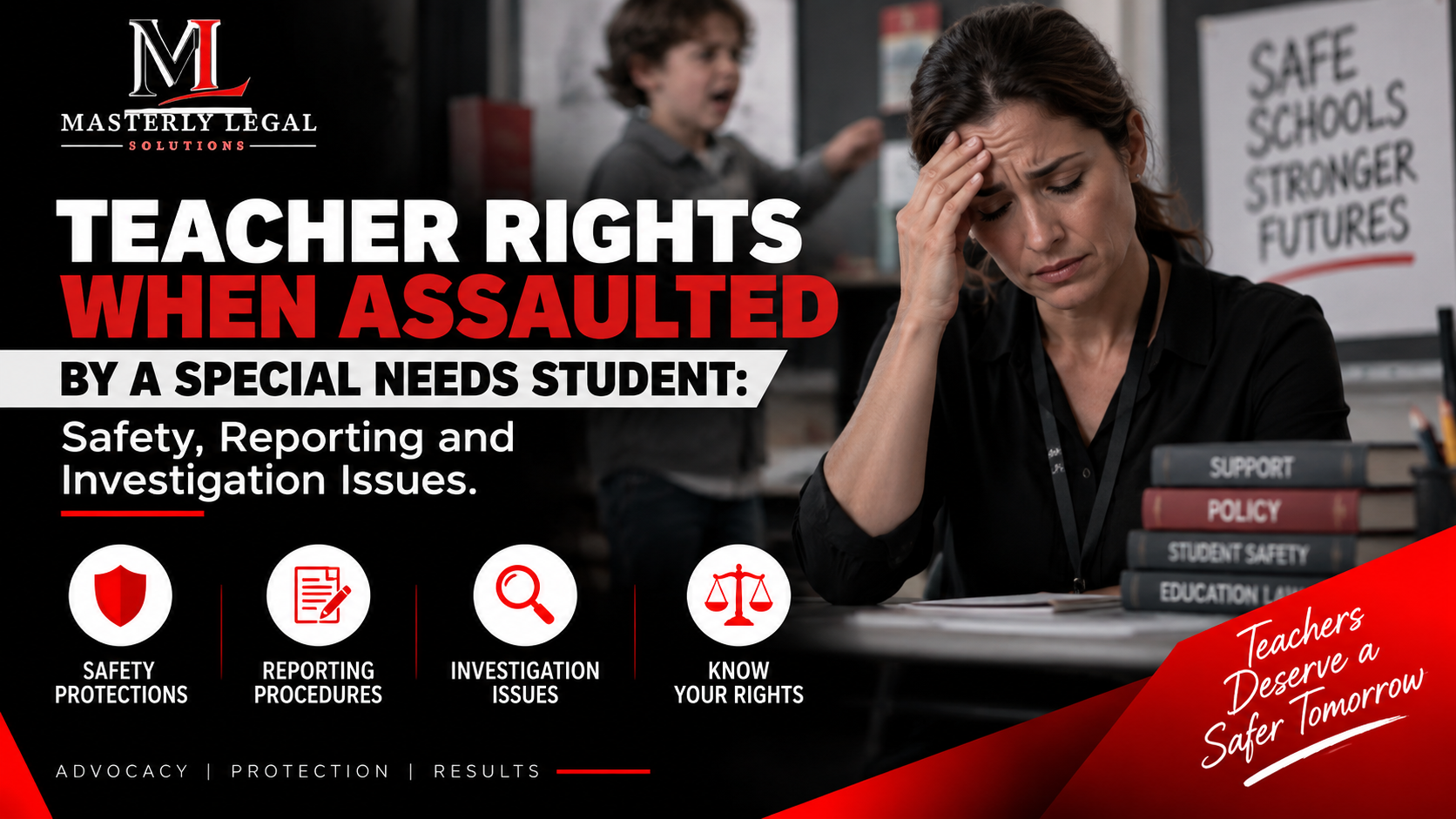
Teacher Rights When Assaulted by a Special Needs Student: Safety, Reporting and Investigation Issues


Looking for Legal & Business Solutions? Contact Us Now
Fill in the form or call us to set up a meeting