

Steps Teachers Should Take If They Suspect Retaliation at Work During an Investigation
Understanding How Retaliation Can Affect Teachers and School Employees
Teachers and school staff often dedicate years of their lives to helping students succeed, supporting school communities, and maintaining professional standards inside the workplace. Unfortunately, there are situations where an employee may begin to notice unfair treatment after reporting misconduct, participating in an investigation, or raising concerns about policy violations. When retaliation occurs, it can create emotional stress, financial pressure, and uncertainty about a person’s career.
Many educators fear that speaking up may place their reputation, teaching license, or future opportunities at risk. Some workers remain silent because they are worried about disciplinary action, reassignment, or being placed in a less desirable position. Others may suddenly face changes in duties, reduced pay, isolation from coworkers, or even paid administrative leave after participating in a protected activity.
At Masterly Legal Solutions, we understand how overwhelming these situations can become for teachers, administrators, coaches, and educational professionals. School districts and employers often have legal teams and HR consulting resources working to protect institutional interests. That is why employees should understand their rights and take careful steps to protect themselves during any workplace investigation.
What Retaliation Means in an Educational Workplace
Retaliation happens when an employer takes negative action against an employee because the worker participated in a legally protected activity. In educational settings, this may involve a teacher reporting harassment, discrimination claims, safety concerns, financial misconduct, testing violations, or inappropriate conduct involving students or staff members.
A reasonable employee may view retaliation as punishment for speaking up or cooperating with an investigation. Federal and state laws often protect workers who report wrongdoing in good faith. In many cases, retaliation occurs after an employee files a complaint, assists agency officials, participates in internal reviews, or provides information during an investigation.
The law does not always require direct termination for retaliation to exist. Sometimes the employer changes schedules, reduces responsibilities, lowers opportunities for advancement, or creates a hostile workplace environment. These actions may still qualify as an adverse action depending on the circumstances.
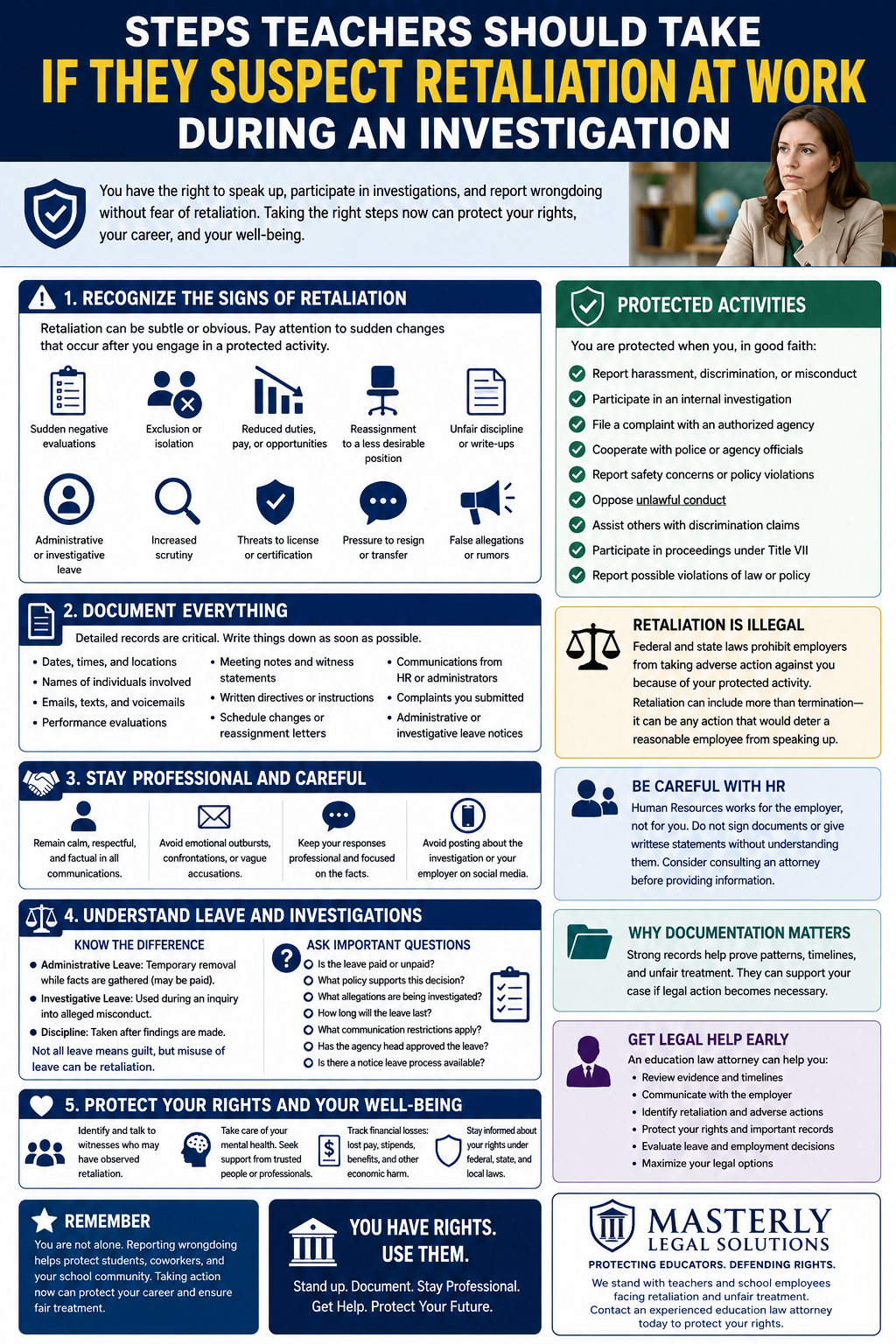
Signs That a Teacher May Be Facing Retaliation
Retaliation is not always obvious in the beginning. Some employers attempt to justify negative treatment through policy changes, evaluations, or administrative decisions. Teachers should pay close attention to sudden changes that happen shortly after engaging in protected activity.
Common warning signs may include:
- Sudden negative evaluations from a supervisor
- Removal from committees or leadership positions
- Assignment to a less desirable position
- Reduction in pay or work opportunities
- Placement on administrative leave without clear explanation
- Exclusion from meetings or school events
- Increased scrutiny compared to other employees
- Threats involving certification or disciplinary action
- False allegations involving alleged misconduct
- Pressure to resign or transfer schools
An example of retaliation may involve a teacher who reports harassment and then suddenly receives multiple write-ups after years of positive evaluations. Another example could involve an employee being placed on investigative leave immediately after cooperating with police or other authorized agency officials.
Why Teachers Must Take Retaliation Seriously
Some educators try to ignore retaliation because they hope conditions will improve over time. Unfortunately, delays can sometimes make legal matters more difficult. Important records may disappear, witnesses may forget details, and deadlines under state laws or federal law may expire.
Retaliation can also create a negative impact on employee morale and overall employee morale within the school system. When workers fear punishment for speaking honestly, it harms workplace safety, trust, and educational quality. Schools function best when employees can report concerns without fear of retaliation.
Teachers should remember that protecting their rights does not mean they are acting against students or the agency's mission. In many situations, reporting wrongdoing actually supports the agency's mission by helping maintain accountability and ethical standards.
Document Everything From the Beginning
One of the most important steps an employee can take is maintaining detailed documentation. Records can become critical evidence if the situation escalates into legal proceedings or formal discrimination claims.
Teachers should keep copies of:
- Emails and text messages
- Performance evaluations
- Meeting notes
- Witness statements
- Written directives from a supervisor
- Documentation involving administrative leave
- Notices involving investigative leave
- Schedule changes or reassignment letters
- Communications from human resources
- Any complaint submitted to the employer
Documentation should include dates, times, locations, and the names of individuals involved. Even brief or short periods of suspicious behavior may become important later. Consistent records help establish timelines and patterns of conduct.
Remain Professional During the Investigation
Educators facing retaliation often feel angry, embarrassed, or emotionally exhausted. However, maintaining professionalism is extremely important throughout the investigation process.
Teachers should avoid emotional confrontations with administrators, coworkers, or agency officials. Angry emails or public accusations can sometimes be used against the employee later. Remaining calm and respectful helps preserve credibility and demonstrates professionalism under difficult circumstances.
This does not mean the employee should stay silent about wrongdoing. It simply means communications should remain factual, organized, and professional. A lawyer can often help guide these conversations to reduce unnecessary risk.
Understand What Counts as Protected Activity
Protected activity generally includes actions where an employee exercises rights protected under federal or state law. Many workers do not realize how broad these protections can be.
Protected activity may include:
- Reporting discrimination or harassment
- Participating in an internal investigation
- Filing a complaint with an authorized agency
- Cooperating with police investigations
- Reporting workplace safety concerns
- Opposing unlawful conduct
- Assisting other workers with discrimination claims
- Participating in proceedings under Title VII
- Reporting a possible violation of policy or law
Other related protected activity may also qualify depending on the situation. Teachers should not assume they are unprotected simply because the employer claims otherwise.
Be Careful When Speaking With Human Resources
Many employees believe human resources exists primarily to protect workers. While HR professionals can sometimes help resolve workplace concerns, their role is generally to protect the employer and reduce institutional liability.
Teachers should approach conversations with human resources carefully and thoughtfully. Employees should avoid signing documents without fully understanding them. If HR requests written statements, the employee may benefit from consulting legal counsel before responding.
Some employers use internal policies to control investigations or justify adverse action. In certain situations, agency policies may be applied inconsistently against employees who engaged in protected activity. Careful legal review can help determine whether those policies are being used fairly.
Know the Difference Between Administrative Leave and Punishment
Many educators become frightened when they are placed on administrative leave. However, not all leave automatically means wrongdoing occurred. In some situations, paid administrative leave is used while an investigation takes place.
Administrative leave may occur during allegations involving student safety, alleged misconduct, policy violations, or internal reviews. Sometimes the employer may grant administrative leave for brief periods while gathering facts. Other times, investigative leave may continue for extended periods depending on the complexity of the matter.
Federal agencies and school systems sometimes rely on opm guidance, internal policies, or agency judgments when deciding whether to place workers on leave. Certain leave decisions may also involve personnel management considerations or workplace safety concerns.
However, there are cases where administrative leave is misused to punish or isolate an employee who engaged in protected activity. Teachers should pay attention to how similarly situated workers are treated under similar circumstances.
Questions Teachers Should Ask About Administrative Leave
When placed on administrative leave, employees should seek clarity about the situation while remaining professional. Important questions may include:
- Is the leave paid leave or unpaid leave?
- What policy supports the leave decision?
- What allegations are being investigated?
- How long is the leave expected to last?
- Is the employee allowed to communicate with coworkers?
- What restrictions apply during leave?
- Has the agency head approved the leave decision?
- Is there a notice leave process available?
The answers to these questions may become important later if retaliation claims arise.
The Emotional Impact of Workplace Retaliation
Teachers often develop deep emotional connections with their schools, students, and communities. Being accused of misconduct or isolated during an investigation can feel devastating. Some employees experience anxiety, depression, sleep issues, or embarrassment.
The emotional pressure can become even more severe when coworkers begin avoiding the employee or administrators spread damaging assumptions. An employer may claim the actions are routine administrative procedures, but the employee may still experience significant stress and fear.
Workers should not ignore their mental health during this process. Seeking support from trusted family members, counselors, or professional advisors can help employees stay focused and emotionally stable.
Why Timing Matters in Retaliation Cases
Timing often plays an important role when evaluating retaliation claims. If adverse action occurs shortly after protected activity, it may support the argument that retaliation occurred.
For example, if a teacher reports harassment and is placed on administrative leave days later, that timeline may raise concerns. Similarly, sudden negative evaluations or reassignment immediately following participation in an investigation may appear suspicious.
Courts and agencies frequently examine whether the employer’s explanation makes sense in light of the timing and surrounding facts. Strong documentation can help establish these patterns.
Teachers Should Preserve Digital Evidence
Modern workplace disputes often involve digital communications. Emails, text messages, online meeting records, and school communication platforms may all contain valuable evidence.
Employees should preserve records carefully and legally. Teachers should avoid deleting relevant communications or violating school technology rules. Instead, they should maintain copies of lawful evidence connected to the investigation or retaliation concerns.
Digital evidence may help demonstrate inconsistencies between what agency officials claimed publicly and what they discussed privately. It can also show whether the employer treated both the employee and other employees fairly during the process.
How School Districts May Justify Adverse Actions
Employers rarely admit retaliation directly. Instead, districts may claim their decisions were related to performance concerns, policy enforcement, staffing needs, or workplace safety.
Agency judgments sometimes rely on broad discretion given to administrators. For instance, a district may claim an employee was reassigned because of operational concerns rather than retaliation. Another employer may argue that investigative leave was necessary due to alleged misconduct.
This is why teachers should never rely only on verbal explanations. Objective evidence, timelines, witness statements, and written communications often become critical in determining whether retaliation occurred.
The Role of State and Federal Protections
Various education and employment laws protect workers from retaliation. Title VII prohibits retaliation connected to discrimination complaints involving race, sex, religion, national origin, and other protected categories. Other protections may apply depending on the facts of the case.
Some investigations also involve rules connected to workplace safety, whistleblower protections, or education-specific regulations. Certain public employees may receive additional protections under the united states code or other provision of federal law.
Educational employees should understand that legal protections may vary between public schools, charter schools, universities, and private sectors, and that experienced education law attorneys can help explain these differences. Each case depends heavily on specific facts and applicable laws.
Why Legal Representation Matters Early
Many teachers wait too long before contacting lawyers who provide legal protection for teachers or employment attorneys. Unfortunately, early mistakes can damage otherwise strong claims.
An education law attorney can help employees:
- Review evidence and timelines
- Communicate with the employer professionally
- Analyze whether adverse action exists
- Identify retaliation patterns
- Protect important records
- Respond to human resources requests
- Evaluate administrative leave decisions
- Determine whether state laws were violated
Early legal guidance may also help prevent the situation from escalating further.
Administrative Leave Does Not Always Mean Guilt
One of the biggest misconceptions among educators is believing that administrative leave automatically proves wrongdoing. In reality, employers sometimes place employees on paid administrative leave while gathering information.
School districts may use administrative leave during internal reviews, police investigations, or allegations involving student interactions. Certain policies specifically authorized under agency policies may permit temporary leave during investigations.
Some employers also use notice leave or safety leave under limited circumstances. Depending on the facts, the employer may claim that placing employees on leave protects workplace safety or preserves the integrity of the investigation.
However, teachers should still examine whether the leave appears consistent with how other workers were treated in similar situations.
How Retaliation Can Affect Career Advancement
Retaliation does not always involve termination. Sometimes it damages a teacher’s professional growth over time.
An employer may:
- Remove leadership duties
- Deny promotions
- Reduce coaching responsibilities
- Transfer the employee to a less desirable position
- Limit opportunities for training
- Exclude the employee from projects
- Assign duties outside the employee's current position
These actions can impact future income, career satisfaction, and professional reputation. Teachers should recognize that retaliation can occur even when the employee remains employed.
Cooperating With Investigations Carefully
Employees should generally cooperate honestly during investigations. However, cooperation does not mean surrendering important legal rights.
Before interviews, teachers may benefit from understanding the purpose of the investigation and the allegations involved. In certain cases, statements made during internal investigations may later affect employment decisions or legal proceedings.
An employee should answer truthfully but avoid speculation or unnecessary commentary. If questions become unclear, the worker may request clarification. Legal counsel can often help prepare employees for difficult interviews.
The Importance of Witnesses
Witness testimony may become extremely valuable in retaliation cases. Coworkers sometimes observe changes in treatment, unfair discipline, or hostile behavior from administrators.
Teachers should identify individuals who may have relevant knowledge regarding:
- Workplace interactions
- Policy enforcement
- Statements by supervisors
- Timeline changes after protected activity
- Treatment of other employees
- Events connected to alleged misconduct
Even a short conversation witnessed by another employee may later become important evidence.
Retaliation and Harassment Often Overlap
In many cases, retaliation and harassment become connected. After an employee reports concerns, supervisors or coworkers may begin creating a hostile workplace environment.
This behavior can include exclusion, rumors, intimidation, unfair criticism, or public embarrassment. Over time, the workplace may become emotionally exhausting for the employee.
Workers should understand that retaliation can take many forms. It is not limited to termination or suspension. Persistent harassment following protected activity may also support legal claims depending on the facts.
How Employers Use Internal Policies During Investigations
School districts frequently rely on internal policies during investigations and disciplinary proceedings. These policies may outline procedures for administrative leave, employee interviews, notice leave, investigative leave, or workplace conduct.
Sometimes agency determines that certain measures are necessary while facts are reviewed. In other cases, agency judgments may appear inconsistent or unfairly targeted toward one employee.
Teachers should carefully review any policies referenced by the employer. Some employers issue internal policies consistent with state requirements, while others may apply rules unevenly. Understanding the written standards can help employees identify unfair treatment.
Why Teachers Should Avoid Social Media Discussions
Employees dealing with retaliation often feel tempted to defend themselves publicly online. However, social media posts can create serious complications.
Comments made online may be misunderstood, taken out of context, or used by the employer during the investigation. Even supportive friends or coworkers may accidentally worsen the situation through public discussions.
Teachers should remain cautious about discussing investigations, alleged misconduct, or workplace disputes on social media platforms. Private legal guidance is generally safer than public online responses.
Understanding Paid Administrative Leave
Paid administrative leave allows an employee to continue receiving pay while temporarily removed from duties. In educational settings, this type of leave may occur during sensitive investigations involving students, parents, or school operations.
The employer may claim the leave protects the agency's mission, preserves neutrality, or allows time for internal reviews. Some districts grant administrative leave for short periods while gathering preliminary information.
However, extended administrative leave can create financial and emotional stress even when the employee continues receiving pay. Teachers may worry about damaged reputations, career uncertainty, and future opportunities.
The Difference Between Investigative Leave and Discipline
Investigative leave and disciplinary action are not always the same thing. Investigative leave may occur before any final determination is made. Discipline usually involves findings that the employer believes justify corrective measures.
Unfortunately, some employers blur these distinctions in practice. A teacher placed on investigative leave may still experience reputational harm even before facts are fully reviewed.
Employees should pay attention to how administrators communicate about the situation. Statements implying guilt before the investigation ends may raise additional legal concerns.
Federal Policies and Administrative Leave Standards
Certain public employers follow opm regulations, presidential memorandum guidance, or executive order requirements involving administrative leave practices. These rules may address investigative leave, safety leave, notice leave, and excused absence procedures.
Some federal agencies use personnel management standards involving time limited basis leave decisions or brief periods of removal from duty. Policies may also address circumstances involving blood donations, officially sponsored events, or temporary absences.
Although public school systems may not follow every federal procedure exactly, these concepts often influence broader employment practices. Understanding these standards can help employees recognize when leave decisions appear excessive or retaliatory.
Teachers Should Track Financial Losses
Retaliation can sometimes create direct financial harm. Employees may lose coaching stipends, overtime opportunities, summer assignments, or promotional opportunities.
Teachers should keep records involving:
- Lost pay
- Reduced benefits
- Missed advancement opportunities
- Medical expenses connected to stress
- Costs involving legal consultations
- Lost supplemental income
These records may become important if legal claims proceed later.
When an Employer Claims Safety Concerns
Employers sometimes justify leave decisions by citing workplace safety concerns. In certain situations, safety issues are legitimate and necessary. However, there are also cases where safety explanations become exaggerated or unsupported.
An agency head may argue that temporary leave protects students, staff, or the integrity of the investigation. Some policies allow agencies to place workers on safety leave during specific circumstances.
Teachers should evaluate whether the employer provided objective evidence supporting these claims. Unsupported accusations or inconsistent treatment may suggest retaliatory motives rather than genuine safety concerns.
How Retaliation Affects School Culture
Retaliation harms more than one employee. It can weaken trust throughout the entire workplace. When teachers fear punishment for reporting misconduct, workers may avoid speaking honestly about serious issues affecting students or staff.
Fear-driven environments reduce overall employee morale and damage collaboration among educators. Employees may stop reporting policy violations, harassment, or safety concerns because they fear becoming the next target.
Healthy educational environments depend on transparency, fairness, and respect for lawful reporting processes.
Teachers Should Understand Investigation Procedures
Every investigation follows its own procedures depending on the allegations involved. Some investigations involve school administrators, while others involve police, agency officials, or outside investigators.
Employees should understand:
- Who is conducting the investigation
- What allegations exist
- Whether interviews are mandatory
- What policies apply
- Whether representation is allowed
- How long the process may last
Understanding the process can reduce confusion and help employees make informed decisions.
Retaliation May Continue Even After the Investigation Ends
Unfortunately, retaliation does not always stop once the investigation concludes. Some employees continue experiencing hostility, isolation, or career limitations long afterward.
A teacher may return from administrative leave only to find reassignment to a less desirable position or removal from leadership opportunities. Others may notice supervisors treating them differently compared to workers who never participated in the investigation.
Employees should continue documenting concerns even after returning to work. Ongoing patterns may strengthen future legal claims.
Protecting Professional Reputation During a Workplace Dispute
Reputation matters greatly in education careers. Allegations, investigations, and retaliation can damage professional standing even when the employee did nothing wrong.
Teachers should remain focused on professionalism, honesty, and consistency throughout the process. Avoiding emotional reactions and maintaining accurate records can help preserve credibility.
Legal representation may also help employees communicate effectively while protecting their rights and reputations.
Why Every Situation Requires Individual Review
No two retaliation cases are exactly alike. The facts, timelines, policies, and individuals involved all matter. Some employees experience subtle retaliation over time, while others face immediate adverse action after reporting misconduct.
An experienced attorney can review whether the employer’s conduct appears directly related to protected activity. Careful legal analysis can help determine whether the employee’s rights may have been violated under applicable law.
Teachers should avoid assuming their situation is hopeless simply because administrators deny wrongdoing. Many workplace retaliation claims involve complex facts that require detailed review.
How Masterly Legal Solutions Helps Educational Employees
At Masterly Legal Solutions, our expert education lawyers understand the pressure teachers and school employees face during workplace investigations. Educators often feel isolated when administrators control the investigation process and communication.
Our education lawyers work closely with employees who believe they have experienced retaliation, unfair treatment, or improper adverse action connected to protected activity. We understand how administrative leave, disciplinary proceedings, and workplace investigations can impact both careers and personal lives.
Whether you are dealing with harassment concerns, discrimination claims, investigative leave, or questions involving paid administrative leave, it is important to understand your rights before making critical decisions. Early guidance can often make a significant difference in protecting your future.
Speak With Our Team About Your Rights
If you believe your employer retaliated against you after reporting concerns, participating in an investigation, or engaging in protected activity, you do not have to face the situation alone. The stress of administrative leave, workplace investigations, and career uncertainty can feel overwhelming, especially when your professional reputation is at stake.
Masterly Legal Solutions assists teachers, administrators, coaches, and educational professionals who need specialized legal support for educators during difficult employment situations. Our team can review the facts of your case, explain potential options, and help you understand whether your rights may have been violated.
Contact Masterly Legal Solutions at (972) 236-5051 for a free consultation. We are here to answer your questions, discuss your concerns, and help you better understand the legal issues connected to retaliation lawyers, workplace investigations, administrative leave, and employee rights.
Disclaimer: This article is for informational and educational purposes only and should not be considered legal advice. Reading this article does not create an attorney-client relationship with Masterly Legal Solutions. Every situation is different, and laws may change depending on the facts and jurisdiction involved. Individuals facing workplace retaliation, investigations, administrative leave, or employment disputes should speak directly with a qualified attorney regarding their specific circumstances.



Teacher Rights When Assaulted by a Special Needs Student: Safety, Reporting and Investigation Issues



Looking for Legal & Business Solutions? Contact Us Now
Fill in the form or call us to set up a meeting





