

CPS Drug Test: What Parents Should Know Before Responding
By Andrew Rhoden | Masterly Legal Solutions
CPS Drug Test: The Short Answer
Yes, Child Protective Services (CPS) can ask a Texas parent to take a drug test during an investigation. However, a caseworker's voluntary request is different from a court order. Texas law recognizes a parent's right to refuse testing during an investigation, while court-ordered testing creates separate legal obligations. Understanding the request matters before responding, especially when your parental rights and your child's safety are at stake.
Receiving a call from CPS can be frightening, especially when a caseworker asks you to take a drug test. A CPS drug test is a formal toxicology screening requested by Child Protective Services during a child abuse or neglect investigation, and it may involve urine, hair, saliva, or blood testing. For Texas parents contacted by CPS, the key questions are whether the test is voluntary or court-ordered, why CPS wants it, how the results are interpreted, and what they could mean for the case.
Parents often face these questions while trying to understand why CPS contacted them in the first place. A request for testing does not automatically mean that CPS has proven abuse or neglect; it may be one part of a larger investigation into a child's safety and living conditions. Knowing how CPS drug testing works, what rights Texas parents have, what legal options may be available, and when to get an attorney involved can help you make informed decisions before you respond.
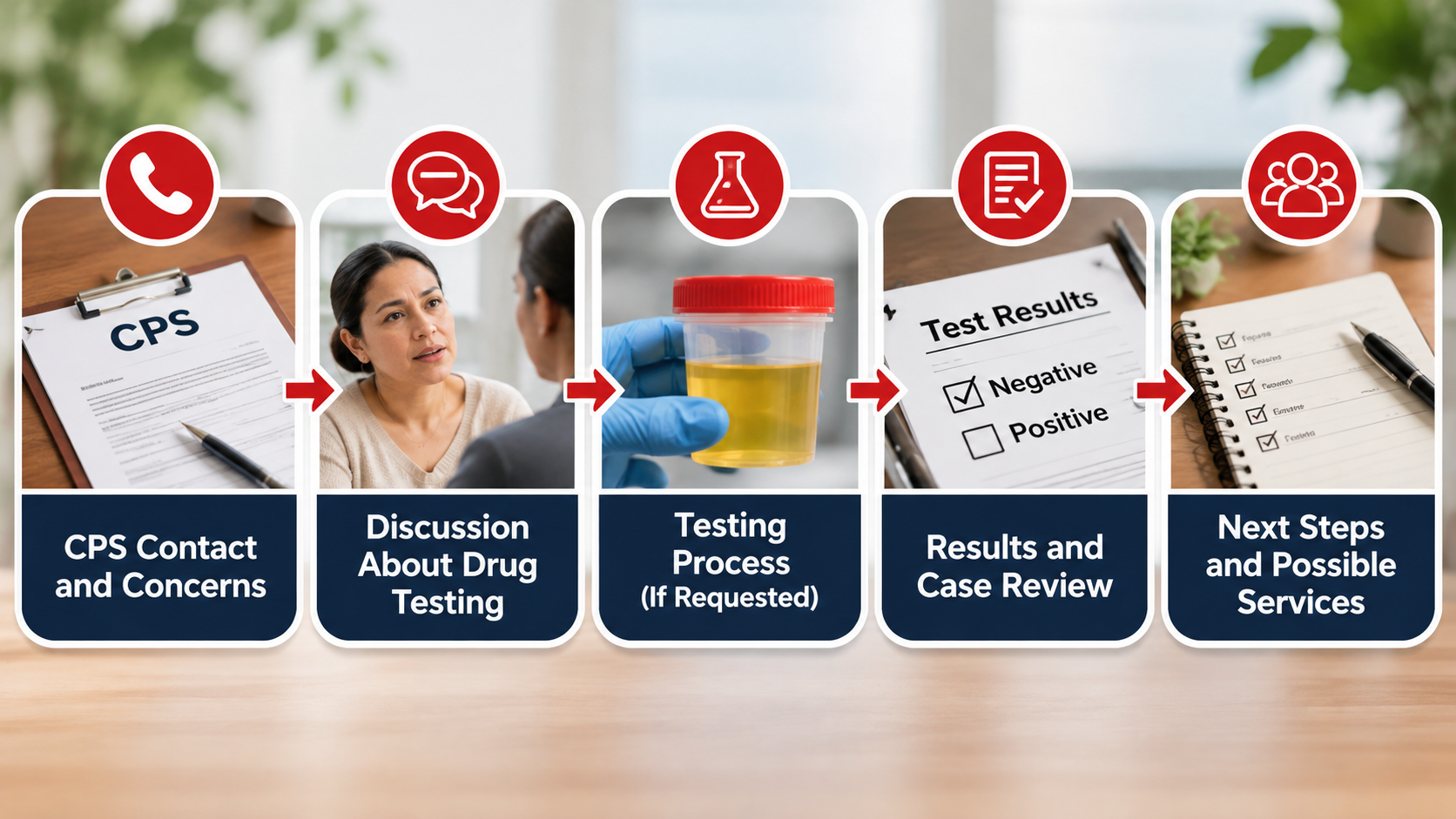
Why a CPS Caseworker May Ask for a Drug Test in a CPS Case
CPS investigates reports of suspected child abuse or neglect. When a report raises concerns about substance use, a caseworker may request drug testing to gather information about a parent's circumstances. In investigations, CPS primarily uses urine tests for drug screening.
According to the Texas Department of Family and Protective Services (DFPS) Substance Use Resource Guide, a caseworker may request testing for several reasons, including:
- A court has ordered the test.
- The agency is assessing whether a parent or legal guardian is actively using substances.
- Testing is connected to participation in substance use treatment or long-term recovery.
The purpose of a request depends on the investigation and the concerns being reviewed. Separately, CPS may conduct pre-employment drug screenings for employees, which is different from testing in a parent investigation.
For example, a caseworker may receive information suggesting that a parent's substance use affects their ability to supervise a child. The investigator may then consider whether testing could provide relevant information.
However, a drug testing request is not the same as a confirmed finding of child abuse or neglect.
How CPS Evaluates Substance Use Concerns
CPS does not investigate substance use in isolation from child safety. The agency may also examine supervision, caregiving, and whether a child's basic needs are being met.
Under Texas Family Code § 261.301, the department investigates reports of suspected child abuse or neglect according to applicable legal requirements.
The investigation may involve interviews, observations, records, and information from people familiar with the family.
A drug test may become part of that review, but it does not necessarily answer every question about a child's safety.
For more information about the broader investigation, read CPS Home Visits in Texas: What Caseworkers Look For and How to Prepare.
[CONFIRM: The current DFPS testing authorization requirements and case-specific reasons for requesting a drug test.]
Can CPS Make You Take a Drug Test? Voluntary Requests vs. Court Orders
One of the most important distinctions in CPS drug testing Texas parents should understand is whether the request is voluntary or required by a court order.
These situations have different legal implications.
When CPS Requests a Voluntary Drug Test
Under Texas Family Code § 261.307(a)(2)(I), DFPS must inform a parent or other covered person of the right to refuse to submit to a drug test during an investigation.
The same section recognizes the right to receive assistance from an attorney and to avoid speaking with a DFPS agent without legal counsel present.
This means that a caseworker's request does not automatically create the same obligation as a judicial order.
However, deciding how to respond may involve considerations beyond whether a test is voluntary. Refusing a voluntary test may still be treated by CPS as a negative indicator in its safety evaluation, so cooperation may improve the chance of a better outcome.
The investigation may continue, and the agency may evaluate other available evidence or seek legal intervention when appropriate.
Neither agreeing to a voluntary test nor declining one automatically determines the investigation's outcome.
When a Court Orders Drug Testing
Court-ordered testing is legally different from a caseworker's voluntary request.
A judge may issue an order requiring drug testing in an appropriate legal proceeding. The order's specific terms determine the obligations involved.
Texas Family Code § 261.303 addresses court involvement when certain investigative access or examinations are disputed. However, that section should not be read as automatically authorizing a parent drug test merely because CPS requests one.
A court order for drug testing must be evaluated under the legal authority applicable to the particular proceeding.
If a parent receives an order, important questions may include:
- What testing does the order require?
- Who must complete the test?
- What deadlines or conditions apply?
- What legal consequences may follow if the order is not followed?
[CONFIRM: The court's specific order, applicable statutory authority, testing deadlines, and procedural requirements.]
An attorney can review the document and explain the obligations it creates.
Why the Difference Matters
A verbal request from a CPS caseworker is not the same as a written court directive.
Parents may also receive documents relating to services, assessments, or safety arrangements that mention drug testing.
Those documents should not automatically be treated as court orders without examining their terms and legal basis.
For related concerns, see CPS Houston and Safety Plans: What You Should Understand Before Agreeing.
Masterly Legal Solutions can help families understand whether a request is voluntary, connected to an agreement, or governed by a judicial order.
What Happens With CPS Drug Test Results and the Investigation?
Drug test results may provide information to a CPS investigator, but they must be considered in the proper context. CPS usually uses urine tests for drug screening, though the specific rules can vary by state and case. CPS drug tests also follow strict chain-of-custody protocols to help ensure reliable results.
DFPS guidance identifies several possible testing outcomes, including negative, positive, presumptive positive, invalid, rejected, and diluted results.
Each category has a different meaning.
What a Positive Drug Test May Mean
A positive result can indicate that a substance was detected within the test's detection period, and a urine test may detect marijuana, cocaine, and opioids.
Depending on the substance and other factors, drugs may remain detectable in urine for several days to weeks.
However, the presence of a substance does not automatically establish that a parent neglected or abused a child.
A caseworker may consider the result alongside other information about the parent's circumstances, caregiving ability, whether the kids are safe, and any child safety concerns, and a positive result may also lead CPS to consider a safety plan or mandated services depending on the case.
The type of test, substance identified, and relevant medical information can also matter.
Prescription Medications and Test Results
Some parents take prescription medications that may affect drug test results.
The DFPS Substance Use Resource Guide instructs caseworkers to ask about prescription and over-the-counter medications before testing.
When a positive result may be connected to medication, DFPS guidance describes procedures involving a Medical Review Officer and verification of valid prescriptions.
A legitimate prescription does not mean that CPS must disregard every safety concern. The agency may still examine whether medication use affects a person's ability to supervise or care for a child.
[CONFIRM: The current DFPS medical review procedures, laboratory confirmation requirements, and policies for documenting prescription medications.]
What If a Drug Test Result Is Invalid or Disputed?
Not every test produces a clear result.
A laboratory may report that a sample is invalid, rejected, or diluted.
DFPS guidance identifies possible responses, including additional testing, a different testing method, or review of other credible information.
A parent may also question whether a result is accurate or has been interpreted correctly. CPS urine tests are generally highly accurate and reliable when proper procedures are followed. CPS may also use observed specimen collection to help prevent attempts to tamper with a sample.
Depending on the circumstances, an attorney may review available laboratory records, testing documents, prescription information, and the agency's stated concerns.
A disputed result does not automatically invalidate an investigation. The available review options depend on the circumstances and applicable procedures.
How Testing Can Affect the CPS Investigation
After receiving test information, CPS may continue gathering evidence and evaluating whether the child faces a safety concern.
Depending on the investigation, the agency may consider services, additional assessments, safety arrangements, or legal action.
A positive result does not automatically mean a child will be removed from the home. Likewise, a negative result does not automatically mean that the investigation will close.
The result is one piece of information within a broader legal and factual review.
Texas Family Code Chapter 261 governs child abuse and neglect investigations, including important notice and review provisions.
If CPS later makes an administrative finding, separate procedures may apply. Families can learn more in CPS Administrative Findings and the Appeal Process in Texas.
How THC, Smoking, and Other Concerns Affect CPS Drug Testing
When CPS receives reports or comments about a parent's substance use, the caseworker may investigate whether the behavior affects a child's safety. For example, concerns about marijuana smoke or THC exposure may lead to questions about the home environment and the parent's ability to provide proper care. A positive THC result does not automatically establish child abuse or neglect. The Texas child welfare system considers available evidence, the child's circumstances, and any safety risks identified during the investigation. CPS may also review statements from other individuals, including comments from people familiar with the family's living situation. The agency's primary interest is whether the child is safe and receiving appropriate care. Masterly Legal Solutions helps parents understand how substance-related allegations may affect a CPS investigation and what legal options may be available.
When to Talk With an Attorney About a CPS Drug Test
When CPS requests a drug test, parents may feel they have little time to understand the situation.
The request may involve concerns about privacy, medical information, child custody, or possible court proceedings.
Legal guidance can be particularly valuable when the parent does not understand the reason for testing, the request's legal status, or how the results may be used.
An attorney may also assist when the agency has raised allegations involving prescription medication, conflicting evidence, or disputed test results.
How Masterly Legal Solutions Helps Texas Parents
Masterly Legal Solutions provides legal assistance to families dealing with CPS investigations and related legal concerns.
Depending on the circumstances, the firm's services may include:
- Reviewing CPS notices and drug testing requests.
- Explaining the difference between voluntary requests and court orders.
- Evaluating relevant investigation documents and allegations.
- Reviewing disputed test results and related medical information.
- Explaining applicable parental rights under Texas law.
- Assessing available legal options and potential next steps.
- Providing legal representation when appropriate.
The firm's approach focuses on understanding the facts, explaining the law, and helping families make informed decisions.
Every CPS investigation is different. The effect of a testing request depends on the circumstances, governing law, and any existing court orders.
Legal representation does not determine how CPS or a court will decide a matter, but it can help parents understand the issues involved before responding.
How Additional Reports and Comments May Affect a CPS Investigation
During a CPS investigation, caseworkers may receive more comments or information from family members, teachers, neighbors, or other individuals familiar with the child's circumstances. These statements may raise additional concerns about substance use, supervision, or safety in the home. However, comments alone do not automatically establish abuse or neglect. CPS must evaluate the information alongside other available evidence and the circumstances of the case. Masterly Legal Solutions helps Texas parents understand how additional allegations may affect a CPS investigation and evaluate their legal options.
Frequently Asked Questions About CPS Drug Testing in Texas
Does a CPS drug test have to be done right away?
Not every CPS drug testing request has the same deadline. The timing depends on whether the test is voluntary, connected to an agreement, or required by a court order. A parent should understand the source of the request and any applicable deadline before deciding how to respond.
[CONFIRM: The specific deadline provided by DFPS, the testing provider, or a court.]
What Is the Difference Between a CPS Request and a Court Order for Testing?
A voluntary CPS request asks a parent to participate in testing during an investigation. Texas Family Code § 261.307 recognizes the right to refuse a drug test in this context.
A court order is a judicial directive that may create legal obligations. The specific order and applicable law determine what is required and the consequences of noncompliance.
Can a CPS Drug Test Result Be Disputed?
Yes, a parent may raise concerns about a result's accuracy, interpretation, or supporting documentation.
Relevant issues may include laboratory procedures, prescription medications, test classifications, or available confirmatory testing.
However, the method for reviewing or disputing a result depends on the testing circumstances and the stage of the CPS investigation.
An attorney can evaluate whether further review or a formal legal response is available.
Request a Confidential Consultation With Masterly Legal Solutions
If CPS has asked you to take a drug test in Texas, understanding the legal nature of the request and its possible role in the investigation is important.
Masterly Legal Solutions helps parents review CPS drug testing concerns, understand their rights, and evaluate the options available under Texas law.
Call (972) 236-5051 to discuss your situation.
This article provides general legal information and does not constitute legal advice. Texas Family Code provisions, DFPS policies, and court procedures may change. CPS drug testing requirements, parental rights, and legal options depend on individual circumstances and applicable laws.








Looking for Legal & Business Solutions? Contact Us Now
Fill in the form or call us to set up a meeting