

Early CPS Contact in Dallas and the Mistakes Families Make Too Fast
The first call from CPS can make your whole world feel like it stops. One moment you are focused on your children, your work, and your normal routine, and the next moment you are worrying about an investigation, a caseworker, and what might happen inside your home. For many families in Dallas, early contact from child protective services is the start of a stressful experience that moves faster than anyone expects. Even parents who have done nothing wrong can feel panic, confusion, and fear of losing their child before they understand what the process really means.
At Masterly Legal Solutions, we help families who feel blindsided by a CPS situation. What we see again and again is not just fear—it is families making quick decisions under pressure that accidentally create bigger problems. Those early choices can affect your rights, your case, your ability to protect your child’s safety, and whether CPS believes your home is stable. If you have been contacted by CPS, knowing what not to do can be just as important as knowing what to do next.
Why CPS Contact Feels So Urgent in Dallas
A CPS call feels urgent because it usually is. When CPS becomes involved, the Texas Department can move quickly to gather information, speak with children, and document concerns. That speed can make families feel like they must respond instantly, even if they are confused or emotional. In Dallas, protective services may handle many reports every day, and families can feel like they are being pushed into a process without enough time to breathe.
One of the most difficult parts is that early contact may feel informal, but the consequences can become serious. A CPS case can develop rapidly depending on what is said, what is documented, and what CPS believes is happening inside the home. This is why families should take early steps to stay calm, stay respectful, and stay prepared.
What CPS Is Really Trying to Determine
CPS is part of the Texas Department of Family and Protective Services, and their job is centered on risk assessment and child welfare. They investigate reports involving child abuse, neglect, and unsafe conditions, but they also look at patterns in the family environment. Many parents expect CPS to arrive with clear proof, but CPS often begins with limited details and tries to fill in gaps through interviews and observations.
That can be frustrating for families because it may feel like they are being judged before being heard. CPS will often ask questions that feel personal, uncomfortable, or confusing. What matters most is understanding that CPS is building a record, and your words and behavior may be interpreted through that lens.
The Difference Between a Report and Proof
Many families hear that CPS received a report and assume it must be true. In reality, a report is simply information that has been communicated to the Texas Department, not a final decision. CPS must still investigate, but the way a family responds can shape the direction of the case. Early mistakes can make a case appear more serious, even when there was no abuse or neglect.
This is one reason families should avoid panicking and making choices that look suspicious. You have rights under Texas law, and it is possible to protect your family while still taking the situation seriously. The goal is not to fight for the sake of fighting, but to respond wisely.
How a CPS Investigation Typically Starts
A CPS investigation often begins with early contact from a CPS caseworker. That caseworker may call, show up at your home, or try to speak with your child at school. Sometimes the caseworker provides limited details and focuses on scheduling a home visit as soon as possible. Families often feel pressured to agree immediately because they worry that saying no will make CPS suspicious.
A CPS investigation can also involve reviewing prior reports, speaking with individuals connected to the family, and collecting information that the parents may not even know exists. This is why early communication must be handled carefully. The faster you get organized, the more control you maintain.
Why Early Mistakes Can Expand the Case
CPS cases often grow because of small missteps. A parent may say something that sounds inconsistent, even if they meant no harm. A family member may overexplain or argue, making the situation feel chaotic. Or a parent may refuse to cooperate in a way that appears like they are hiding something.
CPS is trained to assess stability, truthfulness, and safety. If CPS believes a child is at risk, the case can escalate, including potential court involvement. This is why being prepared matters so much in the first days.
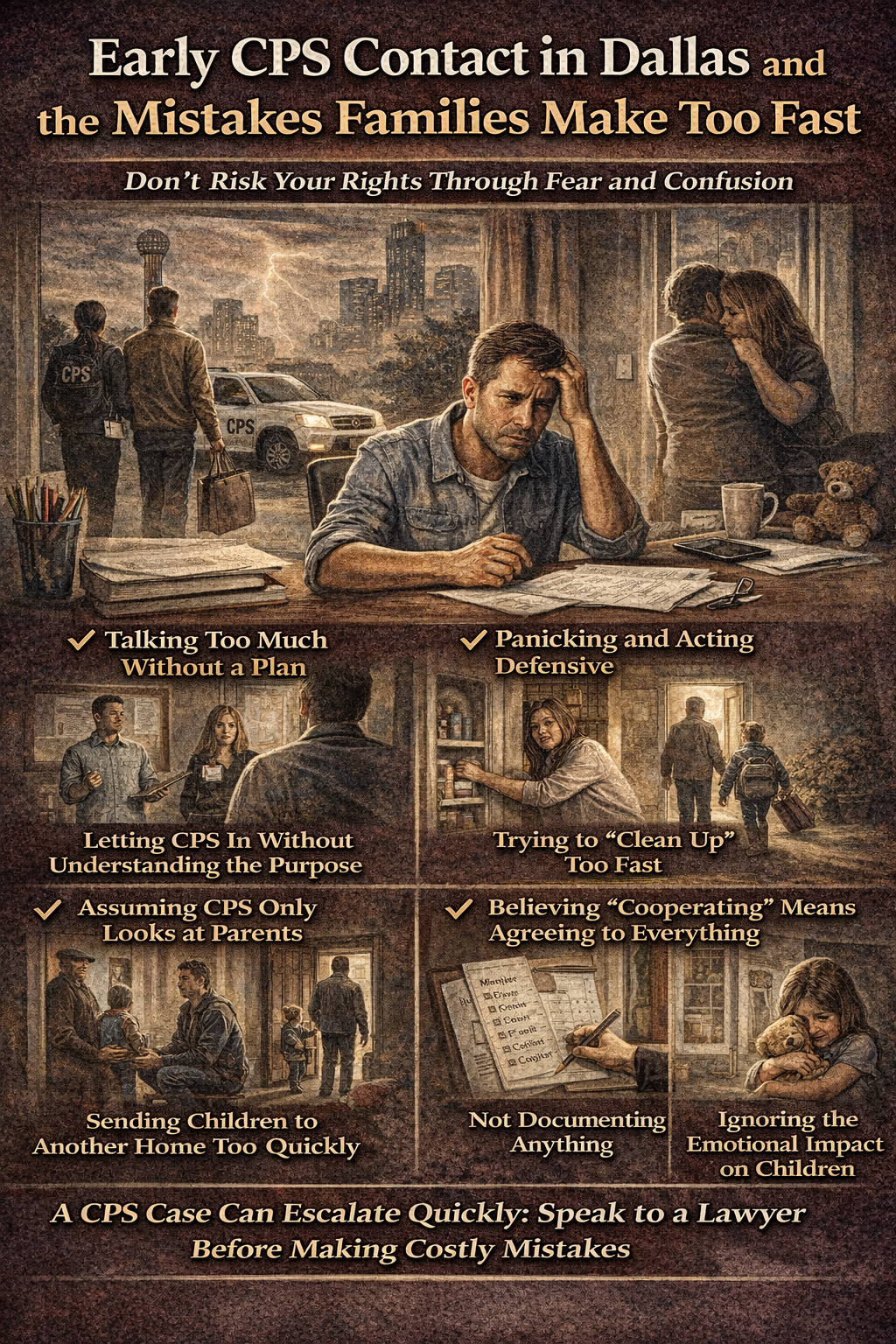
Mistake One: Talking Too Much Without a Plan
One of the biggest early mistakes families make is oversharing. Parents often think more details will “clear everything up,” but too many details can create confusion or contradictions. When CPS asks questions, many parents answer emotionally, quickly, and without thinking about how their words might be documented. Even if you are innocent, confusion can create unnecessary suspicion.
It is okay to be respectful and cooperative, but your answers should be thoughtful and consistent. If you are unsure how to respond, this is when consulting an attorney can help you understand what CPS is looking for. A calm plan can reduce risk dramatically.
Mistake Two: Panicking and Acting Defensive
Defensiveness is normal, but it can backfire. Many families respond to CPS by raising their voice, refusing to answer anything, or accusing the caseworker of “targeting” them. While your emotions are understandable, that approach can make CPS believe the home environment is unstable. That perception can hurt your case even if there is no child abuse.
Protective services caseworkers are trained to document behavior and evaluate home dynamics. If they see panic, anger, or hostility, they may interpret it as a safety concern. Staying calm does not mean you agree with everything—it means you are protecting your child and your rights.
Mistake Three: Letting CPS In Without Understanding the Purpose
A home visit is a major step in the process. Many parents assume CPS has the right to enter anytime, but that is not always the case. In some situations, CPS may request entry without a court order, relying on cooperation. Families often allow entry immediately out of fear, without understanding what CPS will observe or record.
You do not have to create conflict, but you should be aware of the process. If CPS does not have a court order, the family may have options depending on the situation. An attorney can help you understand what cooperation looks like without sacrificing your rights.
Mistake Four: Trying to “Clean Up” Too Fast
Families sometimes rush to make changes in the home right after CPS contact. Cleaning is normal, but extreme behavior can look suspicious. Removing items, hiding medication, deleting messages, or suddenly changing routines can make CPS believe something is being covered up. Even if there is no abuse, these actions can create new questions.
If CPS is involved, focus on stability and honesty. Make reasonable improvements, but do not create the impression that you are trying to erase evidence. CPS cases are often shaped by small perceptions.
Mistake Five: Assuming CPS Only Looks at Parents
CPS does not only focus on parents. They may evaluate the entire home environment, including other adults, roommates, relatives, and frequent visitors. A family member’s history, behavior, or statements can impact the case. Even the way a caregiver speaks about the situation can change how CPS views the home.
This is why families should communicate carefully. Everyone in the household should understand that CPS is evaluating child’s safety, structure, and risk factors. One careless conversation can become part of the report.
Mistake Six: Sending Children to Another Home Too Quickly
Sometimes parents believe the safest choice is to send children to a relative’s home immediately. While protecting children is always important, moving a child suddenly can raise concerns. CPS may wonder why the move was necessary or whether it suggests unsafe conditions. In some situations, CPS may interpret this as an admission that the home is not safe.
There are situations where temporary placement with family is appropriate, but it should be handled carefully. It is best to discuss this with counsel first when possible. A rushed decision can lead to unintended consequences, including deeper involvement from protective services.
Mistake Seven: Believing “Cooperating” Means Agreeing to Everything
Cooperation is important, but it does not mean giving up your rights. Many families assume they must agree to every request or they will lose their children. This fear leads parents to sign documents they do not understand or accept terms that are unnecessary. In a CPS case, signing the wrong paperwork can change everything.
Texas law provides families with rights and procedures. If you feel pressured to sign something quickly, it is wise to pause and ask for clarification. An attorney can help ensure your decisions protect your family long-term.
Mistake Eight: Not Documenting Anything
Many parents assume CPS will document fairly, but families should keep their own records. Write down dates, phone calls, names, and what was discussed. Save copies of any documents provided and keep track of what CPS requested. Your notes can be powerful if the situation becomes complex or ends up in court.
Even basic documentation can help protect you later. It can show timelines, misunderstandings, and what was actually said. Being prepared is not being paranoid—it is being responsible.
Mistake Nine: Ignoring the Emotional Impact on Children
Children often sense fear, even if you try to hide it. When CPS is involved, children may feel guilt, anxiety, or confusion. Some children worry they did something wrong just by talking to a teacher or counselor. Others feel afraid that they will be removed from their home.
Families should protect children emotionally during the investigation period. Keep communication age-appropriate, calm, and reassuring. Your child deserves stability, even while the adults handle the case.
Mistake Ten: Thinking a CPS Case Ends When the Visit Ends
A home visit is not the end of the investigation—it is often the beginning of the record. CPS may continue gathering information for days or weeks after first contact. They may speak with teachers, doctors, relatives, and others who have been involved with the child. They may request additional documents or follow-up meetings.
This is why early strategy matters. What happens in the first week often shapes what happens in the next month. Families who plan early are more likely to protect their home environment and reduce risk.
Understanding Neglect Allegations in Dallas CPS Cases
Neglect allegations are common in CPS cases, and they are often misunderstood. Many families believe neglect only means intentional harm, but CPS may consider supervision issues, unsafe housing, or medical concerns. Sometimes neglect allegations arise from misunderstandings, especially when families are under stress, working long hours, or managing limited resources.
Protective services may evaluate whether the family is providing appropriate care. They may look at home conditions, routines, and the child’s well-being. If CPS believes neglect is present, it may push for stronger intervention, including court involvement.
Understanding Child Abuse Allegations and How They Escalate
Child abuse allegations are among the most serious claims CPS investigates. These allegations can include physical abuse, emotional abuse, or other forms of harm. Families often feel shocked when a report contains claims that are exaggerated or false. Unfortunately, CPS will still investigate to determine what happened.
When child abuse is alleged, families must respond carefully. Panic responses can create confusion, while silence without guidance can look suspicious. A balanced legal approach can help families address allegations while protecting their rights and their child.
How CPS Evaluates Safety in the Home
CPS looks at many factors when evaluating a home. They may examine whether the home is clean, whether children have food and sleeping arrangements, and whether dangerous items are accessible. They may also evaluate supervision, behavior in the home, and the interactions between parents and children. These observations can become part of the official record.
This does not mean families must have a perfect home. It means families should focus on stability, basic safety, and calm communication. CPS cases often turn on whether the environment appears safe, not whether it appears flawless.
When CPS Can Seek Court Involvement
Sometimes CPS may decide the situation requires court involvement. This can happen if CPS believes the child is at immediate risk, or if it believes the family will not cooperate. CPS may seek a court order for certain actions, including access to the home, services, or temporary placement. The idea of court is frightening for many families, but preparation matters.
A court process is formal and can move quickly. Families need to understand their rights and options under Texas law. Having representation can help protect children and prevent unnecessary escalation.
The Reality of Removal and Foster Care
Removal is one of the most feared outcomes of CPS involvement. Families worry that children will be removed and placed into foster care, and this fear drives many rushed decisions. While removal is not guaranteed, it is a real possibility when CPS believes a child is unsafe. The best way to avoid removal is often early planning and careful responses.
If CPS believes the home is unsafe, it may try to move children quickly. Families should understand the seriousness of this risk and respond strategically. Even in difficult situations, there may be ways to protect the family unit and advocate for alternatives.
The Role of Family and Protective Services in Texas
CPS operates under the Texas Department of Family and Protective Services, sometimes referred to as family and protective services. This division has procedures, guidelines, and responsibilities that affect how investigations unfold. Understanding the structure matters because CPS often relies on standard steps, even when your situation is unique.
Families often feel like they are being processed through a system rather than treated like individuals. That is why legal support matters. When you have someone to discuss your options with, you can make better decisions instead of reacting out of fear.
Why Parents Feel Pressured During CPS Interviews
CPS interviews can feel intimidating, especially when questions come quickly. Parents may feel pressured to give immediate answers, even when they do not remember details clearly. Some parents also feel judged, which can trigger defensive reactions. These reactions can be misinterpreted in the case record.
It is okay to slow down and think. Asking for clarification is reasonable. Staying calm and respectful helps protect your credibility and your family’s position.
What CPS Caseworkers Are Trained to Look For
A CPS caseworker is trained to evaluate risk, consistency, and child’s safety. They look for signs of immediate danger, patterns of neglect, and potential abuse. They may also evaluate how parents respond under pressure. This is why emotional stability matters, even when the situation feels unfair.
Caseworkers are not always “against” families, but they are focused on investigation and documentation. You should assume everything you say can become part of the report. That reality is why so many families benefit from early legal guidance.
The Most Common CPS Mistakes Families Make During Phone Calls
Phone calls feel informal, but they are not. Many families say too much during phone calls because they are not prepared. Some families also speak while emotional, which leads to statements they later regret. Others assume CPS is simply collecting background, when it is often collecting evidence.
If you receive a call, stay calm and take notes. You can politely ask what the call is about, what concerns were reported, and what the next step is. If you feel unsure, it may be time to consult an attorney before further discussions.
Why Consistency Matters More Than Perfection
Families often believe they must prove they are perfect. In reality, CPS focuses on whether the family is stable and safe. Consistency in routines, communication, and care can matter more than appearing flawless. When families overcorrect, it can create inconsistencies that raise questions.
Focus on normal routines that support children. Keep the home safe, show structure, and communicate calmly. That approach often reduces suspicion and supports your credibility.
When Families Should Consider Hiring an Attorney
Hiring an attorney early can prevent major mistakes. Many families wait until the case becomes severe, but early guidance can protect your rights from the start. A lawyer can help you understand what CPS can request, what you must do, and what you should avoid. This is especially important when removal or court action is a concern.
At Masterly Legal Solutions, we help families understand the process and stay prepared. We know that families deserve protection and clarity in a stressful situation. The earlier you have support, the better your options may be.
What an Attorney Can Help You Do Immediately
A knowledgeable attorney can help you respond to CPS in a calm, strategic way. They can help you prepare for interviews, understand documents, and avoid statements that could be misinterpreted. They can also help you gather supportive records and resources. This support can shape the result of the investigation.
Legal guidance also helps families feel less alone. It gives you a plan instead of panic. When you have a plan, you make better decisions for your child and your home.
How CPS Cases Can Become Complex Fast
Some CPS situations are straightforward, but others become complex quickly. Allegations may change, additional individuals may become involved, or new reports may appear. The case can expand beyond what the family expected, especially when multiple people are interviewed. This complexity can be overwhelming without support.
When the case grows, protecting your rights becomes even more important. Families should avoid assuming the situation will “just go away.” Even if you expect it to end soon, preparation is still the safest choice.
The Long-Term Impact on Families in Dallas
A CPS case can affect more than the immediate investigation. It can impact employment, custody concerns, and future interactions with schools and medical providers. Even when CPS closes a case, families may feel lingering fear about being reported again. This stress can affect the family dynamic and the child’s sense of security.
Families deserve to move forward without constant fear. That often starts with responding correctly during the first days. With the right help, families can protect their stability and reduce long-term harm.
Protecting Your Child Without Creating New Risk
When CPS is involved, every step should be purposeful. Families want to protect children, but rushed decisions can create new risk. Moving children suddenly, arguing with caseworkers, or refusing to answer basic questions can backfire. The key is balancing cooperation with smart boundaries.
You can protect your child and still protect your rights. That balance is often difficult without guidance. This is why representation matters in sensitive situations.
The Importance of Being Prepared for a Home Visit
A home visit is one of the most important moments in a CPS investigation. It is when CPS gathers impressions about the home environment and family stability. Being prepared does not mean staging a perfect home. It means ensuring basic safety, calm communication, and appropriate conditions for children.
Keep your home reasonably clean and safe. Make sure hazards are addressed and children’s needs are met. Small changes that improve safety can support your case.
How to Respond When CPS Requests Documents
CPS may request documents related to schooling, medical care, or household arrangements. Families often feel overwhelmed by these requests and respond too quickly or not at all. Providing too much unrelated material can create confusion, while refusing everything can look noncooperative. It is important to respond thoughtfully.
This is where discussing strategy with counsel can help. An attorney can help determine what documents matter and how to provide them appropriately. A careful approach helps protect your family and reduce misunderstandings.
What “Services” May Mean in a CPS Case
Sometimes CPS will recommend services such as parenting classes, counseling, or evaluations. Families often see these recommendations as accusations, but CPS may present them as prevention. Still, agreeing too quickly can be used against you if it implies wrongdoing. Refusing automatically can also be misinterpreted.
Each situation is different. Families should evaluate what is being requested, why it is being requested, and what the long-term result might be. The goal is ensuring safety while protecting your rights.
Why the “Right Tone” Matters When CPS Is Involved
Tone matters more than most families realize. CPS workers often document attitudes, cooperation, and how parents communicate. If you speak respectfully and calmly, it supports credibility. If you speak with hostility or sarcasm, it can be interpreted as a warning sign.
This is especially important in stressful Dallas cases where CPS may already be cautious. Staying calm helps show stability. It can also help your children feel safer during a difficult period.
What Families in Texas Should Know About Their Rights
Families in TX have rights during CPS contact, even when protective services is investigating. Texas law requires processes that protect children while also giving families opportunities to respond. Parents often assume they have no rights because they feel powerless. But rights exist, and using them appropriately matters.
You do not have to face this alone. Understanding your rights helps prevent rushed decisions that make the case worse. A strong plan can protect your family.
Why Every CPS Case Needs a Clear Strategy
A CPS case should never be approached casually. Even if you expect CPS to close it quickly, the record created can impact your family later. A strategy helps you respond consistently, protect children, and avoid unnecessary escalation. It also helps you stay organized and calm.
When families do not have a strategy, they react emotionally. That is when mistakes happen. A smart plan creates stability in a stressful situation.
How Masterly Legal Solutions Supports Families Under Pressure
Masterly Legal Solutions works with families in Dallas and across Texas who feel overwhelmed by CPS involvement. We understand how stressful it is to feel judged as a parent. We also understand that families deserve clear answers and strong representation. Our goal is to help you protect your children, protect your home, and protect your rights.
We help families discuss the details of their situation and determine the safest next steps. We assist with communication strategy, preparation, and case guidance. When families feel powerless, we help restore control.
How an Experienced Law Office Can Protect Your Home and Your Rights
When families are investigated by CPS, having an experienced law office on your side can make a meaningful difference in the outcome and the stress you carry through the process. At Masterly Legal Solutions, our attorneys have built a practice focused on helping families protect their rights, their children, and their stability at home, especially when CPS begins asking questions that could lead to a request to remove a child. We represent families with care and strategy, drawing on decades of experience to help clients understand what CPS can do, what steps to take next, and how to respond in a way that protects their homes and future. In many situations, early legal support can reduce confusion, prevent unnecessary escalation, and help families stay prepared for what comes next.
Contact Masterly Legal Solutions for a Free Consultation
If you have been contacted by CPS or are dealing with cps dallas concerns, you do not have to guess your way through the next steps. Early mistakes can lead to bigger problems, including court involvement, removal, or long-term stress for your children and your family. Masterly Legal Solutions is here to assist families who want clear guidance, strong representation, and real answers when child protective services becomes involved. Call (972) 236-5051 today to schedule a free consultation so we can discuss your situation, answer your questions, and help you protect what matters most.
This article is for educational purposes only and does not constitute legal advice. Reading this article or contacting Masterly Legal Solutions does not create an attorney-client relationship. Every case is different, and outcomes depend on specific facts and applicable law.

Teacher Rights When Assaulted by a Special Needs Student: Safety, Reporting and Investigation Issues



Looking for Legal & Business Solutions? Contact Us Now
Fill in the form or call us to set up a meeting





