

TEA Investigations and Work Retaliation Laws: When School Districts Cross the Legal Line
If you’re a teacher or school employee going through a TEA-related situation, you may already feel the pressure building before you even understand what you’re being accused of. One day you’re doing your job, managing students, and trying to keep up with expectations. The next day you’re pulled into a meeting, questioned, and placed on administrative leave like you did something wrong. For many educators, it feels less like a fair process and more like the district has already chosen its side.
At Masterly Legal Solutions, we see what happens behind the curtain when school districts want to “control the narrative.” Too often, they use internal power, intimidation, and unfair discipline to silence people who speak up. That is where work retaliation laws come in—because when a district crosses the legal line, it’s no longer just “policy.” It can become unlawful.
This article is written for teachers and school workers who are already dealing with intense scrutiny, sudden administrative leave, and retaliation tactics designed to break them down. If you’re reading this while feeling targeted, isolated, or worried about your career, you’re not overreacting. You’re seeing what happens when an employer chooses self-protection over fairness.
What a TEA Investigation Really Means for Employees
A TEA-related issue can start quietly, but it rarely stays that way. Sometimes an administrator files a report, sometimes a parent files a complaint, and sometimes a co worker pushes a rumor that turns into an accusation. Once it’s on paper, the district often treats the employee like a liability instead of a professional. That moment is when the “us vs. them” reality becomes obvious.
Many employees believe TEA investigations are only about serious wrongdoing, but districts often treat routine disagreements like a crisis. A minor issue turns into an “investigation,” then into administrative leave, then into discipline. What matters most is how your employer behaves once the process starts. If the district uses fear, punishment, or isolation to force silence, retaliation may already be happening.
The District Has Lawyers and Power—You Need Protection Too
School districts operate like institutions built to defend themselves. They have HR departments, legal teams, layers of authority, and a system designed to keep employees from fighting back. Teachers are expected to comply immediately, cooperate quietly, and accept whatever the manager or supervisor says. That imbalance is the reason so many educators lose their jobs before they even realize they had rights.
A reasonable employee would assume the district is acting in good faith. But if you’re placed on administrative leave without clarity, denied a fair chance to respond, or punished for speaking up, that assumption can collapse fast. Masterly Legal Solutions exists to help workers protect themselves when the system turns hostile. You deserve legal help that doesn’t hesitate to call out unlawful district behavior.
Retaliation Is Not Just “Drama”—It’s a Legal Issue
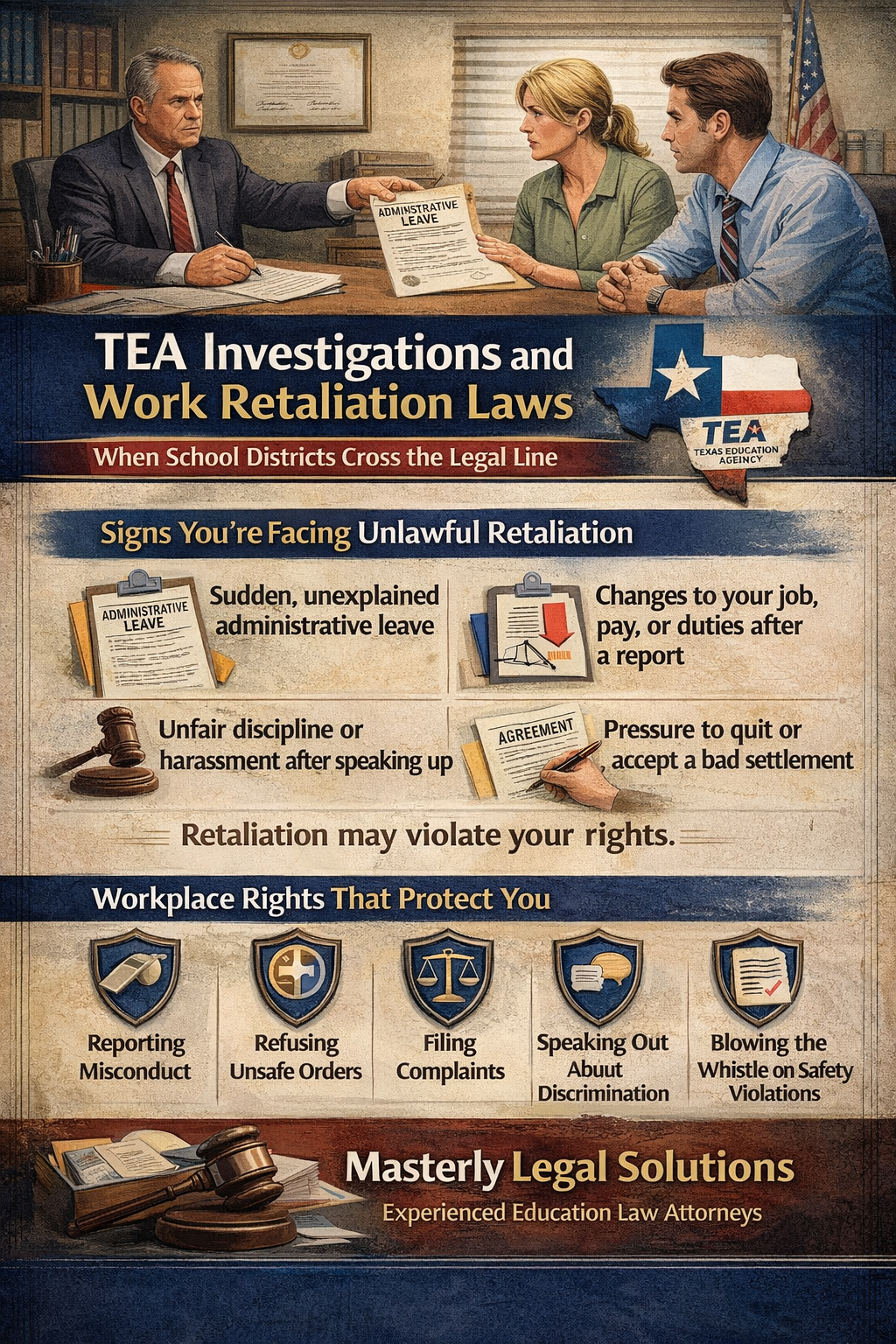
Retaliation is not simply workplace tension or administrators being “strict.” Under federal and state laws, retaliation can be an illegal reaction to a legally protected action. Retaliation can show up as sudden discipline, a forced transfer, loss of pay, or threats that escalate after you speak up. The problem is that districts often use subtle tactics so they can deny responsibility later.
In many cases, retaliation occurs right after the employee does something the district doesn’t like. That may include filing an internal complaint, reporting unsafe conditions, or cooperating in an investigation. When retaliation starts, the district wants you scared, quiet, and exhausted. The law exists to stop that, but you need legal strategy to use it effectively.
Understanding Protected Activity in a School Workplace
A key concept in retaliation cases is protected activity. This refers to actions employees take that are legally allowed and safeguarded, even if management dislikes it. A district doesn’t get to punish you just because you asserted your rights or questioned wrongdoing. If they do, it may be illegal retaliation.
Examples of protected activity can include making a complaint to HR, reporting misconduct, refusing unlawful orders, or supporting another employee’s complaint. Protected activity can also include participating in investigations or speaking out about discrimination and harassment. Even if the district calls you “difficult,” the law may still protect you if your actions fall under protected activity.
When Administrative Leave Becomes a Weapon
Districts love using administrative leave because it looks “neutral” on paper. But in reality, administrative leave can be used to isolate employees, damage reputation, and pressure resignations. It often triggers gossip, fear, and panic within the building. Many workers feel like their careers are falling apart, even if they did nothing wrong.
What makes it worse is that teachers may be kept on administrative leave for weeks or months without answers. The district may delay information, refuse transparency, and treat silence as strategy. If you’re stuck on administrative leave with no timeline, no support, and no fair process, that can signal deeper legal problems.
The Difference Between Administrative Leave and Paid Administrative Leave
Not all leave is the same. Some educators are placed on paid administrative leave, which may sound “better,” but it still can carry reputational harm and professional consequences. Being paid doesn’t erase the damage to your name, your mental health, or your standing in the school system. A district can still use paid administrative leave to control the situation and keep you out of the building.
In other cases, districts change the terms of the leave, cut off extra paid time, reduce benefits, or threaten future employment. Teachers who started on paid administrative leave may later face unpaid status or forced resignation. The district’s goal is often to break your resolve, not to seek the truth.
How School Districts Quietly Push Employees Into Resigning
One of the most common retaliation tactics is making the workplace unbearable. The employee returns from administrative leave and suddenly everything feels hostile. The supervisor watches every move, coworkers avoid you, and the manager treats you like a problem. This is how employers try to force employees out without firing them.
Districts also pressure employees to accept “agreements” that limit future work opportunities. They may promise references, neutral records, or “quiet exits” if you resign. But resigning under pressure may still harm your certification and future employment. When the district plays these games, you need legal protection immediately.
Adverse Actions That Signal Retaliation
In legal terms, retaliation often involves adverse actions—negative decisions that affect your job, pay, benefits, or professional opportunities. Adverse actions don’t have to be dramatic to be serious. They can be subtle but damaging, especially in education environments.
Examples of adverse actions that may be considered retaliation include:
- Unexplained administrative leave
- Unfair disciplinary action
- Removal from a desirable position
- Assignment to a less desirable position
- Reduction in hours
- Loss of pay or access to benefits
- Negative evaluation following a complaint
These adverse actions can cause a long-term negative impact on your career. When districts do this after protected activity, the behavior may be considered retaliatory.
The Hidden Retaliation Teachers Don’t Recognize at First
Not all retaliation looks like termination. Sometimes it’s social, emotional, and designed to isolate you. District leadership may encourage other employees to avoid you, stop communication, or exclude you from meetings. They may limit access to resources and make your work impossible.
Teachers may notice their duties changing overnight. Suddenly, the same worker who was praised last year is labeled a “problem” this year. That shift is often intentional. It is a district tactic used to establish a paper trail for discipline later.
Harassment After You Speak Up Is Still Retaliation
Many employees experience harassment after they report wrongdoing or speak up about mistreatment. The harassment can come from supervisors, managers, or other employees. It can involve threats, humiliating comments, public criticism, or hostile treatment that makes the workplace unsafe.
Workplace harassment can include unwanted behavior, intimidation, or retaliation-based targeting. In serious cases, harassment may involve discriminatory comments or sexual advances. Even if the district claims it is “normal management,” the timing often reveals the truth. When harassment follows protected activity, it can be part of an unlawful retaliation pattern.
Employment Discrimination and Retaliation Often Happen Together
Retaliation cases are frequently tied to employment discrimination. If an employee reports discrimination and then suffers punishment, the district may be violating multiple laws at once. Discrimination may involve race, sex, age, disability, religion, or other protected categories. Retaliation often shows up right after you resist unfair treatment.
Districts sometimes act like teachers should accept discrimination quietly. But laws exist to protect workers from discrimination and punishment for reporting it. Employment discrimination claims often require careful documentation, evidence, and legal analysis. That is where Masterly Legal Solutions steps in.
Title VII and Why It Matters to Teachers and School Workers
Title VII is a major federal law that protects workers from discrimination and retaliation in employment. It applies to many school employers and public entities. Title VII also matters because it supports employees who report harassment or discrimination and then face adverse actions.
Under Title VII, employees who report discrimination or participate in related proceedings may be protected. That includes filing complaints, cooperating in investigations, and opposing unlawful practices. If a school district punishes you after Title VII-related reporting, the district may have created a legal problem bigger than they expected.
The Civil Rights Act and the Line Districts Cannot Cross
The Civil Rights Act is one of the foundational legal frameworks protecting employees from discriminatory treatment. Districts sometimes behave like they are above accountability, especially when they have power over a teacher’s career. But they are not immune to the law.
If a district retaliates against someone for asserting civil rights protections, the case can become serious quickly. District decision-makers may assume teachers will not fight back. At Masterly Legal Solutions, we help employees enforce their rights when the district chooses intimidation instead of fairness.
Reporting to the Equal Employment Opportunity Commission
Some cases may require filing with the Equal Employment Opportunity Commission (EEOC). The EEOC plays an important role in discrimination and retaliation claims under federal law. This step often matters when the district’s internal process is biased or designed to protect management.
Many teachers are nervous about contacting the EEOC. They worry it will make the district even angrier. But if the district is already retaliating, staying silent rarely protects you. A strong legal plan can help determine whether EEOC filing is appropriate and how to build the case properly.
Whistleblower Laws and Reporting Wrongdoing in Education
Educators often report wrongdoing because they care about students and safety. That might involve unethical behavior, misuse of funds, falsified records, or unsafe conditions. When employees report those concerns, whistleblower laws may apply. These laws exist to protect workers who bring misconduct into the light.
Districts may try to label whistleblowers as “troublemakers.” They may claim the employee was acting out of spite. But legal protections can still apply when the report was made in good faith. If the district retaliates against whistleblowing, the situation may become a possible violation of multiple legal standards.
Occupational Safety Complaints and Retaliation
Schools are workplaces, and teachers are workers. If you report safety concerns—like violent incidents, unsafe building conditions, or dangerous student behaviors—those concerns may fall under occupational safety issues. Districts sometimes treat safety reports as “complaining,” but that doesn’t make them wrong.
If an employee is punished after reporting safety hazards, that can be retaliation. It can also create liability for the employer if someone gets hurt later. No teacher should be forced to stay silent about safety risks. When districts retaliate over safety reporting, they are crossing the legal line.
Immigration Status Threats and Illegal Pressure
Some workers fear retaliation involving their immigration status, especially if management uses intimidation or threats. While many educators are U.S. citizens, school workplaces also include employees, paraprofessionals, and contracted staff who may feel vulnerable. Districts and employers cannot weaponize immigration fears to silence employees.
If immigration-related threats appear after protected activity, it may show an abusive retaliation pattern. A school workplace should never become a place where fear replaces fairness. Legal help can matter even more in those situations.
Retaliation Against Job Applicants and Future Workers
Retaliation can also affect job applicants, not just current employees. If a district blacklists someone, spreads rumors, or blocks hiring because the person previously asserted rights, it may still be unlawful. Teachers often assume they can “just move districts,” but retaliation can follow.
In some cases, districts quietly influence future opportunities. They may discourage other schools from hiring you, especially within the same region. That can impact your career, income, and professional stability. If this happens, it may support a legal claim, depending on the circumstances.
Police Reports and When Districts Escalate the Threat
District retaliation can involve intimidation through outside authorities. Some school systems involve police early, even when the matter could have been handled internally. Other times, districts exaggerate incidents to justify extreme discipline. Police involvement can create fear and public embarrassment.
Not every police report is improper, but timing matters. If the employee engaged in protected activity and suddenly faces police involvement, the district’s motive becomes relevant. Districts sometimes use law enforcement as leverage. That tactic may be unlawful or abusive depending on the situation.
The Employer’s Duty to Act Lawfully During an Investigation
During any investigation, the employer has obligations. District leadership should be fair, consistent, and honest in how they treat employees. But many school employers treat investigations as political events rather than truth-finding missions.
An investigation should not be used to punish workers who spoke up. It should not be used to “make an example” out of someone. When an employer uses an investigation to justify retaliation, the district may create legal exposure under federal and state laws.
How Districts Manufacture “Performance Issues” After Protected Activity
One retaliation tactic is suddenly claiming the employee has performance problems. A teacher with years of positive reviews gets labeled “unprofessional” right after reporting misconduct or harassment. This is a common pattern in retaliation cases, and it is often intentional.
The district creates documentation to support adverse actions later. They may issue reprimands, negative evaluations, or “performance plans” that don’t reflect reality. This tactic is designed to protect the employer and weaken the employee’s credibility. A lawyer can challenge these manufactured claims with evidence and timing.
Less Desirable Assignments, Unfair Transfers, and Career Damage
Retaliation can include moving a teacher into a less desirable position without legitimate reason. A teacher may be removed from a leadership role, pulled from their department, or stripped of duties that helped them grow. Meanwhile, other employees are placed into the roles the teacher wanted.
Districts sometimes pretend transfers are “normal restructuring.” But if the move comes after protected activity, it may be retaliation. Teachers may also lose a desirable position or be denied advancement opportunities. These changes can affect career growth and long-term pay.
Pay, Wages, and Benefits Retaliation in Education Jobs
Many people don’t realize how often retaliation affects pay. Districts can reduce stipends, take away extra duty assignments, or cut opportunities that improve income. This can happen while the employee is on administrative leave or after they return.
Retaliation can also impact wages indirectly through scheduling changes or reduced work assignments. Some employees lose overtime, coaching stipends, or grant-based positions. These financial losses matter because they show real harm and negative impact. If the employer changes pay structures after protected activity, legal action may be warranted.
Working Conditions That Change Overnight
A teacher may return from administrative leave and find their working conditions have changed drastically. Support disappears. Class load increases. Supplies are denied. A supervisor becomes hostile. These changes are often meant to punish and pressure.
This form of retaliation is easy for districts to deny because it looks like “management.” But patterns matter. If the changes follow a complaint or protected activity, that timing can help establish retaliation. Teachers should document every change carefully.
Medical Leave Act Rights and Retaliation
Some educators experience retaliation after taking leave related to health or family needs. The Medical Leave Act provides legal protections in many situations, and employers cannot punish employees for taking legally protected leave. But in school systems, employees sometimes return to hostility.
When an employee returns from leave and immediately faces discipline, isolation, or negative reviews, retaliation may be at play. If the district treats leave as weakness or inconvenience, they may act unlawfully. Teachers deserve protection during vulnerable life moments, not punishment.
Federal Employees and How Protections Compare
While teachers are typically not federal employees, it’s still useful to understand how federal systems treat retaliation. Federal employees often operate under stricter administrative rules, but the principle is the same—retaliation is unlawful when tied to protected activity. Public sector rules can vary, but protections still exist.
School employers sometimes act like “government employers” can do whatever they want. That is not true. Even public systems must follow laws and regulations. Teachers should not assume they have fewer rights just because the employer is a public entity.
State Laws That Protect School Workers Too
Many teachers don’t realize how many state laws can apply in retaliation cases. State laws may protect reporting, whistleblowing, contract rights, and other workplace rights. In some cases, state regulations also shape how districts must handle leave, discipline, and investigations.
Because state laws can be complex, legal strategy matters. A lawyer can determine which laws apply to your case and how to enforce them. When districts ignore state protections, the case becomes stronger for the employee.
Federal and State Laws Can Work Together in One Case
Retaliation cases are often built using both federal law and state law. Many people assume they must “choose one,” but a strong legal plan may involve overlapping protections. This is especially true when discrimination and retaliation happen together.
Districts can violate multiple legal standards through one course of conduct. A retaliation claim can involve discrimination, harassment, safety, whistleblowing, and due process failures. The key is building a clear case that shows motive, timing, and harm.
How to Determine If Retaliation Happened
A teacher may ask, “How do I know if this is retaliation?” The truth is, you don’t have to guess—there are patterns legal professionals use to determine whether retaliation is likely. Timing, consistency, documentation, and motive matter. A case becomes stronger when the employee can show a clear connection between protected activity and adverse actions.
Important things that may help establish retaliation include:
- Proof of protected activity
- Evidence the employer knew about it
- A sudden change in treatment
- Increased discipline or isolation
- Loss of pay or hours
- Unfair administrative leave
If you are experiencing these circumstances, it may be a possible violation of laws designed to protect workers.
Examples of Retaliation School Districts Try to Hide
Districts often retaliate quietly, then deny it. That is why real-world example patterns matter. Teachers may not realize what’s happening until the damage is already done. Here are examples that frequently appear in retaliation cases:
- Teacher reports harassment, then is placed on administrative leave
- Employee files a complaint, then gets transferred to a less desirable position
- Worker refuses unsafe instructions, then loses paid time opportunities
- Staff member reports misconduct, then faces disciplinary hearings
- Employee supports another worker, then becomes targeted
Each example shows how retaliation can take many forms while still being legally actionable.
Many Forms of Retaliation Can Be Illegal
Retaliation comes in many forms, and districts rely on that flexibility to disguise wrongdoing. They know employees may only recognize retaliation if it looks like termination. But retaliation can be discipline, ostracism, threats, reduced pay, or paperwork attacks.
Some retaliation is emotional and psychological, designed to harm well being and confidence. Other retaliation is financial, targeting wages, hours, and benefits. Some districts retaliate through reputation damage, hoping the teacher will “disappear quietly.” Regardless of the form, the law may still protect the employee.
How Retaliation Damages Employee Morale and the Whole School
Retaliation doesn’t just hurt one teacher—it damages the culture of the entire workplace. When workers see retaliation, employee morale collapses. Staff members become afraid to speak up, report wrongdoing, or defend students. The school becomes a fear-driven environment instead of a healthy educational community.
Over time, overall employee morale suffers, and good workers leave the profession. Students also lose stability when educators are pushed out unfairly. Districts sometimes ignore this long-term harm because they focus on protecting leadership in the short term. But the damage is real, and it spreads fast.
What Teachers Should Do Immediately If They’re Targeted
If you believe retaliation is happening, you must protect yourself early. Waiting too long can allow the district to shape the record, control witnesses, and create paperwork that hurts your case. Your best move is to act strategically and document everything.
Practical steps include:
- Save emails, messages, and directives from your supervisor or manager
- Keep a timeline of events, including dates of protected activity
- Track any changes to pay, hours, or assignments
- Avoid emotional confrontations and keep communication professional
- Contact legal counsel before signing anything
When you act early, you protect your future options. When you delay, the district gains control.
Filing Complaints and Reports the Right Way
Teachers often want to do the right thing, but they don’t know how to file properly. Some employees file internal complaints, while others report issues to outside agencies. Filing can include HR documents, formal reports, or legal action depending on the issue. It also includes how you communicate with authority figures.
Filing correctly matters because districts often exploit mistakes. They may claim your complaint was “unclear” or “unprofessional.” They may pretend they never received it. A legal plan can ensure your filing is clean, defensible, and effective.
How Masterly Legal Solutions Builds Retaliation Cases
At Masterly Legal Solutions, we take an aggressive, evidence-based approach. We are not here to protect the district’s image—we’re here to protect workers. Our role is to identify patterns, challenge unlawful actions, and enforce employee protections under the laws that apply.
We look at timing, documentation, communication, and motive. We analyze whether adverse actions followed protected activity and whether the employer’s explanations make sense. We also evaluate whether discrimination, harassment, or safety issues are part of the story. Our job is to expose what the district wants hidden.
Holding Employers Accountable When They Break the Rules
School districts are employers, and employers must follow the law. That includes treating employees fairly during investigations and responding appropriately to protected activity. When districts retaliate, they create legal exposure that can lead to enforcement actions, claims, and lawsuits.
Accountability requires clarity and courage. Districts often assume teachers won’t fight back because they’re tired, scared, or worried about their reputation. But when you have legal representation, the balance shifts. You’re no longer alone, and the district can no longer control the process.
Protecting Yourself and Your Family From Career Destruction
Retaliation doesn’t just affect your job. It affects your financial stability, your confidence, and your family’s future. Teachers often support households, children, and obligations that don’t pause because the district decided to target them. Retaliation can cause emotional stress that follows you home every night.
At Masterly Legal Solutions, we understand what’s on the line. We work to protect your career, your pay, and your name. Our goal is not simply to “manage the damage,” but to stop unlawful behavior and push back with legal force. In addition to our legal protection services, we also offer business consulting to support your professional growth and success. You deserve protection, and you deserve to be treated like a professional—not a disposable employee.
Contact Masterly Legal Solutions for a Free Consultation
If you’re facing a TEA-related issue, sudden administrative leave, or pressure that feels like punishment for speaking up, don’t ignore the warning signs. When retaliation starts, it rarely gets better on its own. School districts often double down, hoping you’ll resign, stay silent, or stop asserting your rights.
At Masterly Legal Solutions, we help teachers and school workers protect themselves when an employer crosses the legal line. If you believe you are dealing with retaliation, discrimination, harassment, unfair discipline, or job threats connected to protected activity, we’re ready to step in. We’ll review your situation, help you determine your options, and explain what legal protections may apply.
Call (972) 236-5051 today to schedule your free consultation and get answers from a legal team that takes educator retaliation seriously.
Disclaimer: This article is for educational purposes only and does not constitute legal advice or legal guidance. Every case is different, and outcomes depend on specific facts, timelines, and applicable laws. For advice about your situation, contact qualified legal counsel directly.


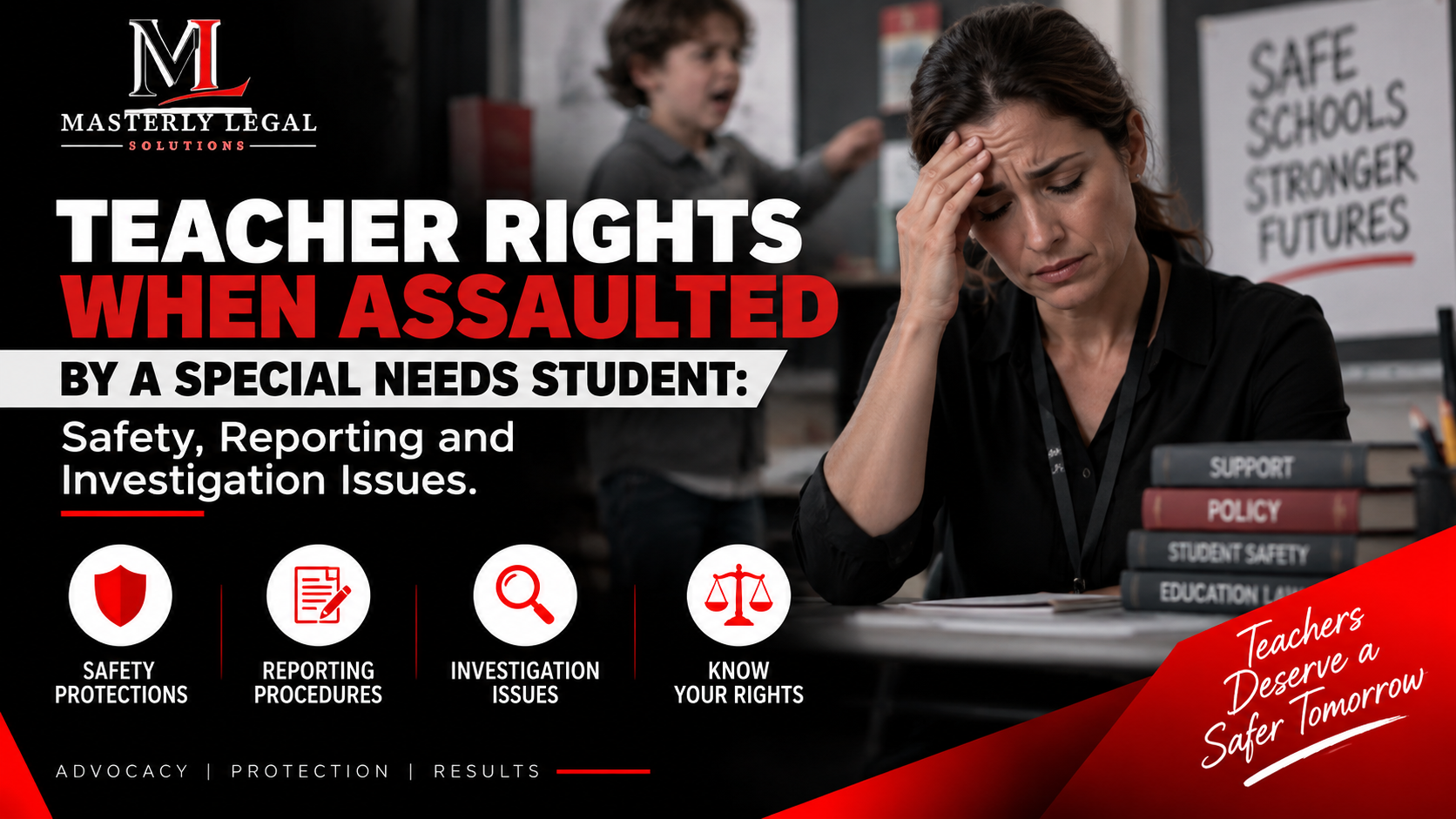
Teacher Rights When Assaulted by a Special Needs Student: Safety, Reporting and Investigation Issues



Looking for Legal & Business Solutions? Contact Us Now
Fill in the form or call us to set up a meeting





