

How Texas CPS Investigations Begin Without Formal Allegations
Most families expect that if Child Protective Services ever gets involved, there will be a clear accusation, a written complaint, or a specific “charge” placed in front of them. In real life, that is not always how it happens. In Texas, many CPS cases start quietly—through a phone call, a request to “check in,” or a surprise home visit that catches parents completely off guard. It can feel confusing, especially when CPS will not clearly explain what was reported or why your family is being investigated.
At Masterly Legal Solutions, we speak with families who are stunned by how fast an investigation can start even without formal allegations. Parents often tell us, “They didn’t even say what we did,” or “Nobody accused us of anything, but they’re still here.” That is exactly why early steps matter, because when CPS believes there is a potential risk, they may act first and clarify later. If you respond too quickly without a plan, small misunderstandings can turn into something that follows your family for months.
Why CPS Can Start an Investigation Without Clear Allegations
Many people assume allegations must be proven before CPS steps in, but a CPS investigation can begin based on reports that are incomplete, vague, or even anonymous. CPS is part of a larger system of protective services that is designed to evaluate safety, not to wait until harm happens. This means accusations do not have to be detailed for CPS to become involved. In many cases, CPS begins by gathering information first, then decides whether the claims have validity.
That process can feel unfair to families, but it is common. Instead of presenting a full explanation, CPS may start by asking questions and reviewing the home environment. The situation can escalate quickly if the caseworker feels unsure about the children’s security or stability. For parents, the best protection is understanding how the process truly works.
What CPS Is Evaluating in the Earliest Stage
Early in the process, CPS is often trying to determine whether the children are safe and whether the home is stable. They may also evaluate whether there are signs of neglect, abuse, or conditions that could lead to future danger. Sometimes, what concerns CPS is not what you think it will be. Parents may expect the focus to be on a dramatic claim, but CPS may instead ask about routines, supervision, and basic care.
CPS may also look at whether a parent appears overwhelmed, unable to manage stress, or unwilling to cooperate. Even if there is no child abuse, inconsistency can create suspicion. That is why families should be cautious about reacting emotionally or defensively. Calm responses can protect your family and reduce risk.
How “Informal Contact” Often Becomes a Formal CPS Case
In many CPS cases, the first contact feels informal. A parent might receive a call that sounds like a simple request for information or a quick review. The caseworker may use relaxed language and act as if it is “not a big deal.” But even an informal conversation can become part of the official case record.
When the caseworker begins documenting statements and observations, the process is no longer casual. The words you use may shape what CPS believes happened, even if you meant no harm. Many families do not realize how quickly the situation can lead to a formal investigation. That is why early clarity is critical.
The Role of Reports and Third-Party Information
A CPS investigation often starts because someone made a report. That person might be a mandated reporter, a neighbor, a teacher, a medical professional, or another individual who believes something is wrong. Sometimes, a report is based on misunderstanding, bias, or incomplete information. Regardless of the accuracy, CPS still has authority to look into the situation.
Reports can also arise after family conflict, custody disputes, or stressful events. One parent might accuse the other during a disagreement, hoping CPS will take their side. In other situations, CPS receives reports about a child’s health or home conditions that are exaggerated. Even if the report is weak, CPS may still investigate.
Why CPS Does Not Always Share the Full Details Immediately
Families often feel frustrated because CPS will not always reveal the full allegations at the beginning. CPS may say they are “looking into concerns” without giving specifics. This is partly because the caseworker may still be reviewing the initial information. It can also be because CPS wants to observe natural conditions in the home before anything changes.
Parents deserve to understand what is happening, but they should also recognize that CPS is collecting information from multiple sources. If you push too aggressively for details too early, it can create tension. Instead, families should focus on safe communication, documentation, and legal guidance. An experienced attorney can help you request clarity without creating unnecessary conflict.
The Difference Between “Allegations” and “Concerns”
Not every CPS case begins with formal allegations that sound like a criminal accusation. Sometimes, it begins with “concerns” such as supervision issues, a child’s statement, or a vague description of possible neglect. CPS may treat these concerns as a potential safety issue until proven otherwise. That is why even a small statement can lead to a full review.
Families should not assume that “concerns” mean the case will close quickly. If CPS believes the concerns suggest danger, the case can escalate. What starts small can grow if communication becomes inconsistent. Protecting your family means taking every CPS contact seriously.
Common Situations That Trigger CPS Contact Without Formal Allegations
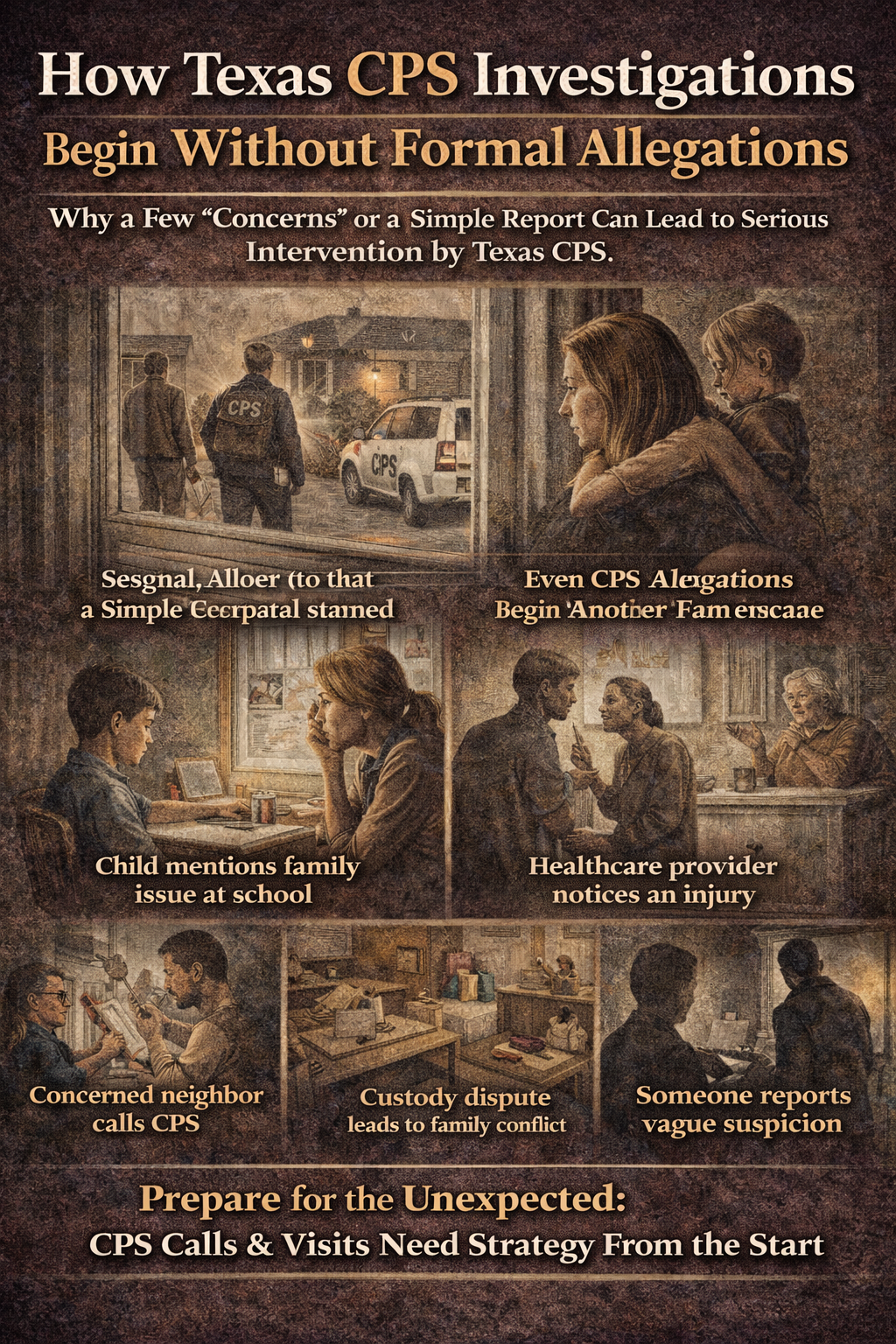
Many CPS cases start without a clear accusation because the situation is unclear from the beginning. CPS may simply have enough information to justify checking in. Parents often feel shocked because they expected a written accusation first.
Here are examples that commonly lead to CPS involvement:
- A child mentions something at school that is misunderstood
- A medical provider notices an injury and makes a report
- A neighbor hears arguing and contacts protective services
- A family conflict leads to accusations during a custody dispute
- A report claims inadequate supervision or unsafe home conditions
Even when the family believes the situation is harmless, CPS may still investigate.
What CPS Is Looking for During a Home Visit
A home visit is one of the most important early moments in the investigation. CPS may evaluate basic cleanliness, sleeping arrangements, food access, and obvious hazards. They may also observe how children interact with parents and whether the child appears fearful. The caseworker may ask about routines, school attendance, and medical care.
The home visit can feel intrusive, but it often determines how serious CPS thinks the situation is. If CPS believes the environment is stable, the case may move toward closure faster. If not, the case may expand and remain open for months. This is why preparation matters.
How Children Become the Center of the Investigation
When CPS begins investigating, the focus quickly shifts to the children. CPS may speak with children alone and ask questions that feel uncomfortable for parents. The goal is to assess safety and whether the child may be at risk of harm. CPS may also ask children about discipline, supervision, or who lives in the home.
Children may respond honestly but without context, which can create confusion. A child may describe normal events in a way that sounds alarming. That is why parents should remain calm and avoid coaching children, which can backfire. CPS will evaluate whether the child’s statements appear consistent and natural.
How CPS Defines Neglect in Everyday Family Life
Neglect is one of the most misunderstood reasons CPS gets involved. Many parents believe neglect only applies to extreme cases, but CPS may interpret neglect more broadly. It can include inadequate supervision, unsafe living conditions, or failure to address medical needs. Sometimes, neglect allegations arise from poverty, stress, or limited resources—not intentional wrongdoing.
CPS may ask whether children have consistent meals, appropriate clothing, and access to medical attention. They may also ask whether children are left alone or placed with a guardian who cannot supervise properly. Even small issues can trigger ongoing concern. Families should take neglect claims seriously and address them carefully.
How Abuse and Child Abuse Allegations Can Appear Without Warning
Abuse allegations can arise quickly and sometimes without a direct accusation to the parents. A child might make a statement, or an injury may lead to a report, and CPS may open an investigation. Child abuse claims are serious, but they are not always accurate. Misunderstandings and misinterpretations are common in high-stress situations.
CPS will evaluate whether abuse is physical, emotional, or connected to exploitation. They may also review whether there is a pattern of behavior that suggests danger. If CPS believes abuse is possible, the investigation may intensify. That is why families must respond carefully and consistently.
Why CPS Cases Often Involve Custody and Family Conflict
Many CPS cases overlap with custody disputes. One parent may report the other, or extended family may accuse parents of neglect or abuse. CPS may then step in to review the family situation. Even if the original report is exaggerated, the investigation can create new complications.
Custody concerns may also arise if CPS believes the children are not safe in the home. CPS may consider whether a guardian or relative placement is appropriate. This can feel overwhelming for parents who expected a simple conversation. A strong plan is essential when custody becomes part of the conversation.
What Happens When CPS Believes a Child Is at Risk
When CPS believes a child may be in danger, they may push for faster intervention. This does not always mean immediate removal, but it can increase pressure on parents. The caseworker may request services, interviews, or follow-up visits. CPS may also discuss safety plans that restrict certain behaviors or individuals in the home.
Families often feel trapped in this stage. They want to cooperate but fear making the wrong choice. If CPS believes risk is high, the case may be escalated to court involvement. Understanding your rights can help you respond wisely.
When CPS Can Involve the Court
CPS can seek court involvement when they believe the children face immediate risk or when parents refuse critical cooperation. Court involvement changes everything because it becomes a formal legal process. A judge may review evidence, listen to CPS concerns, and determine next steps. Families should not wait until court is involved to seek help.
Court hearings can move quickly and feel intimidating. Parents may feel unprepared because they did not know the case was serious until it reached court. Having an attorney early can protect your family’s position. It can also help ensure CPS follows the law correctly.
The Risk of Removal and Foster Care Placement
Removal is one of the most feared outcomes in CPS cases. Families worry CPS will remove children from the home and place them into foster care. While removal does not happen in every case, it can happen when CPS believes the child is unsafe. Even the possibility of removal creates intense stress.
CPS may also consider temporary placement with relatives instead of foster care. However, placement decisions can still disrupt the family and create long-term emotional impact. Parents should not assume they can “talk their way out of it” without preparation. Careful strategy can reduce the risk of removal.
Understanding the Services CPS May Request
CPS often requests services as part of an investigation. These services may include counseling, parenting classes, evaluations, or other programs. Families sometimes interpret services as a punishment, but CPS may view them as protection and prevention. Still, agreeing too quickly can create unintended consequences.
Some services may be helpful, but others may not be necessary or appropriate. Parents should understand what they are agreeing to and why. It is okay to request clarification and time to review. An experienced attorney can help evaluate which services make sense.
Why Parents Feel Pressured to Decide Too Fast
CPS cases move quickly, and parents often feel pressured to comply immediately. A caseworker may say something needs to happen “today” or “right now,” which increases fear. In that moment, families may agree to things they do not fully understand. This pressure can lead to mistakes that shape the rest of the case.
Parents deserve to slow down and think. You can cooperate without surrendering your rights. Asking questions and documenting conversations is smart, not suspicious. A consultation with legal counsel can help you make wise choices.
The Importance of Documentation and Review
Families should keep their own documentation from the beginning. Write down dates, names, summaries of conversations, and what services were requested. Keep copies of paperwork and any written communication. This review process helps protect you if details become disputed later.
Documentation also helps families identify patterns and inconsistencies. If CPS statements change, your notes may become strong evidence. You do not need to be confrontational to protect yourself. You just need to be organized and prepared.
How CPS Investigations Can Affect Your Home Life for Months
Many families assume CPS cases last only a few weeks, but some remain open for months. During this time, families may feel constant stress and uncertainty. Routine activities may be interrupted by visits, calls, and service requirements. Children may feel anxious and confused, even if parents try to shield them.
The investigation can affect how your household functions daily. It can also strain relationships between parents and extended family. This is why early strategy matters so much. The sooner you stabilize the process, the sooner your family can breathe again.
The Emotional Impact on Children and Families
A CPS investigation affects more than paperwork. It affects emotions, trust, and the feeling of safety within the home. Children often sense fear, even when parents try to appear calm. They may worry that they will be taken away or punished.
Families may also feel ashamed or judged, even when they did nothing wrong. That emotional burden can lead to rushed decisions and mistakes. Protecting your mental health is part of protecting your family. Support, counseling, and sound legal guidance can help reduce stress.
How CPS Uses Authority to Gather Information
CPS has authority to interview children, review records, and speak to individuals connected to the family. They may contact schools, doctors, and caregivers. They may also look at the child’s health history and whether the family has followed medical recommendations. This can feel invasive, but it is part of how CPS determines risk.
Because CPS has authority, families sometimes assume they have no rights. That is not true. Parents have rights, and CPS must follow procedures. The key is knowing how to assert your rights appropriately.
Why Some CPS Cases Expand Into Broader Accusations
Even when CPS starts without formal allegations, cases can expand. A caseworker might learn new details and begin investigating additional concerns. What started as a neglect question may become an abuse question. What started as a home concern may become a custody concern.
This expansion often happens when communication becomes inconsistent or emotional. It can also happen when multiple reports are filed. Families should be careful about who they speak to and how information is shared. A strong legal strategy can limit unnecessary expansion.
Common “Accusations” That Appear Later in the Process
Some accusations are not mentioned at the beginning but appear later. Families may feel shocked because they were not warned. This can create panic and instability. When accusations appear suddenly, families may respond emotionally, which can worsen the situation.
Accusations may include claims about supervision, discipline, substance use, or exploitation. Even when claims are untrue, CPS may still investigate. This is why early preparation is essential. The earlier you plan, the better you can defend your family.
The Role of Experience When Defending CPS Cases
Experience matters in CPS cases because the process is fast and high-stakes. A family needs someone who understands how CPS operates and how cases move through the system. An experienced attorney can help determine which steps are necessary and which are not. They can also help families protect children without creating new risk.
At Masterly Legal Solutions, our team brings deep experience and knowledge to family defense matters. We understand how protective services evaluates cases and how to respond strategically. Our goal is always to protect children, protect parents, and protect the family’s future. That commitment guides everything we do.
How an Attorney Can Help You Respond the Right Way
An attorney can help families communicate clearly and avoid common mistakes. They can help you prepare for interviews, understand service requests, and organize documentation. They can also help defend against unfair allegations and ensure procedures are followed. The right attorney helps you stay calm and strategic.
A proven track record matters because CPS cases require careful handling. These cases are not just emotional—they are legal and procedural. Families deserve strong defense and clear guidance. That is where a skilled legal team can make a difference.
Why “Hiring” Help Early Can Protect Your Family
Families often hesitate to hire help because they believe the case will end quickly. Unfortunately, waiting can create more harm. Early mistakes are harder to fix later, especially if CPS documents the family as uncooperative or unsafe. Early support can protect your rights from the start.
Hiring legal support does not mean you are guilty. It means you are prepared. Protecting your family means making smart choices, not rushed decisions. The earlier you seek help, the more options you may have.
When CPS Says It Is “Just Checking,” Take It Seriously
One of the most common phrases families hear is that CPS is “just checking” or “just following up.” That language can be misleading. Even a “check” can lead to a documented case record. Even a “follow-up” can lead to new questions.
If CPS is contacting you, treat it as serious. Stay calm, document everything, and consider your next steps carefully. Your family’s stability matters, and your responses shape the outcome. Early strategy protects you.
Why Different Counties Can Affect the Process
CPS processes can vary based on county and workload. A county with higher case volume may move faster or rely more heavily on standardized procedures. Some families hear different expectations depending on the caseworker. This can be confusing and frustrating.
Families in larger counties may feel like they are being rushed through a system. This is why legal guidance matters. A good defense strategy is consistent, even when county practices vary. Your rights should not depend on confusion.
Orange County and Irvine References in CPS Discussions
Families sometimes search for information online and find references to Orange County or Irvine procedures. While those terms may appear in broader discussions of child protective practices, Texas cases follow Texas-specific processes. Still, the confusion shows how difficult it is for families to find accurate guidance quickly. That uncertainty can lead to mistakes.
It is better to rely on Texas-based legal advice than generalized online information. Families should focus on what applies to their state and local procedures. When you are investigated, accuracy matters more than assumptions. An experienced attorney can clarify what truly applies.
Protecting Children, Protecting the Future
The purpose of protective services is to ensure safety, but families also deserve fairness and respect. Children deserve stability, and parents deserve a process that follows the law. The goal is not to panic or fight blindly—it is to protect your child and protect your family’s future. With the right strategy, families can move through the process and recover.
CPS cases can feel frightening, but families are not powerless. Your choices matter, your documentation matters, and your preparation matters. The earlier you take control, the more protection you create. That is the difference between chaos and stability.
Understanding the Different Types of Child Protective Services CPS Cases
There are several types of situations that can lead to involvement from child protective services CPS, and each one is evaluated based on the specific conduct being reported and the level of risk CPS believes may exist. Some cases involve misunderstandings, while others involve more serious concerns that require careful defense and planning from the very beginning. Because every family’s circumstances are different, having legal expertise can help you respond appropriately and avoid mistakes that create long-term consequences. At Masterly Legal Solutions, we focus on building a strategy that supports both protection and stability, giving families the best opportunity for success while navigating an emotionally difficult process.
Contact Masterly Legal Solutions for a Free Consultation
If CPS has contacted your family and the situation feels unclear, you do not have to guess what happens next. Even when a case begins without formal allegations, it can quickly grow into an investigation that impacts your home, your custody rights, and your children’s long-term stability. At Masterly Legal Solutions, we help families protect their rights, defend against unfair accusations, and respond strategically before the situation escalates. If you are searching for help related to child protective services charlotte north carolina and want guidance on how protective services cases can begin quietly and change lives fast, we invite you to contact our team for support and clarity. Call (972) 236-5051 today to schedule a free consultation and get answers before the case moves further.
This article is for educational purposes only and does not constitute legal advice. Reading this content or contacting Masterly Legal Solutions does not create an attorney-client relationship. Every case is different, and outcomes depend on specific facts and applicable law.


Teacher Rights When Assaulted by a Special Needs Student: Safety, Reporting and Investigation Issues


Looking for Legal & Business Solutions? Contact Us Now
Fill in the form or call us to set up a meeting