
How School District Investigations Can Quietly End a Teaching Career Without Legal Help

January 15, 2026

Teaching is more than a job. For many educators, it is a calling tied to personal identity, financial stability, and long-term well being. What most teachers do not realize is how quickly a routine-looking school district investigation can turn into a career-ending employment issue. These investigations often begin quietly, without accusations that sound serious on the surface, but the consequences can follow an educator for years. Without the guidance of an experienced attorney, many individual employees do not see the risks until it is too late.


At Masterly Legal Solutions, we regularly speak with teachers who believed cooperating would protect them. Instead, they unknowingly gave up legal protections guaranteed under federal and state laws. This article is written to shed light on the hidden dangers of school district investigations and explain why early legal counsel can protect your future.


The Illusion of an Informal Investigation

Many educators are told that an investigation is simply a fact-finding process. Administrators may describe it as routine, internal, or non-disciplinary. This language lowers defenses and encourages teachers to speak freely without representation. Unfortunately, what feels informal can still trigger serious employment law consequences.


School districts operate as employers with legal authority. Statements made during these early stages can be documented, shared, and later used in litigation or termination proceedings, particularly in cases of educator discipline and misconduct. Once the legal process begins, it is difficult to undo damaging statements.


Why Teachers Often Underestimate the Risk

Teachers are trained to follow rules, cooperate with leadership, and act in good faith. That instinct works well in the classroom but can be dangerous during an investigation. Administrators are not neutral parties, even when they appear supportive.


Districts are protecting their business interests, public image, and liability exposure. Their goals do not always align with the interests of individual employees. Without an attorney, the playing field is uneven from the start.


The Hidden Power of School District Employers

A school district has legal teams, human resources departments, and access to outside law firms. Teachers usually face these complex disputes alone. Districts understand state and local laws, internal policies, and how to document claims effectively.


Educators, on the other hand, may not realize that a single complaint can escalate into allegations involving discrimination, harassment, or retaliation. Once these terms appear in writing, the investigation takes on a much more serious tone.


Investigations Rarely Stay Internal

Many teachers assume that internal investigations stay within the district. In reality, information often travels far beyond the workplace. Findings can be shared with licensing boards, other districts, or outside agencies.


In some cases, reports reach the equal employment opportunity commission or other federal entities. What started as a local matter can quickly involve federal and state courts if claims are escalated or challenged.


How Policies Can Override Fairness

School district policies are written to protect the employer. While they reference fairness and professionalism, they often prioritize limiting liability. These policies may conflict with broader employment law principles that protect employees.


Without legal guidance, teachers may unknowingly waive rights guaranteed under the civil rights act, title vii, or the disabilities act. Once those rights are waived, reversing the damage becomes extremely difficult.


The Silent Role of Retaliation

Retaliation is one of the most common issues in school district investigations. It often begins subtly, through schedule changes, negative evaluations, or isolation in the workplace. Teachers may not immediately recognize these actions as retaliation cases.


By the time retaliation is obvious, documentation already favors the employer. Legal counsel helps identify patterns early and preserve evidence that supports claims of unfair treatment.


When Discrimination Allegations Change Everything

Discrimination claims are treated with seriousness under employment law. Allegations involving age discrimination, disability status, or protected characteristics can reshape an entire investigation. Districts respond aggressively to reduce risk.


Teachers accused of discrimination may not realize how these claims intersect with federal and state laws. Without an attorney, responding incorrectly can permanently harm credibility and future employment prospects.


The Danger of Speaking Without Counsel

Anything said during an investigation can be used later in litigation, arbitration, or settlement negotiations. Teachers often believe honesty alone will resolve the matter. Unfortunately, honesty without strategy can be damaging.


An attorney ensures that statements are accurate, contextualized, and aligned with a broader winning strategy. This protection is critical during interviews and written responses.


Employment Contracts Matter More Than You Think

Many educators sign employment contracts without fully understanding the legal language. These contracts often dictate investigation procedures, dispute resolution methods, and termination rights. During an investigation, these provisions become central.


An attorney well versed in employment contracts can identify violations, inconsistencies, and leverage points. Without this review, teachers may miss opportunities to protect their interests.


How Investigations Lead to Wrongful Termination

Not all terminations are lawful. Wrongful termination can occur when a district violates employment law, breaches a contract, or retaliates against an employee. Investigations are frequently used to justify these decisions.


Districts often rely on documentation created during the investigation to defend their actions. Legal counsel helps challenge flawed processes and unsupported conclusions.


The Long-Term Impact on Your Career

Even when a teacher is not terminated, investigation records can follow them. References, background checks, and licensing reviews may reveal past disputes. This can quietly block future hiring opportunities.


Teachers often discover these consequences only after being denied positions. At that point, correcting the record is far more difficult.


Why Early Legal Advice Changes Outcomes

Early involvement of an attorney shifts the balance of power. It signals to the employer that the teacher understands their rights and expects fairness. This alone can influence how the district proceeds.


Experienced litigators understand how districts build cases. They know how to protect clients during interviews, document retaliation, and preserve claims for potential litigation.


The Intersection of Local and Federal Law

School districts must comply with local laws, state laws, and federal regulations. These overlapping obligations create opportunities for error. Teachers without legal counsel rarely see these violations.


An attorney can analyze whether the district followed proper procedures under state and local laws while respecting federal standards. This analysis often reveals leverage points.


When Investigations Turn Into Lawsuits

Not every case ends in litigation, but many do. Lawsuits may involve claims of discrimination, harassment, or retaliation. Districts prepare for this possibility early.

Teachers should do the same. Legal counsel helps position cases for favorable outcomes, whether through settlement, arbitration, or trial.


The Cost of Waiting Too Long

Delaying legal help often increases attorney's fees and limits options. Evidence may be lost, deadlines missed, and statements locked into the record. Early consultation is both strategic and cost-effective.


Waiting until termination or suspension occurs places teachers at a significant disadvantage.


Understanding the Legal Process in Education Employment

The legal process in employment disputes is structured and unforgiving. Deadlines, procedures, and evidentiary rules matter. School districts know this and plan accordingly.


Teachers need representation that understands this process and can navigate it efficiently on their behalf.


How Districts Protect Their Interests

Districts act like large businesses. They manage risk, control narratives, and protect their reputation. Their actions are guided by counsel and internal policy.

Teachers deserve the same level of protection. Legal representation ensures that individual employees are not sacrificed for institutional convenience.


Why Not All Law Firms Are the Same

Not all law firms handle education-related employment disputes effectively. These cases require knowledge of employment law, administrative procedures, and litigation strategy.


At Masterly Legal Solutions, our practice areas include complex employment disputes involving public employers. We understand how districts operate and how to challenge unfair actions.


The Role of Litigation and Settlement Strategy

Litigation is not always the goal. Strategic settlement negotiations can resolve disputes while protecting a teacher’s record. The key is leverage.

An attorney builds leverage through documentation, legal analysis, and procedural compliance. This approach often leads to better outcomes for clients.


Arbitration and Alternative Resolution Risks

Some employment contracts require arbitration. While arbitration can be faster, it also limits discovery and appeal rights. Teachers should understand these risks before participating.


Legal counsel ensures that arbitration is approached strategically, not blindly.


How Retaliation Escalates Over Time

Retaliation rarely stops on its own. It escalates as districts justify prior actions. Without intervention, teachers may face increased scrutiny, discipline, or isolation.

An attorney can interrupt this pattern by asserting rights and documenting violations.


Protecting Your Professional Reputation

Your reputation is an asset. Investigations threaten that asset quietly and persistently. Legal counsel helps control narratives and correct misinformation.

This protection extends beyond the current employer to future opportunities.


Why Federal Employees Face Unique Challenges

Teachers connected to federally funded programs or federal employees working in education settings face additional layers of regulation. Federal rules add complexity to disputes.


Understanding these distinctions requires legal experience and careful analysis.


The Emotional Toll of Investigations

Investigations affect more than employment. Stress, anxiety, and strain on family members are common. The uncertainty can be overwhelming.

Having legal counsel provides clarity, structure, and reassurance during an otherwise isolating process.


When Family and Career Collide

An investigation does not stay at work. It affects finances, relationships, and future planning. Teachers often worry about supporting a family member or maintaining stability.


Legal representation helps protect both career and personal interests.


Why Experience Matters in These Disputes

Experience matters when navigating disputes with school districts. Understanding how administrators think and how cases unfold is critical.

Our firm has represented clients in employment-related disputes across various forums, including state courts and administrative settings.


Standing Up to the Employer Without Fear

Teachers should not fear asserting their rights. The law exists to protect employees from abuse, discrimination, and retaliation.

With the right attorney, teachers can level the playing field and protect their future.
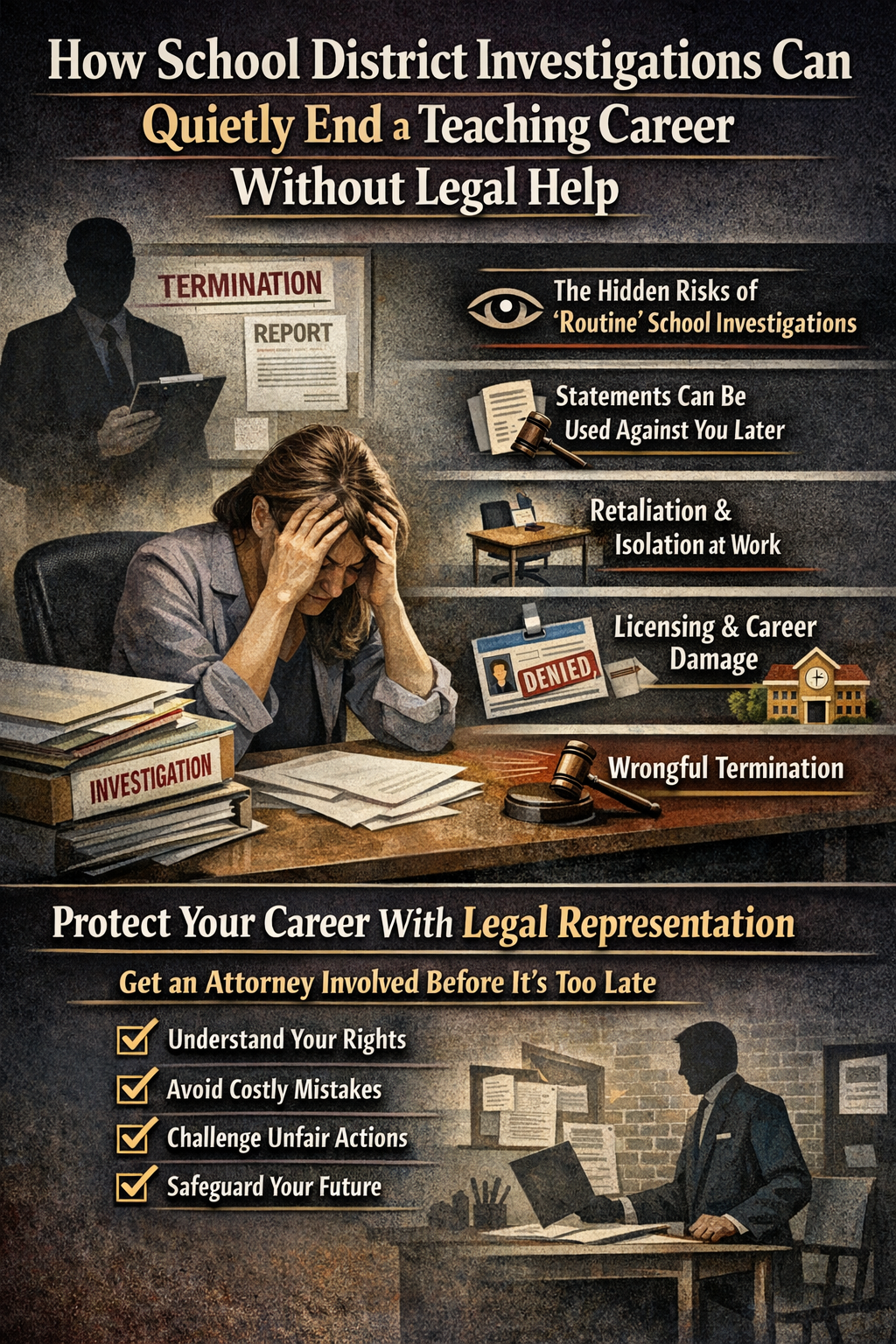
Infographic showing a distressed teacher sitting at a desk with investigation documents while shadowy school administrators stand in the background. Headline reads “How School District Investigations Can Quietly End a Teaching Career Without Legal Help.” Visual elements highlight risks such as statements being used against teachers, retaliation, licensing and career damage, and wrongful termination, emphasizing the importance of legal representation to protect an educator’s career.


When Employment Disputes Turn Into High-Stakes Legal Battles

When a school district investigation escalates, it often shifts from an internal employment concern into a formal legal dispute governed by the employment act and enforced through complex commercial litigation principles. At this stage, experienced employment lawyers become essential, as these cases can overlap with areas many teachers do not expect, including family law implications, partnership disputes within a school-related company, and even allegations tied to business torts. Districts frequently rely on teams of lawyers and outside partners to protect their interests, manage compensation exposure, and control risk, while individual educators are left navigating unfamiliar legal terrain.


These matters can rise through state systems and, in rare but impactful cases, reach the supreme court, shaping how justice is interpreted for employees nationwide. Working with recognized counsel, including attorneys ranked among super lawyers, gives educators the ability to find lawyers who understand how to challenge powerful institutions and pursue fair outcomes. The best lawyers know how to balance strategy, negotiation, and litigation to ensure teachers are not overpowered by a system designed to protect the employer, not the individual.


Contact Masterly Legal Solutions for Guidance

If you are a teacher facing or anticipating an investigation involving a school district, including matters connected to the Frisco school district, early legal guidance can make a decisive difference. At Masterly Legal Solutions, we offer a confidential consultation to help you understand your options, your rights, and the risks you may not yet see. Our goal is to protect your career, your reputation, and your long-term interests before irreversible damage occurs. Call (972) 236-5051 to schedule a free consultation and get clarity before the investigation defines your future.


This article is for educational purposes only and does not constitute legal advice. Reading this content or contacting our firm does not create an attorney-client relationship. Legal outcomes depend on specific facts and applicable law.

(972) 236-5051
Attorney for CPS speaking with family about child protection case.
May 19, 2026
Experienced CPS attorney and CPS lawyer helping families protect parental rights during child protective services and CPS investigation cases across Texas.
Atlanta estate planning attorney reviewing wills and estate documents with family
May 19, 2026
Atlanta estate planning attorney helping families protect assets and create an estate plan with trusted guidance from an experienced estate planning lawyer.
Arlington law attorney consultation services in Northern Virginia..
May 19, 2026
Arlington law attorney providing family law, estate planning, criminal defense & business law consultation in Northern Virginia. Trusted legal counsel for clients.
May 19, 2026
Understanding the Stress Behind a TEA Investigation Few situations are more overwhelming for an educator than learning they are under a TEA investigation. Many teachers, administrators, coaches, and school employees spend years building a career only to suddenly face allegations that threaten their reputation, teaching certificate, and future employment opportunities. In many cases, the process begins quietly with a complaint, an unexpected meeting with a supervisor, or being placed on administrative leave without fully understanding what happens next. For many workers in education, the emotional toll can be severe. An employee may feel isolated from co workers, worried about their family responsibilities, and uncertain about whether the employer intends to protect their rights or pressure them into resignation. These investigations often create fear, anxiety, and confusion, especially when the allegations involve workplace discrimination, harassment, retaliation, or accusations of inappropriate conduct. At Masterly Legal Solutions, we understand how quickly a TEA investigation can impact every part of a person’s professional life. Taking immediate steps after receiving a TEA investigation notice can help protect an educator’s license, career, and future opportunities. Even before the Texas Education Agency makes findings, school districts may begin internal disciplinary procedures, place an employee on paid administrative leave, or restrict access to the campus. The way an educator responds during the early stages of an investigation can significantly affect the outcome of the case. What Administrative Leave Means During a TEA Investigation Administrative leave is a temporary removal from regular duties while an employer reviews allegations or gathers facts related to an investigation. In the education setting, a school district may place teachers or administrators on administrative leave after receiving a complaint from a student, parent, co worker, or another staff member. Understanding the specific steps Texas teachers should take while on administrative leave can be critical to protecting both employment and certification. In some circumstances, the leave may be temporary and routine. In other cases, the leave can become prolonged and damaging to the employee’s professional reputation. Many educators assume that being placed on leave automatically means they have done something wrong, but that is not always true. Employers sometimes use administrative leave while determining whether allegations are supported by evidence. A school district may also use administration leave as a method of limiting access to students or staff during the review process. While districts often claim this step is precautionary, the consequences for the employee can still be serious. The employee may lose access to school systems, face public scrutiny, or experience emotional distress while waiting for the investigation to move forward. The Difference Between Paid and Unpaid Leave Not all leave policies are the same. Some educators are placed on paid administrative leave, while others may experience unpaid suspensions depending on the allegations and district policies. Understanding the difference is important because it can affect wages, benefits, retirement contributions, and future employment opportunities. Paid leave generally allows the employee to continue receiving pay and benefits while the employer conducts the investigation. However, even paid leave can create long-term damage when rumors spread throughout the workplace or the community. Unpaid leave can place extreme financial strain on workers and their family member obligations. In some cases, school districts attempt to pressure employees into resigning rather than allowing the investigation process to continue. Before agreeing to resign, sign documents, or provide detailed written statements, educators should seek legal guidance from an attorney experienced with TEA matters. Common Reasons Educators Are Placed on Administrative Leave School districts may place an employee on administrative leave for many reasons. Some allegations involve serious accusations, while others stem from misunderstandings, interpersonal conflicts, or false claims, particularly in situations where Texas educators must defend their licenses during a TEA investigation . Common examples include: Allegations of harassment involving students or co workers Claims of workplace discrimination Accusations involving inappropriate communication Reports related to sexual advances Complaints concerning classroom management Allegations involving discrimination based on disability or age discrimination Claims of retaliation after engaging in protected activity Disputes involving employment discrimination Reports concerning policy violations or misconduct In many cases, the school district begins its own internal investigation before reporting the matter to the TEA. The district may also cooperate with police or outside investigators depending on the circumstances. How Retaliation Can Develop During a TEA Investigation Retaliation is one of the most common concerns educators face after reporting misconduct or defending themselves during an investigation. Retaliation can take many forms, and it is not always obvious in the beginning, which is why many employees benefit from guidance from an education lawyer for teachers in Texas when workplace conditions begin to change. An employer may attempt to isolate an employee, alter the employee's work schedule, reduce opportunities for promotion, assign less favorable duties, or create a hostile workplace environment. In some situations, a manager or supervisor may encourage co workers to avoid the employee altogether. Federal law and state laws prohibit retaliation against workers who engage in protected activity. Protected activity can include filing a complaint, reporting workplace discrimination, cooperating with investigators, or participating in proceedings related to employment discrimination claims. Unfortunately, retaliation often occurs quietly. A school district may claim staffing changes are unrelated while simultaneously treating the employee differently after they report misconduct. This is why documenting events, preserving communications, and obtaining legal representation early can be critical. Recognizing Signs of Workplace Retaliation Some educators are unsure whether they actually face retaliation or whether their employer’s actions are simply part of the investigation process. While every case is different, there are several warning signs that may indicate unlawful conduct. Examples of retaliation may include: Sudden negative evaluations after filing a complaint Removal from a desirable position Transfer to a less desirable position Reduction in work hours or responsibilities Exclusion from meetings or professional opportunities Increased scrutiny from a supervisor or manager Unfair disciplinary action Threats regarding future employment Pressure to resign before the investigation concludes Retaliation laws exist to protect workers from being punished for asserting their rights. However, proving retaliation often requires strong documentation and strategic legal representation. Federal Protections for Employees Facing Retaliation Several federal statutes and regulations protect employees from retaliation and employment discrimination. These laws apply to many workplaces, including public schools and educational institutions, and often intersect with education law services from experienced attorneys who help employees enforce their rights. Discrimination on the basis of race, color, religion, sex, or national origin is forbidden by Title VII of the Civil Rights Act.. Title VII also prohibit retaliation against employees who report unlawful conduct or participate in investigations. The Equal Employment Opportunity Commission, commonly known as the EEOC, enforces many federal workplace protections. The EEOC investigates claims involving workplace discrimination, harassment, retaliation, and other unlawful employment practices. Additional federal protections may arise under the Disabilities Act, the Fair Labor Standards Act, and other employment laws. These statutes protect workers from unfair treatment related to disability, wages, labor issues, and protected conduct. How the EEOC Handles Retaliation Claims The EEOC plays an important role in reviewing employment discrimination and retaliation complaints. When an employee believes an employer violated federal law, the individual may file a claim with the eeoc before pursuing a lawsuit. The EEOC may: Review documentation and statements Interview witnesses Request employment records Examine workplace policies Determine whether discrimination or retaliation occurred Although TEA investigations involve educator certification issues, employment claims involving discrimination or harassment may also overlap with EEOC procedures. This overlap makes legal strategy especially important because statements made during one investigation can affect another proceeding. The Relationship Between TEA Investigations and Employment Law Many educators do not realize that a TEA investigation can involve both certification concerns and employment law issues. A teacher may face disciplinary proceedings with the TEA while simultaneously dealing with retaliation or discrimination in the workplace, and in some cases may need focused support from a Texas law firm that defends educators in TEA investigations and license actions . For example, an employee who reports sexual advances from a supervisor may later face increased scrutiny, disciplinary action, or removal from campus. In another example, an educator may report workplace discrimination based on disability or immigration status and later experience retaliation after participating in the investigation. These cases often involve overlapping legal issues under federal and state statutes. Because of this, educators should avoid assuming the school district will protect their interests throughout the process. The Impact of False Allegations on Educators False allegations can destroy careers even when the claims are eventually disproven. A simple complaint may lead to suspension, reputational damage, and emotional distress before investigators even determine whether misconduct occurred. Teachers and administrators frequently experience fear about losing their job, certification, and future opportunities. Some employees become concerned about how the allegations affect their family member relationships, finances, and mental health. Even after an investigation closes, the stigma associated with being placed on administrative leave can continue affecting employment opportunities. School districts sometimes hesitate to hire individuals who previously faced investigations, even if the allegations lacked merit. This is why responding quickly and strategically is so important. Educators should never assume the truth alone will automatically resolve the matter. How School Districts Conduct Internal Investigations Most school districts begin with an internal investigation before or during TEA involvement. The district may assign human resources personnel, administrators, or outside investigators to gather information, and educators often turn to an education law attorney for teachers to understand how these internal steps may affect later certification or employment proceedings. The process often includes: Witness interviews Requests for written statements Reviews of emails or electronic communications Examination of personnel files Meetings with supervisors and managers Employees sometimes feel pressured to answer questions immediately without legal guidance. However, statements made during these meetings can later be used in TEA proceedings, employment hearings, or litigation. Before participating in interviews or signing documents, educators should carefully evaluate their rights and legal options. Why Documentation Matters During an Investigation Strong documentation can significantly improve an employee’s ability to defend against allegations or prove retaliation. Educators should maintain organized records of communications, disciplinary actions, meeting notes, and performance evaluations, and may wish to review those records with an education law attorney for teachers and administrators to assess potential claims. Helpful documentation may include: Emails and text messages Copies of complaints or reports Witness information Work schedules and assignment changes Evidence of harassment or discrimination Notes regarding conversations with supervisors Documentation can help determine whether the employer acted fairly or engaged in prohibited conduct. Retaliation After Reporting Harassment Many educators who report harassment later experience negative treatment in the workplace. This can occur when an employee reports sexual advances, inappropriate comments, hostile behavior, or discriminatory treatment. Federal and state laws protect employees who report harassment or participate in investigations. Unfortunately, some employers still retaliate against workers by limiting opportunities, changing assignments, or increasing scrutiny. An employee who experiences retaliation after filing a complaint should carefully monitor workplace changes and seek legal guidance promptly. Family Responsibilities and Workplace Pressure TEA investigations can place enormous pressure on families. Educators often worry about supporting children, maintaining benefits, and protecting long-term career goals while dealing with uncertainty. Some employees face retaliation connected to family responsibilities. For example, a district may criticize an employee’s absence related to caregiving obligations or use scheduling changes to create additional hardship. These circumstances can create emotional and financial stress that affects every area of life. Protecting your professional reputation during this period is essential. Disability Discrimination and Retaliation Concerns Employees with a disability may face additional challenges during investigations. In some situations, an employer improperly assumes medical conditions affect job performance or reliability. Federal laws, including protections under the disabilities act, prohibit employment discrimination based on disability. Employers are also prohibited from retaliating against workers who request accommodations or report discriminatory treatment. If an employee believes the investigation process involves discrimination related to disability, medical conditions, or accommodations, immediate legal review may be necessary. Age Discrimination in Educational Workplaces Age discrimination can also arise during disciplinary proceedings or staffing changes. Older educators sometimes report being treated differently during investigations or targeted for removal from employment. Federal employment laws prohibit discrimination based on age. An employer cannot lawfully use age as justification for unfair discipline, denial of promotion opportunities, or retaliatory treatment. These cases may involve subtle patterns of behavior that become clearer over time. Careful documentation and legal analysis are important when evaluating potential claims. The Role of Protected Activity Protected activity refers to actions employees take that are legally protected under federal and state employment laws. Participating in an investigation, reporting misconduct, filing complaints, or opposing unlawful behavior can qualify as protected activity. Examples of protected activity include: Filing an EEOC complaint Reporting workplace discrimination Cooperating with investigators Reporting harassment Participating in hearings or interviews Employers cannot legally punish employees for engaging in these actions. If retaliation follows protected activity, the employee may have legal options available. When Retaliation Becomes Unlawful Not every workplace disagreement qualifies as unlawful retaliation. However, when an employer takes adverse action because an employee engaged in protected conduct, the situation may violate federal or state laws. Courts and agencies often examine whether the employer’s actions would discourage a reasonable employee from reporting misconduct or participating in investigations. Examples may include termination, demotion, denial of promotion opportunities, reduced pay, reduced hours, or hostile treatment from management. Sexual Harassment Allegations and TEA Cases Allegations involving sexual harassment or sexual advances often trigger immediate district responses. Schools may place an employee on administrative leave before fully evaluating the facts. While districts must take complaints seriously, employees also deserve fair treatment and due process. False allegations, misunderstandings, and exaggerated claims can occur in educational settings. Educators should avoid discussing allegations publicly or attempting to contact witnesses without legal advice. Mishandling communications during an investigation can create additional complications. How Federal Agencies Become Involved Several federal agencies may become involved depending on the allegations. The EEOC handles many workplace discrimination and retaliation matters, while other federal agencies oversee labor standards and employment regulations. Federal employees in educational environments may face separate procedures depending on the institution involved. Although many public-school educators work under state systems, federal employment laws still provide important protections. Understanding which agency has authority over a matter is important when building a legal strategy. Immigration Status and Employment Protections Federal employment laws generally protect workers regardless of immigration status in certain workplace matters involving discrimination and retaliation. Employers cannot use immigration concerns to intimidate employees who report unlawful conduct. Educators facing retaliation should understand that workplace protections may still apply even when complicated employment questions arise. The Importance of Legal Representation Early in the Process One of the biggest mistakes educators make is waiting too long to seek legal representation. Many employees assume cooperating fully with the district will automatically resolve the matter fairly. Unfortunately, statements made during early interviews can later affect certification proceedings, employment hearings, and even lawsuits. An attorney can help determine how to respond to requests, preserve evidence, and protect professional interests throughout the process. Early legal guidance may also help identify whether the employer violated laws related to retaliation, discrimination, harassment, or employment rights. Why Educators Should Be Careful With Written Statements School districts frequently request written responses from employees during investigations. These statements may later become part of TEA records or other proceedings. Before submitting statements, educators should carefully review the facts and understand how the information could be interpreted. Inconsistent wording, emotional responses, or incomplete explanations can create unnecessary risks. An attorney can help evaluate whether additional information should be provided and how to avoid statements that may unintentionally harm the employee’s case. The Emotional Impact of Administrative Leave Being removed from the workplace can feel humiliating and isolating. Many employees experience depression, anxiety, sleep issues, and fear about the future. Educators often dedicate years to serving students and communities. Suddenly facing allegations or retaliation can create emotional trauma that affects both professional and personal relationships. Support systems, careful planning, and experienced legal counsel can make a significant difference during this difficult period. Understanding Employer Responsibilities Employers have legal obligations during workplace investigations. School districts must follow policies, respect employee rights, and avoid unlawful retaliation or discrimination. An employer should conduct investigations fairly, avoid predetermined conclusions, and take appropriate action based on evidence rather than rumors or assumptions. When districts fail to follow regulations or engage in prohibited conduct, employees may have grounds to pursue legal claims. Common Mistakes Employees Make During Investigations Educators under stress sometimes make decisions that unintentionally harm their cases. Common mistakes include: Resigning too quickly Deleting communications or records Discussing allegations publicly Ignoring deadlines Providing inconsistent statements Failing to document retaliation Avoiding these mistakes can improve the employee’s ability to protect certification status and employment rights. The Importance of Preserving Professional Reputation Even when allegations are unfounded, investigations can damage reputations within the educational community. Rumors and speculation may spread quickly among co workers and administrators. Protecting professional credibility requires careful communication, strategic planning, and experienced legal guidance. Educators should remain professional throughout the process and avoid emotional confrontations with supervisors or managers. When a Lawsuit May Become Necessary Some retaliation and discrimination matters eventually lead to litigation. A lawsuit may become necessary when employers refuse to correct unlawful conduct or when significant damages occur, making it important to consult an education lawyer who represents teachers and schools about potential legal strategies. Potential claims may involve: Employment discrimination Workplace retaliation Harassment Wrongful termination Violations of federal employment laws Legal claims often depend on documentation, timelines, witness testimony, and procedural requirements. Missing deadlines or failing to file properly can affect an employee’s ability to pursue compensation or relief. How Masterly Legal Solutions Assists Educators At Masterly Legal Solutions, we understand the unique pressure educators face during TEA investigations and workplace disputes. As a Texas law firm focused on defending educators and their licenses , we work with teachers, administrators, coaches, and school employees who need guidance during complex disciplinary matters. Our firm helps clients: Respond to TEA investigations Address retaliation concerns Evaluate discrimination claims Protect teaching certifications Prepare responses to complaints Navigate employment disputes Defend professional reputations  Every case involves different facts and circumstances. Having experienced legal representation can help employees make informed decisions and avoid mistakes that may impact their future careers.
Houston CPS child protective services family support..
May 19, 2026
Houston CPS helps families facing child abuse or neglect investigations. Child Protective Services in Texas provide support, guidance, protection & family help.
Attorney for CPS child protective services defense.
May 19, 2026
CPS lawyer and attorney defending parental rights in Child Protective Services cases. Trusted CPS lawyers for county courts and dependency defense matters.
Sports law attorney and sport management legal services..
May 19, 2026
Sports law guidance for the sports industry, helping sports organizations and leagues navigate legal matters and the business side of sport with trusted lawyers.
CPS attorney meeting with parents during child protection case.
May 18, 2026
Experienced CPS attorney and lawyer protecting parental rights in child protective services cases. Trusted PLLC law firm for strong CPS defense services now.

Looking for Legal & Business Solutions? Contact Us Now

Fill in the form or call us to set up a meeting

(972) 236-5051
A black and white drawing of a straight line on a white background.