

How a CPS Attorney Provides Strategic Guidance Without Court Battles
Few things shake a parent’s world like a call from Child Protective Services CPS. One moment you’re handling normal family routines, and the next you’re being told there is a report alleging abuse or neglect involving your child. Even if you know the accusation is false or exaggerated, the fear is real—because CPS has authority, and their decisions can affect your family life fast. What many parents don’t realize is that a strong legal strategy can often protect your rights before the case turns into a courtroom fight.
At Masterly Legal Solutions, we help families respond to CPS investigations with clarity, strength, and control. We understand that most families don’t want a loud legal war—they want stability, safety, and the ability to move forward. A smart CPS defense plan often focuses on preventing escalation, addressing concerns early, and building credibility with the government agency involved. When done correctly, strategic guidance can stop unnecessary damage long before a judge ever gets involved.
This article explains how a lawyer can guide a family through a CPS investigation process without forcing everything into court hearings. We’ll also explain the steps that help you protect your parental rights, reduce the risk of removal, and respond to CPS allegations in a way that strengthens your future. If you are being investigated, the right defense approach can make the difference between chaos and control.
Why CPS Involvement Feels So Personal and So Dangerous
A CPS investigation doesn’t feel like a normal administrative issue. It feels like someone is questioning your ability to love and protect your child. Even when there is no sufficient evidence, many parents feel judged the second the report is made. That emotional weight can cause people to panic, argue, overshare, or make decisions that unintentionally harm their case.
CPS cases also move differently than other legal matters. There may be interviews, home visits, document requests, and constant monitoring. The process can feel unpredictable, especially when you don’t know what the caseworker is writing down. Strategic legal guidance gives you a roadmap when the system feels designed to confuse you.
What Child Protective Services Actually Has the Power to Do
Child protective services has broad authority during an investigation. CPS can interview children, request access to medical and school information, and speak with relatives or other contacts. CPS may also raise safety concerns based on living conditions, allegations, or family disputes. Some parents don’t realize how quickly an investigation can affect custody decisions.
In serious situations, CPS can ask the court for a court order to restrict contact or require certain steps. They can request supervised visitation or even seek court intervention if they believe the child is at risk. That’s why it matters to respond carefully and early, even if you believe the allegations are completely false. The system is powerful, and families need protection.
How a CPS Investigation Usually Begins
Most CPS investigations start with a report—sometimes anonymous—claiming possible child abuse, child abuse or neglect, or abuse or neglect. The report may come from a neighbor, an angry ex, a teacher, a doctor, or even someone misreading a family situation. CPS begins investigating reports to determine if the allegations have any support. In many cases, the report contains partial information, assumptions, or exaggerations.
Once CPS opens a case, a CPS caseworker may contact the parent quickly. They may request an interview, visit the home, or try to speak with the child privately. The moment that first contact occurs, the case becomes serious, even if the family believes CPS will “close it fast.” Strategic legal guidance helps families respond without feeding the allegations.
Understanding the CPS Investigation Process Without Panic
The CPS investigation process often includes interviews, home observations, medical reviews, and safety assessments. CPS may ask questions that feel invasive, personal, or accusatory. Some parents try to explain everything in one emotional conversation, thinking honesty will fix it immediately. But in CPS cases, the way information is presented matters as much as the information itself.
A strong defense attorney helps you remain calm and focused. They help you understand what CPS is looking for, what you must provide, and what you should not volunteer without a strategy. That’s how a case stays controlled and does not spiral into a court-driven conflict. Your goal is to show stability, not desperation.
What CPS Is Looking for in Child Protective Services Cases
In child protective services cases, CPS focuses heavily on risk, patterns, and stability. They are trained to look for indicators that might suggest ongoing danger to the child. That can include claims of physical injuries, unsafe conditions, domestic conflict, or lack of supervision. Even when there is no real proof, a caseworker may interpret “red flags” based on limited information.
This is why legal guidance matters. An attorney can help you communicate clearly and provide documentation that supports a safer and more accurate view of your home. A CPS case is not won by being the loudest person in the room—it’s won by proving stability and credibility. And that can often be done without court battles.
What “CPS Defense” Means When You Want to Avoid Court
Many people think CPS defense means showing up to a courtroom and fighting CPS in front of a judge. In reality, most strong CPS defense strategies begin outside the courtroom. The first goal is often to prevent the case from escalating into formal court action. That includes responding correctly to interviews, documenting facts, and correcting misunderstandings early.
A strategic defense is about protecting your rights while reducing conflict. It’s about making sure CPS cannot twist statements or misinterpret the home environment. When CPS sees a prepared family with legal support, it often changes their behavior. That shift can prevent unnecessary court intervention.
Why CPS Defense Attorneys Focus on Strategy, Not Drama
The best CPS defense attorneys do not create conflict just to look aggressive. They focus on outcomes. A smart plan includes identifying the risk points in the case and addressing them calmly and legally. It also includes ensuring the family doesn’t accidentally increase CPS suspicion through emotional reactions.
At Masterly Legal Solutions, we build a defense based on preparation and control. That means we help clients respond professionally, provide the right information, and avoid the mistakes that keep cases open longer. We understand that families want peace, not chaos. Strategic guidance is how you move toward closure without unnecessary court hearings.
When CPS Allegations Come From Family Disputes or Custody Conflicts
Some of the most painful CPS cases start because of family conflict. A custody disagreement turns toxic, or a family member makes accusations out of anger. In these situations, CPS is pulled into a personal war that the child never asked for. The report may involve emotional claims that sound serious but lack evidence.
An experienced attorney recognizes these patterns quickly. They focus on facts, documentation, and credibility rather than fighting emotionally. They also protect clients from being baited into statements that can be used against them. This type of strategy can shut down weak allegations before they become court cases.
The Difference Between Neglect and a Neglect Case With Real Risk
The term neglect can be confusing and frustrating for parents. Some people assume neglect always means intentional harm. But CPS definitions can be broad, and families can be accused based on misunderstandings, poverty-related issues, or parenting decisions that others disagree with.
A neglect case becomes high-risk when CPS believes there is a pattern or immediate danger. It may involve supervision issues, unsafe conditions, lack of medical follow-up, or repeated incidents. An attorney helps determine whether CPS has a legitimate concern or a weak claim. That clarity guides the right response, especially when the family wants to avoid court.
Child Safety and Ensuring Child Safety While Protecting Parental Rights
Every CPS case claims to be about child safety, and that is a serious subject. Families should care about the best interest of the child, and courts do too. But CPS sometimes acts as if protecting the child requires punishing the parents. That mindset can cause unnecessary damage to families who are already trying their best.
A strong attorney supports ensuring child safety while also defending the parent’s legal rights. You do not have to accept unfair treatment to prove you care about your child. Your defense strategy can show cooperation without surrendering your rights. That balance is where strategic guidance makes a difference.
Why “Sufficient Evidence” Matters More Than CPS Opinions
In many CPS cases, parents feel like the caseworker’s opinion becomes the story. But legally, CPS should still be grounded in sufficient evidence. The problem is that CPS decisions can be influenced by emotion, risk-avoidance, and incomplete information. That is why documentation and careful legal messaging matter.
A defense attorney focuses on evidence, not assumptions. They help you gather records, explain timelines, and challenge weak claims. They also identify gaps and contradictions in the allegations. Strong evidence-based defense can prevent a case from escalating into court action.
The Role of a CPS Caseworker and How to Communicate Smartly
A CPS caseworker is often the gatekeeper of the case. They may decide how to summarize the family situation, what risks to highlight, and what steps CPS demands next. Even when the caseworker seems polite, they are still building a file that can be used in court. That’s why you must treat every interaction seriously.
A lawyer helps clients communicate clearly and professionally. They help families avoid emotional statements, unnecessary details, or defensive reactions that look suspicious. In many situations, the attorney also becomes the main point of contact, limiting direct pressure on the family. This reduces confusion and lowers the risk of unintentional mistakes.
How a Defense Attorney Prevents Court Intervention Before It Starts
Court cases often happen because CPS believes the family won’t cooperate or because the allegations appear severe. But many cases escalate simply due to poor communication, missing documents, or unmanaged conflict. Strategic legal guidance is designed to stop that escalation early.
A defense attorney can help provide organized responses, safety planning, and documentation that reduces CPS concerns. They can also push back when CPS makes unreasonable demands. When CPS sees a family that is informed and represented, it often changes their approach. That shift can prevent formal court intervention in many situations.
What Parents Should Never Do During a CPS Investigation
When parents panic, they sometimes do things that unintentionally worsen the case. CPS investigations are stressful, but your actions become part of the record. Even good parents can be misinterpreted if they react emotionally. Strategic guidance helps families avoid the most common mistakes.
Here are actions that often create legal risk:
- Refusing to communicate at all without a plan
- Oversharing personal history that isn’t relevant
- Confronting the reporter or threatening others
- Posting about CPS on social media
- Arguing with the caseworker during home visits
- Trying to “handle it alone” without legal advice
A lawyer helps you stay calm, compliant where necessary, and protected where it matters. That can keep the case out of court.
When CPS Cases Intersect With Criminal Charges
Sometimes CPS allegations come with a risk of criminal charges. This is especially true in claims involving serious physical harm, sexual abuse allegations, or domestic violence concerns. Parents often don’t realize they are facing two systems at once—CPS and criminal investigation. What you say in one setting may affect the other.
When criminal exposure exists, legal representation becomes urgent. A defense attorney must protect your rights in both contexts. The goal is to prevent you from accidentally creating evidence against yourself. Strategic CPS defense is about protecting your family while also protecting your legal future.
Domestic Violence Claims and CPS Involvement
Many CPS investigations involve accusations connected to domestic violence. Even when the child is not harmed, CPS may argue that the environment is unsafe. These cases can be complex because emotions run high and stories conflict. CPS may treat the household as dangerous without seeing the full context.
An attorney helps clarify facts, protect the parent’s credibility, and advocate for a fair assessment. They also help ensure the parent is not unfairly blamed simply for being in a difficult relationship. A strategic response can reduce CPS pressure and prevent court escalation. These cases demand careful handling, not panic.
Supervised Visitation and How to Prevent Overreach
One frightening outcome in CPS cases is being told you must accept supervised visitation. Parents often feel like they’re being treated as dangerous without proof. Sometimes supervision may be appropriate temporarily, but sometimes it’s a tool CPS uses to control the situation. Either way, it affects the parent-child relationship deeply.
A lawyer can challenge unnecessary supervision and propose alternatives that protect the child without punishing the parent unfairly. They can also ensure supervision terms are clear and realistic. Strategic guidance protects parental rights while addressing safety concerns. It’s about controlling damage before it becomes permanent.
The Risk of Foster Care and How Strategic Defense Helps
Parents fear foster care for a reason. Removal is traumatic, and families often feel powerless once CPS makes that move. Many removals happen quickly, especially if CPS claims immediate danger. Even when a family is willing to cooperate, the system may move aggressively.
Strategic legal guidance can sometimes prevent removal by addressing concerns early. It can also position relatives as safe alternatives if needed. Lawyers help families propose safe solutions rather than waiting for CPS to impose harsh outcomes. The earlier you hire legal support, the more options you usually have.
Juvenile Dependency and Why It’s Not Just a “Family Problem”
CPS cases can fall under juvenile dependency processes, where the court becomes involved in a child’s placement, safety plans, and family supervision. This is serious because it shifts power away from parents and into the legal system. Many parents do not realize how long juvenile dependency cases can last. Once they start, they can reshape the family’s life for months or years.
A lawyer helps families avoid that path when possible. When juvenile dependency becomes unavoidable, a defense attorney helps protect parental rights, present evidence, and argue for family unity. Strategic defense aims to prevent dependency cases whenever possible. If it can’t be avoided, the goal is to reduce harm and regain stability quickly.
Why Family Law Knowledge Can Strengthen CPS Defense
Although CPS cases are not exactly the same as divorce cases, they share some overlap with family law concepts like custody rights and the child’s best interest. Understanding this area helps attorneys craft better strategies. It also helps families see the bigger picture of how CPS decisions can affect future custody issues. Parents should not treat a CPS case like a short-term inconvenience.
A law firm with strong family law awareness can build a defense plan that protects the parent long-term. That includes addressing custody risk and documentation that may be used later. A smart defense doesn’t just end the case—it protects the family’s future. That is what strategic guidance is meant to do.
Guardian ad Litem and How Their Role Impacts Your Case
In some CPS matters, a guardian ad litem may be involved to represent the child’s interests. Parents sometimes assume the guardian is “on their side,” but that isn’t always the case. The guardian is typically focused on what they believe is best for the child. That opinion can carry weight in court-related decisions.
An attorney helps parents understand how to interact with the guardian ad litem professionally. They also help ensure the family’s progress and stability are presented clearly. When the guardian is involved, the case becomes more delicate. Strategic guidance helps protect parents while respecting the child’s needs.
What Happens When a Court Appointed Attorney Becomes Part of the Case
Some parents hear the phrase court appointed attorney and assume that means they are protected. But court appointment may have limitations, and not every parent gets full strategic support. Court-appointed counsel can be helpful, but families often need more direct guidance and communication than those systems can offer. The family still needs a plan, not just representation on paper.
A private attorney can provide more tailored strategy and faster response. They can help before court hearings happen and focus on preventing escalation. They can also coordinate documentation, communication, and proof of stability. That kind of strategy often matters most at the early stages.
Court Order Threats and How to Respond Without Losing Power
When CPS threatens to seek a court order, families often panic and rush into agreements. They may sign safety plans they don’t fully understand, or accept restrictions that aren’t necessary. CPS may make it sound like the only option is compliance or removal. But families still have rights, and not every CPS demand is legally required.
A lawyer can evaluate what CPS is asking and why. They can also propose alternatives that protect the child and preserve parental rights. Strategic guidance focuses on controlling your choices rather than reacting out of fear. When done correctly, this prevents CPS from controlling the entire family narrative.
Court Hearings: How Strategic Guidance Helps You Avoid Them
Many families want to avoid court hearings because court is stressful, expensive, and unpredictable. The goal of strategic defense is to keep cases from reaching that stage whenever possible. A strong legal plan can reduce conflict and show CPS that court intervention is unnecessary. That alone can change how CPS approaches the case.
But even when court hearings become unavoidable, strategy still matters. The attorney helps prepare evidence, anticipate arguments, and guide the family in presenting credibility. The goal is not to “fight for drama.” The goal is to defend the family efficiently and effectively.
The Truth About “Compelling Arguments” in CPS Defense
Parents often think CPS cases are decided by who is more emotional or who tells the saddest story. That’s not how serious legal decisions should work. A strong defense depends on facts, documentation, and compelling arguments supported by evidence. CPS and courts respond better to structure than to panic.
Compelling arguments may include showing consistent parenting, stable home conditions, and quick corrective action when needed. They may also highlight gaps in CPS evidence or inconsistencies in the allegations. The point is to guide the case toward reason, not fear. That’s how many families avoid long court battles.
How a Law Firm Creates a Step-by-Step CPS Defense Plan
A strong law firm doesn’t wait for court to build a defense. Strategic guidance starts immediately with a plan and clear priorities. Families under investigation need structure because CPS will test their stability. When you have a plan, you stay calm and credible.
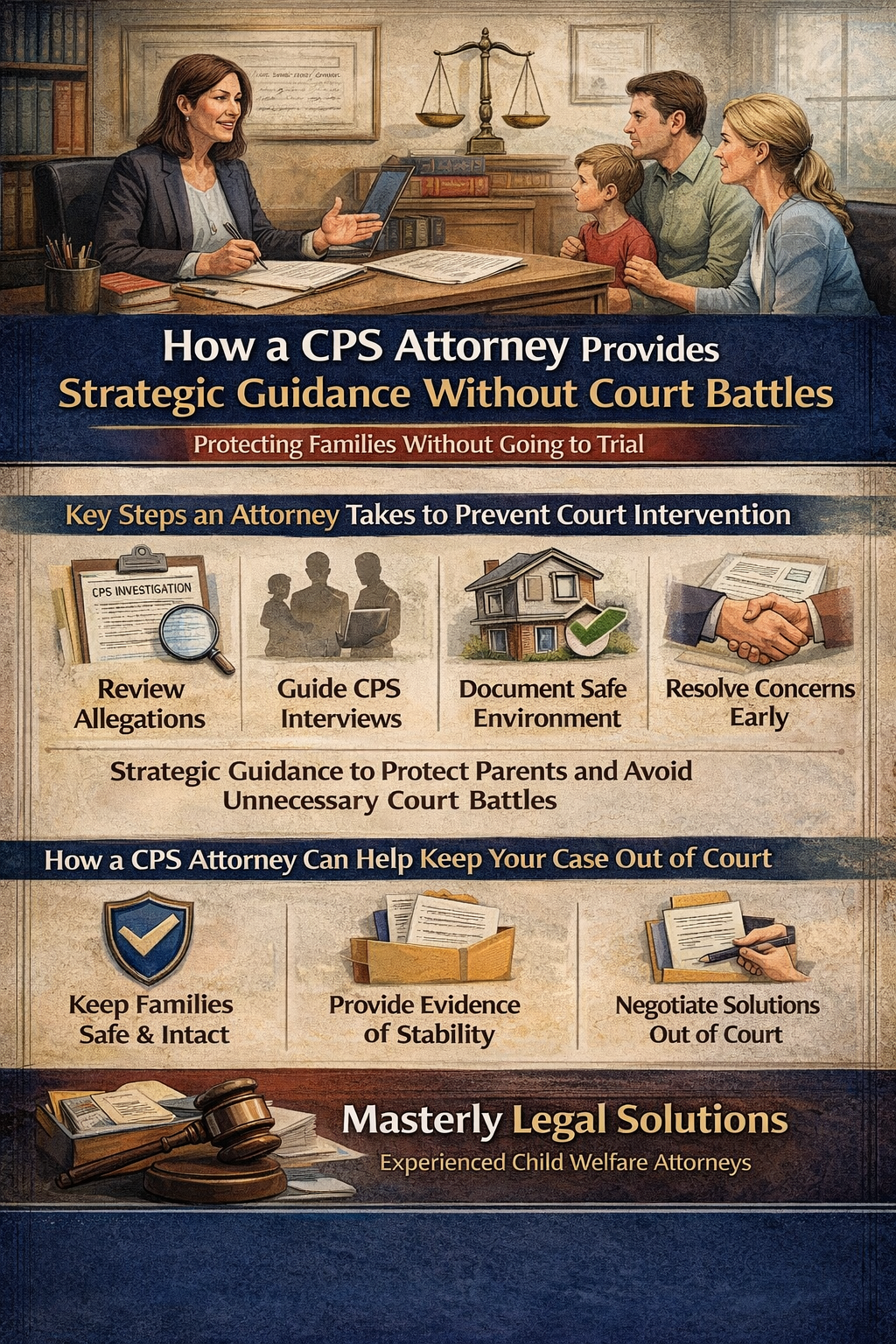
A CPS defense plan often includes:
- Reviewing the allegations and the initial report
- Preparing for interviews and home visits
- Organizing proof of stability and safety
- Addressing any legitimate safety issues quickly
- Managing communication with CPS and caseworkers
- Preventing unnecessary admissions or mistakes
This is not about being combative. It’s about being prepared. Preparation is protection.
Proven Track Record: Why Experience Matters in CPS Defense Attorneys
Families need more than generic legal advice when CPS is involved. They need attorneys with a proven track record of handling CPS cases strategically. A good defense attorney understands how CPS operates, what they focus on, and how they escalate cases. They also know what triggers court involvement and how to prevent it.
At Masterly Legal Solutions, we treat CPS defense as a serious and time-sensitive matter. We know parents are not just defending paperwork—they’re defending their family unit. Strategic guidance means we plan for every move CPS might make. That is what families deserve in moments like this.
Orange County, Southern California, and Cross-County CPS Concerns
Families sometimes face CPS issues that involve more than one jurisdiction. Cases may arise in Orange County, in another county, or involve family movement across the state. Some cases also involve concerns tied to Southern California, where certain systems and policies may differ. Cross-county issues can create confusion and delays if families don’t have legal help.
A lawyer can help coordinate communication and clarify which agency has authority. They can also prevent contradictions that CPS might use against the family. Even when your primary concern is Texas, it still matters to recognize how CPS issues can stretch across locations. Strategy becomes even more important when multiple counties are involved.
When CPS Workers Push Too Hard and Overstep Boundaries
Some families experience CPS workers who feel aggressive, dismissive, or overly suspicious. While many caseworkers are trying to do their job, others may pressure families into unreasonable steps. Parents may feel bullied into signing agreements or admitting things they don’t believe. That is where a lawyer’s role becomes critical.
The presence of legal representation often changes the tone immediately. CPS becomes more careful, more formal, and more accountable. When CPS workers push too hard, attorneys can push back with law and documentation. That is how families protect their rights without needing to fight in court.
Protecting Parental Rights Without Starting a Court Battle
Parents deserve to defend their rights without feeling like they are declaring war. Parental rights include the right to care for your child, make decisions, and maintain your family. When CPS threatens those rights without evidence, the parent needs protection. But protection doesn’t always require courtroom conflict.
Strategic defense focuses on minimizing risk and building credibility. It protects the family while keeping communication professional and calm. It also prevents CPS from turning misunderstandings into long-term consequences. When the strategy is clear, court becomes less likely.
How CPS Cases Become Court Cases and How to Stop That Path
CPS cases usually become court cases for specific reasons: allegations are severe, the district attorney gets involved, the family is labeled uncooperative, or a safety plan fails. Sometimes the escalation happens simply because the family didn’t know what to do. That is why early legal strategy matters more than people realize.
A lawyer helps you avoid the missteps that push cases into court. They help you document compliance and show stability. They also defend you against false narratives that make CPS think court is necessary. Preventing escalation is one of the biggest benefits of strategic legal guidance.
CPS Defense Services That Help Families Stay in Control
At Masterly Legal Solutions, we provide services that help families respond intelligently to CPS involvement. Our role is to defend, protect, and guide families through high-stress situations. We don’t treat you like a case number. We treat your situation like it matters—because it does.
Our services may include legal coaching, communication strategy, evidence organization, and representation when needed. We can help determine what CPS is really alleging and what outcomes are possible. We also help you protect your child while protecting your legal position. Strategic guidance is about staying one step ahead.
Initial Consultation: What Families Should Expect
Your initial consultation is not just a quick chat. It is your chance to finally get clarity when everything feels uncertain. Families often come to us scared, confused, and exhausted. That is normal, and we treat it with respect.
During consultation, we listen to your story, assess the allegations, and explain the process. We help you determine risks and identify immediate steps to protect yourself and your child. We also discuss what to avoid and what to document. That early direction can prevent months of stress later.
How a Lawyer Helps You Determine the Smartest Next Move
One of the biggest challenges in CPS cases is not knowing what matters. Parents may focus on emotional details while CPS focuses on risk indicators and documentation. A lawyer helps you determine what issues CPS will care about and how to address them properly. That focus protects your credibility.
Strategic guidance includes identifying strong evidence, spotting weak allegations, and building a calm response plan. The goal is not to hide information but to present it correctly. The right strategy helps families protect themselves without unnecessary court battles. That is how many cases are resolved faster.
When to Hire CPS Defense Attorneys Before It Gets Worse
If CPS has contacted you, if you are being investigated, or if someone has made serious allegations, you should consider hiring help immediately. Waiting often allows the agency to build a narrative without your protection. Parents sometimes wait because they hope the case will disappear. But CPS cases rarely “disappear” without careful strategy.
The sooner you hire CPS defense attorneys, the more options you typically have. Early involvement can prevent removal, reduce restrictions, and stop escalation. It can also protect your rights if the case later moves toward court. Timing is critical in CPS defense.
Filing, Petitions, and Lawsuits: When the Case Turns Formal
Not every CPS case becomes formal court action, but some do. When the case escalates, you may hear terms like filing, petition, or even lawsuit depending on the legal action being taken. Parents often feel overwhelmed by these terms and fear they have already lost. But legal steps are not automatic defeat—they are part of the process.
An attorney can explain what each filing means and how to respond. They can also evaluate whether CPS has legal grounds for court action. Strategy still matters even after formal action starts. The earlier you build your defense, the stronger your position becomes.
How Masterly Legal Solutions Helps Families Fight Without Destroying Peace
Sometimes families need to fight, but they don’t want their home turned into a war zone. They want protection, not chaos. At Masterly Legal Solutions, we defend families while respecting their need for stability. We build defenses that are strong, calm, and strategic.
We know CPS cases can affect everything—work schedules, mental health, family relationships, and your child’s sense of safety. That is why we focus on clarity, preparation, and controlled communication. We aim to defend your parental rights while reducing unnecessary conflict. Strategic guidance is the best way to protect your family without endless court battles.
Contact Masterly Legal Solutions for a Free Consultation
If you are dealing with CPS, facing a CPS investigation, or feeling pressured by child protective services to agree to restrictions you don’t understand, you do not have to handle it alone. CPS cases move fast, and the wrong response at the beginning can create long-term damage for your family. When your child, your reputation, and your parental rights are on the line, you deserve guidance that is both strategic and protective.
At Masterly Legal Solutions, our team helps parents respond with confidence and control. We support families with smart CPS defense strategies designed to prevent court intervention whenever possible—while still preparing for court if necessary. If you are looking for cps defense attorneys who will take your case seriously, build a strong plan, and protect your family’s future, we are ready to help.
Call (972) 236-5051 today to schedule your free consultation and speak with our team about CPS defense options.
Disclaimer: This article is for educational purposes only and does not constitute legal advice or legal guidance. Every situation is different, and legal outcomes depend on specific facts and circumstances. For advice about your case, contact an attorney directly.
Teacher Rights When Assaulted by a Special Needs Student: Safety, Reporting and Investigation Issues

Looking for Legal & Business Solutions? Contact Us Now
Fill in the form or call us to set up a meeting





