How Early Documentation Shapes CPS Houston Outcomes
Facing a CPS investigation can feel overwhelming, confusing, and deeply personal. Many parents feel powerless when they first hear that child protective services has become involved with their family. In cps houston cases, what happens in the earliest days often shapes everything that follows. At Masterly Legal Solutions, we see firsthand how early documentation can change the direction of a cps case and protect what matters most—your child and your family.
Early documentation is not just paperwork. It is the foundation of your defense, your voice in the cps process, and often the difference between temporary disruption and long-term consequences. When parents understand how documentation works and act quickly, they are better positioned to protect their parental rights and fight for fair outcomes.
Understanding the Role of CPS in Houston
What CPS Is Designed to Do
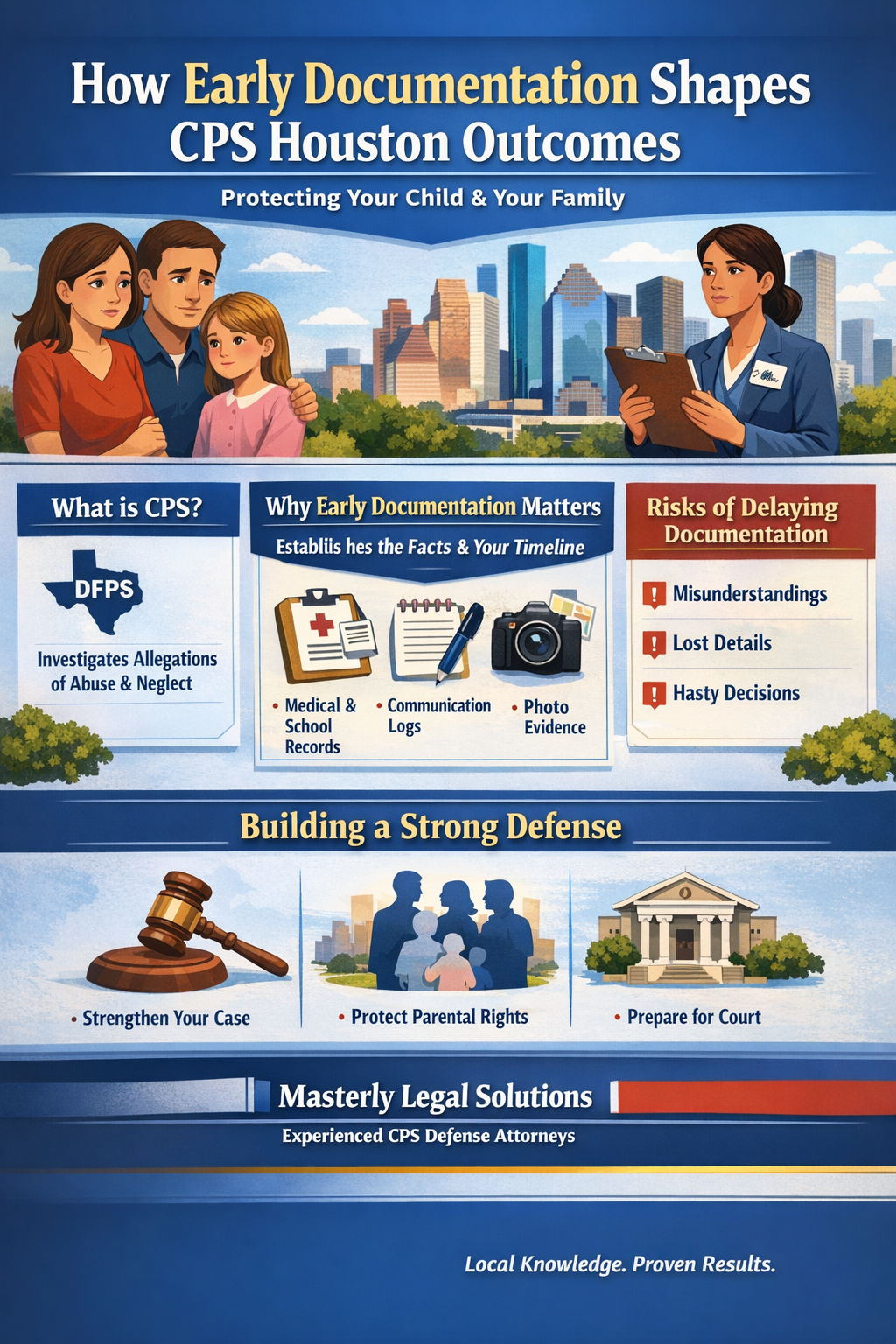
Child protective services exists to investigate allegations of child abuse and neglect. In Houston, cps operates under the texas department of family and protective services. Their stated goal is child safety, but the process can feel harsh and intimidating for families under investigation.
CPS investigations often move fast, and decisions are sometimes made before parents fully understand what is happening. Social workers are tasked with gathering information, interviewing children, and assessing risk. Early documentation ensures your side of the story is not overlooked during this investigation process.
Why CPS Houston Cases Move Quickly
In houston, cps investigations are often high volume, which means caseworkers rely heavily on initial reports and early evidence. A cps case can escalate rapidly if concerns about abuse, neglect, or physical harm are not addressed right away. This is why documentation from the very beginning is so critical.
When families delay gathering records or fail to document interactions, they risk allowing assumptions to shape the narrative. Acting early helps ensure accuracy and fairness in the cps process.
Why Early Documentation Matters More Than You Think
Documentation Creates Your Timeline
One of the most important aspects of early documentation is establishing a clear timeline. CPS relies on reports, interviews, and observations to build their case. If parents do not document events as they happen, memories fade and details can be lost.
Accurate documentation helps explain circumstances, clarify misunderstandings, and provide proof when allegations are exaggerated or incorrect. This is especially important in child abuse cases where facts can easily be misinterpreted.
Protecting Yourself From Miscommunication
Miscommunication between parents and caseworkers is common. Statements can be misunderstood or taken out of context during cps investigations. Early documentation allows you to keep records of conversations, instructions, and expectations.
These records can later be used by your attorney to defend your position and challenge inconsistencies. Documentation is not about fighting cps blindly—it is about protecting yourself and your child with facts.
Types of Documentation That Can Impact CPS Outcomes
Medical and Educational Records
Medical records often play a major role in cps cases involving physical or sexual abuse allegations. These records can provide context, show prior conditions, or disprove claims of harm. Educational records can also demonstrate stability, attendance, and developmental progress of a child.
Keeping these documents organized and accessible is essential. Early access allows your lawyer to present a stronger, more complete defense.
Communication Logs and Personal Notes
Parents should keep detailed logs of all interactions with cps, social workers, and other professionals involved. This includes dates, times, names, and summaries of conversations. These notes can become valuable evidence if disputes arise.
Personal notes about your child’s behavior, routines, and well-being can also help explain parenting decisions. This type of documentation humanizes your family and provides important context.
Photographs and Physical Evidence
In cases involving allegations of physical abuse or neglect, photographs can be powerful proof. Images that show living conditions, injuries, or lack of injuries can directly impact a cps investigation. These should be taken carefully and stored securely.
Physical evidence should never be altered or staged. Honest documentation is far more effective than trying to create a narrative that does not reflect reality.
How Documentation Influences CPS Investigations
Shaping the Caseworker’s Perspective
Caseworkers often form early impressions based on the information available to them. When parents provide organized, timely documentation, it demonstrates cooperation and responsibility. This can influence how the caseworker views the family and the level of risk involved.
Without documentation, caseworkers may rely more heavily on third-party reports. Early records help balance the picture and ensure fairness.
Supporting or Challenging Reports
Many cps cases begin with anonymous reports. These reports may be incomplete or inaccurate. Documentation allows your attorney to challenge these reports with facts and evidence.
In child abuse cases, the burden often feels like it falls entirely on parents. Documentation shifts some of that burden back where it belongs—on proof.
The Legal Impact of Early Documentation
Building a Strong Defense Strategy
A strongest possible defense starts with information. Attorneys rely on documentation to identify weaknesses in the cps case and develop legal strategies. Early records give your lawyer more options when defending your parental rights.
This is especially important when a cps case moves toward court involvement. Judges rely on evidence, not emotions, when making decisions about custody and foster care.
Preserving Parental Rights
Parental rights can be affected quickly during cps investigations. Safety plans, temporary placements, and service requirements can all impact your relationship with your child. Documentation helps ensure that these decisions are based on accurate information.
Without proper records, parents may struggle to challenge unfair restrictions or demonstrate compliance with services.
Safety Plans and Early Documentation
Understanding Safety Plans
A safety plan is often one of the first tools cps uses during an investigation. While it may seem informal, a safety plan can significantly affect custody and parenting time. Parents should never sign or agree to a safety plan without understanding its implications.
Documenting the circumstances leading to a safety plan, as well as your compliance, is critical. These records can later be used to show cooperation and protect your interests.
Documenting Compliance and Progress
When cps requires services or parenting changes, documentation proves that you are meeting expectations. This includes attendance at classes, therapy, or other services provided. Keeping detailed records helps avoid disputes about compliance or failure.
Documentation also shows commitment to protecting your child and resolving concerns raised by cps.
Common Mistakes Families Make With Documentation
Waiting Too Long to Start
One of the biggest mistakes parents make is waiting until a case escalates before documenting. By then, important details may already be lost. Early documentation should begin as soon as cps becomes involved.
Act quickly to protect yourself and your family. Delays can weaken your defense and limit your legal options.
Sharing Documentation Without Legal Guidance
While documentation is important, sharing it without consulting an attorney can be risky. Some information may be misunderstood or used against you. A lawyer can explain how and when to present evidence effectively.
At Masterly Legal Solutions, we help clients understand what documentation helps and what should remain private.
The Role of an Attorney in CPS Documentation
Guiding What to Document
An experienced cps attorney helps families understand what documentation matters most. Not all records carry the same weight, and some details are more important than others. Legal guidance ensures your efforts are focused and effective.
Your lawyer can also help organize documentation into a clear, persuasive format for cps or the court.
Using Documentation in Court
If a cps case reaches court, documentation becomes even more critical. Judges rely on evidence to make decisions about custody, foster placements, and reunification. Well-organized records can make a significant difference.
Your attorney presents documentation on your behalf, ensuring it supports your defense and protects your rights.
Emotional Impact of CPS Cases on Families
When Parents Feel Powerless
CPS involvement can leave parents feeling powerless and afraid. The fear of losing custody or facing allegations of abuse can be emotionally exhausting. Documentation gives families a sense of control during an uncertain time.
Having records and proof helps parents feel prepared rather than reactive. This emotional stability can also positively impact interactions with cps.
Protecting the Parent-Child Relationship
Early documentation supports the preservation of the parent-child relationship. By demonstrating safe parenting, cooperation, and compliance, families can reduce the risk of long-term separation or foster care placement.
Protecting this relationship is often the primary goal for parents dealing with cps investigations.
CPS Houston and the Importance of Local Knowledge
Understanding Houston CPS Practices
Cps houston cases are influenced by local practices and procedures. Understanding how local caseworkers operate and what documentation they prioritize can be invaluable. A local attorney brings this insight to your defense.
At Masterly Legal Solutions, our practice focuses on cps cases in houston and surrounding areas like league city. This local experience allows us to better serve our clients.
Working With Local Professionals
CPS cases often involve coordination with medical providers, schools, and service providers. Documentation from these local professionals can carry significant weight. Early communication and record collection are essential.
Your lawyer can help coordinate these efforts and ensure consistency across all records.
How Early Documentation Supports Long-Term Outcomes
Reducing Case Duration
Well-documented cps cases often resolve more efficiently. When concerns are addressed clearly and promptly, cps may close investigations sooner. Documentation helps avoid prolonged involvement that disrupts family life.
Reducing the length of a cps case also minimizes stress on children and parents alike.
Preventing Future CPS Involvement
Documentation does not just affect the current investigation. It can also protect families from future reports or misunderstandings. Clear records demonstrate patterns of safe parenting and responsible behavior.
This long-term protection is one of the most overlooked benefits of early documentation.
Our Commitment to Families Facing CPS
Dedicated Legal Support
At Masterly Legal Solutions, we are a firm dedicated to defending families involved in cps investigations. Our attorneys understand the emotional and legal challenges parents face. We are committed to protecting parental rights and advocating for fair treatment.
We work closely with clients to build strong defenses rooted in evidence, documentation, and law.
A Personalized Approach
Every family’s circumstances are unique. We take the time to understand your situation and develop a strategy tailored to your needs. Early documentation is a key part of that strategy.
Our goal is not just to respond to cps, but to actively defend your family’s future.
When and How to Contact Child Protective Services
There are situations where a person may need to contact child protective services to report concerns about a child’s safety. Understanding the role of child protective services cps can help families approach these moments with clarity rather than fear. While CPS is part of a larger system focused on safety, early legal guidance rooted in family law can help parents understand how reports are handled and what steps follow. Knowing when and how to engage can make a meaningful difference in how a case unfolds.
Providing Services While Protecting Justice and Family Rights
CPS often focuses on providing services aimed at keeping families together whenever possible, but those services must still align with fairness and justice. Parents may feel overwhelmed by requirements, especially when allegations involve neglect or abandonment, even when circumstances are misunderstood. Having an attorney allows families to discuss what services are appropriate, what additional information should be shared, and how to protect their rights throughout the process. Open communication and proper documentation help ensure the system works as intended, without causing unnecessary harm to the family unit.
Contact Us for a Confidential Consultation
If you are dealing with cps houston involvement and feel uncertain about what steps to take next, you do not have to face it alone. Early documentation can shape the outcome of your cps case, but knowing how to use it effectively requires legal guidance. At Masterly Legal Solutions, we offer a confidential consultation to help you understand your rights, your options, and how to protect your family.
We encourage parents to act quickly and seek legal support before mistakes are made. Contact our office at (972) 236-5051 to schedule a free consultation with an experienced cps attorney. Our firm is committed to standing with families, defending parental rights, and building the strongest possible defense during cps investigations.
Disclaimer: This article is for informational purposes only and does not constitute legal advice. Reading this content does not create an attorney-client relationship. For higher education institutions seeking legal guidance, consider specialized legal support. For legal guidance specific to your circumstances, contact a qualified attorney directly.
Teacher Rights When Assaulted by a Special Needs Student: Safety, Reporting and Investigation Issues


Looking for Legal & Business Solutions? Contact Us Now
Fill in the form or call us to set up a meeting