

Legal Guidance That Keeps Texas Schools in Compliance with UIL Regulations
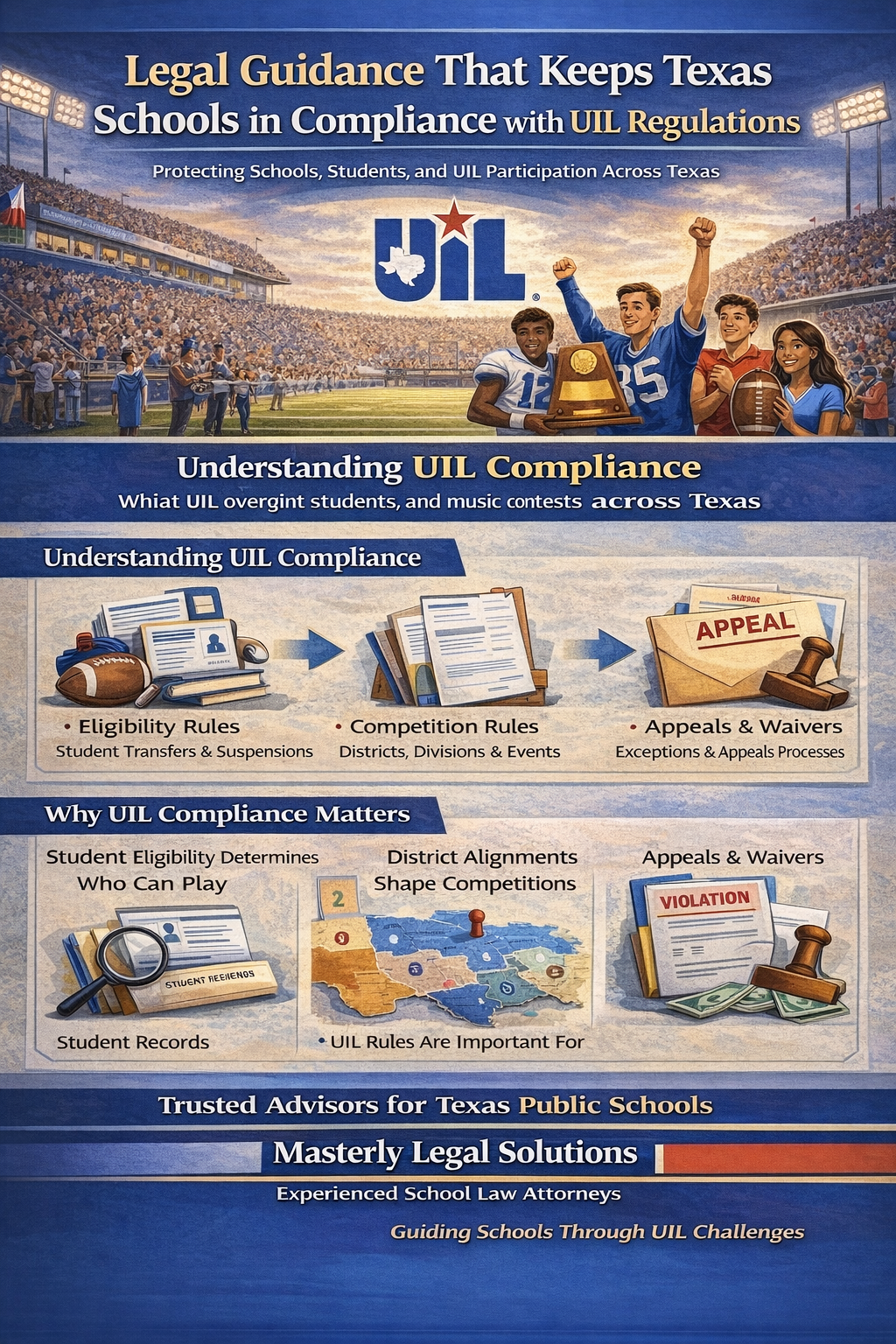
For many schools across Texas, participation in UIL activities is more than tradition—it is part of the identity of the campus and the community. From packed football stadiums on a monday night to academic contests that shape student futures, UIL involvement touches nearly every high school in the state. Yet compliance with UIL rules is not always straightforward, and small missteps can quickly turn into major problems. At Masterly Legal Solutions, we help schools understand what is UIL compliance and how proper legal guidance can prevent costly consequences.
Administrators, coaches, and district leaders often assume UIL compliance is simply about following written rules. In reality, UIL oversight involves interpretation, eligibility determinations, realignment decisions, and appeals that are deeply tied to state law and evolving policies. Without clear legal support, schools risk penalties that affect students, teams, and entire programs.
Understanding What UIL Means for Texas Schools
What Is UIL and Why It Matters
Many people ask, what is UIL, especially when issues arise. The University Interscholastic League is the governing authority for most public school competitions in Texas. It oversees high school sports, academic contests, music contests, and a wide range of competitive programs.
UIL rules affect who can participate, when teams can compete, and how schools are grouped into districts and conferences. Compliance is not optional, and violations can lead to forfeits, suspensions, or long-term restrictions.
The Connection to the University of Texas
The University Interscholastic League operates under the authority of the University of Texas at Austin. The university interscholastic structure gives UIL statewide authority while aligning it with public education goals.
This connection adds complexity, as UIL rules intersect with university policies, texas education agency oversight, and district-level governance.
The Scope of UIL Authority Across Texas
Schools and Districts Under UIL Oversight
UIL governs thousands of schools across Texas, from small rural districts to large urban systems in Austin, Fort Worth, Arlington, and San Antonio. Every district must comply with UIL eligibility and competition rules during each school year.
District decisions about enrollment, transfers, and classification directly affect UIL compliance. Legal guidance ensures these decisions align with UIL authority and state law.
How UIL Rules Shape Student Opportunities
UIL rules determine whether students are eligible to participate in sports, music, and academic programs. Eligibility issues can arise unexpectedly, often due to enrollment changes, prior transfers, or misunderstandings about full time status.
When mistakes occur, students may lose opportunities they worked years to earn. Legal support helps schools protect students and educators safeguard their teaching licenses while staying compliant.
Eligibility Rules That Create Risk for Schools
Student Eligibility Is Not Always Simple
Student eligibility is one of the most common areas of UIL disputes. Rules governing whether a student is eligible depend on enrollment status, residence, prior participation, and academic standing.
Even well-intentioned schools can misinterpret eligibility rules. A single error can result in forfeited wins, vacated titles, or broader sanctions.
Common Eligibility Challenges Schools Face
Eligibility issues often involve:
- Transfer students who recently enrolled
- Students who graduated early or were previously enrolled elsewhere
- Questions about full time enrollment
- Prior participation at another school
Legal guidance helps districts evaluate eligibility before problems arise.
High School Sports and UIL Compliance
Football and Friday Night Pressures
High school football is central to many Texas communities. Wins, playoffs, and championships carry pride and financial impact. UIL violations in football can result in games being overturned or teams being removed from playoffs.
Legal review of eligibility and district alignment reduces the risk of public penalties and negative news coverage.
Basketball, Soccer, and Seasonal Sports
Basketball, soccer, volleyball, baseball, softball, and swimming all fall under UIL athletic rules. Each sport has unique schedules, practice limits, and competition guidelines.
Schools must ensure coaches and staff understand these rules. Legal counsel can assist with training and compliance audits.
Academic and Music Contests Under UIL
Academic Contests and Fair Competition
Academic contests are governed by detailed UIL rules covering eligibility, coaching limits, and competition formats. Mistakes in academic programs can undermine student achievements and damage school credibility.
Compliance ensures fair competition and protects the integrity of academic programs.
Music Contests and Performance Rules
Music contests involve additional considerations, including rehearsal schedules, participation limits, and contest procedures. UIL rules aim to create consistency across regions and conferences.
Legal guidance helps schools align music programs with UIL expectations while supporting student creativity.
District Alignment and Realignment Challenges
Understanding UIL Realignment
UIL realignment occurs every two years and affects district, conference, and division placement. These changes impact competition levels, travel, and rivalries.
Realignment decisions are based on enrollment data and geographic factors. Errors in reporting can lead to misclassification and appeals.
Preparing for the Next Two Years
Schools must plan for how realignment will affect teams and programs over the next two years. Legal review of enrollment data and classification decisions helps districts prepare and respond effectively.
Advance planning reduces disruption and uncertainty.
Conferences, Regions, and Divisions
How Conferences Are Determined
UIL conferences group schools by size and enrollment. Placement in the same conference determines regular competition and playoff paths.
Mistakes in conference placement can lead to disputes and appeals. Legal guidance helps ensure accuracy and compliance.
Regions and Geographic Considerations
Regions, such as Region II and others, structure competition across the state. Regional placement affects playoff routes, travel, and scheduling.
Schools must understand how regional rules apply to their district and teams.
Practice, Participation, and Competition Rules
Limits on Practice Time
UIL sets strict practice rules to protect students and ensure fairness. Violations can occur when staff misunderstand allowable practice periods.
Legal support helps schools develop compliant practice policies.
Participation Requirements
Rules governing who may participate in contests are precise. Students must meet eligibility standards on the day of competition.
Documentation and legal review prevent last-minute disqualifications.
Appeals and Exceptions Within UIL
When Schools Can Seek Appeals
UIL allows appeals in limited circumstances, often involving eligibility or classification disputes. Appeals require timely filings and strong justification.
Legal representation increases the likelihood of successful appeals.
Understanding Exceptions to UIL Rules
Exceptions exist but are narrowly applied. Schools should not assume exceptions will be granted without clear evidence.
Legal counsel helps assess whether an exception is appropriate before proceeding.
News, Public Attention, and UIL Violations
How UIL Issues Become Public Stories
UIL violations often attract news coverage, especially when football, playoffs, or championships are involved. Headlines can affect community trust and school reputation.
Proactive compliance helps schools avoid negative publicity.
Managing Public and Internal Response
When issues arise, schools must respond carefully. Legal guidance helps manage communication while protecting the district’s interests.
Clear strategy reduces reputational harm.
Stadiums, Events, and Hosting Responsibilities
Compliance for Hosted Events
Schools that host UIL events must comply with facility, safety, and scheduling rules. Stadium requirements and event protocols are closely regulated.
Legal review ensures hosted events meet UIL standards.
Responsibilities of Member Schools
UIL members have ongoing obligations, not just during competition. Compliance extends throughout the school year.
Understanding these responsibilities reduces risk.
Enrollment, Transfers, and Prior Attendance
Enrollment Data Accuracy
Enrollment numbers affect realignment, conference placement, and division classification. Errors can have statewide implications.
Legal oversight helps ensure data accuracy.
Prior School Attendance Issues
Students with prior enrollment histories present eligibility challenges. Schools must verify records carefully.
Legal review protects students and programs.
Graduated Students and Special Circumstances
Early Graduation and Eligibility
Students who have graduated early may face eligibility limitations. These rules are often misunderstood.
Legal guidance clarifies whether participation is allowed.
Special Situations and Waivers
Some circumstances warrant special consideration. Knowing when to seek a waiver is critical.
Legal counsel evaluates options before action is taken.
UIL Compliance Across Texas Communities
Urban and Suburban Districts
Large districts in Austin, Arlington, Fort Worth, and San Antonio face complex compliance challenges due to size and mobility.
Legal guidance helps standardize compliance across campuses.
Rural Schools and Resource Limitations
Smaller schools may lack internal compliance resources. External legal support fills that gap.
Consistent guidance benefits all schools.
The Role of State Law in UIL Compliance
UIL Rules and State Law
UIL rules must align with state law. When conflicts arise, legal interpretation becomes necessary.
Understanding this relationship is essential for compliance.
Authority and Oversight
UIL operates with authority delegated through public education structures. Schools must respect that authority while protecting their rights.
Legal guidance ensures balance.
Why Legal Guidance Matters for UIL Compliance
Preventing Costly Mistakes
Many UIL violations are preventable with proper advice. Early legal review saves time, money, and reputation.
Compliance is always less costly than correction.
Supporting Administrators and Coaches
Legal guidance supports those tasked with enforcing rules daily. Clear policies reduce confusion and stress.
This support strengthens school leadership.
Our Commitment to Texas Schools
Dedicated Legal Support
At Masterly Legal Solutions, we work with schools, districts, and administrators to maintain UIL compliance. Our firm understands the intersection of UIL rules, state law, and educational realities.
We provide practical, proactive guidance tailored to each district.
Helping Schools Compete With Confidence
Our goal is to help schools compete confidently, knowing their programs comply with UIL standards. From eligibility reviews to appeals, we support schools at every stage.
Strong compliance protects students and communities.
Contact Us for a Free Consultation
If your school or district has questions about what is UIL compliance or concerns about eligibility, realignment, or appeals, early legal guidance can make a difference. Understanding UIL rules before issues arise helps schools protect students, teams, and reputations. At Masterly Legal Solutions, we offer a free consultation to discuss your compliance needs and answer questions with clarity.
Contact us at (972) 236-5051 to schedule a free consultation. We are committed to helping Texas schools navigate UIL regulations with confidence and care.
Disclaimer: This article is for informational purposes only and does not constitute legal advice. Reading this content does not create an attorney-client relationship. For legal advice specific to your situation, consult a qualified attorney. If you are facing termination from a university position, refer to this legal guide for more information.
Teacher Rights When Assaulted by a Special Needs Student: Safety, Reporting and Investigation Issues





Looking for Legal & Business Solutions? Contact Us Now
Fill in the form or call us to set up a meeting





