
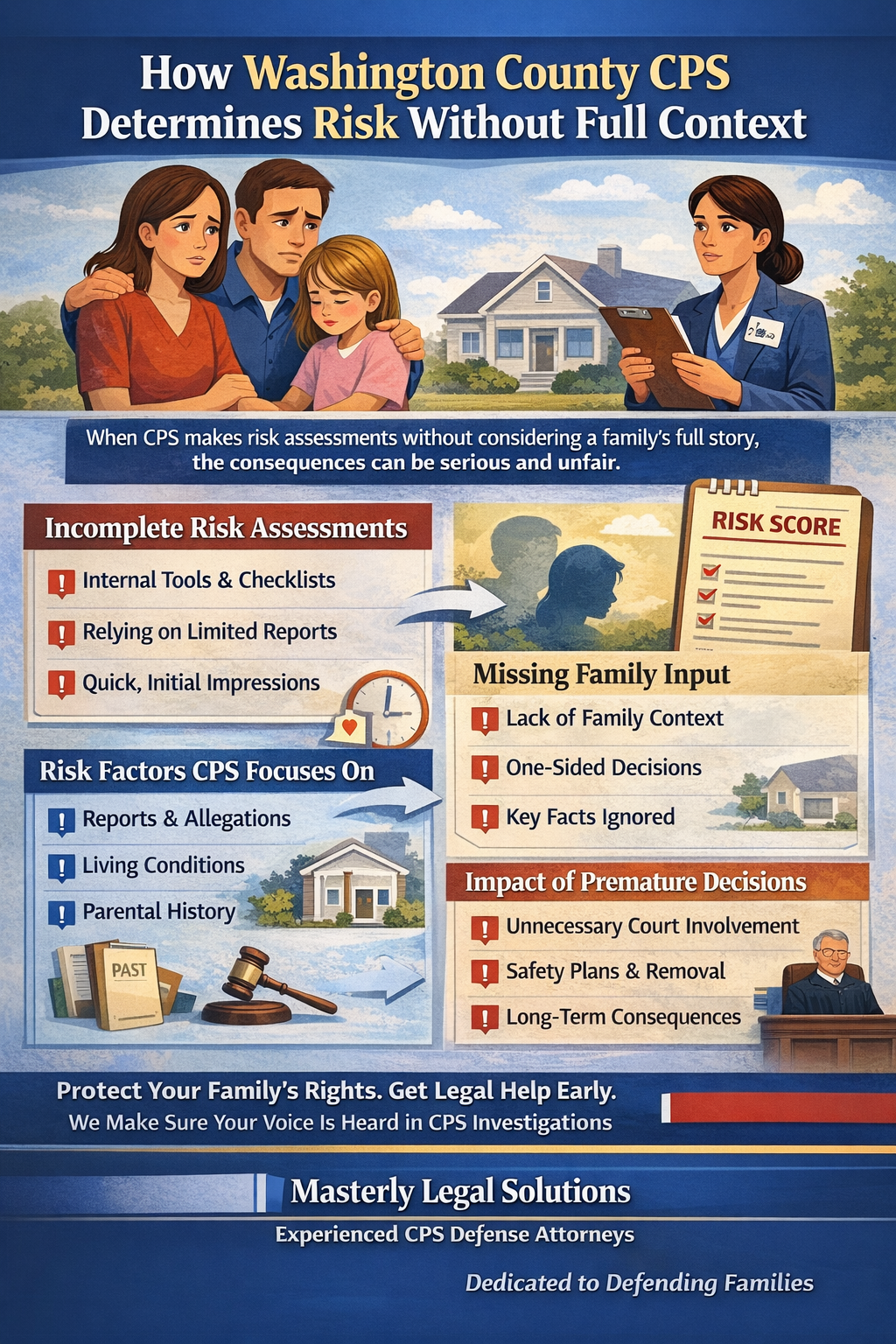
How Washington County CPS Determines Risk Without Full Context
When parents first learn that CPS is assessing risk in their home, the experience can feel sudden and deeply unsettling. Many families assume the system will naturally take time to hear their full story, yet that is not always how child protective services operates. In washington county cps matters, early risk determinations are often shaped by internal tools, limited reports, and initial impressions rather than the full context of a family’s life. At Masterly Legal Solutions, we regularly help parents understand how these decisions are made and how legal advocacy can change the direction of a case.
Risk assessments are not just abstract evaluations. They directly influence cps investigations, safety plans, removal decisions, and whether a case moves into dependency court. When family input is missing or minimized, parents may feel that decisions are being made about their child without truly knowing them. Understanding this process is the first step toward protecting parental rights and ensuring fair treatment.
The Purpose of CPS Risk Assessments
Why Risk Scoring Exists
Child protective services uses risk assessments to determine whether a child may be abused or neglected. These tools are designed to help cps workers prioritize cases and allocate protective services efficiently. In theory, they exist to support child safety and ensure timely intervention.
In practice, however, these assessments rely heavily on initial reports and limited data. When a family’s full circumstances are not considered, the resulting risk score may not reflect reality.
How Internal Tools Shape Decisions
Risk assessment tools often rely on checklists, prior reports, and standardized criteria. These tools do not always account for cultural differences, family dynamics, or temporary hardships. As a result, cps cases may escalate even when the actual risk is low.
Parents are rarely shown how these tools work. Without legal guidance, families may not realize how early inputs affect the entire investigation process.
Missing Family Input in CPS Investigations
When Parents Are Not Fully Heard
During cps investigations, parents may assume they will have multiple opportunities to explain their situation. In reality, early interviews and reports often carry the most weight. If parents are overwhelmed or unrepresented, their voices may not be fully captured.
This lack of family input can lead to conclusions that do not reflect daily caregiving realities. Over time, these conclusions become part of the official cps record.
The Impact of Limited Context
Risk assessments often fail to capture nuance. For example, a short-term crisis may be treated as ongoing neglect. A misunderstanding may be interpreted as abuse or neglect without sufficient evidence.
When context is missing, cps involvement can intensify quickly. This is where early legal representation becomes critical.
How CPS Workers Interpret Risk Factors
Training Versus Real-Life Families
Cps workers are trained to identify warning signs, but training cannot cover every family situation. Risk tools are meant to guide judgment, not replace it. Unfortunately, heavy caseloads can lead workers to rely too heavily on standardized metrics.
This reliance can disadvantage parents who do not fit neatly into predefined categories. Families dealing with stress, poverty, or domestic violence may be unfairly labeled as high risk.
The Role of Reports and Allegations
Most cps cases begin with reports from third parties. These reports may be incomplete, biased, or inaccurate. Yet they often form the foundation of the initial investigation.
Allegations alone do not equal proof, but they can strongly influence risk determinations. Without timely evidence to counter them, families may face unnecessary court intervention.
Risk Determination and Juvenile Dependency
How Risk Leads to Dependency Cases
When cps determines that a child is at high risk, the case may move into juvenile dependency. Dependency cases involve court oversight, mandatory services, and potential removal from the home. These cases can profoundly affect both parents and children.
Dependency is not reserved only for severe cases of abuse. It can also arise from perceived neglect or failure to comply with cps expectations.
The Long-Term Impact on Families
Once a case enters dependency court, it becomes harder to challenge early assumptions. Judges often rely on cps reports and recommendations. Early risk assessments can influence custody decisions, visitation, and even termination of parental rights.
This is why addressing risk determinations early is so important.
The Legal Consequences of Incomplete Risk Assessments
When CPS Decisions Affect Court Proceedings
Risk assessments often shape court proceedings before parents fully understand what is happening. Safety plans, removal orders, and case plans may be imposed quickly. Parents may feel pressured to consent without knowing the long-term implications.
A defense attorney can help parents understand their rights and challenge unsupported conclusions before they become court orders.
The Importance of Sufficient Evidence
CPS decisions should be based on sufficient evidence, not assumptions. However, internal tools may give the appearance of objectivity even when evidence is weak. Legal review helps ensure that decisions are grounded in facts rather than speculation.
Challenging weak evidence early can prevent unnecessary escalation.
How CPS Defense Protects Families
The Role of a CPS Defense Attorney
A cps defense attorney helps families navigate investigations, hearings, and dependency cases. Legal counsel ensures that parents’ voices are heard and that evidence is properly evaluated. This advocacy is essential when risk assessments lack full context.
At Masterly Legal Solutions, our attorneys focus on defending families while prioritizing the best interests of the child.
Defending Against Overreach
Cps defense is not about opposing child safety. It is about ensuring fairness, accuracy, and proportional responses. When cps overestimates risk, families can suffer lasting harm.
Legal defense helps balance protective goals with parental rights.
Safety Plans and Consent Issues
Understanding Safety Plans
Safety plans are often presented as temporary solutions. However, they can significantly restrict parenting time and decision-making. Parents may feel compelled to agree without understanding their rights.
Documenting concerns and seeking legal advice before consenting is crucial. Once in place, safety plans can influence later court decisions.
When Consent Is Not Truly Voluntary
Consent obtained under pressure may not reflect true agreement. Parents facing allegations often fear removal if they do not comply. Legal guidance helps ensure consent is informed and voluntary.
This protection is especially important in juvenile dependency cases.
Court Hearings and Dependency Court
What Happens After Removal
If a child is removed, the case moves quickly into court hearings. Dependency court oversees placement, services, and reunification efforts. Early risk assessments often shape the judge’s initial view.
Parents need strong legal advocacy to counter incomplete or misleading reports.
Status Reviews and Ongoing Oversight
Dependency cases involve multiple hearings and status reviews. Progress is evaluated based on compliance with case plans rather than holistic parenting ability. Documentation and evidence remain critical throughout the process.
Legal representation helps parents stay focused and protected.
Regional Practices and Broader Context
Comparisons With Other Counties
While this article focuses on washington county cps, similar practices exist in orange county and san bernardino. Across california, cps agencies rely on internal tools that may not fully capture family realities.
Understanding regional differences helps attorneys anticipate challenges and tailor defenses.
The Role of Government Agencies
CPS operates as part of larger government agencies tasked with child welfare. These systems prioritize efficiency, which can sometimes conflict with individualized assessment.
Legal advocacy helps ensure that families are treated as individuals, not case numbers.
Protecting Parental Rights Early
Why Early Action Matters
Once cps determines risk, reversing that assessment becomes more difficult. Early action allows parents to provide context, evidence, and support before decisions harden. This proactive approach can prevent removal or dependency filings.
Parents who act quickly often achieve better outcomes.
Supporting Families Through the Process
Facing allegations can leave parents feeling isolated and afraid. Legal support provides clarity, structure, and reassurance. Families deserve guidance during one of the most stressful experiences they may ever face.
At Masterly Legal Solutions, we are committed to protecting families during every stage of cps involvement.
Our Approach to CPS Defense
Experience and Proven Advocacy
Our firm has a proven track record of defending families in cps cases and juvenile dependency matters. We understand how risk assessments work and how to challenge them effectively. Our attorneys are dedicated to protecting parental rights and family unity.
We approach each case with care, strategy, and respect for the child involved.
Personalized Legal Support
Every family is different. We tailor our defense strategies to each client’s circumstances. From initial consultation through court proceedings, we stand beside our clients with clarity and commitment.
Our goal is to protect families and achieve fair outcomes.
When Child Abuse Allegations Intersect With CPS Decisions
Allegations of child abuse are some of the most serious claims handled by child protective services cps, and they often trigger rapid action with limited verification. In many child welfare cases, cps begins investigating reports before families fully understand the accusations or have a chance to respond. While ensuring child safety is the stated priority, these early steps can overlook important family dynamics. Having legal help grounded in family law allows parents to respond carefully, protect their rights, and prevent misunderstandings from escalating into long-term consequences.
How Investigations Can Lead to Criminal and Dependency Outcomes
When cps is investigating reports, information may be shared with other agencies, including law enforcement, which can expose parents to criminal charges alongside dependency proceedings. These cases are often connected to broader policies set by the texas department and enforced through multiple layers of a government department. Without guidance from an experienced lawyer, families may not realize how statements made early on can impact both civil and criminal outcomes. Understanding the law and the scope of each agency’s authority is critical in protecting both parental rights and personal freedom.
Placement Decisions and the Impact on Families
If cps determines that a child cannot remain at home, decisions about relative placement or foster care are made quickly. While placement with a family member is often preferred, it is not always properly explored without advocacy. A lawyer can help present viable relatives, ensure they are considered, and challenge unnecessary removals. These placement decisions deeply affect the child and the family, making early legal involvement essential to protect relationships and minimize trauma.
Contact Us for a Free Consultation
If you are facing washington county cps involvement and are concerned that risk is being assessed without full context, legal guidance can make a meaningful difference. Early intervention may protect your child, your rights, and your family’s future. At Masterly Legal Solutions, we offer a free consultation to help parents understand their situation and options.
We encourage families to contact us at (972) 236-5051 to discuss their case with an experienced cps defense attorney. Our firm is dedicated to defending families, challenging unsupported risk determinations, and providing clear legal support during difficult times.
Disclaimer: This material does not provide legal advice; it is merely meant to be informative. An attorney-client relationship is not established by reading this content. See a knowledgeable lawyer for legal advice tailored to your situation.
Teacher Rights When Assaulted by a Special Needs Student: Safety, Reporting and Investigation Issues




Looking for Legal & Business Solutions? Contact Us Now
Fill in the form or call us to set up a meeting