

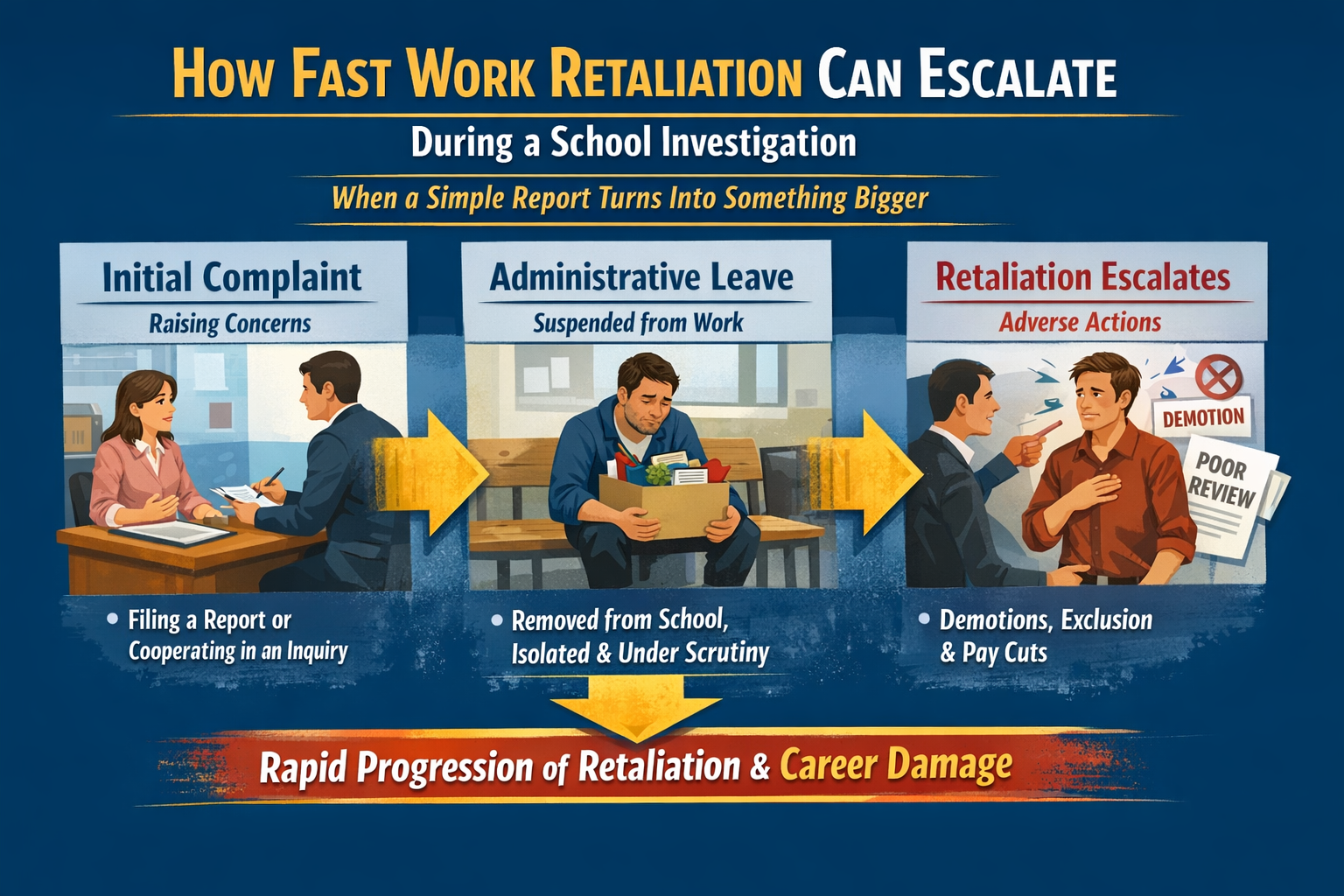
How Fast Work Retaliation Can Escalate During a School Investigation
When a Simple Report Turns Into Something Bigger
It often begins with something that feels routine. A teacher raises a concern, files a complaint, or cooperates in an investigation involving alleged misconduct. At first, the process may appear standard, even acceptable, with administrators assuring the employee that everything will be handled fairly and according to established regulations.
However, what many workers do not realize is how quickly workplace retaliation can begin to take shape. What starts as a protected activity can quietly trigger a chain of events that changes the trajectory of a teacher’s job and long-term employment prospects.
Why Timing Matters More Than Most Teachers Expect
Time plays a critical role in retaliation cases. The closer an adverse action follows a protected activity, the more likely it is that retaliation occurs. Yet, delays in recognizing the pattern can make it harder to establish a claim later.
A reasonable employee may initially believe that changes in their workplace are coincidental. But when those changes escalate over a short period, the connection between the protected activity and the employer’s actions becomes harder to ignore.
The Early Stage of a School Investigation
During the early phase of an investigation, teachers are often asked to provide statements, answer questions, or serve as a witness. This participation is considered protected activity under many employment laws.
At this stage, everything may seem professional. The employer may emphasize cooperation and fairness. However, behind the scenes, decisions may already be forming that could affect the employee’s position.
Initial Administrative Leave Decisions
One of the first major steps in a school investigation is administrative leave and pay at work. Teachers may be placed on administrative leave while the employer gathers information. In some cases, this may be framed as a neutral action.
There are two common forms:
- Paid administrative leave, where the employee continues to receive pay and benefits
- Unpaid administrative leave, which can create immediate financial strain
Even when paid administrative leave is used, the decision can carry a negative impact on the employee’s reputation and future opportunities.
How Administrative Leave Begins to Shift Perception
Once an employee is placed on administrative leave, perceptions begin to change. Other employees may assume wrongdoing, even if no violation has been established. This shift can affect employee morale and overall employee morale within the organization.
Administrative leave is often presented as a precaution, but in many circumstances, it becomes the first step toward more serious actions. The longer the period of administrative leave continues, the more damage it can cause.
The Role of Allegations and Reports
Allegations of misconduct, whether proven or not, can quickly influence how an employer responds. Reports made during an investigation can shape decisions about discipline, reassignment, or continued employment.
An allegation does not need to be valid to trigger consequences. In many cases, the mere presence of a report can lead to increased scrutiny and additional investigation steps.
The First Signs of Retaliation
Retaliation rarely starts with something obvious. Instead, it often begins with subtle changes that may seem minor on their own but become significant over time, making it important to understand your options with a dedicated retaliation lawyer and employment attorney.
Examples of early retaliation include:
- Increased monitoring by a supervisor or manager
- Changes in job duties or responsibilities
- Reduced hours or altered schedules
- Exclusion from meetings or decision-making
Each example may appear routine, but together they can signal that retaliation is taking place.
Escalation Into Adverse Action
As the investigation continues, retaliation can escalate into more direct adverse action. This is where the impact becomes more noticeable and potentially harmful to the employee’s career.
Adverse action may include:
- Placement in a less desirable position
- Denial of promotions or transfers to a desirable position
- Formal disciplinary action
- Reduction in pay or benefits
These actions can create long-term harm, especially if they are documented in employment records.
The Impact of Delayed Responses
Delays can significantly affect the outcome of a retaliation case. When an employee waits too long to report concerns or seek guidance from a knowledgeable workplace retaliation law attorney, it becomes more difficult to establish a clear timeline.
Timing is critical in proving that retaliation occurs. Without prompt action, employers may argue that changes were based on legitimate business reasons rather than retaliation.
The Role of Supervisors and Administrators
Supervisors, managers, and administrators play a central role in how investigations unfold. Their discretion can influence decisions about administrative leave, discipline, and job assignments, which is why many teachers seek help from an experienced education law attorney for teachers.
While they are responsible for following laws and regulations, their actions may still reflect bias or retaliation. This is why it is important to carefully document all interactions during the investigation process.
Participation as a Protected Activity
Participating in an investigation is a protected activity under many employment laws. This includes providing statements, serving as a witness, or assisting with a report of alleged misconduct, and may also involve filing or supporting retaliation and labor complaints with the Department of Labor.
Even though these actions are protected, retaliation may still occur. Employers are prohibited from taking adverse action in response to such participation, but enforcement often requires legal intervention.
When Retaliation Becomes More Visible
As time passes, retaliation often becomes more apparent. The employee may notice patterns of behavior that suggest intentional harm.
Examples include:
- Being reassigned to less favorable duties
- Receiving negative performance reviews without justification
- Experiencing changes in pay, wages, or benefits
- Facing repeated disciplinary action
At this stage, the cumulative effect of these actions can be difficult to ignore.
The Financial Impact of Retaliation
Retaliation can have a direct effect on an employee’s financial stability. Changes in pay, hours, or benefits can create immediate challenges.
For teachers, this may involve:
- Loss of overtime hours
- Reduction in wages
- Suspension without pay
- Delays in receiving benefits
These financial pressures can add stress during an already difficult period.
The Emotional and Professional Toll
Beyond financial concerns, retaliation can take a significant emotional toll. Teachers may feel isolated, unsupported, or targeted within their workplace.
This can lead to:
- Decreased employee morale
- Increased stress and anxiety
- Damage to professional reputation
- Loss of confidence in the employment process
The impact extends beyond the individual, affecting other employees and the overall workplace environment.
Legal Protections That Prohibit Retaliation
Federal and state laws exist to protect employees from retaliation. These laws prohibit retaliation against workers who engage in protected activity, including reporting harassment or participating in an investigation.
Federal agencies, such as the Equal Employment Opportunity Commission, are responsible for enforcing these protections. However, navigating these processes can be complex without proper guidance.
Understanding What Qualifies as a Violation
Not every negative action qualifies as a violation. To establish retaliation, certain elements must be present:
- The employee engaged in protected activity
- The employer took an adverse action
- There is a connection between the two
Determining whether these elements exist requires careful analysis of the circumstances and available evidence.
The Role of Documentation in Building a Case
Documentation is essential in retaliation cases. Keeping detailed records can help establish a timeline and support claims of retaliation, and an experienced education lawyer for teachers and schools can help you understand what to preserve and how to use it.
Important records may include:
- Emails and written communications
- Notes from meetings or conversations
- Copies of reports and complaints
- Records of hours, pay, and benefits
These documents can provide critical evidence during an investigation or legal proceeding.
Witnesses and Their Importance
Witnesses can play a key role in establishing retaliation. Other employees who observed events can provide valuable insight into what occurred, especially in complex school or Title IX investigation processes.
Being a witness is itself a protected activity. Retaliation against witnesses is also prohibited under employment laws.
The Involvement of Agencies and Government Oversight
Agencies and government departments oversee compliance with labor laws and regulations. They may investigate claims, review evidence, and determine whether a violation has occurred, similar to how state boards oversee educator misconduct defense and license protection.
Working with an agency can provide additional support, but it also requires careful preparation and understanding of the process.
When Retaliation Affects Long-Term Employment
The long-term impact of retaliation can be significant. Teachers may find it difficult to secure new employment or advance in their careers.
Negative records, unresolved investigations, and damaged reputations can follow an employee for years. This is why early intervention is critical.
The Risk of Remaining Silent
Many teachers hesitate to take action due to fear of further retaliation. However, remaining silent can allow the situation to escalate, particularly if you have already been placed on leave and need to understand the steps to take on administrative leave in Texas.
Taking proactive steps can help protect your rights and prevent additional harm. Seeking legal guidance early can make a meaningful difference.
Recognizing Patterns of Behavior
Recognizing patterns is essential in identifying retaliation. Isolated incidents may not seem significant, but repeated actions over time can establish a pattern.
A reasonable employee would consider whether these actions would discourage someone from engaging in protected activity. If the answer is yes, retaliation may be present.
The Importance of Acting Quickly
Acting quickly can help preserve evidence and strengthen your case. Delays can make it harder to establish the connection between protected activity and adverse action.
Early action also allows for timely intervention, which can prevent further escalation.
How Employers Justify Their Actions
Employers often provide explanations for their decisions, citing business needs or policy requirements. While some actions may be legitimate, others may serve as a cover for retaliation.
Careful analysis is required to determine whether these explanations are valid or pretextual.
The Role of Union Representatives
In some cases, a union representative may be involved in the investigation process. They can provide support and guidance, but they may not be able to address all aspects of retaliation.
Legal representation can offer additional protection and ensure that your rights are fully considered.
Preventing Further Harm During the Process
Taking steps to protect yourself during an investigation is essential. This includes maintaining professionalism, documenting interactions, and seeking guidance when needed.
Avoiding actions that could be misinterpreted can help strengthen your position.
Moving Forward With Clarity and Confidence
Understanding how quickly retaliation can escalate is the first step in protecting your career. Awareness allows you to recognize warning signs and take action before the situation worsens.
Every step in the process matters, from the initial report to the final outcome of the investigation.
Recognizing a Possible Violation During an Ongoing Investigation
When patterns begin to shift after a teacher engages in protected activity, it may signal a possible violation of employment laws. Even subtle changes in treatment should not be ignored, especially when they follow a complaint, report, or cooperation in an investigation. A reasonable employee would start to question whether the employer’s actions are connected to the situation. It is important to look at the timing, consistency, and overall context to determine whether the conduct crosses the line into retaliation.
Understanding Paid Leave and Its Impact on Your Position
Being placed on paid leave may initially seem like a neutral or even beneficial outcome, but it can still carry serious consequences. While the employee continues to receive pay, the absence from the workplace can affect reputation, relationships, and future opportunities. In many cases, paid leave is used during an investigation, but it may also be part of a broader pattern of adverse action. Teachers should carefully evaluate whether the leave is truly administrative or if it is being used in a way that creates a negative impact.
Other Related Protected Activity That May Trigger Employer Response
In addition to filing formal complaints, there are many other related protected activity scenarios that teachers may not immediately recognize. Speaking up in meetings, supporting another employee, or raising safety concerns can all qualify as protected actions under employment laws. These activities are meant to protect both the individual and the overall integrity of the workplace. However, employers may still respond negatively, making it important to understand the scope of these protections.
How Related Protected Activity Connects to Retaliation Claims
Related protected activity often plays a key role in establishing a retaliation claim. When an employee engages in actions tied to reporting or addressing misconduct, any negative response from the employer must be closely examined. The connection between the activity and the employer’s behavior is critical in determining whether retaliation has occurred. Establishing this link requires careful documentation and attention to detail throughout the process.
When Police Involvement Becomes Part of the Process
In certain situations, particularly those involving alleged misconduct, police involvement may become part of the investigation. This can add another layer of complexity and stress for the employee involved. Even if no wrongdoing is found, the mere presence of a police report can affect perception within the workplace. Teachers should understand their rights and seek guidance when law enforcement becomes involved in employment-related matters.
Seeking Additional Information to Protect Your Rights
Access to additional information is essential when navigating a workplace investigation. Employees should request documentation, clarification of policies, and updates on the status of the investigation. Having a clear understanding of what is happening can help reduce uncertainty and allow for better decision-making. Without this information, it becomes more difficult to determine whether the employer’s actions are appropriate or potentially retaliatory.
Getting Assistance Early in the Process
Seeking assistance early can make a significant difference in the outcome of a situation. Whether it involves consulting with legal professionals or speaking with a union representative, having support can help protect your rights. Early guidance allows employees to take informed steps and avoid common mistakes that could weaken their position. Waiting too long can limit available options and make it harder to address retaliation effectively.
When Employers Retaliate Against Employees
Employers are prohibited from taking action to retaliate against employees who engage in protected activity. However, retaliation can still occur in various forms, including reassignment, disciplinary action, or changes in working conditions. Recognizing when an employer may be attempting to retaliate is critical for protecting your career. Understanding your rights under applicable laws can help you respond appropriately.
The Impact of Absence From the Workplace
An extended absence from the workplace, whether due to administrative leave or other factors, can have lasting effects. During this time, employees may miss out on opportunities, professional development, and important interactions. This absence can also influence how colleagues and supervisors perceive the employee. Over time, these effects can contribute to long-term career challenges.
Acting With Care and Regard During an Investigation
Maintaining professionalism and acting with regard for the process is essential during an investigation. Employees should remain cooperative while also protecting their rights. Clear communication and careful documentation can help ensure that their perspective is accurately represented. Taking a thoughtful approach can make a difference in how the situation unfolds.
Understanding What You May Be Subject To
Employees involved in an investigation may find themselves subject to various procedures, including interviews, evaluations, and administrative decisions. These processes are intended to gather information, but they can also create stress and uncertainty. Knowing what to expect can help employees prepare and respond effectively. Being informed is a key part of protecting your position.
What Generally Happens in Workplace Investigations
Generally, workplace investigations follow a structured process that includes gathering evidence, interviewing witnesses, and reviewing policies. While this process is designed to be fair, it may not always feel that way to the employee involved. Delays, lack of communication, or inconsistent actions can raise concerns about fairness. Understanding the typical steps can help employees identify when something is not being handled properly.
Ultimately, How These Situations Affect Your Career
Ultimately, the outcome of a workplace investigation can have a significant impact on an employee’s career. Even if no violation is found, the process itself can leave lasting effects. Teachers may face challenges in rebuilding trust or securing future opportunities. This is why it is important to address concerns early and take proactive steps to protect your professional future.
Recognizing Other Type of Adverse Actions
Retaliation does not always take the same form. There are many other type of adverse actions that employers may use, including subtle changes in responsibilities or workplace treatment. These actions may not seem significant on their own, but they can accumulate over time. Recognizing these patterns is essential for identifying potential retaliation.
Maintaining Professional Respect Throughout the Process
Maintaining respect for yourself and the process is critical during any workplace issue. While the situation may be challenging, staying professional can help protect your credibility. Employers, colleagues, and investigators often consider how employees conduct themselves during these circumstances. A respectful approach can strengthen your position.
The Role of the Office in Handling Complaints and Investigations
The office environment plays a central role in how complaints and investigations are handled. Policies, leadership decisions, and workplace culture all influence the outcome, just as organizational rules shape UIL disciplinary defense and proceedings. Employees should be aware of how their organization operates and who is responsible for key decisions. Understanding this structure can help them navigate the process more effectively.
Speak With Masterly Legal Solutions Today
If you are experiencing retaliation during a school investigation, timing is critical. What may seem like a small issue today can quickly escalate into serious consequences for your job, pay, and long-term employment.
At Masterly Legal Solutions, we understand how fast these situations can develop and how overwhelming they can feel. Our team is here to provide clear guidance, help you understand your rights, and support you through every stage of the process.
Do not wait until the situation becomes harder to manage. Contact us today at (972) 236-5051 for a free consultation. We are prepared to hear you out, respond to your inquiries, and support you as you confidently go forward.
Disclaimer: This article is for educational purposes only and does not constitute legal advice. Every situation is unique, and you should seek professional legal counsel to address your specific circumstances.
Teacher Rights When Assaulted by a Special Needs Student: Safety, Reporting and Investigation Issues







Looking for Legal & Business Solutions? Contact Us Now
Fill in the form or call us to set up a meeting