

Retaliation at Work and the Long-Term Risk to Teaching Careers
Understanding the Reality of Retaliation in the Workplace
Retaliation is one of the most misunderstood risks facing workers today, especially in education. Many teachers believe that simply doing the right thing—reporting misconduct, raising a complaint, or participating in an investigation—will automatically protect them. Unfortunately, retaliation often happens in subtle and complex ways that are not always easy to recognize at first.
In school systems, including large districts such as Dallas Fort Worth school districts, retaliation can quietly affect a teacher’s career over time. It may begin with small changes, like reduced hours, reassignment to a less desirable position, or being placed under scrutiny by a supervisor. Over time, these actions can escalate into more serious consequences that impact long-term career stability.
What Retaliation Means Under the Law
Retaliation occurs when an employer takes an adverse action against an employee for engaging in a protected activity, and in many cases it is important to consult a dedicated retaliation lawyer for workplace law and employment issues. A protected activity includes reporting discrimination, harassment, wage issues, or participating in an investigation involving workplace concerns. These protections exist under federal laws, including Title VII, as well as various state laws designed to protect workers, and employees may also have the option to file retaliation and labor complaints with the Department of Labor.
A reasonable employee in the same situation would view retaliation as discouraging or punishing lawful behavior. The law does not require a dramatic action for retaliation to exist. Even subtle changes in treatment can qualify if they have a negative impact on the employee’s work environment or career.
Protected Activity and Why It Matters for Teachers
Teachers frequently engage in protected activity without fully realizing it. Speaking up about unsafe conditions, reporting harassment, or cooperating with a school investigation all fall under protected categories, which is why understanding legal protection for teachers and their rights is so important. Engaging in these activities is legally protected because they help maintain accountability within educational institutions.
Examples of protected activity include:
- Filing a complaint about discrimination claims
- Reporting improper conduct by a supervisor or administrator
- Acting as a witness during an internal investigation
- Raising concerns about wages, hours, or unpaid work
- Reporting violations to a government agency or federal agencies
Each example shows how teachers are often placed in positions where they must choose between staying silent or protecting their rights.
How Retaliation Occurs in School Systems
Retaliation in schools does not always look obvious. It often develops gradually through a pattern of behavior. An employer may begin placing employees under closer observation or changing their assignments without clear justification, situations where guidance from an experienced retaliation lawyer for workplace retaliation claims can be critical.
Common forms of retaliation include:
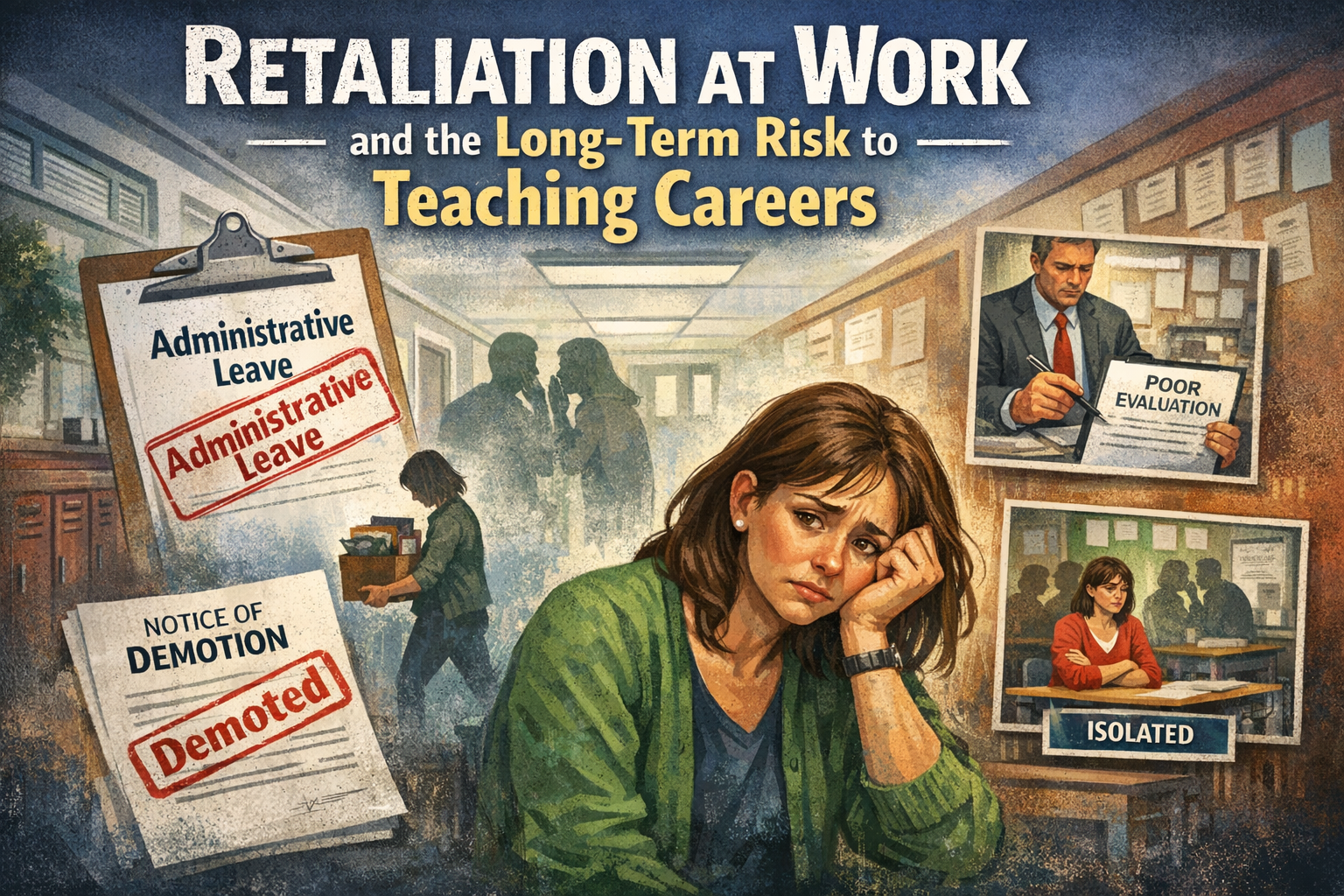
- Placement on administrative leave without clear cause
- Being assigned to a less desirable position
- Reduction in pay or denial of overtime hours
- Increased disciplinary action or negative evaluations
- Exclusion from opportunities or leadership roles
These actions may seem routine on the surface, but when connected to protected activity, they can signal a possible violation of employment laws.
Administrative Leave and Its Hidden Consequences
Administrative leave is one of the most common tools used in school environments. While it can be necessary during an investigation, it is also frequently misused, and an education law attorney offering expert legal guidance for teachers can help evaluate whether your rights are being violated. Teachers may be placed on paid administrative leave or unpaid administrative leave for extended periods without clear resolution.
Being placed on administrative leave can create uncertainty, stress, and reputational harm. Even when the leave is labeled as paid leave, it can still damage a teacher’s professional standing. In some cases, placing employees on administrative leave becomes a form of retaliation rather than a neutral step in an investigation.
Paid Administrative Leave vs. Unpaid Leave
There is a significant difference between paid administrative leave and unpaid leave. Paid administrative leave allows the employee to continue receiving wages, but it does not eliminate the negative impact on their career. Unpaid leave, on the other hand, directly affects financial stability and increases pressure on the employee.
An employer may attempt to justify administrative leave as part of standard procedure. However, when it follows a complaint or participation in an investigation, it may indicate retaliation. The key question is whether the action would discourage a reasonable employee from engaging in protected activity.
Adverse Action and Its Impact on Teaching Careers
An adverse action is any decision that negatively affects an employee’s job. This includes termination, demotion, reduction in pay, or reassignment to a less desirable position, all areas where an education lawyer providing expert support for teachers can help you respond effectively. In education, adverse actions often involve subtle changes that are harder to prove.
Examples of adverse action include:
- Removing a teacher from a desirable position
- Reducing hours or limiting access to resources
- Assigning additional duties without compensation
- Creating unnecessary performance issues
Each example demonstrates how retaliation can interfere with a teacher’s ability to succeed and grow professionally.
The Role of Employers and School Administrators
Employers, including school districts, have a responsibility to protect employees from retaliation. Administrators and supervisors are expected to follow regulations and ensure fair treatment of all workers. However, in practice, decisions are often influenced by discretion and internal pressures.
A manager or administrator may act in ways that appear neutral but are actually motivated by retaliation. This is why documentation and education law services that protect teachers with legal representation are critical when dealing with workplace concerns.
Investigations and the Risk of Retaliation
Investigations are meant to uncover the truth, but they can also become a source of retaliation. Teachers who participate in investigations may find themselves treated differently by their employer or other employees.
Being involved in an investigation as a witness or reporting party is a protected activity. However, retaliation may occur through:
- Negative performance reviews
- Increased scrutiny from supervisors
- Isolation from colleagues
- Delayed career advancement
These actions can create a hostile work environment that affects both professional and personal well-being.
Retaliation and Discrimination Claims
Retaliation often overlaps with discrimination claims. A teacher who reports harassment or discrimination may face backlash from their employer. This creates a cycle where employees are discouraged from speaking up, allowing misconduct to continue.
Federal laws are designed to prohibit retaliation in these situations. However, enforcement often requires legal action, which can be intimidating for many workers.
The Long-Term Risk to Teaching Careers
The long-term effects of retaliation can be severe. Teachers may experience stalled career growth, loss of income, and damage to their professional reputation. In some cases, they may leave the profession entirely.
Retaliation can also impact future employment opportunities. Negative reports or unresolved investigations may follow a teacher from one school district to another, affecting their ability to secure a desirable position.
Employee Morale and Workplace Culture
Retaliation does not only affect one individual. It has a broader impact on overall employee morale. When other employees witness retaliation, they may become reluctant to report concerns or participate in investigations.
This creates a culture where problems go unaddressed, ultimately harming the entire organization. Maintaining strong employee morale requires employers to actively prevent retaliation and promote transparency.
Legal Protections for Teachers
Teachers are protected under various federal and state laws. These laws are designed to protect workers from retaliation and ensure fair treatment in the workplace. Agencies such as the Equal Employment Opportunity Commission (EEOC) play a key role in enforcing these protections.
Legal protections cover:
- Reporting discrimination or harassment
- Participating in investigations
- Filing complaints with a government agency
- Reporting wage or labor violations
Understanding these protections is essential for teachers who want to safeguard their careers.
Recognizing a Possible Violation
Recognizing retaliation is not always straightforward. Teachers must look at the timing and circumstances surrounding adverse actions. If negative treatment begins after engaging in protected activity, it may indicate a violation.
Key factors to consider include:
- Changes in pay or hours
- Sudden disciplinary action
- Reassignment to a less desirable position
- Being placed on administrative leave
Each of these factors can help establish whether retaliation has occurred.
The Importance of Documentation
Documentation is one of the most important tools for protecting your rights. Keeping records of complaints, communications, and actions taken by an employer can help establish a pattern of retaliation.
Examples of useful documentation include:
- Emails and written reports
- Notes from meetings with supervisors
- Records of hours and wages
- Copies of disciplinary actions
These records can provide critical evidence during an investigation or legal proceeding.
How Retaliation Affects Pay and Financial Stability
Retaliation often has a direct impact on pay. Teachers may experience reduced hours, denial of overtime, or placement on unpaid leave. These changes can create financial stress and uncertainty.
Wages and benefits are essential for maintaining stability. When retaliation interferes with these elements, it can have lasting consequences on a teacher’s life.
The Role of Federal Agencies and Government Oversight
Federal agencies and government departments play a vital role in enforcing labor laws. They investigate complaints, review evidence, and determine whether a violation has occurred.
Teachers can seek assistance from these agencies when facing retaliation. However, navigating the process can be complex, which is why education law legal insights for teachers and professionals and direct representation are often necessary.
Building a Strong Case Against Retaliation
To establish a retaliation claim, certain elements must be proven. These include:
- Engagement in protected activity
- An adverse action taken by the employer
- A connection between the two
Each element requires evidence and careful analysis. Working with experienced education law attorneys and legal services can help strengthen your case.
The Role of Witnesses in Retaliation Cases
Witnesses can play a critical role in retaliation cases. Other employees who observed the events can provide valuable testimony. Their statements can help establish patterns of behavior and support your claims, much like witnesses do in North Carolina educator misconduct defense and license protection cases.
Being a witness is also a protected activity, meaning that retaliation against witnesses is also prohibited.
Preventing Retaliation in Educational Institutions
Preventing retaliation requires a proactive approach. Employers must establish clear policies, provide training, and ensure accountability at all levels.
Steps to prevent retaliation include:
- Implementing clear reporting procedures
- Training administrators and managers
- Monitoring workplace behavior
- Addressing complaints promptly
These measures can help create a safer and more supportive environment for teachers.
Taking Action to Protect Your Career
If you believe retaliation has occurred, taking action is essential. This may involve filing a complaint, participating in an investigation, or seeking legal guidance.
Early action can help prevent further harm and protect your rights. It also sends a message that retaliation will not be tolerated.
Why Legal Representation Matters
Navigating retaliation claims can be challenging. Laws, regulations, and procedures can be complex, especially when dealing with school systems and government agencies.
Legal representation can provide:
- Guidance on your rights and options
- Assistance with documentation and evidence
- Representation during investigations
- Support in pursuing claims
Having experienced legal counsel can make a significant difference in the outcome of your case.
Moving Forward with Confidence
Retaliation at work is a serious issue that can affect every aspect of a teaching career. Understanding your rights and taking proactive steps can help protect your future.
Teachers deserve to work in an environment where they feel safe reporting concerns and participating in investigations. Protecting these rights is essential for maintaining integrity within the education system.
Speak With Masterly Legal Solutions About Retaliation at Work
If you are facing retaliation at work or believe your rights have been violated, you do not have to navigate this alone. At Masterly Legal Solutions, we understand how complex and stressful these situations can be, especially for educators whose careers are on the line.
Our team is here to provide guidance, answer your questions, and help you determine the best path forward based on your specific circumstances. Whether you have been placed on administrative leave, experienced an adverse action, or are concerned about how a complaint or investigation may affect your career, we are ready to assist.
Contact us today at (972) 236-5051 for a free consultation. We will take the time to understand your situation, explain your rights, and help you protect your career with confidence.
Disclaimer: This article is provided for educational purposes only and does not constitute legal advice. Every situation is unique, and you should contact a qualified attorney to receive advice tailored to your specific circumstances.
Teacher Rights When Assaulted by a Special Needs Student: Safety, Reporting and Investigation Issues





Looking for Legal & Business Solutions? Contact Us Now
Fill in the form or call us to set up a meeting