

How TEA Investigations Affect Future Employment in Austin School Districts
For many educators, teaching is more than a career—it is a calling built over years of dedication, training, and service to students. When a Texas Education Agency investigation begins, however, that career can suddenly feel uncertain. Even if a teacher believes they have done nothing wrong, the existence of an investigation may create concerns about future employment opportunities, making it critical to understand the immediate steps to take after receiving a TEA investigation notice.
Teachers working in school districts in austin often worry about how a TEA investigation could affect hiring decisions, background reviews, and professional reputation, especially when they do not fully understand the common causes of TEA investigations and available teacher protections. In some situations, investigations may lead to disciplinary action or allegations that follow an educator throughout their career. These consequences can become especially concerning when misunderstandings, administrative bias, or workplace retaliation influence how a case unfolds.
Understanding how investigations affect future austin employment opportunities is essential. With the support of experienced employment lawyer professionals and knowledgeable austin employment lawyers, educators can better navigate this challenging process and protect their long-term professional interests.
Understanding the Purpose of TEA Investigations
The Texas Education Agency investigates complaints involving educators, administrators, and school staff throughout texas. These investigations are designed to evaluate allegations related to professional conduct, student safety, and compliance with educational policies, and educators often benefit from guidance focused on Texas TEA investigations and teacher certification help.
A TEA investigation may begin after a complaint from a parent, administrator, colleague, or another individual. The texas board responsible for educator certification reviews these concerns and determines whether disciplinary action should occur.
Although the system exists to maintain standards within the education system, it can also create stress and uncertainty for educators. The existence of an investigation alone can raise concerns about future employment prospects, particularly if the situation involves allegations of misconduct, harassment, or professional policy violations.
Teachers in austin must understand that an investigation does not automatically mean wrongdoing occurred. However, the process can still influence hiring decisions and professional reputation within school districts in austin and across the state, so many turn to resources on surviving a TEA investigation and protecting a teaching license.
How TEA Investigations Become Part of Professional Records
Once an investigation begins, documentation related to the case may become part of a teacher’s professional file. School administrators and licensing boards may review these records when evaluating future employment applications.
Hiring committees often conduct background checks to determine whether an applicant has been involved in disciplinary matters. Even when the educator is cleared of wrongdoing, the presence of an investigation may still raise questions during the hiring process.
Educators may also encounter difficulties if an employer interprets the investigation as a sign of risk or potential liability. In these situations, the educator may feel that the employer's actions unfairly limit future opportunities.
This is why teachers facing investigations often consult an experienced employment lawyer or employment attorney. Legal professionals can help ensure that the educator’s legal rights are protected throughout the process, and broader education law guidance for teachers and education professionals can clarify how TEA matters intersect with employment protections.
Workplace Retaliation During TEA Investigations
Another issue that frequently arises during investigations is workplace retaliation. Sometimes administrators or supervisors respond negatively when teachers raise concerns or participate in investigative proceedings.
Retaliation in the workplace can take many forms, including negative performance reviews, demotion, reassignment, or termination. These actions may occur after a teacher participates in protected activity, such as cooperating with investigators or reporting discrimination.
In some cases, workplace retaliation occurs when a teacher files a discrimination claim, reports misconduct, or raises concerns about harassment. Instead of addressing the issue, the employer may respond with adverse actions that negatively impact the educator’s career.
When retaliation becomes severe, it may qualify as unlawful retaliation under federal law, the texas labor code, or other state and federal laws. Experienced austin employment lawyers understand how to evaluate these situations and determine whether a retaliation case may exist, and they can also explain broader legal protections and options available to teachers facing discipline or wrongful treatment.
Examples of Retaliation in the Workplace
Educators should recognize the warning signs of retaliation in the workplace. Retaliatory behavior may appear subtle at first but can escalate over time.
Common examples include:
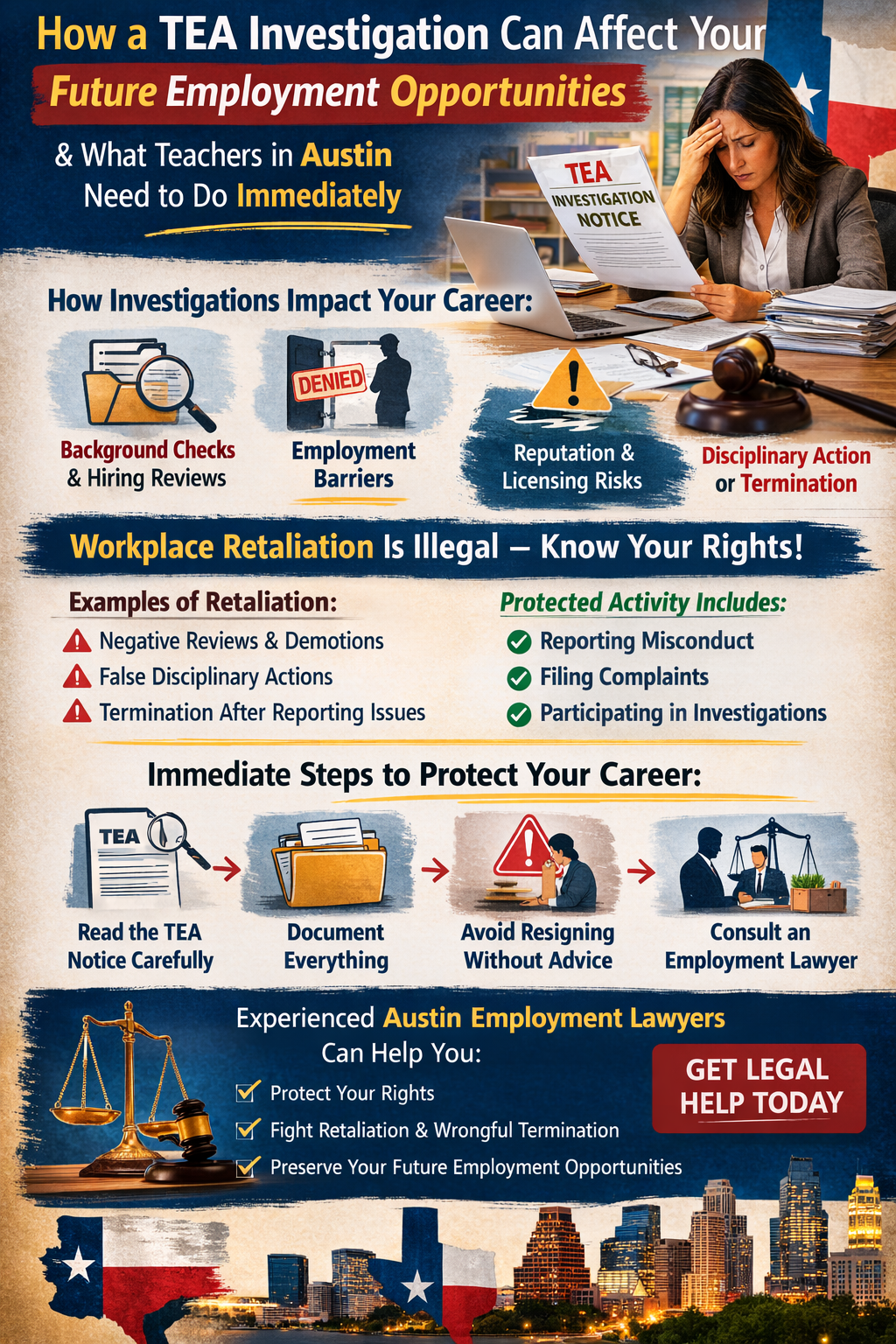
- Sudden negative evaluations following reporting discrimination
- Being reassigned to less desirable duties or locations
- Being excluded from professional opportunities
- Receiving disciplinary actions based on a false reason
- Facing termination after cooperating with investigators
These types of adverse actions can create a difficult environment for teachers who are simply attempting to perform their jobs responsibly.
Protected Activity and Employee Rights
Under employment law, teachers who engage in protected activity are legally safeguarded from retaliation. A protected activity may include reporting discrimination, filing a complaint, or assisting in an investigation involving misconduct, and an education law attorney providing expert legal guidance for teachers can help educators understand how these rights apply in practice.
Employees are also protected when asserting their rights under laws such as the disabilities act, which safeguards individuals with a disability, or statutes addressing unlawful discrimination related to race, gender, or national origin.
When an employer responds negatively to such actions, it may be considered retaliating against the employee. Because retaliation is prohibited under several laws, educators may have grounds to pursue legal remedies.
An experienced employment attorney can review the circumstances to determine whether the employer's actions violated employee rights.
How Retaliation Claims Develop
A retaliation claim typically begins when an educator files a complaint with the equal employment opportunity commission or another enforcement agency. The eeoc investigates whether the employer engaged in conduct that violates workplace protections.
During this process, investigators review documents, witness statements, and employment records. They analyze whether the adverse actions occurred shortly after the employee participated in a protected activity.
If the evidence suggests that the employer acted improperly, the case may proceed to court. At that stage, a skilled employment lawyer or austin retaliation lawyer can represent employees and advocate for their rights, similar to the support an education law attorney for teachers and administrators provides in complex school-related disputes.
The Role of Evidence in Retaliation Cases
Strong evidence is essential in any retaliation case. Educators should maintain records of communications, disciplinary notices, and performance evaluations that may reveal patterns of retaliation.
For example, if an educator receives positive evaluations for years and then suddenly faces disciplinary actions after reporting discrimination, this may support a retaliation claim.
Courts often examine whether the employer's actions were motivated by legitimate reasons or whether retaliation was the true cause.
When sufficient evidence exists, a court may award financial compensation, including lost wages, benefits, and sometimes additional damages.
Wrongful Termination and Retaliation
In severe situations, retaliation may escalate to wrongful termination. This occurs when an employee is wrongfully terminated because they engaged in a protected activity or exercised their legal rights.
For example, an educator who files a complaint involving harassment or discrimination may later face sudden termination. If the employer claims a false reason for the dismissal, courts may examine whether retaliation actually occurred.
Teachers facing wrongful termination often rely on experienced employment law attorneys or an austin retaliation lawyer to investigate the case and pursue legal remedies.
Filing Employment Law Claims in Austin
When disputes cannot be resolved internally, teachers may pursue employment law remedies through administrative agencies or the court system.
The process of filing claims typically begins with submitting a complaint to the eeoc or a related state agency. The agency reviews the complaint and determines whether the case should move forward.
If the agency finds evidence of wrongdoing, the educator may receive authorization to pursue the case in court. At that point, austin employment lawyers may begin preparing a case involving retaliation, discrimination, or other violations of law.
Financial Consequences of Retaliation
When a court determines that retaliation occurred, the affected employee may be entitled to compensation. Financial recovery may include back pay, reinstatement to a position, or damages for emotional harm.
In some cases, teachers may also recover unpaid wages or lost benefits if the employer's actions caused financial losses. Courts may evaluate the full impact of the retaliation when calculating damages.
These remedies are designed to restore the educator to the position they would have held if retaliation had not occurred.
The Importance of Legal Guidance
Navigating TEA investigations and potential retaliation claims can be extremely complex. Teachers often face difficult decisions regarding filing complaints, gathering evidence, and responding to disciplinary actions, and many benefit from focused legal defense for educators in TEA investigations to safeguard their licenses.
This is where experienced austin employment lawyers can provide valuable guidance. Legal professionals with extensive experience in employment law cases understand how investigations interact with workplace protections.
A knowledgeable employment lawyer can evaluate the situation, explain available options, and help teachers protect their professional reputation and future career opportunities.
Why Legal Representation Matters
Teachers facing investigations often feel overwhelmed by the complexity of the process. Administrators, investigators, and attorneys representing school districts may all become involved.
Working with a qualified employment attorney ensures that the educator has an advocate who understands the legal framework governing workplace disputes, such as the dedicated support offered by Masterly Legal Solutions for educators facing school investigations.
A reputable law firm can analyze the facts, review policies, and determine whether retaliation, discrimination, or other unlawful conduct occurred.
The right legal strategy can make a significant difference in protecting an educator’s career.
Protecting Your Career After a TEA Investigation
Educators who face investigations should take proactive steps to safeguard their future austin employment opportunities.
Important steps may include:
- Documenting interactions with administrators and supervisors
- Keeping copies of evaluations and employment records
- Seeking legal advice from an experienced employment lawyer
- Avoiding decisions such as resignation without professional guidance
These measures can help teachers protect their professional standing and prepare for potential disputes.
Understanding Negative Employment Action During TEA Investigations
During a TEA investigation, teachers may experience what the law refers to as a negative employment action. This can include demotion, suspension, reassignment, loss of responsibilities, or even termination. These decisions may occur after a teacher participates in protected activity, such as cooperating with investigators or reporting discrimination. When an employer takes a negative employment action shortly after an educator raises concerns or files a complaint, it may raise questions about possible retaliation. An experienced employment lawyer can review the situation to determine whether the employer’s decision violated employment law or the educator’s legal protections.
When Legal Action May Be Necessary to Protect Your Career
If an educator believes they have been treated unfairly during a TEA investigation, pursuing legal action may become necessary. Teachers who experience retaliation, wrongful termination, or discrimination sometimes need legal intervention to defend their professional reputation. Filing claims through administrative agencies or the court system can help determine whether the employer's actions violated workplace protections. Skilled austin employment lawyers can evaluate the facts, gather evidence, and help educators understand their options for pursuing legal action when workplace treatment crosses legal boundaries.
Supreme Court Decisions and Workplace Retaliation Protections
Over the years, the supreme court has played an important role in shaping how retaliation and discrimination laws are interpreted in the workplace. Several major rulings have clarified that employers cannot punish employees for participating in protected activity, such as filing a discrimination complaint or assisting with an investigation. These decisions help establish clear legal standards for determining when retaliation in the workplace occurs. By interpreting federal statutes and constitutional protections, the Supreme Court has strengthened the legal framework that helps protect teachers and other workers from unlawful employment practices.
How Other Laws May Protect Educators
In addition to federal statutes and the texas labor code, other laws may also protect teachers who face retaliation or discrimination during investigations. These laws may include regulations addressing harassment, disability accommodations under the disabilities act, and workplace safety rules. When an employer violates any of these protections, educators may have grounds to pursue a retaliation claim or another type of employment dispute. Understanding how these other laws interact with employment law can help teachers better protect their professional standing and future employment opportunities.
Recognizing Other Forms of Workplace Retaliation
Retaliation does not always appear in obvious ways. While termination is one example, retaliation can take other forms that may be more subtle but equally damaging to an educator’s career. For example, a teacher might suddenly receive poor performance evaluations, be excluded from leadership opportunities, or lose access to professional development programs. These other forms of retaliation can make the workplace environment difficult and may discourage educators from asserting their rights. Recognizing these patterns early allows teachers to document concerns and seek advice from an experienced employment attorney.
When Complaints Are Accepted by Investigative Agencies
When a teacher files a complaint with the EEOC or another agency, the case must first be reviewed to determine whether it will be accepted for investigation. If the agency finds that the allegations may involve retaliation, discrimination, or violations of workplace laws, the complaint may be formally accepted and investigated further. This step often involves collecting documentation, interviewing witnesses, and reviewing the employer's actions. Once the claim is accepted, the educator may gain additional opportunities to pursue remedies under employment law.
Submitting a Request for Workplace Review
Teachers who believe they are experiencing retaliation may choose to submit a formal request for investigation or review through internal school district procedures or government agencies. This request may involve filing documentation that explains the situation, identifies relevant policies, and describes the adverse actions taken by the employer. Submitting a clear and organized request can help establish a record of events and strengthen a potential retaliation claim. Many educators consult an employment lawyer before making such a request to ensure the process is handled properly.
Pursuing Justice After Workplace Retaliation
When teachers face retaliation or discrimination, the legal system exists to help them seek justice. Courts evaluate whether the employer violated workplace protections and whether the employee’s rights were ignored during the investigation or disciplinary process. If wrongdoing is proven, judges may award compensation, reinstate employment, or require corrective actions. For many educators, pursuing justice is not only about financial recovery but also about restoring professional reputation and accountability.
Protecting Workers in the Education Profession
Teachers and school staff are part of a broader group of workers who rely on fair workplace practices and legal protections. Education professionals dedicate their careers to serving students and communities, and they deserve a work environment that respects their rights. Laws addressing retaliation, discrimination, and wrongful termination exist to ensure that workers can report problems without fear of punishment. By understanding their rights and seeking guidance when needed, workers in education can better protect their careers and maintain professional integrity.
Speak With Masterly Legal Solutions About Your Situation
Educators working in school districts in austin deserve experienced legal support when their careers are threatened by investigations, retaliation, or discrimination. When allegations arise or a complaint is filed, it is important to understand how the process may affect future employment opportunities.
At Masterly Legal Solutions, our law firm is committed to helping educators navigate complex workplace disputes. Our team of experienced professionals works with teachers throughout austin and across texas to evaluate claims, gather evidence, and determine whether retaliation, wrongful termination, or other violations of law occurred.
If you are dealing with a TEA investigation, possible retaliation in the workplace, or concerns about your future career, speaking with an experienced employment lawyer can help you better understand your options. Our firm works to protect the interests of educators and ensure their employee rights are respected.
Call (972) 236-5051 today to contact our team and schedule a free consultation. During your consultation, we can review your situation, discuss your legal options, and provide guidance on how to protect your career moving forward.
Disclaimer: This article is provided for informational and educational purposes only. It does not constitute legal advice and does not create an attorney-client relationship. Every situation is unique, and outcomes depend on specific facts and circumstances. Individuals facing legal concerns should consult directly with a qualified attorney for personalized guidance.







Looking for Legal & Business Solutions? Contact Us Now
Fill in the form or call us to set up a meeting





