

How TEA Reviews Teacher Conduct and What It Means for Your License
For many educators, earning a professional teaching credential represents years of dedication, education, classroom training, and personal commitment. A teaching certificate opens the door to meaningful careers that shape the future of students and communities across Texas. Because that credential is so valuable, receiving notice that the TEA license review process has begun can be one of the most stressful moments in an educator's career, especially when educators are unfamiliar with how TEA investigations and disciplinary reviews actually work.
Questions regarding professional conduct often arise unexpectedly. A complaint, workplace dispute, employment issue, or allegation of misconduct may trigger a review by the Texas Education Agency. While not every complaint results in disciplinary action, every educator should understand how the review process works and what steps may follow.
At Masterly Legal Solutions, we understand that teachers, administrators, and other education professionals often feel overwhelmed when facing licensing concerns. Questions involving certification, employment, investigations, or disciplinary proceedings frequently involve complicated procedures and strict deadlines. Having a clear understanding of the process can help educators make informed decisions while protecting their professional future.
Understanding the Purpose of the TEA License Review Process
The TEA license review process exists to help maintain professional standards throughout public education in Texas. The agency reviews allegations involving educator conduct to determine whether disciplinary action may be appropriate under applicable education law, agency regulations, and professional standards.
The review process is designed to protect students while also providing educators with procedural safeguards. Not every report leads to disciplinary action, and each matter is evaluated based on its individual facts and available evidence.
Because every situation is different, understanding how the review process operates is essential before responding to an investigation.
Professional Conduct Matters
The Texas Education Agency reviews various situations involving educator conduct.
Examples may include:
- Professional misconduct
- Contract issues
- Criminal allegations
- Certification concerns
- Student safety matters
- Ethical obligations
Each matter follows its own review process depending on the circumstances.
Teacher Conduct Reviews Can Begin in Different Ways
Many educators assume investigations only begin after criminal charges are filed.
In reality, complaints may originate from school districts, parents, coworkers, students, licensing agencies, or other reporting entities.
Sometimes administrators are required to report specific incidents involving educators under state law. In other situations, complaints may arise from employment disputes or alleged violations of professional standards.
Understanding how reports are initiated helps educators recognize the seriousness of receiving official notification.
Education Law Affects Every Stage of the Process
Teacher certification matters frequently involve both agency regulations and broader principles of education law.
These matters may intersect with employment issues, contract disputes, administrative procedures, student rights, and professional responsibilities.
Because education law matters often involve multiple legal considerations, educators benefit from understanding both the regulatory process and their available options before responding, and many choose to consult an education lawyer for teachers and schools when questions arise.
Every case requires careful evaluation rather than assumptions.
School Districts Have Reporting Responsibilities
Public school districts play an important role in maintaining professional accountability.
Certain incidents involving educators may require reporting to the Texas Education Agency under applicable laws or administrative regulations, and in serious cases those reports can raise education and certification issues with TEA educator certificates.
School officials often conduct internal investigations before submitting documentation to the agency.
The information provided during these early stages may become part of the overall review process.
Administrators Also Have Responsibilities
School leaders frequently coordinate investigations involving:
- Employment concerns
- Student safety
- Professional conduct
- Policy compliance
- Documentation
- Reporting obligations
Careful documentation helps create a complete record for future review.
Investigations Do Not Automatically Result in Discipline
Receiving notice of a complaint does not necessarily mean disciplinary action will occur.
Many investigations conclude without certificate sanctions after additional information becomes available.
The review process exists to gather facts before decisions are made.
Educators should avoid assuming outcomes before the investigation has been completed.
Responding carefully and professionally often becomes an important part of protecting one's career.
Due Process Protects Educators During Reviews
Professional licensing matters often involve important due process protections.
Educators facing investigations may have opportunities to respond, present information, and participate in certain administrative procedures depending upon the circumstances.
Understanding available process rights helps individuals make informed decisions while navigating complex agency procedures.
Each case follows its own timeline based upon applicable regulations.
Administrative Hearings May Become Necessary
Some certification matters proceed beyond the initial review stage.
When disputes remain unresolved, administrative hearings may become part of the process before final agency decisions are issued.
These proceedings differ significantly from traditional courtroom litigation.
They involve specialized administrative procedures, evidence, and legal standards that may affect professional certification.
Preparing carefully before any hearing becomes important.
Employment Issues Can Affect Professional Licensure
Many educators first encounter TEA investigations following workplace concerns.
Employment disputes involving resignations, alleged misconduct, contract issues, or workplace investigations sometimes overlap with licensing reviews.
Teacher certification matters and teacher contracts often involve separate legal considerations even when they arise from the same events.
Understanding how employment actions interact with licensing reviews helps educators evaluate their options more effectively.
Charter Schools and Private Schools Present Different Issues
Although many certification matters involve traditional public schools, educators employed by charter schools, private schools, and other educational institutions may also encounter legal questions affecting professional licensure.
Different employers operate under different policies, contractual obligations, and reporting procedures.
Understanding those differences becomes important when evaluating potential licensing concerns.
The specific facts surrounding employment frequently influence how matters develop.
Student Safety Remains a Central Consideration
Protecting students remains one of the primary objectives of educator regulation.
Questions involving student discipline, classroom conduct, supervision, or student welfare receive careful review whenever allegations arise.
Schools have responsibilities to maintain safe learning environments while also respecting educator rights throughout investigative processes.
Balancing these interests requires thoughtful evaluation of available evidence.
Student Protection Covers Many Areas
Student-related concerns may involve:
- Classroom supervision
- Student safety
- Professional boundaries
- Reporting obligations
- Student services
- School policies
Every allegation deserves careful consideration before conclusions are reached.
Special Education Responsibilities Require Additional Attention
Educators working in special education often manage additional legal responsibilities involving students with disabilities.
Federal requirements, including the Disabilities Act, establish protections designed to support students with special needs while promoting equal educational access.
Questions involving accommodations, services, procedural compliance, or student rights may involve both federal law and state requirements.
Understanding these obligations helps educators reduce compliance concerns.
Professional Reputation Can Be Difficult to Restore
Even when investigations conclude without disciplinary action, allegations alone may create significant stress for educators.
Professional relationships, future employment opportunities, and personal reputations may all be affected during lengthy investigations.
Responding thoughtfully while maintaining professionalism helps protect both immediate employment interests and long-term career goals.
Understanding the review process early allows educators to prepare before important decisions must be made.
Teacher Contracts and Employment Decisions Can Influence License Reviews
Many educators are surprised to learn that employment issues and certification matters do not always follow the same path. A school district may address a workplace concern internally while the Texas Education Agency continues reviewing whether additional action involving a TEA license is appropriate. Because these proceedings serve different purposes, an employment decision does not automatically determine the outcome of a licensing review.
Questions involving teacher contracts, resignations, nonrenewals, or workplace investigations often require careful evaluation. Understanding how employment actions may affect certification helps educators make informed decisions before responding to requests or signing documents.
Probationary Periods Require Careful Attention
Educators working during a probationary period should understand that early-career employment often involves unique contractual expectations. New teachers may feel additional pressure when workplace concerns arise because they are still establishing their professional careers.
Although probationary status may affect employment decisions, educators continue to have important legal rights throughout many administrative processes. Understanding those rights early can help reduce unnecessary mistakes while responding to licensing concerns.
Federal and State Laws May Overlap
Many teacher certification matters involve more than one area of law. Depending on the circumstances, federal law, state law, district policies, and agency regulations may all influence how a matter is reviewed.
Issues involving employment, discrimination, student rights, or special education frequently require careful analysis because multiple legal standards may apply simultaneously. Each situation deserves an individualized review rather than relying on general assumptions.
Several Legal Areas May Be Involved
A single matter may involve questions relating to:
- Education law
- Employment law
- Administrative regulations
- Student rights
- Professional ethics
- School policies
Understanding how these legal areas interact can help educators better prepare for the review process.
Title IX and Discrimination Allegations Require Immediate Attention
Allegations involving Title IX, workplace discrimination, or professional misconduct often require prompt action, and educators may benefit from specialized education law attorneys for teachers who regularly handle these complex matters. These matters may involve internal school investigations, district procedures, or agency reviews that operate on separate timelines.
Educators should carefully review every notice they receive and understand what information has been requested. Responding thoughtfully while preserving relevant documentation can be important when addressing these types of allegations.
College Professors and University Educators May Face Similar Issues
Although many certification matters involve K-12 educators, college professors, instructors, and employees working within a university or other post-secondary institution may also encounter employment-related legal issues.
Professional conduct, employment policies, contractual obligations, and administrative investigations exist across many educational settings, and high-profile cases involving Texas teachers in trouble and educator scandals show how quickly these issues can escalate without informed guidance. Every educational institution establishes procedures designed to address concerns while maintaining accountability.
Parents and School Administrators Play Important Roles
Successful schools depend on cooperation between educators, parents, school administrators, and support staff. When concerns arise, communication among these groups often influences how quickly misunderstandings are resolved.
Administrators frequently coordinate investigations, while parents may provide information or request clarification regarding student-related concerns. Respectful communication throughout the process can help reduce unnecessary conflict while protecting the best interests of everyone involved.
Educators Should Understand Their Rights Before Responding
Receiving notice of an investigation may create uncertainty, but responding too quickly without fully understanding the circumstances can create additional challenges. Before providing statements or documents, educators should understand applicable procedures and available options.
Taking time to gather information does not mean avoiding responsibility. Instead, it allows educators to make informed decisions while protecting their professional interests throughout the review process.
Preparation Makes a Difference
Before responding to an investigation, educators may consider:
- Reviewing available documentation
- Understanding agency procedures
- Identifying important deadlines
- Gathering employment records
- Requesting clarification when appropriate
Being organized often leads to a more effective response.
Legal Representation Can Provide Valuable Guidance
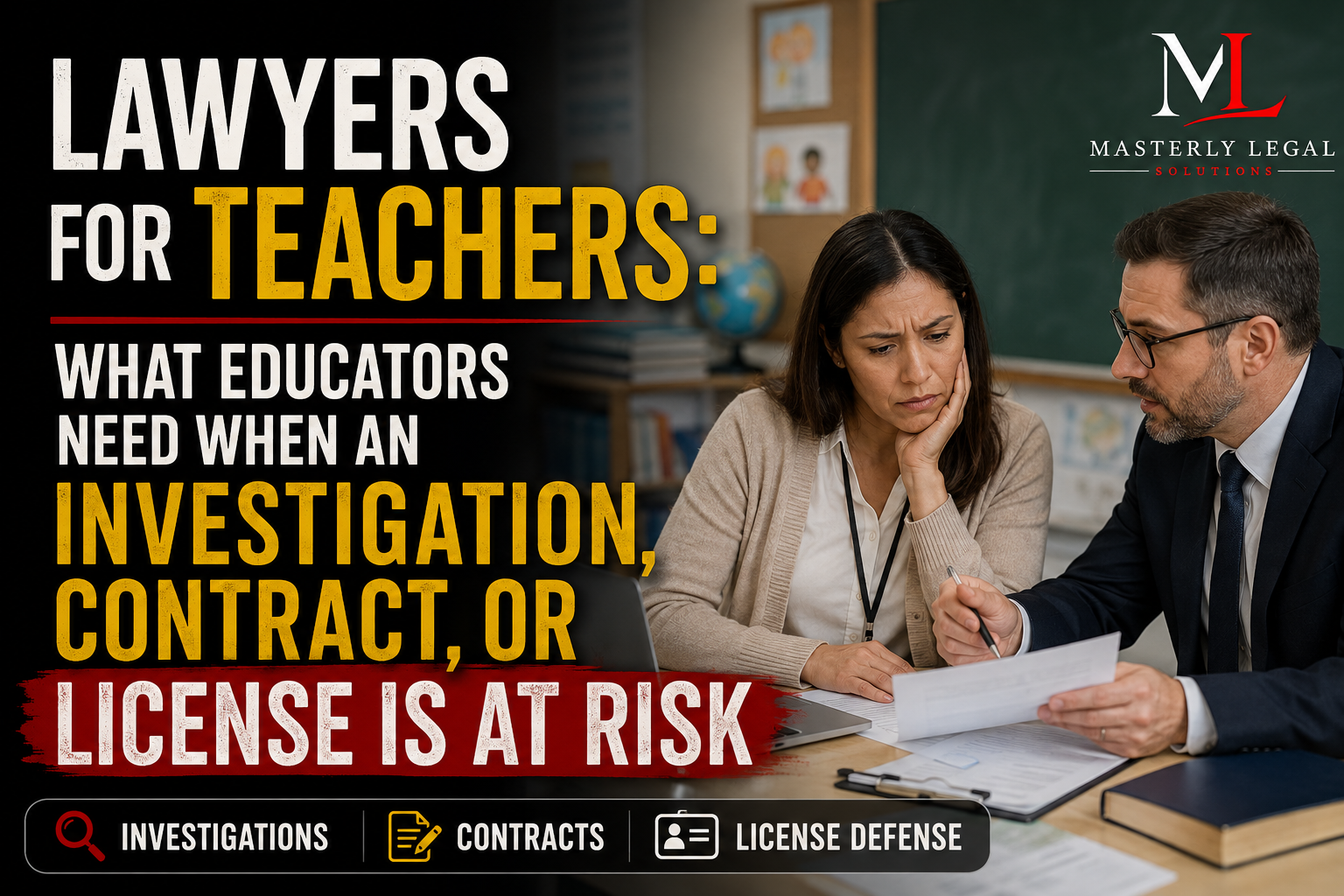
Certification matters frequently involve technical regulations, administrative procedures, and legal deadlines that may be unfamiliar to educators. Having experienced legal representation from a firm focused on protecting educators in TEA license and school investigations allows teachers and other education professionals to better understand the process while protecting their rights.
An experienced education lawyer or attorney from a firm that also understands broader issues like estate planning and business consulting, such as Masterly Legal Solutions’ comprehensive legal services, can review available information, explain applicable procedures, and help clients evaluate potential options based on the facts of their situation. Every case deserves individualized attention because no two investigations are exactly alike.
Education Law Matters Require Careful Analysis
Questions involving certification, employment, or professional conduct often involve detailed education law matters that extend beyond ordinary workplace issues. Administrative regulations, agency policies, and statutory requirements may all affect how a matter is resolved.
Masterly Legal Solutions has extensive experience assisting clients facing complex legal issues involving education. Our firm remains committed to helping educators understand the process while protecting their professional future whenever possible.
Schools, Organizations, and Communities Benefit From Strong Educators
Strong educators contribute far beyond the classroom. They help educate future generations, strengthen local community connections, and prepare students for college, careers, and lifelong success.
Protecting qualified teachers benefits students, schools, educational organizations, and communities throughout Texas. Fair procedures help maintain public confidence while ensuring educators receive appropriate consideration when concerns arise.
Every License Review Deserves Individual Attention
No two educator investigations are identical. The facts, available evidence, school policies, employment history, and applicable regulations all influence how a case develops.
Educators should avoid relying solely on advice from coworkers or internet discussions because every situation involves unique legal and factual considerations. Careful evaluation helps identify the most appropriate path forward.
Masterly Legal Solutions Helps Educators Navigate Complex Licensing Matters
At Masterly Legal Solutions, we understand how stressful a TEA investigation can become. Questions involving educator certification, professional conduct, employment disputes, administrative proceedings, or school investigations often affect careers that have taken years to build.
Our team is dedicated to helping teachers, educators, administrators, and other education professionals understand their rights and responsibilities throughout the licensing process. Whether you are dealing with certification concerns, administrative proceedings, or employment-related legal matters, we strive to provide knowledgeable guidance tailored to your circumstances.
We believe every educator deserves the opportunity to fully understand the process before making important decisions that may affect future employment and professional certification.
Protecting Your Professional Future Begins With Understanding the Process
Teaching is more than a profession—it is a commitment to educating future generations and supporting student success. When questions arise about professional conduct or certification, understanding the review process can help reduce uncertainty and allow educators to make informed decisions.
Every investigation presents its own challenges, but early preparation, careful communication, and knowledgeable guidance often place educators in a stronger position as the matter progresses. Protecting a professional license means protecting years of education, dedication, and career development.
Rather than waiting until a matter becomes more complicated, educators should take the time to understand available options whenever concerns first arise.
Experienced Legal Guidance Can Help Protect Your Teaching Career
When an educator is accused of professional misconduct, understanding the review process is essential before responding to the department or school administration. Questions involving free speech, employment policies, tenure, or workplace conduct can become complex, making experienced legal assistance especially valuable. At Masterly Legal Solutions, we use our knowledge and expertise in education law to advocate on behalf of educators facing licensing investigations and other professional challenges. Whether your concerns involve protecting your certification, preserving future jobs, or responding to agency inquiries, our goal is to help you understand your rights and make informed decisions throughout the process.
Contact Masterly Legal Solutions for a Free Consultation
If you have questions about a TEA license investigation, educator certification, employment concerns, administrative proceedings, or other education law issues, Masterly Legal Solutions is here to help. Our team understands how important your professional license is and how significantly a certification review can affect your career.
We proudly assist teachers, school administrators, education professionals, and other clients throughout Texas with matters involving educator discipline, certification reviews, employment issues, and related legal concerns. Every case receives careful attention because we understand that your career, reputation, and future opportunities matter.
Contact Masterly Legal Solutions today at (972) 236-5051 for a free consultation. We will listen to your concerns, explain the review process, answer your questions, and discuss potential options that may help protect your professional future.
Disclaimer: This article is intended for general informational purposes only and should not be interpreted as legal advice or legal guidance. Reading this article does not establish an attorney-client relationship with Masterly Legal Solutions. Every educator licensing matter involves unique facts, regulations, and legal considerations. If you are facing a TEA investigation, certification review, employment dispute, or other education-related legal issue, you should consult with a qualified attorney regarding your individual circumstances.




Looking for Legal & Business Solutions? Contact Us Now
Fill in the form or call us to set up a meeting





