

How to Challenge a CPS Finding in Texas Before It Follows You for Life
Few things feel more frightening than receiving notice that child protective services has made a finding against you. Many parents describe it as a moment when time stops. Suddenly, your name may be associated with child abuse or neglect, and you are left wondering how this could affect your child, your career, and your family’s life.
A CPS finding in Texas can have long-term consequences. It may impact employment opportunities, professional licenses, custody matters, and even your ability to volunteer with children. That is why understanding how to challenge a CPS finding in Texas before it follows you for life is critical.
At Masterly Legal Solutions, we represent parents and caregivers facing serious allegations from child protective services CPS. This article explains the CPS investigation process, how long does a CPS investigation take, and what steps you can take to protect your parental rights and your child’s well being.
Understanding the CPS Investigation Process in Texas
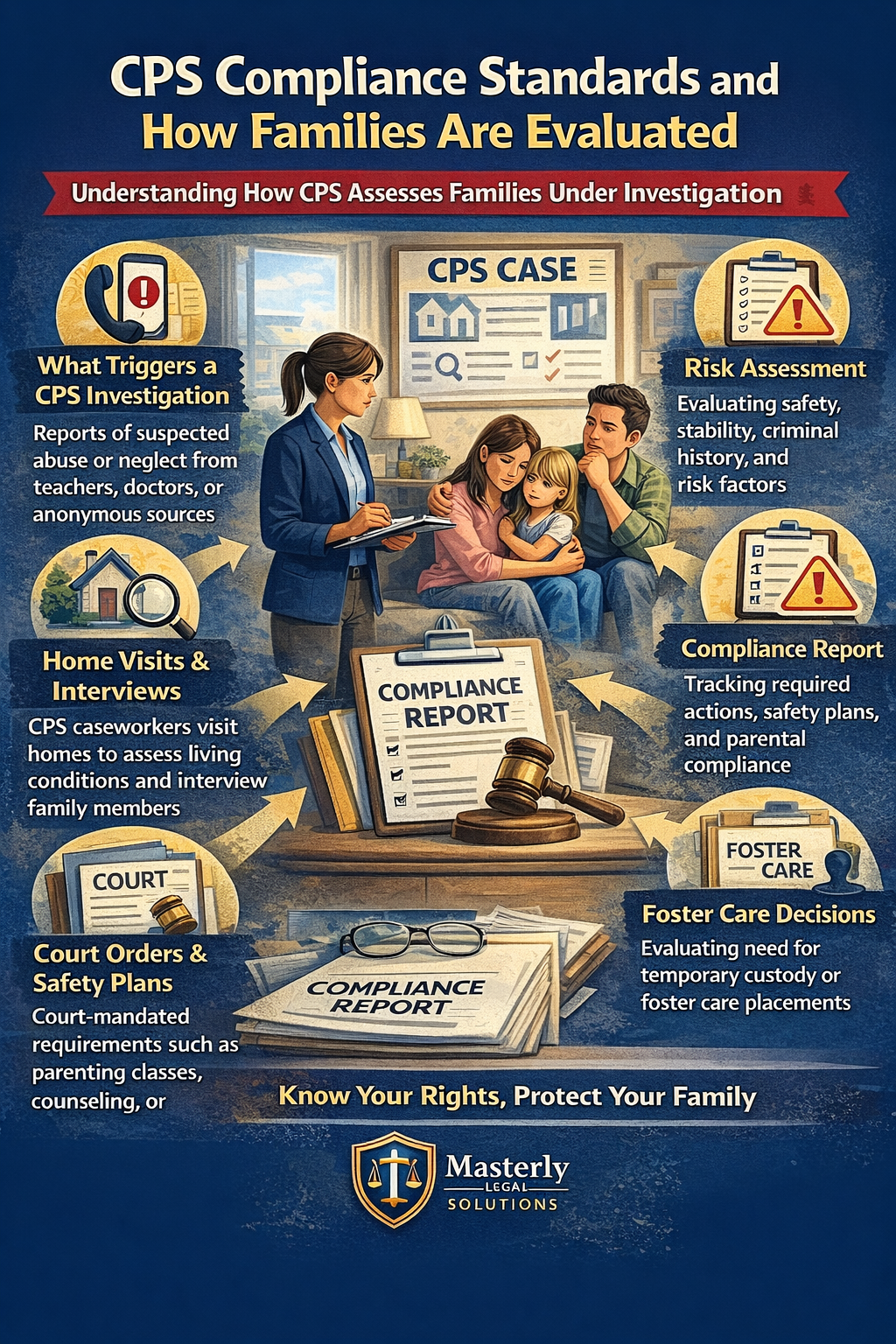
A CPS investigation begins when child protective services receives a report of suspected abuse or neglect. The Texas Department of Family and Protective Services, a division of human services, evaluates the report to determine whether it meets the criteria for investigation.
If accepted, a CPS investigator is assigned to the case. The cps investigation process includes interviews, home visits, and review of witness statements. The goal is to assess whether child abuse or neglect occurred and whether the child faces immediate risk or serious harm.
How Long Does a CPS Investigation Take?
One of the most common questions parents ask is, how long does a cps investigation take? In Texas, the cps investigation timeline typically lasts up to 30 days, although extensions are possible.
\
Some cases close quickly through administrative closure if evidence is insufficient. Others extend when additional risk assessment or criminal investigation is required. The complexity of the allegations, availability of witnesses, and cooperation of family members can all affect how long the CPS investigation lasts.
Understanding the cps investigation timeline is important because deadlines for challenging findings may begin once written notice is issued.
What Happens During the Investigation Stage
During the investigation stage, child protective services CPS will conduct interviews with the alleged victim, the alleged perpetrator, and other family members. Social workers may also conduct a home visit to inspect the child’s home environment.
The CPS investigator looks for safety concerns, child safety issues, and risk factors. The agency performs a risk assessment to determine whether abuse or neglect occurred and whether future abuse is likely.
This investigation process can feel intrusive, but parents have legal protections and the right to seek legal counsel.
Types of Allegations in a CPS Case
A cps case may involve allegations of physical child abuse, sexual abuse, sexual exploitation, neglect, domestic violence, or other forms of abuse or neglect. The agency evaluates whether the child’s basic needs are met and whether the child is safe.
In some cases, a criminal investigation runs parallel to the cps investigation. A criminal case may involve police and prosecutors, while child protective investigations focus on the child’s safety and well being.
Even if no criminal charges are filed, a CPS finding can still impact parental rights.
Possible Investigation Results
At the end of the CPS investigation, investigation results are categorized. These may include:
- Reason to believe child abuse or neglect occurred
- Ruled out
- Unable to determine
- Administrative closure
If CPS determines that neglect occurred or that child abuse or neglect happened, your name may be placed in the central registry. That registry can follow you long after the cps case is closed.
Why a CPS Finding Can Follow You for Life
A substantiated finding of abuse or neglect can affect employment in schools, healthcare, foster care, and other child-focused environments. Many employers conduct background checks that include the central registry.
For parents involved in family law matters, a CPS finding may influence custody and court proceedings. Even years later, it may be raised in disputes over parental rights.
That is why challenging an incorrect finding promptly is essential.
The Importance of Risk Assessment
Risk assessment is a key part of the cps investigation process. CPS evaluates whether the child faces immediate risk or ongoing safety concerns.
Factors may include prior criminal history, reports of domestic violence, and allegations of sexual abuse. The risk level assigned by child protective services can determine whether foster care or temporary custody is pursued.
A flawed risk assessment can lead to unfair findings and serious consequences.
Safety Plans and Service Plans
If CPS identifies safety concerns but does not remove the child, it may implement a safety plan. A safety plan outlines steps the child’s family must follow to keep the child safe.
In more formal cases, a service plan may be required under a court order. These plans may include counseling, parenting classes, or substance abuse treatment.
Failure to comply can affect the cps case and strengthen the agency’s position in court hearings.
When Foster Care Is Involved
If child protective services CPS believes the child faces serious harm or immediate risk, it may seek temporary custody through a court order. The child may be placed in foster care.
Foster care placement significantly affects a family’s life. Court hearings follow quickly, and parents must respond promptly to protect parental rights.
Challenging the basis of removal often requires experienced legal representation.
Challenging a CPS Finding Through an Administrative Review
In Texas, parents can request an administrative review of certain CPS findings. This internal process allows you to challenge the determination before it becomes final.
You must act quickly after receiving written notice. The review examines whether the evidence supports the conclusion that abuse or neglect occurred.
Having an experienced attorney during this stage can improve your chances of correcting errors.
The Role of Court Proceedings
In some cases, challenging a CPS finding requires court proceedings. A judge may review evidence, witness statements, and arguments from both sides.
A court order may be issued to uphold or overturn findings. Legal representation is especially critical when foster care or termination of parental rights is involved.
Court proceedings can feel overwhelming, but they also provide an opportunity to contest flawed investigation results.
Protecting Parental Rights Under Texas Law
The Texas Family Code provides guidelines for how child protective services must operate. It also outlines parental rights and procedural safeguards.
Parents have the right to notice, to present evidence, and to challenge findings. Understanding the texas family code is essential to defending your child’s family and your reputation.
Legal protections exist, but they must be asserted in a timely manner.
Evidence That Can Help Challenge a Finding
Challenging a CPS finding often involves presenting additional evidence. This may include:
- Witness statements contradicting allegations
- Medical records clarifying injuries
- Evidence addressing domestic violence claims
- Documentation showing services provided and compliance
Complete investigations should consider all available evidence. If the CPS investigation was rushed or incomplete, that may be grounds for challenge.
The Impact of Criminal History and Criminal Cases
A prior criminal history may influence CPS risk assessment, but it does not automatically prove current child abuse or neglect. Likewise, a criminal case and a cps investigation are separate processes.
Even if a criminal investigation does not lead to charges, CPS may still pursue findings. That is why coordinated legal counsel is important when both processes overlap.
The Role of an Experienced Attorney
An experienced attorney can review the cps investigation timeline, examine whether procedures were followed, and challenge unsupported conclusions. Legal counsel can identify weaknesses in the investigation process.
At Masterly Legal Solutions, we analyze every cps case carefully. We look at how the cps investigator conducted interviews, whether the alleged perpetrator was fairly evaluated, and whether the child’s home conditions were accurately documented.
Strong legal representation can make a meaningful difference in investigation outcomes.
Accessing Legal Aid and Community Resources
Some families seek legal aid through organizations like the Texas Legal Services Center. While legal aid can provide support families need, complex CPS cases often require individualized attention.
Community resources and voluntary services can also help demonstrate commitment to the child’s safety. Participation in services provided may strengthen your position during review.
The Emotional Toll on the Child and Family
A CPS investigation can be traumatic for a child and the entire family. The uncertainty, home visit inspections, and repeated interviews disrupt daily life.
Protective services are meant to ensure the child is safe, but the process can strain relationships and create stress. Protecting the child’s well being includes protecting stability and fairness.
Taking action to challenge inaccurate findings can help restore balance to the family’s life.
Why Early Action Matters
Waiting too long to respond can limit your options. Deadlines for administrative review and appeals are strict.
If you believe the investigation was flawed or that neglect occurred was incorrectly determined, immediate action is essential. Early involvement of legal representation increases the likelihood of correcting errors before they become permanent.
Contact Masterly Legal Solutions for a Free Consultation
If you are facing a CPS finding and wondering how long does a cps investigation take or how to challenge it, now is the time to seek guidance. A CPS investigation can move quickly, and once your name is entered into the central registry, the consequences can follow you for years.
At Masterly Legal Solutions, we focus on protecting parents and children during the CPS process. We review the investigation stage carefully, analyze risk assessment findings, and advocate for fair treatment under the Texas Family Code. Whether your case involves allegations of child abuse, domestic violence, sexual abuse, or other forms of abuse or neglect, we are prepared to stand with you.
Call (972) 236-5051 for a free consultation. We will listen to your story, explain your rights, and help you determine the next steps to protect your child and your future.
Disclaimer: This article is for informational purposes only and does not constitute legal guidance. Reading this content does not create an attorney-client relationship. Every CPS investigation depends on specific facts and applicable law. For advice tailored to your situation, please contact Masterly Legal Solutions directly.


Teacher Rights When Assaulted by a Special Needs Student: Safety, Reporting and Investigation Issues



Looking for Legal & Business Solutions? Contact Us Now
Fill in the form or call us to set up a meeting