CPS Compliance Standards and How Families Are Evaluated
When a family first learns that Child Protective Services is involved, the fear can be overwhelming. Parents often ask, “How are we being judged?” or “What standards are they using to evaluate our home?” These questions are not just emotional reactions. They reflect a real concern about how a CPS case unfolds and how compliance standards can affect parental rights, custody, and a child’s future.
At Masterly Legal Solutions, we work with families facing child protective investigations and complex compliance report issues. This article provides a comprehensive overview of CPS compliance standards, how families are evaluated, and why experienced legal representation can make a critical difference.
Understanding the Role of Child Protective Services
Child protective services are state agencies responsible for investigating allegations of child abuse or neglect. Their primary mission is to ensure a child's safety and well being.
When a report is made, CPS opens a cps case and begins an investigation process. The agency evaluates whether abuse or neglect occurred and whether immediate risk exists. These decisions can affect temporary custody, foster care placement, and long-term parental rights.
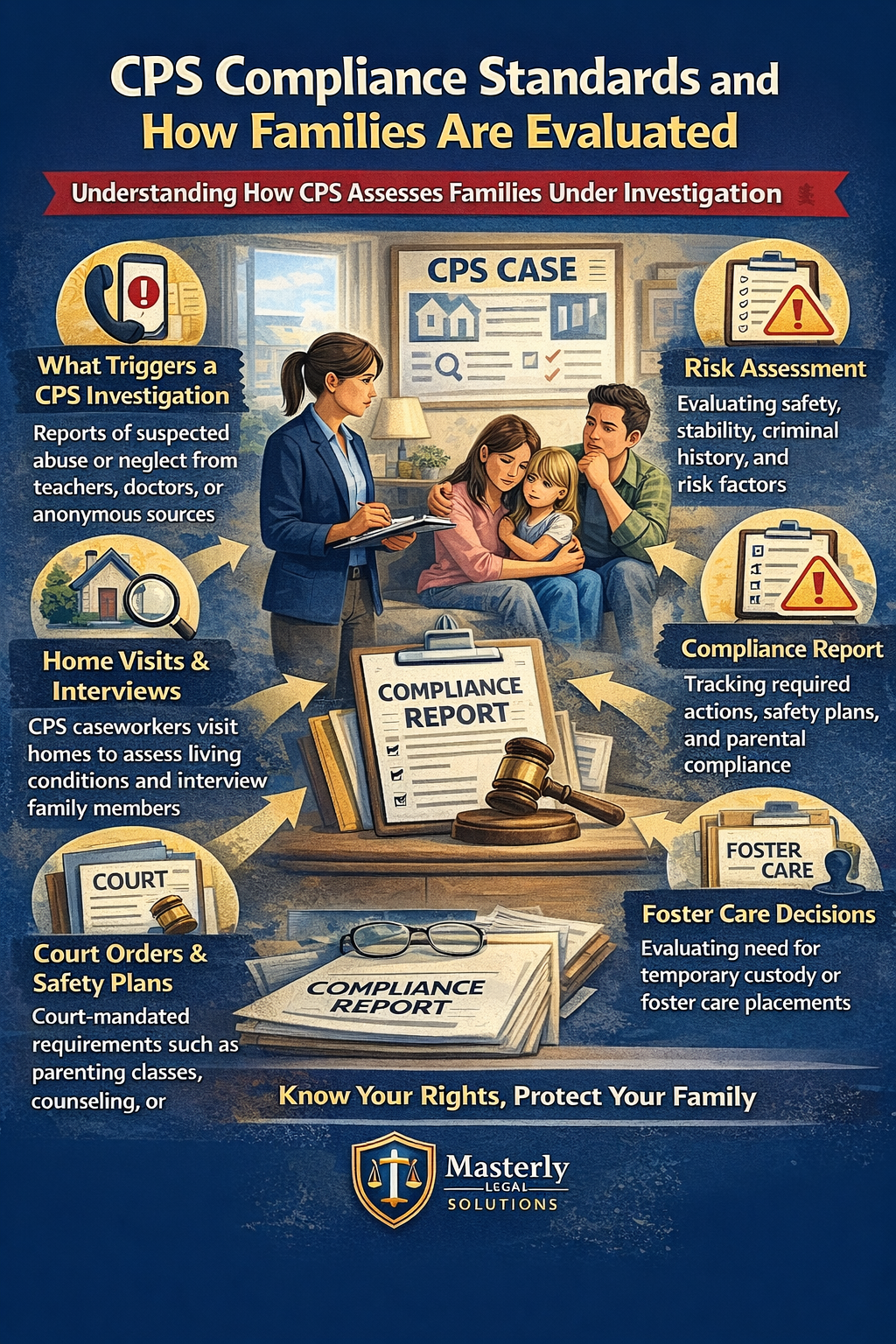
What Triggers a CPS Investigation
A cps investigation typically begins after someone reports suspected child abuse or neglect. Reports can come from teachers, doctors, neighbors, or even anonymous callers.
Once a report is received, child protective services conduct an initial screening. If the report meets statutory criteria, the agency opens a cps case and begins child protective investigations. In some cases, police reports may also be involved, particularly if alleged abuse involves criminal conduct.
The Investigation Process Explained
The investigation process is structured but can feel invasive. A caseworker may visit the child's home, interview family members, and speak with the alleged perpetrator.
CPS gathers data collection through interviews, home inspections, and document reviews. The agency also considers criminal history, prior CPS involvement, and risk factors. During the investigation stage, CPS evaluates whether abuse or neglect occurred and whether the child's safety is threatened.
What Is a Compliance Report in a CPS Case?
In a cps case, a compliance report is a structured document that outlines findings, actions taken, and the family’s compliance status with regulatory requirements. While compliance reports are often associated with corporate settings, similar standards apply in CPS cases.
A compliance report in this context reviews adherence to safety plans, service requirements, and court orders. It ensures accountability by documenting what services provided were offered and whether family members complied. The report's content can influence investigation outcomes and court decisions.
Why Compliance Reports Matter for Families
A compliance report can shape the direction of a cps case. Judges and regulatory bodies often rely on detailed compliance reports to evaluate parental progress.
If the report reflects non compliance issues, it may lead to stricter oversight or foster care placement. On the other hand, a comprehensive compliance report demonstrating compliance efforts can support reunification. Understanding how these reports are created is essential for protecting parental rights.
Risk Assessment in CPS Evaluations
Risk assessment is central to every cps investigation. Caseworkers evaluate risk factors such as prior allegations, household conditions, and supervision concerns.
The goal is to determine whether immediate risk exists to the child's safety. If risk is considered high, CPS may seek a court order for temporary custody. A careful risk management review can help families respond effectively.
How CPS Evaluates the Child’s Home
When evaluating a child's home, CPS considers safety, stability, and supervision. The agency looks for hazards, signs of neglect occurred, and whether basic needs are met.
Child protective services may also review data protection practices if sensitive records are involved. Protecting sensitive information is part of broader data privacy compliance obligations. Families are often unaware that compliance processes include documentation of living conditions.
Safety Plans and Compliance Obligations
If CPS identifies concerns but not immediate removal grounds, it may implement a safety plan. A safety plan outlines steps parents must follow to ensure the child's safety.
Compliance managers within the agency monitor adherence. Failure to meet compliance obligations may be documented in a compliance report. Non compliance can significantly affect a cps case.
The Role of Court Orders
In some situations, CPS seeks a court order to formalize supervision or removal. Court orders often require specific compliance initiatives, such as parenting classes or counseling.
The organization’s adherence to regulatory requirements is reviewed through operational compliance reports and financial compliance reports when services involve funding. Families must understand that compliance status directly impacts the court’s view of progress.
Foster Care and Temporary Custody Decisions
If CPS determines that abuse or neglect poses an immediate risk, the child may be placed in foster care. Temporary custody may be granted by court order.
During this time, detailed compliance reports track parental compliance efforts. Foster care placements are reviewed regularly, and investigation outcomes depend heavily on documented compliance status.
Allegations of Child Abuse or Neglect
Allegations of child abuse or neglect can include physical abuse, sexual abuse, emotional harm, or lack of supervision. Child abuse or neglect findings require careful evaluation of evidence.
CPS may rely on police reports, medical records, and witness interviews. The alleged perpetrator has the right to respond. Legal counsel can help ensure accuracy and challenge human error in documentation.
Non Compliance Issues in CPS Cases
Non compliance issues arise when families fail to meet safety plan requirements or court-ordered services. This may include missed counseling sessions or incomplete parenting programs.
Non compliance can be documented in a compliance report and presented to regulatory bodies or the court. Multiple instances of non compliance may affect parental rights and prolong foster care placement.
Data Collection and Data Privacy in CPS
CPS relies on extensive data collection during investigations. This includes medical records, school reports, and interviews.
Data protection and data privacy reports ensure that sensitive information is handled according to data protection laws. Data breaches can undermine confidence in the investigation process. Protecting sensitive information ensures accountability and safeguards families’ rights.
Internal Controls and Regulatory Adherence
Like other agencies, child protective services operate under regulatory requirements. Internal controls are designed to reduce human error and ensure regulatory adherence.
Audit findings and data privacy reports may reveal gaps in compliance processes. These regulatory changes can affect how cps case decisions are made.
Financial and Operational Compliance Reports
Financial compliance reports review how funds allocated for protective services are used. Operational compliance reports assess whether regulatory bodies’ standards are followed.
Although families may not see these reports, they influence the organization’s compliance status. A comprehensive compliance report often combines financial reporting, operational compliance reports, and risk assessment findings.
Risk Management and Responsible Parties
Risk management in CPS cases involves identifying responsible parties and addressing risk factors. The alleged perpetrator’s role is evaluated alongside environmental concerns.
Risk management strategies may include community resources, voluntary services, and monitoring. Effective compliance efforts can reduce the likelihood of removal.
Investigation Outcomes and Parental Rights
Investigation outcomes can include findings that abuse or neglect occurred or that allegations were unfounded. These determinations are documented in a compliance report.
If neglect occurred, CPS may recommend continued supervision or foster care. If the allegations are not substantiated, the cps case may close. Protecting parental rights requires careful review of investigation findings.
Family and Community Resources
CPS often recommends family and community resources to address concerns. These may include counseling, substance abuse programs, or housing assistance.
Engaging with community resources can demonstrate compliance efforts. Documenting participation in services provided strengthens the family’s compliance status.
The Importance of Legal Representation
Facing a cps case without legal representation can put families at a disadvantage. Compliance reports and risk assessment findings carry significant weight.
Legal representation helps ensure that the report's content is accurate and that non compliance issues are fairly assessed. An attorney can challenge errors, incomplete investigations, or improper data collection.
How Masterly Legal Solutions Assists Families
At Masterly Legal Solutions, we analyze every compliance report for accuracy and fairness. We review internal controls, audit findings, and risk management practices.
We advocate for families during child protective investigations and court proceedings. Our team understands how regulatory adherence and compliance processes affect cps case outcomes.
Protecting Your Child’s Well Being
The central focus of protective services is the child’s safety and well being. However, protecting a child's family and parental rights is equally important.
Ensures accountability means holding both families and agencies to standards. When non compliance or procedural errors occur, families deserve strong advocacy.
Why Early Action Matters
The earlier families seek legal aid or legal counsel, the better positioned they are to respond. Early involvement allows for review of compliance status and investigation stage documentation.
Delays can lead to foster care placement or prolonged court oversight. Proactive compliance efforts supported by legal guidance can influence outcomes.
The Role of the Texas Legal Services Center in CPS and Compliance Matters
The Texas Legal Services Center can be an important resource for families who cannot afford private representation in a CPS case. While it does not replace individualized legal counsel in every situation, it may provide guidance, referrals, or educational materials that help parents better understand their rights. In complex investigations involving compliance standards, accessing reputable legal information early can make a difference. Families should explore all available support options to ensure they are fully informed before making critical decisions.
Why Relevant Stakeholders Matter in CPS Evaluations
During a CPS investigation, relevant stakeholders may include parents, extended family members, caseworkers, medical professionals, teachers, and in some cases, court-appointed representatives. Each stakeholder can influence how facts are interpreted and documented in the compliance report. Their statements and observations often shape risk assessment findings and recommendations. Understanding who is involved and how their input is used can help families prepare for interviews and protect their interests.
How Compliance Standards Affect Business Operations
Although CPS cases focus on child safety, the agency itself must follow strict regulatory requirements that guide its business operations. Internal controls, documentation protocols, and compliance processes are designed to ensure fairness and accountability. When these systems function properly, they reduce human error and support consistent decision-making. Families benefit when agency procedures are transparent and aligned with established compliance standards.
Compliance Transparency and Investor Confidence in Public Systems
While CPS is a public agency rather than a private company, transparency in compliance reporting still affects investor confidence in broader public systems and funding structures. Government oversight, audit findings, and detailed compliance reports help demonstrate regulatory adherence. When agencies maintain strong compliance status, it strengthens public trust and ensures accountability. Confidence in oversight systems ultimately supports more stable funding and program continuity.
Gaining Valuable Insights from Compliance Reports
A carefully reviewed compliance report can provide valuable insights into how CPS evaluated a family’s situation. It may reveal the specific risk factors identified, services recommended, and any alleged non compliance issues. By analyzing the report’s content, families and their legal representatives can better understand the agency’s position. This insight can guide strategic decisions and improve compliance efforts moving forward.
The Importance of Complete Investigations
Families have the right to expect complete investigations that consider all available evidence, not just selected facts. When investigations are thorough, they ensure accountability and help prevent unfair findings. Complete investigations also reduce the likelihood of misunderstandings that could negatively affect parental rights. If a family believes the investigation process was incomplete or biased, seeking legal representation is essential to challenge the outcome.
Contact Masterly Legal Solutions for a Free Consultation
If you are involved in a cps case and have concerns about a compliance report, risk assessment, or allegations of child abuse or neglect, you do not have to face it alone. Child protective services investigations can move quickly, and misunderstandings in a compliance report can affect parental rights and custody decisions.
At Masterly Legal Solutions, we provide experienced legal representation focused on protecting families. We carefully review compliance reports, identify non compliance issues, and work to ensure that the organization’s compliance status is accurately reflected. Our goal is to protect your child’s home, safeguard parental rights, and help you respond effectively to regulatory requirements.
Call us at (972) 236-5051 for a free consultation. We will listen to your concerns, explain your options, and help you understand the compliance process from start to finish.
Disclaimer: This article is for informational purposes only and does not constitute legal guidance. Reading this content does not create an attorney-client relationship. Each cps case depends on specific facts, regulatory requirements, and court decisions. For advice about your situation, please contact Masterly Legal Solutions directly.
Teacher Rights When Assaulted by a Special Needs Student: Safety, Reporting and Investigation Issues
Looking for Legal & Business Solutions? Contact Us Now
Fill in the form or call us to set up a meeting