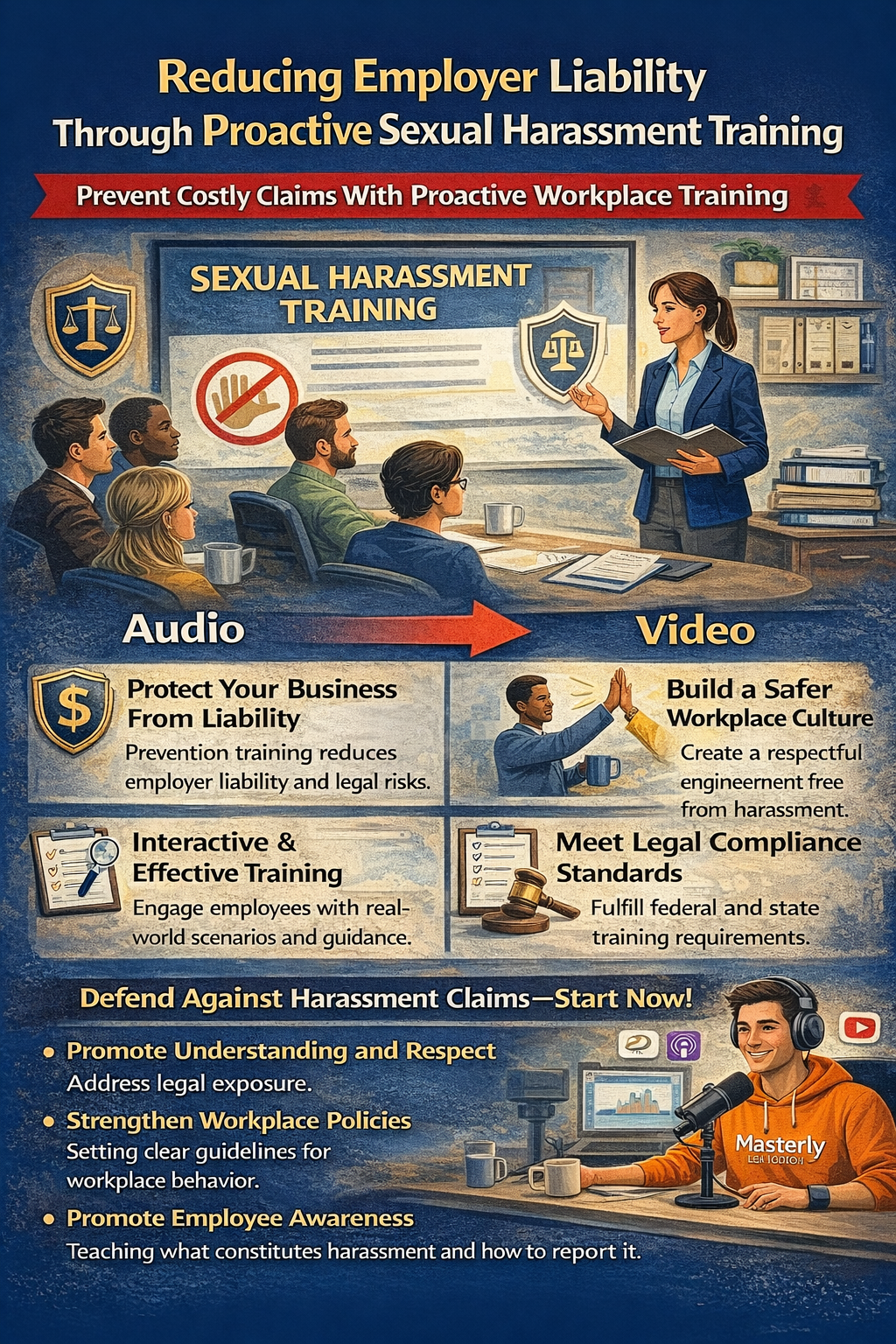
Reducing Employer Liability Through Proactive Sexual Harassment Training
In today’s business climate, a single complaint of sexual harassment can reshape an entire organization overnight. What begins as an internal report can quickly become a legal claim, a public relations issue, and a long-term liability concern. Employers who believe “it won’t happen here” often discover that prevention is far less expensive than defense.
At Masterly Legal Solutions, we work with employers who want to reduce risk before it turns into litigation. Proactive sexual harassment training is not just about checking a regulatory box. It is about building awareness, strengthening compliance, and protecting your workplace from costly claims under federal and state law. When handled correctly, harassment prevention training becomes a powerful shield against liability.
Why Employers Cannot Ignore Sexual Harassment Risk
Sexual harassment remains one of the most common workplace claims filed across the country. Allegations may involve supervisors, managers, coworkers, or even third parties interacting with employees. Even one substantiated complaint can lead to investigations by the Equal Employment Opportunity Commission or similar agencies.
Under Title VII of the Civil Rights Act, employers have a legal obligation to prevent unlawful harassment and discrimination. When the law applies, failure to implement effective workplace harassment training can expose a business to significant liability. Proactive compliance demonstrates good faith efforts to protect employees and maintain a respectful work environment.
Understanding What Constitutes Sexual Harassment
Many organizations underestimate what constitutes sexual harassment. It is not limited to overt misconduct or physical contact. Inappropriate comments, unwanted advances, repeated jokes, or behaviors that create a hostile work environment can all qualify.
Sexual harassment may also intersect with unlawful discrimination based on national origin, gender, or other protected characteristics. Harassment in the workplace becomes illegal when it is severe or pervasive enough to affect working conditions. Employers must understand these key concepts to design meaningful harassment prevention training.
The Legal Framework Governing Harassment Prevention
Federal law sets the baseline for sexual harassment training legal requirements for employers. Title VII requires employers to address unlawful harassment promptly and effectively. Courts examine whether the organization took reasonable steps to prevent and correct misconduct.
State regulations add additional training requirements. For example, New York and New York State mandate annual training for many employers. NYC requirements impose further obligations on businesses operating within city limits. California and Illinois also have detailed workplace harassment prevention training regulations that employers must follow to comply.
Because applicable laws vary, employers with operations in New York State, California, Illinois, or other states must ensure their training program aligns with each jurisdiction’s regulations.
The Business Case for Proactive Training
Some employers view sexual harassment prevention training as a regulatory burden. In reality, proactive training can save substantial financial and reputational costs. Litigation, settlements, and lost productivity can far exceed the expense of a well-designed course.
By investing in workplace harassment prevention training, employers reduce risk and strengthen workplace culture. A structured approach to harassment prevention training also improves employee awareness and supports inclusion training efforts. When employees understand acceptable behaviors, misconduct decreases.
Core Elements of Effective Sexual Harassment Training
Effective sexual harassment training should be comprehensive and interactive. It must clearly define sexual harassment, explain reporting procedures, and address retaliation. The course should also cover conflict resolution strategies and emphasize accountability.
Strong programs often include:
- Realistic workplace scenarios
- Guidance for supervisors and managers
- Clear explanation of responsibilities
- A review of applicable laws
- A final exam to confirm understanding
An interactive format increases awareness and retention. Employees are more likely to remember the material when they actively participate.
The Importance of Supervisors and Managers
Supervisors and managers hold special responsibilities under federal and state law. They are often the first to receive complaints and must respond appropriately. Sexual harassment prevention training should provide additional guidance tailored to leadership roles, with a clear focus on manager accountability in sexual harassment prevention.
Managers must know how to document incidents, handle complaints, and avoid retaliation. Proper training ensures supervisors understand their obligations and reinforces compliance. Without this guidance, even well-intentioned leaders may mishandle sensitive situations.
Meeting Training Requirements in New York and NY State
New York and New York State have some of the most detailed training requirements in the country. Employers must provide annual training that meets specific content standards. New York State employees must receive education on reporting procedures and legal protections.
NYC requirements add another layer of compliance for employers within city limits. York State mandates that training be interactive and provided in accessible formats, including Spanish when necessary. Employers operating in NY State must ensure the course content reflects the most current regulations.
Because regulations can change, employers should review their training every three years to confirm continued compliance.
Compliance Obligations in California and Illinois
California requires sexual harassment prevention training for supervisors and non-supervisory employees. Supervisors often must complete at least two hours of training. Illinois also mandates annual training for employees.
Employers in other states should monitor evolving state regulations to ensure they comply. Multi-state organizations must design flexible programs that address varying legal standards. Proactive compliance reduces liability exposure across jurisdictions.
Leveraging Online and Mobile Training Solutions
Online training platforms provide flexibility for modern workplaces. Employees can complete harassment prevention training on a computer or mobile device. This accessibility makes it easier for new employees to participate promptly.
Interactive modules can include videos, quizzes, and scenario-based exercises. A structured course with technical support ensures that employees can complete the material without disruption. Digital platforms also simplify recordkeeping and reporting.
Building a Strong Sexual Harassment Prevention Policy
A written sexual harassment prevention policy is essential for every organization. Closely aligned with this is a comprehensive employee handbook that reinforces expectations, reporting procedures, and workplace standards. The policy should clearly outline reporting procedures, investigation steps, and anti-retaliation protections. It must define acceptable behaviors and address unlawful harassment.
Employers should distribute the policy in written form and review it during workplace training. This reinforces awareness and demonstrates commitment to compliance. A well-drafted policy supports legal defenses if incidents arise.
Handling Complaints and Investigations
When harassment complaints surface, employers must act quickly. Prompt investigation shows respect for employees and reduces liability. In many cases, engaging outside counsel for internal investigations helps ensure the process is impartial, thorough, and legally compliant. A structured response includes documenting the complaint, interviewing witnesses, and preparing a detailed report.
Employers should maintain confidentiality to the extent possible. Taking corrective action when necessary reinforces accountability. Failure to respond appropriately may increase risk under federal law and state regulations.
Preventing Retaliation and Protecting Human Rights
Retaliation claims often accompany harassment complaints. Employers must ensure that employees who report misconduct are not subjected to adverse treatment. Sexual harassment training should address retaliation explicitly, and consulting with an experienced retaliation lawyer can help organizations recognize and mitigate these risks.
Protecting human rights and promoting inclusion training strengthens workplace culture. These same principles apply in educational settings, where our higher education law counsel for colleges and universities helps institutions manage compliance, training, and employment issues. When employees feel safe reporting concerns, organizations can address issues early. This proactive approach helps save resources and preserve trust.
Documentation and Recordkeeping
Proper documentation is a critical compliance strategy. Employers should maintain records of training completion, attendance, and course materials. These records may be essential in defending against claims.
A centralized system allows employers to track annual training and monitor participation. Digital dashboards can simplify compliance and reporting obligations. Maintaining accurate documentation helps reduce liability in the event of litigation.
Long-Term Benefits of Workplace Harassment Prevention Training
Harassment prevention training does more than reduce legal exposure. It improves morale and fosters a respectful workplace culture. By committing to the benefits of regular sexual harassment training, employers reinforce expectations and support ongoing behavior change. Employees who understand acceptable conduct are more likely to collaborate effectively.
Organizations that prioritize prevention demonstrate commitment to ethical standards. This commitment enhances reputation and strengthens client relationships. Proactive training is an investment in long-term stability.
Why Employers Partner With Masterly Legal Solutions
At Masterly Legal Solutions, we help employers design comprehensive sexual harassment prevention training programs tailored to their specific operations. In addition to training, our HR consulting services help businesses navigate employment laws, develop compliant policies, and manage employee relations. We also provide comprehensive legal services for corporations and nonprofits, integrating labor and employment advice with customized training solutions. We understand how federal and state regulations intersect with business realities. Our team works closely with organizations to align policies, procedures, and training with current law.
Whether you operate in New York, New York State, California, Illinois, or other states, we guide you through compliance. We also support colleges and universities through dedicated higher education law services that address student, faculty, and regulatory issues. We focus on reducing liability while strengthening workplace culture. Our approach combines legal insight with practical implementation strategies.
Training Programs Intended to Prevent Harassment Before It Starts
Effective sexual harassment training is intended to do more than satisfy a legal requirement. It is designed to educate employees and supervisors about appropriate conduct, reporting procedures, and the serious consequences of harassment in the workplace. When a program is clearly intended to prevent misconduct before it escalates, it strengthens awareness and reduces organizational risk. Employers who implement training that is genuinely intended to protect their workforce demonstrate a proactive commitment to compliance and a respectful work environment.
Speak With a Sexual Harassment Lawyer Frisco TX Businesses Trust
If your organization is reviewing its training requirements or responding to harassment complaints, proactive legal guidance can make all the difference. Consulting with a sexual harassment lawyer Frisco TX employers rely on can help you evaluate existing policies and identify potential gaps.
At Masterly Legal Solutions, we offer a strategic approach to harassment prevention and compliance. We help employers build interactive training programs, draft clear policies, and respond effectively to complaints. Call (972) 236-5051 for a free consultation. Let us help you strengthen your organization’s compliance efforts, reduce liability, and create a respectful workplace that protects both employees and leadership.
Disclaimer: This article is for informational purposes only and does not constitute legal guidance. Reading this content does not create an attorney-client relationship. Every situation is unique and depends on specific facts and applicable law. For advice tailored to your organization, please contact Masterly Legal Solutions directly.


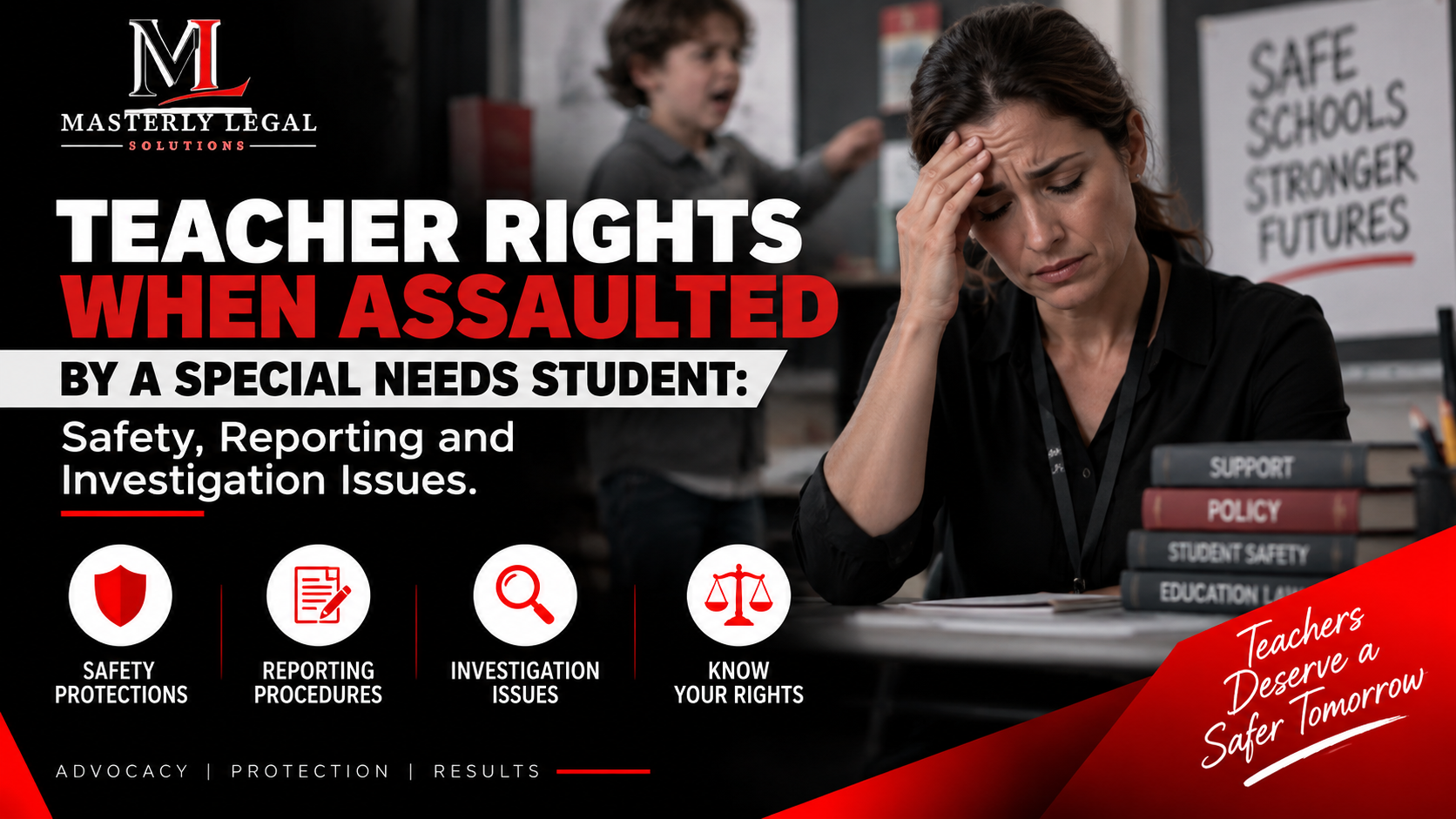
Teacher Rights When Assaulted by a Special Needs Student: Safety, Reporting and Investigation Issues

Looking for Legal & Business Solutions? Contact Us Now
Fill in the form or call us to set up a meeting