Retaliation at Work: Protecting Your Rights and Your Career
Understanding Retaliation in the Workplace
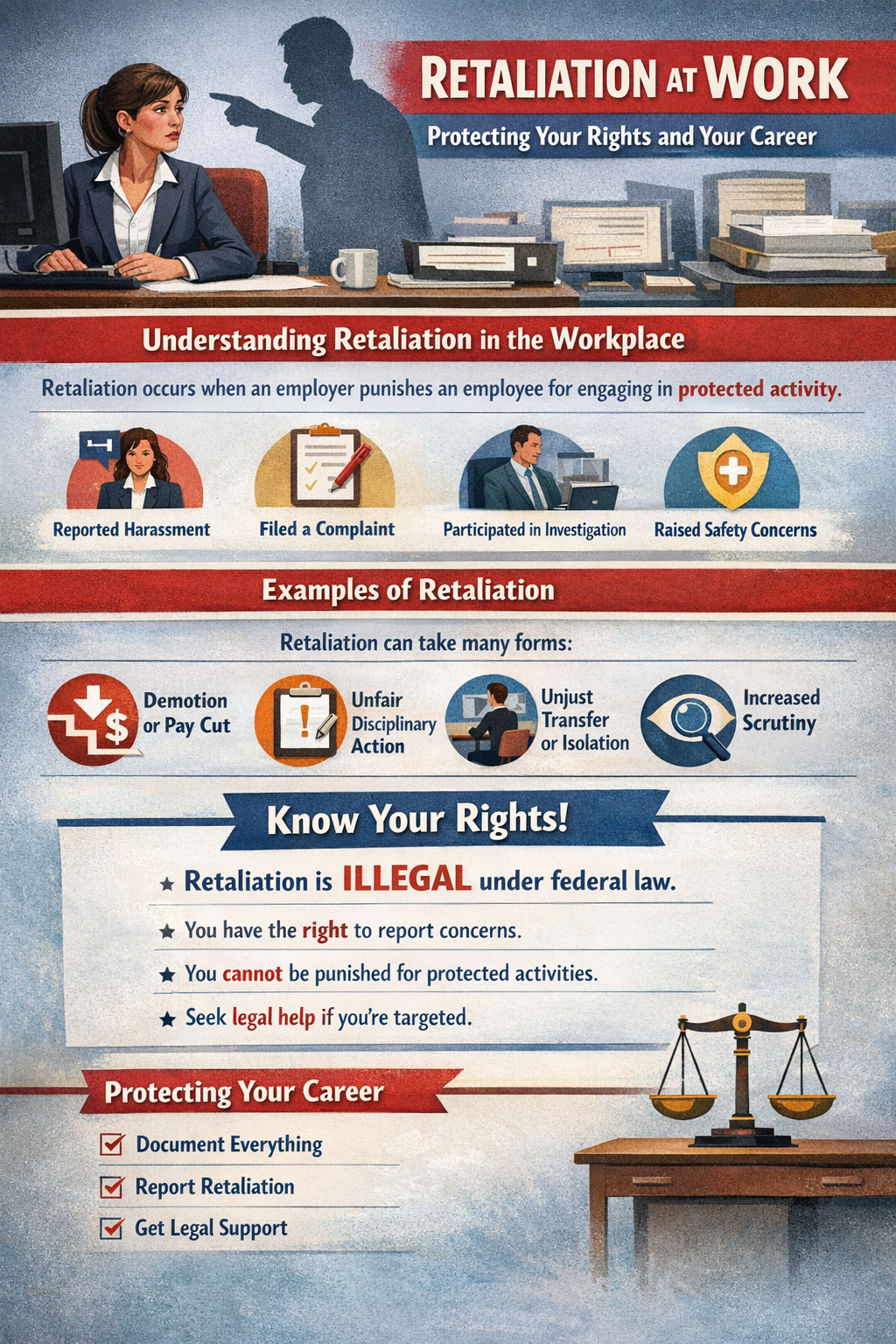
Retaliation at work is a serious issue that affects workers across many industries. It happens when an employer takes negative action against an employee because they engaged in a protected activity. This could include reporting harassment, filing a complaint, or participating in an investigation. Many employees do not realize that retaliation is illegal under federal law and can have lasting consequences for their careers.
When retaliation occurs, it often creates fear and uncertainty in the workplace. Employees may feel discouraged from speaking up about wrongdoing, which can harm overall employee morale. A reasonable employee should be able to report concerns without fear of punishment or intimidation. Understanding your rights is the first step toward protecting yourself and your future.
What Is Considered Protected Activity
Protected activity refers to actions that employees are legally allowed to take without fear of retaliation. These activities are safeguarded under various laws and regulations designed to protect workers.
Common Forms of Protected Activity
Employees may engage in protected activity when they:
- Report discrimination or harassment to human resources
- File a complaint about workplace safety or wage issues
- Participate in an investigation involving alleged misconduct
- Cooperate with police or other authorized agency officials
- Raise concerns about a possible violation of workplace laws
These actions are considered directly related to enforcing workplace protections. An employer cannot legally punish an employee simply for doing what the law allows.
Other Related Protected Activity
There are also situations involving other related protected activity. For example, supporting a co worker who filed a complaint or assisting in internal reviews may also be protected, especially in sensitive settings where teachers and schools need legal support. Even informal reports can qualify if they involve a violation or concern about workplace practices.
What Retaliation Looks Like in Real Situations
Retaliation is not always obvious. It can take many forms, and sometimes it is disguised as routine workplace decisions. However, if the action creates a negative impact on the employee because of their protected activity, it may be unlawful.
Common Examples of Retaliation
Here are several example scenarios that illustrate how retaliation may appear:
- An employee reports harassment and is suddenly placed on administrative leave without clear justification
- A worker files a complaint and is transferred to a less desirable position
- A manager reduces an employee’s pay or hours after they participate in an investigation
- A supervisor issues unwarranted disciplinary action following a report of alleged misconduct
- An employee is excluded from meetings or opportunities that affect their benefits or career growth
Each example shows how retaliation can interfere with an employee's current position and future prospects.
Adverse Action and Its Impact
An adverse action is any action taken by an employer that negatively affects an employee’s job. This can include termination, demotion, or even subtle changes that affect workplace conditions.
Types of Adverse Action
Adverse action may include:
- Reduction in pay or benefits
- Reassignment to a less desirable position
- Placement on investigative leave or notice leave
- Denial of promotions or training opportunities
- Increased scrutiny or unfair performance evaluations
These actions can create a hostile environment and discourage employees from reporting violations.
How Adverse Action Affects Workers
The impact of adverse action goes beyond financial loss. It can damage employee morale, create stress, and harm long-term career opportunities. Workers may feel isolated or targeted, especially when other employees witness the retaliation but remain silent out of fear.
The Role of Administrative Leave in Retaliation Cases
Administrative leave is often used by employers during investigations. While it can be appropriate in some cases, it may also be misused.
Understanding Administrative Leave
Administrative leave is typically a paid leave granted during an investigation or review process. It is sometimes referred to as paid administrative leave or excused absence. Employers may grant administrative leave when there are concerns about alleged misconduct or workplace safety.
When Administrative Leave Becomes Problematic
Administrative leave can become an issue when:
- It is used as a punishment rather than a neutral action
- It is extended beyond brief periods without justification
- It negatively impacts the employee’s reputation or career
Employers must follow internal policies and ensure that administrative leave is applied fairly and consistently.
Types of Leave Used by Employers
Employers may use different forms of leave, including:
- Investigative leave during an investigation
- Notice leave when transitioning an employee out of a role
- Safety leave when there is a risk to workplace security
- Paid leave for officially sponsored activities such as blood donations
Each type of leave should be used appropriately and not as a tool for retaliation.
Employer Responsibilities Under the Law
Employers have a legal obligation to protect employees from retaliation. This includes following established regulations, seeking tailored labor and employment legal services, and maintaining fair workplace practices.
Compliance With Federal Law and Regulations
Employers must comply with federal law, including provisions under the united states code. These laws are designed to protect workers who engage in protected activity. Employers must also adhere to opm regulations and opm guidance where applicable.
Internal Policies and Procedures
Employers should issue internal policies consistent with legal requirements. These policies should clearly outline how complaints are handled and how employees are protected.
Role of the Agency Head and Management
In some organizations, the agency head and management team play a key role in enforcing policies. Agency officials must ensure that decisions are based on objective criteria and not influenced by retaliation. Agency judgments should reflect fairness and support the agency's mission while maintaining employee morale.
The Investigation Process and Employee Rights
When a complaint is filed, an investigation is typically initiated and may benefit from guidance from an experienced workplace retaliation lawyer. This process must be handled carefully to ensure fairness.
What Happens During an Investigation
During an investigation, employers may:
- Review evidence and interview witnesses
- Place employees on investigative leave
- Conduct internal reviews or ad hoc assessments
The goal is to determine whether a violation occurred and what actions are necessary.
Protecting Employees During Investigations
Employees should be protected throughout the investigation process. This includes ensuring that any absence or leave is justified and not punitive. Employers must avoid actions that could be perceived as retaliation.
Recognizing Signs of Retaliation Early
Employees should be aware of warning signs that may indicate retaliation and consider consulting a dedicated retaliation employment attorney if they appear.
Key Warning Signs
Some common signs include:
- Sudden changes in job duties or responsibilities
- Unexplained reductions in pay or benefits
- Increased scrutiny from a supervisor or manager
- Negative performance reviews without clear reasons
Recognizing these signs early can help employees take action before the situation worsens.
The Impact of Retaliation on Workplace Culture
Retaliation does not just affect one employee. It can have a broader impact on the entire workplace.
Effects on Employee Morale
When retaliation occurs, it can lower overall employee morale. Workers may feel unsafe or unsupported, leading to decreased productivity and engagement.
Impact on the Agency’s Mission
A workplace that tolerates retaliation may struggle to achieve its agency's mission. This is especially true for colleges and universities that depend on strong higher education law compliance and support. Employees are less likely to report issues, which can lead to unresolved problems and long-term damage.
Legal Options for Employees Facing Retaliation
Employees who experience retaliation have several options under the law.
Filing a Complaint
Employees can file a complaint with the appropriate agency or authority, including pursuing retaliation and labor complaints options when workplace rights are violated. This may involve working with human resources or external organizations.
Seeking Legal Representation
Working with an experienced legal team can help employees understand their rights and options. Legal professionals can guide workers through the process and help protect their interests.
Potential Remedies
Remedies for retaliation may include:
- Reinstatement to a desirable position rather than being pressured to resign, an issue explored in depth in guides on whether an employer can force you to quit
- Recovery of lost pay and benefits
- Removal of negative records from personnel files
Each case is unique, and outcomes depend on the specific circumstances.
How Employers Can Prevent Retaliation
Preventing retaliation is essential for maintaining a healthy workplace and many organizations rely on outside HR consulting services and training to support compliance.
Best Practices for Employers
Employers should:
- Provide regular sexual harassment training on workplace laws and regulations
- Encourage open communication and reporting
- Implement clear internal policies
- Conduct regular internal reviews
These steps can help create a culture of accountability and trust.
Supporting Employees
Employers should actively support employees who report concerns. This includes ensuring that they are not subjected to adverse action or unfair treatment.
Why Taking Action Matters
Ignoring retaliation can lead to serious consequences for both employees and employers. Workers may suffer financial loss, emotional stress, and career setbacks. Employers may face legal challenges and damage to their reputation.
Taking action early can help protect your rights and prevent further harm. Whether you are dealing with administrative leave, adverse action, or other forms of retaliation, understanding your options is critical.
Administrative Leave for Brief or Short Periods in Personnel Management
In many workplaces, administrative leave may be used for brief or short periods as part of effective personnel management. This type of leave is often granted on a time limited basis when an agency determines that temporarily removing an employee from their duties is necessary during an investigation or internal review. These decisions are typically guided by agency policies, which must align with applicable regulations, executive order requirements, and any presidential directive or presidential memorandum that may apply.
In some cases, leave may be specifically authorized under an other provision of law to address unique workplace concerns while still protecting the only employee involved and maintaining fairness. Employers must also ensure that such actions do not violate minimum wage laws, especially when paid leave or compensation is affected within a calendar year. When used properly, short periods of administrative leave can help balance workplace needs while allowing time to gather additional information and protect both the organization and its workers.
Speak With Masterly Legal Solutions About Your Situation
If you believe you are experiencing retaliation at work, you do not have to navigate it alone. At Masterly Legal Solutions, we understand how overwhelming these situations can feel. Our team is here to help you make sense of what is happening and guide you through your options.
Every situation is different, and the details matter. Whether you were placed on administrative leave, faced a reduction in pay, or experienced another form of adverse action, we can help you evaluate your case. We are committed to helping workers protect their rights and move forward with confidence.
Call us today at (972) 236-5051 for a free consultation. We are here to answer your questions, listen to your concerns, and provide the support you need to take the next step.
Disclaimer: This article is for informational purposes only and does not constitute legal advice. Reading this content does not create an attorney-client relationship. For guidance specific to your situation, please consult with a qualified legal professional.


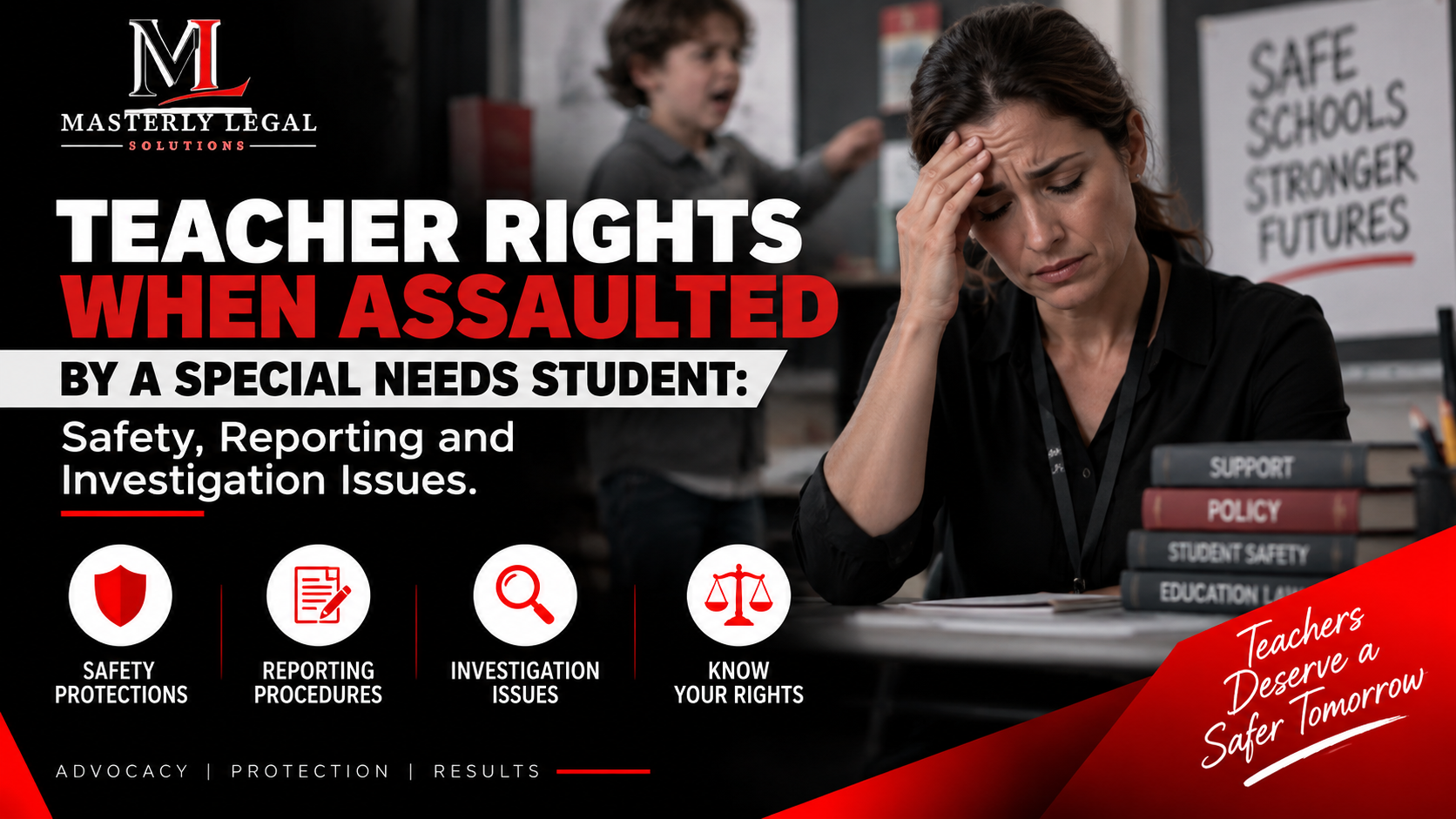
Teacher Rights When Assaulted by a Special Needs Student: Safety, Reporting and Investigation Issues


Looking for Legal & Business Solutions? Contact Us Now
Fill in the form or call us to set up a meeting