

The Difference Between CPS Houston Investigations and CPS Houston Findings
When Families First Learn CPS Is Involved
Few moments are more stressful for a family than learning that houston cps has received a report about possible child abuse or neglect. Parents often feel overwhelmed, confused, and unsure about what happens next. In many situations, the initial call to child protective services begins a complex legal and investigative process that can affect the entire household.
The Texas Department of Family and Protective Services is responsible for responding to these reports. Their mission is to protect children and ensure their safety while also respecting the parental rights of families. When houston cps becomes involved, the situation may develop quickly, and families often feel they must respond immediately.
Understanding the difference between a cps investigation and the final findings issued by child protective services cps can help families make informed decisions. Knowing how the investigation works may also help parents understand why legal representation from an experienced attorney can make a difference.
Understanding the Role of Child Protective Services
How the Agency Responds to Reports
Child protective services exists to evaluate allegations involving potential child abuse, neglect, or other risks to a child’s safety. When someone files a report, the agency must determine whether the allegations meet the legal threshold requiring further review.
The agency responsible for these investigations in Texas is part of the Texas Department of Family and Protective Services. Their investigators work throughout Harris County, Houston, and surrounding communities such as League City.
The primary responsibility of protective services is to protect children from serious harm. However, the investigation must also respect the rights of parents and other adults in the home.
What Triggers a CPS Investigation
Reports That Lead to Investigation
A cps investigation usually begins when someone files a report alleging child abuse, sexual abuse, physical abuse, or neglect. Reports can come from many different sources, including teachers, neighbors, medical professionals, or other concerned individuals.
In some cases, the report may involve visible physical injury, suspected sexual misconduct, or concerns that a child is living in unsafe conditions. Other situations involve allegations that a caregiver may be an abuser or that a child may be at risk of abuse or neglect.
Once the agency receives the report, investigators begin evaluating whether the allegation requires immediate action.
The Beginning of a CPS Investigation
The Initial Steps Taken by CPS
After receiving a report, a cps investigator is assigned to begin the investigation. The investigator may visit the home, speak with parents, interview the child, and gather additional information about the situation.
This phase is often where families feel the most uncertainty. The cps investigator may request access to the home or ask to speak with the child privately. They may also contact schools, medical professionals, or other adults who may have knowledge of the situation.
Although the goal is to protect children, the experience can leave parents feeling as though their lives are suddenly under scrutiny.
What Happens During a CPS Investigation
The Investigative Process Explained
The investigation phase focuses on gathering facts and evaluating the circumstances surrounding the report. Investigators attempt to determine whether evidence supports the allegations of abuse or neglect.
A cps investigator may:
- Interview the child and other children in the household
- Speak with parents and other adults in the home
- Review medical records for evidence of injury or physical abuse
- Consult with law enforcement if criminal charges may be involved
In some cases, investigators may also develop a safety plan designed to temporarily reduce any perceived risk.
When Law Enforcement Becomes Involved
Criminal Investigations and CPS
In more serious cases, police may become involved if investigators suspect criminal behavior. Situations involving sexual abuse, severe physical abuse, or intentional injury often require cooperation between cps and law enforcement.
When criminal charges are possible, the stakes increase significantly. Parents or caregivers may face both a cps investigation and a criminal court case.
These circumstances highlight the importance of seeking guidance from an experienced lawyer who understands both criminal defense and CPS matters.
Understanding CPS Findings
What CPS Findings Actually Mean
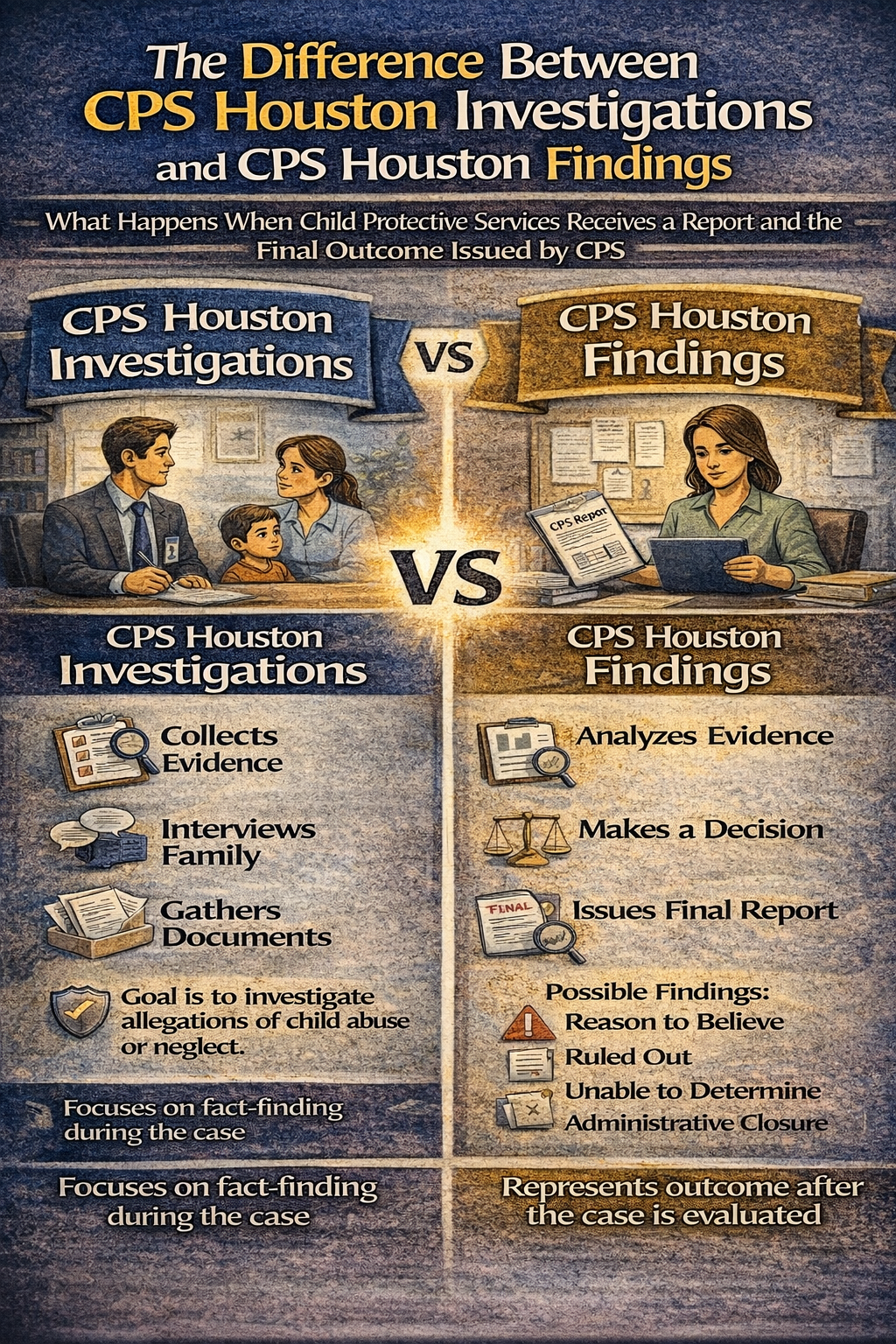
Once the investigation is complete, child protective services will issue findings. These findings represent the agency’s official determination regarding the allegations.
Unlike the investigation, which focuses on gathering information, the findings represent the outcome of that review. Investigators analyze the evidence and determine whether the allegations were supported.
Common findings may include:
- Reason to believe child abuse occurred
- Ruled out allegations
- Unable to determine
- Administrative closure
Each finding can have significant consequences for the family.
Why CPS Findings Matter
Long-Term Effects on Families
A CPS finding can influence many aspects of a family’s future. If investigators conclude that abuse occurred, the result may affect custody, employment opportunities, and the family’s reputation.
In some cases, CPS findings may lead to court proceedings. The agency may seek protective orders, placement of a child in foster care, or additional supervision.
For families facing these challenges, legal representation from an experienced attorney is often essential.
Differences Between Investigation and Findings
Understanding the Key Distinction
The difference between a cps investigation and the findings issued by child protective services cps is significant.
The investigation is the phase where the agency collects evidence and interviews witnesses. This stage may involve home visits, interviews, and document reviews.
The findings, however, represent the agency’s final decision based on the information gathered during the investigation.
Families sometimes misunderstand this distinction and believe that cooperating fully guarantees a favorable result. Unfortunately, that is not always the case.
How a CPS Case Can Escalate
The Domino Effect of Allegations
When a cps case escalates, multiple issues may arise. A report involving abuse or neglect may trigger additional investigations or referrals to law enforcement.
For example, if a child reports physical abuse during an interview, investigators may seek additional evidence or request involvement from police. In serious cases, prosecutors may pursue criminal charges.
This progression can place tremendous stress on families and create uncertainty about the future.
The Importance of Protecting Parental Rights
Legal Protections for Parents
While CPS has a duty to protect children, the law also recognizes the importance of protecting parental rights. Parents have the right to understand the allegations and respond appropriately.
In many situations, parents may wish to consult an attorney before speaking extensively with investigators. A knowledgeable lawyer can explain the legal implications of each step in the process.
Legal guidance ensures families understand their rights and responsibilities during the investigation.
When Families Feel Powerless
Many parents describe CPS investigations as one of the most difficult experiences they have faced. The process can make families feel powerless, especially when investigators begin asking questions about personal matters.
Concerns about the child’s future, the family’s reputation, and potential court involvement can create overwhelming stress. Families may worry that a misunderstanding could change the course of their lives.
Seeking legal guidance can help restore a sense of control during this challenging time.
Why Legal Representation Matters
The Role of an Attorney
A skilled attorney helps families understand their rights and develop a strongest possible defense. A knowledgeable cps investigations attorney from Masterly Legal Solutions can review the evidence, challenge incorrect assumptions, and ensure the family’s voice is heard.
Attorneys also communicate with investigators on behalf of their clients, helping to prevent misunderstandings during the investigation.
In many cases, legal defense strategies can influence the outcome of the investigation.
How Attorneys Build a Defense
Strategies Used to Defend Families
An experienced lawyer examines the facts carefully and builds a strategy tailored to the family’s circumstances. This may include reviewing witness statements, challenging inaccurate claims, or presenting evidence that contradicts the allegations.
Common legal strategies include:
- Identifying inconsistencies in the report
- Presenting evidence that refutes claims of abuse
- Demonstrating that a child was not at risk of harm
These strategies help protect families from unfair conclusions, while thoughtful estate planning services in Dallas can further safeguard a family’s assets and wishes.
Protecting Children While Protecting Families
The goal of child protective services is to ensure that every child is safe. However, the process must also respect the rights of families.
Legal advocates help ensure that investigations are fair and that parents have the opportunity to respond to allegations.
With experienced defense, families can pursue justice and work toward protecting their future, and may also benefit from estate planning services in Houston that help protect their long-term interests.
Taking Action Early
Families facing a cps investigation should consider seeking legal help as soon as possible. Early action can help prevent misunderstandings and allow attorneys to guide clients through the process.
Waiting too long may limit available options and make it harder to challenge findings.
Taking proactive steps can help families protect their rights and their future, including reaching out through the Masterly Legal Solutions contact offices page to connect with legal support.
When Families Need to Contact Child Protective Services
There are situations where individuals may need to contact child protective services to report concerns about a child’s safety. When someone believes a child may be experiencing abuse, neglect, or living in a harmful environment, reporting the situation allows authorities to investigate and determine whether intervention is necessary. Many reports are made by teachers, medical professionals, or concerned community members who want to protect a child from potential harm, and educators in particular may need legal support for school investigations and TEA license issues when allegations arise. Once the report is submitted, the agency begins reviewing the information and may assign a caseworker to evaluate the circumstances.
The Importance of Acting Quickly During an Investigation
When CPS becomes involved, families often feel the need to fight for their rights and reputation. Allegations can lead to serious consequences, including court involvement or restrictions related to parenting responsibilities. In some situations, a hearing may be scheduled where a judge reviews the facts and determines what actions should be taken to protect the child’s interests. During this stage, legal guidance can help families understand their rights and respond appropriately to the allegations.
How CPS Investigators and Caseworkers Evaluate Reports
After receiving a report, a caseworker assigned to the investigation may visit the home, interview the child, and gather information from other people involved in the situation. The investigator may also review records or request documentation from schools or medical providers. In many cases, the office responsible for the investigation will evaluate multiple sources of evidence before reaching a conclusion. The goal is to investigate the allegations carefully while determining whether any action is needed to ensure the child’s safety.
Understanding Legal Proceedings and Parental Rights
If CPS believes intervention is necessary, the situation may move forward within the legal system. Parents may need to appear in court or participate in programs designed to address concerns about safety or supervision. These proceedings focus on ensuring the well-being of the child while allowing parents the opportunity to present their side of the story. During this stage, families often work with an attorney who has experience in CPS practice or education law for teachers and administrators to help guide them through the process and protect their rights.
Documentation and Required Forms During a CPS Case
Throughout a CPS investigation, families may be asked to complete certain paperwork or provide information in a specific form requested by the agency. These documents may relate to the child’s living arrangements, health history, or other details about the household. Each person involved in the case may also be asked to provide statements describing what occurred. Providing accurate information and responding promptly can help ensure the agency has a clear understanding of the situation.
When Allegations Involve Serious Accusations
In more serious cases, investigators may examine whether someone committed an act of abuse or neglect that places a child in danger. These determinations can affect custody decisions, visitation rights, and even potential criminal proceedings. Because these allegations carry serious consequences, families often benefit from seeking legal guidance early in the process, particularly from a false accusation attorney providing robust legal defense. An experienced attorney can help explain the steps involved and work to protect the family’s future while the investigation continues.
Contact Masterly Legal Solutions for Guidance
Facing an investigation from houston cps can leave families feeling uncertain about what to do next. Allegations involving child abuse, neglect, or other concerns can quickly escalate into serious legal matters. Understanding the difference between a cps investigation and the final findings issued by child protective services is critical to protecting your family and your future.
At Masterly Legal Solutions, our experienced legal team works with families throughout Houston and Harris County who are dealing with CPS matters. Our attorneys understand the complex laws, procedures, and challenges involved in CPS cases, and can also assist with trust-based estate planning services to help secure your family’s future. We help clients understand the process, review the evidence, and build a strong legal strategy designed to protect their rights.
If you or someone you love is facing a cps investigation, it is important to seek legal guidance immediately and consider related planning tools such as a power of attorney for your children. Our team can help you understand your options and develop the strongest possible defense for your case.
To learn more about how we can help, contact us at (972) 236-5051 to schedule a confidential consultation. Our legal team is ready to listen, answer your questions, and help you protect what matters most—your family, offering a full range of legal and business services across Texas.
Disclaimer: This article is provided for informational purposes only and does not constitute legal advice. Reading this content does not create an attorney-client relationship. Individuals facing CPS investigations or legal concerns should consult with a qualified attorney to receive guidance tailored to their specific circumstances.





Looking for Legal & Business Solutions? Contact Us Now
Fill in the form or call us to set up a meeting





