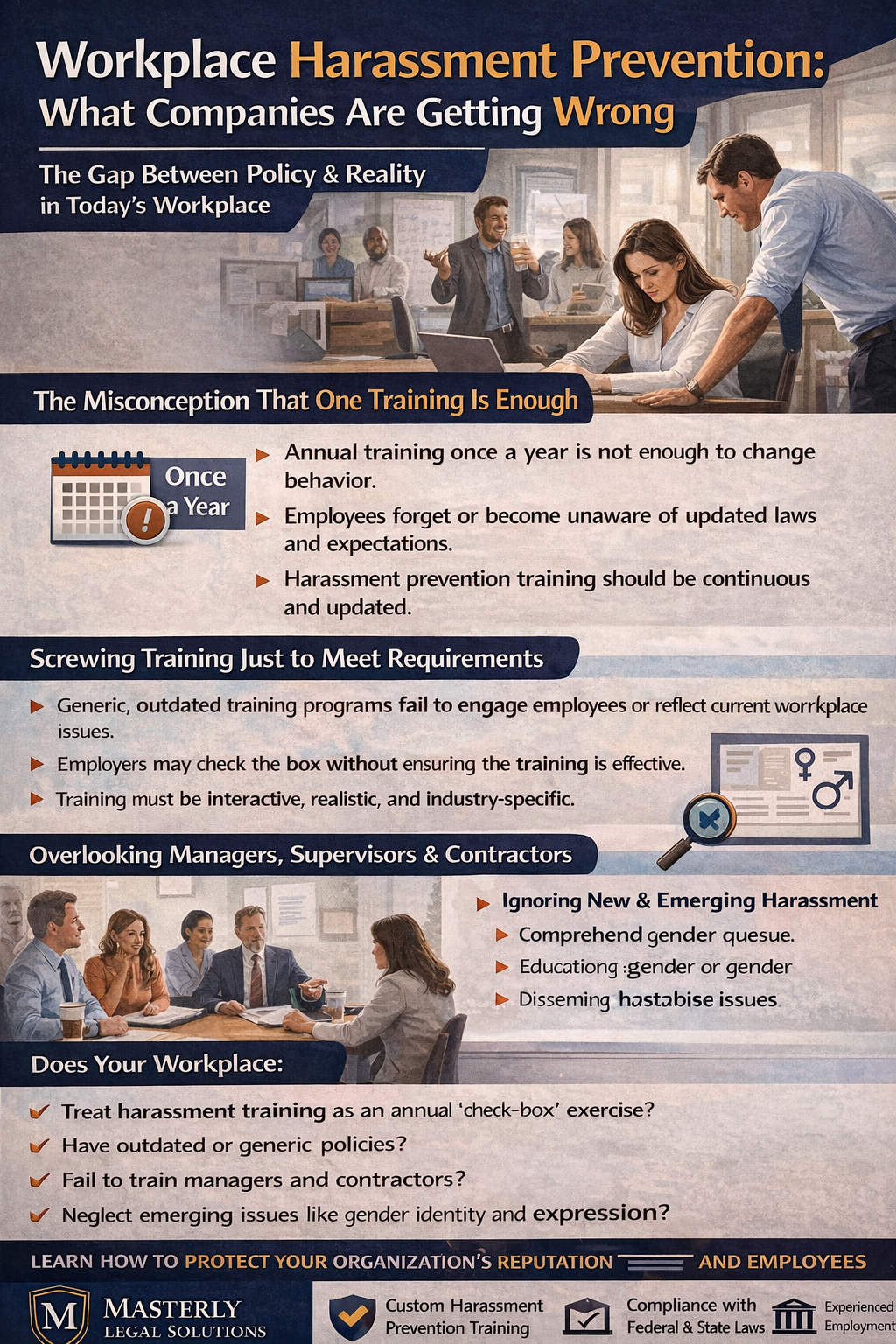
Workplace Harassment Prevention: What Companies Are Getting Wrong
The Gap Between Policy and Reality in Today’s Workplace
Most companies believe they are doing enough to prevent workplace harassment. They have a handbook, a few policies, and maybe a basic sexual harassment prevention training session once a year. On paper, it looks compliant. In reality, many organizations are missing critical pieces that leave them exposed to serious risk.
The truth is that workplace harassment prevention is not just about checking a box. It requires consistent effort, proper education, and a deep understanding of what actually constitutes sexual harassment. When businesses fail to approach harassment prevention training with urgency and strategy, they often discover their mistakes only after a complaint or legal issue arises.
The Misconception That One Training Is Enough
Many employers assume that providing sexual harassment training once is sufficient. This is one of the most common mistakes companies make. Harassment training requirements in many states, including California law, require ongoing education, not a one-time event.
Why Ongoing Training Matters
Sexual harassment prevention training should be continuous because workplace dynamics change. New employees join, laws evolve, and workplace culture shifts over time. Without regular updates, employees may not fully understand what constitutes unlawful sexual harassment or how to respond when issues arise.
Annual training helps reinforce expectations and ensures that employees remain aware of their responsibilities. Companies that fail to provide harassment prevention training consistently may fall out of compliance with federal and state law.
Ignoring the Importance of Tailored Training Programs
A generic training program is rarely effective. Many organizations rely on outdated training materials that do not reflect their actual workplace environment.
The Risk of One-Size-Fits-All Training
- Training that lacks practical examples fails to engage employees
- Generic content does not address industry-specific risks
- Employees may not recognize inappropriate conduct in real situations
An effective sexual harassment training program should include real-world scenarios, especially for industries like the restaurant or bar industry where interactions are more frequent and complex.
Failing to Train Managers and Supervisors Properly
Supervisory and managerial employees carry greater responsibility when it comes to harassment prevention. Yet many companies fail to provide specialized manager accountability training in sexual harassment prevention for this group.
Managers must understand how to respond to sexual harassment complaints, how to document incidents, and how to prevent retaliation. Without proper workplace harassment training, even well-intentioned managers can mishandle situations, increasing liability for the employer.
Overlooking Non Supervisory Employees and Contractors
Another major oversight is failing to include nonsupervisory employees, independent contractors, and seasonal and temporary employees in harassment prevention training.
Who Should Be Included in Training
- New employees entering the workplace
- Seasonal and temporary employees
- Independent contractors working closely with staff
- Employees hired into entry-level roles
Workplace harassment does not discriminate based on job title. Everyone in the organization must be educated to prevent harassment effectively.
Not Understanding What Constitutes Sexual Harassment
One of the most dangerous gaps in workplace harassment prevention is a lack of clarity around what constitutes sexual harassment. Many employees believe harassment must be extreme to be reported.
In reality, unlawful sexual harassment can include subtle behaviors such as inappropriate comments, repeated unwanted attention, or actions related to gender identity or sexual orientation. Training must clearly define what constitutes unlawful sexual harassment to prevent confusion.
Weak Sexual Harassment Prevention Policies
A poorly written sexual harassment policy can create more problems than it solves. Some companies rely on vague language that does not align with federal law or state statutory provisions.
A strong sexual harassment prevention policy should clearly outline reporting procedures, consequences, and protections against retaliation. It should also reflect the company’s commitment to human rights and maintaining a respectful workplace.
Lack of Emphasis on Workplace Culture
Workplace harassment prevention training should go beyond rules and regulations. It should address workplace culture and encourage respectful behavior.
When companies fail to prioritize culture, harassment in the workplace can become normalized. Employees may hesitate to report issues, leading to unresolved problems that escalate over time.
Failure to Meet Sexual Harassment Training Requirements
Many employers underestimate the complexity of harassment training requirements. Different states have different rules, and failing to comply with legal sexual harassment training requirements for employers can result in penalties.
Examples of Training Requirements
- California employers must provide sexual harassment training to employees with five or more employees
- New York State requires annual training for all employees
- Illinois Department regulations include specific requirements for certain industries
Understanding these requirements is essential for compliance with federal and state regulations.
Inadequate Training for New Employees
New employees are particularly vulnerable if they are not properly trained. Many companies delay training until later, leaving employees unprepared.
Providing sexual harassment training early ensures that new employees understand expectations from day one. This reduces the risk of inappropriate conduct and strengthens workplace harassment prevention efforts, especially when organizations commit to the benefits of regular sexual harassment training.
Ignoring Emerging Issues Like Gender Identity and Expression
Modern workplace harassment prevention must address issues related to gender identity and gender expression. These topics are increasingly recognized under federal and state law.
Failure to include these areas in training can lead to unlawful discrimination and potential legal claims. Companies must ensure their harassment prevention training is inclusive and up to date.
Overlooking Bystander Intervention Training
Bystander intervention training is an often-overlooked component of harassment prevention. Teaching employees how to respond when they witness inappropriate conduct can make a significant difference.
Employees who feel empowered to act can help prevent harassment before it escalates. This approach strengthens the overall effectiveness of workplace harassment training.
Not Providing Additional Training for High-Risk Roles
Certain roles require additional training due to increased interaction or authority. Supervisory employees and those in customer-facing roles often face higher risks.
Providing additional training ensures these employees are better equipped to handle challenging situations. This is especially important in industries with frequent public interaction.
Failure to Address Abusive Conduct
Harassment prevention training should also include abusive conduct prevention training. This includes behaviors that may not qualify as sexual harassment but still create a hostile work environment.
Ignoring abusive conduct can lead to broader issues within the organization. Addressing these behaviors early helps maintain a respectful workplace.
Poor Documentation and Training Records
Maintaining accurate records of training is essential for compliance. Many companies fail to document participation, making it difficult to prove compliance during an investigation.
Proper documentation demonstrates that the employer has taken steps to prevent harassment. This can be critical if a claim arises.
Lack of Online Training Options
In today’s work environment, online training is an important tool. Many organizations fail to offer flexible options for employees who work remotely or have varying schedules.
Providing online training ensures that all employees can complete harassment training requirements. It also makes it easier to deliver consistent training materials across the organization.
Misunderstanding Employer Responsibilities
Employer responsibilities go beyond providing training. Employers must actively monitor the workplace, respond to complaints, and enforce policies, often with the support of outsourced general counsel legal services.
Failing to meet these responsibilities can result in legal consequences. Employers must take a proactive approach to harassment prevention.
The Role of Federal Law and the Civil Rights Act
Federal law, including the Civil Rights Act, plays a significant role in workplace harassment prevention. These laws prohibit unlawful harassment and discrimination in the workplace.
Understanding these legal frameworks helps employers develop effective compliance training programs. It also ensures alignment with human rights standards, which is especially critical for institutions that rely on higher education legal counsel for Title IX and compliance.
The Risk of Ignoring Complaints
Ignoring sexual harassment complaints is one of the most serious mistakes a company can make. Every complaint should be taken seriously and investigated promptly.
Failure to act can lead to legal recourse for employees and increased liability for the employer. Addressing complaints quickly helps prevent escalation.
The Financial and Reputational Cost of Getting It Wrong
The cost of failing to prevent harassment extends beyond legal penalties. It can impact employee morale, productivity, and the company’s reputation.
Companies that invest in effective sexual harassment prevention training are better positioned to avoid these risks.
How Masterly Legal Solutions Helps Businesses Get It Right
At Masterly Legal Solutions, we understand that every business is different. Our Texas-based comprehensive law firm has worked with Fortune 100 companies, startups, nonprofits, government agencies, and individuals.
We provide customized sexual harassment prevention training and HR consulting services and training that align with your organization’s needs and ensure compliance with federal and state law.
Building a Stronger, Safer Workplace Through Training
Effective harassment prevention training is not just about compliance—it is about creating a safe and respectful environment. Educating employees and providing the right tools can transform workplace culture.
By investing in comprehensive training programs and partnering with a client-focused Texas law firm for ongoing legal support, companies can prevent harassment and protect their employees.
Understanding Sexual Harassment Training Requirements Under State and Federal Law
Businesses with three or more employees must take proactive steps to prevent sexual harassment by implementing structured employee training programs that comply with both state and federal law. Many jurisdictions, including California, require California sexual harassment training to be conducted regularly, with some mandates calling for sexual harassment training annually to ensure a workplace culture that is sexual harassment consistent in its policies and enforcement. These requirements are often guided by agencies such as the Equal Employment Opportunity Commission, as well as regional authorities like the New York State Division and the York State Division, which enforce standards related to employment law, legal prohibition, and workplace safety. Effective anti harassment training and such training programs not only address inappropriate conduct, including sexual assault, but also educate employees on reporting procedures and employer responsibilities, helping organizations maintain compliance while fostering a respectful work environment.
Take Action Before a Workplace Issue Becomes a Legal Problem
If your organization has not reviewed its harassment training program recently, now is the time to act. Waiting until a complaint arises can lead to serious consequences.
At Masterly Legal Solutions, we offer tailored sexual harassment prevention training and broader business consulting services for growth and risk management designed to meet your specific needs. Our team provides guidance, compliance training, and ongoing support to help you stay ahead of potential issues.
Contact us at (972) 236-5051 for a free consultation. Let us help you protect your business, your employees, and your future.
Disclaimer: This article is for informational purposes only and does not constitute legal advice. Every situation is different, and you should consult with a qualified attorney regarding your specific circumstances.


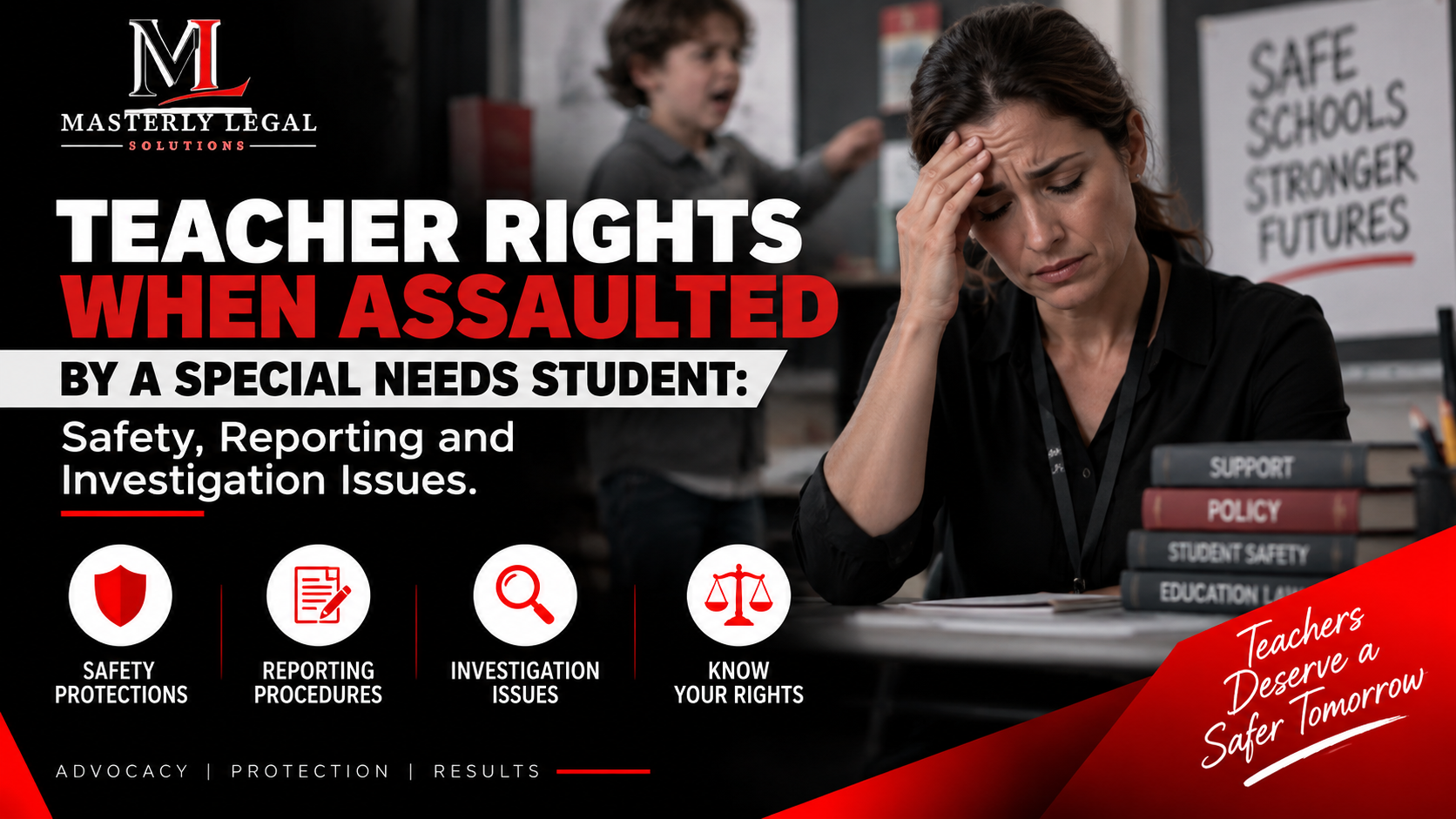
Teacher Rights When Assaulted by a Special Needs Student: Safety, Reporting and Investigation Issues

Looking for Legal & Business Solutions? Contact Us Now
Fill in the form or call us to set up a meeting