
Your Teaching Certificate Is at Risk: How TEA Investigations Can Impact Your Career
Every educator works hard to earn and maintain a teaching certificate. It represents years of education, testing, background checks, and professional dedication. When a Texas Education Agency investigation begins, that certificate—and your entire livelihood—can suddenly feel uncertain.
For many teachers, the real fear is not just losing one position, but losing the ability to work anywhere in the profession. A TEA case can affect future employment decisions, income, reputation, and even your personal life. Understanding what is at stake is the first step in protecting your career.
At Masterly Legal Solutions, we represent educators whose certificates are under scrutiny. We know how quickly allegations can escalate and how severe certification consequences can become.
The Real Meaning of a TEA Investigation
A TEA investigation is not a routine workplace disagreement. It is a formal process that can lead to sanctions, suspension, or revocation of your teaching certificate. Resources like TEA investigations common causes and teacher protections can help you better understand how these cases develop. Once the process begins, the outcome can follow you long after a single school year ends.
Unlike internal school discipline, TEA cases affect your state certification. That means your ability to work as a teacher anywhere in Texas may be at risk. Even if you later seek employment in another state, a revoked certificate can create long-term barriers.
Many educators are placed on administrative leave while the investigation unfolds. This period is stressful, uncertain, and often isolating.
Your Teaching Certificate Is Your Livelihood
Your certificate is more than a document. It is your professional identity and the foundation of your income. When it is threatened, your financial stability and career path are placed in jeopardy. Many teachers turn to Texas TEA investigations and teacher certification help to better understand their options.
A suspension or revocation can prevent you from working in any public school district. Private schools may also hesitate to hire someone with an active or past TEA sanction. The damage extends far beyond one employer, especially when you consider the many reasons educators can lose a TEA educator certificate.
Losing a certificate can also impact retirement plans, benefits, and future earnings. In many cases, teachers feel the consequences for years.
Administrative Leave and Immediate Consequences
When an allegation surfaces, districts often respond by placing the employee on administrative leave. While this may be paid, it signals that serious concerns are being evaluated. Immediate steps after a TEA investigation notice can be critical during this time. Colleagues may speculate, and rumors can spread quickly.
Administrative leave does not mean guilt, but it can feel like punishment. You may lose access to school systems, communication tools, and daily classroom interaction. The emotional toll can be significant.
If the employer denies access to records or information, it can make preparation more difficult. Early legal help can be critical during this stage.
How Allegations Begin
Investigations may begin with a parent complaint, student report, or internal audit. In some cases, co workers report concerns about classroom management or professional conduct. Other cases involve allegations of workplace discrimination, inappropriate communication, or policy violations. For many educators, learning about the common causes of TEA investigations is an important part of prevention and preparation.
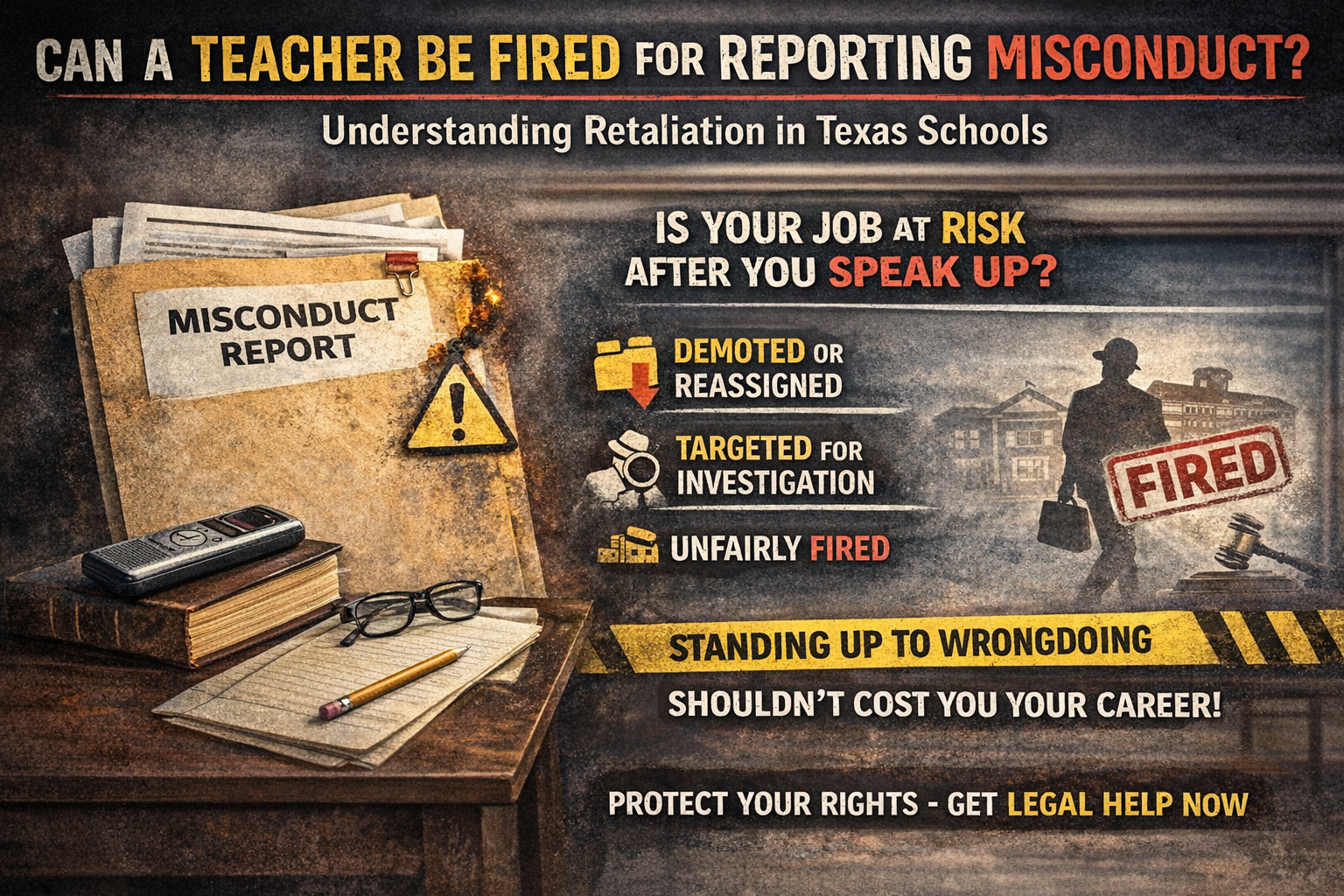
Sometimes, a teacher is accused after engaging in protected activity, such as reporting unsafe working conditions or wage theft. In these situations, retaliation may be a concern. Retaliation occurs when an employer punishes an employee for exercising legal rights.
Understanding whether the case involves genuine misconduct or potential workplace retaliation is essential.
When Retaliation Becomes Part of the Story
Retaliation is a serious issue in education settings. An employee may face retaliation after reporting wrongdoing, raising safety concerns, or filing a complaint. Whistleblower retaliation is especially troubling when a teacher tries to protect students or uphold ethical standards.
If you reported wrongdoing or opposed workplace discrimination and suddenly find yourself under investigation, it is important to consider whether retaliation is involved. Federal and state laws prohibit retaliation against individuals who engage in protected activity.
Title VII of the Civil Rights Act and other federal law provisions are designed to protect employees. These laws protect employees from retaliation related to complaints about sex discrimination, gender discrimination, or national origin discrimination.
Protected Activity and Your Rights
Protected activity includes actions such as filing a formal complaint, reporting discrimination, or participating in an investigation. It also covers reporting unsafe working conditions or potential violations of occupational safety standards.
If retaliation occurs after a protected activity, you may have additional legal options. Retaliation can include negative performance reviews, reassignment to a less desirable position, or even wrongful termination.
Teachers who face retaliation often feel blindsided. They may have believed they were acting in the best interest of students or the school community.
Workplace Discrimination in Education
Workplace discrimination can take many forms. It may involve sex discrimination, gender discrimination, age discrimination, or bias based on national origin or sexual orientation. Direct discrimination occurs when an employer makes adverse employment decisions based on these protected characteristics.
Federal law, including Title VII and the Disabilities Act, prohibits workplace discrimination. State and local laws may also provide additional legal protections. When workplace discrimination is tied to a TEA investigation, the consequences can multiply.
Employment discrimination cases in education can be complex. They often require careful documentation and a detailed record of events.
Hostile Work Environment and TEA Investigations
A hostile work environment can develop when discrimination or retaliation becomes severe or pervasive. If an employee reports harassment and then faces a TEA referral, the timing may raise concerns.
Retaliation complaints are taken seriously under federal and state laws. If an employer denies fair treatment after a protected activity, that may support a claim.
Teachers should never assume that raising concerns about workplace discrimination will be ignored. Laws protect employees who speak up.
Whistleblower Laws and Educators
Whistleblower laws are designed to protect individual employees who report wrongdoing. In schools, this may involve financial misconduct, safety violations, or unethical practices
.
Whistleblower retaliation can occur when an employer punishes a teacher for reported wrongdoing. This may involve adverse actions such as reassignment, suspension, or negative performance reviews.
If you suspect retaliation after reporting issues, immediate legal help is important. Waiting too long can weaken your position.
Federal and State Laws That Apply to Teachers
Federal and state laws work together to protect employees. Title VII, the Civil Rights Act, and other employment act provisions address workplace discrimination and retaliation. The Disabilities Act requires employers to provide reasonable accommodations unless doing so creates undue hardship.
The Medical Leave Act protects eligible employees who need job protected leave for serious health conditions or family responsibilities. If an employer denies rights under the medical leave act, additional claims may arise.
State and local laws may also offer protections beyond federal law. Understanding how these laws intersect with TEA procedures is critical.
The Role of the Equal Employment Opportunity Commission
The Equal Employment Opportunity Commission enforces federal laws related to workplace discrimination. In some cases, filing a complaint with the commission is necessary before pursuing legal action.
Filing a complaint does not automatically resolve a TEA case. However, it may address retaliation, sex discrimination, or national origin discrimination tied to employment decisions.
An experienced employment lawyer can evaluate whether filing a complaint is appropriate.
Wrongful Termination and Certification Risk
Wrongful termination occurs when an employee is unfairly fired in violation of federal or state laws. A teacher who is wrongfully terminated may also face a TEA investigation, especially if the district reports alleged misconduct.
Being wrongfully terminated can damage your professional reputation. If the termination is tied to protected activity, workplace discrimination, or whistleblower retaliation, legal action may be warranted.
Economic damages and emotional distress damages may be available in certain cases. Punitive damages may also apply if the conduct was especially severe.
Negative Performance Reviews and Career Impact
Negative performance reviews can become part of the record reviewed by TEA. Sometimes, these reviews appear after an employee reports unsafe working conditions or discrimination.
If retaliation occurs, documentation becomes essential. Keeping a detailed record of job assignments, communications, and evaluations can strengthen your defense.
Future discrimination may also become a concern if inaccurate records follow you to new districts.
Federal Employees and Public School Teachers
While most teachers are not federal employees, federal law still applies. Federal employees in education settings are protected under many of the same anti-discrimination statutes.
Title VII applies broadly to public school districts. The civil rights act provides significant legal protections for employees facing workplace discrimination or retaliation.
Understanding these protections is part of building a strong response.
When Retaliation Affects Your Personal Life
A TEA investigation does not stay confined to the classroom. It can affect your personal life, finances, and mental health. Stress from uncertainty can impact family member relationships and family responsibilities.
If an employer punishes a teacher in ways that cause emotional distress damages, the consequences may extend beyond lost wages. Emotional strain and reputational harm can be profound.
Teachers deserve fair treatment and due process.
Immigration Status and Employment Concerns
In rare cases, immigration status issues may intersect with employment practices. Federal and state laws prohibit discrimination based on national origin.
An employer cannot make adverse employment decisions solely because of immigration status if work authorization is valid. Direct discrimination based on these factors may violate title vii.
Legal protections exist, but they must be asserted.
Reasonable Accommodations and Disability Claims
The Disabilities Act requires employers to provide reasonable accommodations to qualified employees with disabilities. Failure to provide reasonable accommodations may lead to claims of workplace discrimination.
If a district claims that accommodations create undue hardship, that claim must be evaluated carefully. Sometimes, what is labeled hardship is not legally justified.
Certification consequences should not stem from unaddressed accommodation needs.
Unsafe Working Conditions and Reporting
Teachers sometimes report unsafe working conditions involving facilities, student behavior, or occupational safety concerns. Reporting such issues is often a protected activity.
If retaliation follows reported wrongdoing, whistleblower retaliation may be involved. Retaliation can include less favorable job assignments or reassignment to a less desirable position.
Prohibit retaliation provisions in federal and state laws are meant to prevent this pattern.
Wage Theft and Overtime Pay Issues
Although less common in education, wage theft and unpaid overtime pay can occur. Reporting wage violations may also be a protected activity.
If retaliation follows these reports, the employee may have additional claims. Retaliation should never be tolerated.
Legal help can clarify available remedies.
Building a Strong Defense Early
The earlier you involve an employment lawyer, the better positioned you are to protect your certificate. Labor and education law attorneys providing expert legal guidance for teachers understand how workplace discrimination and retaliation intersect with TEA investigations, and firms offering broader education law and teacher license defense legal services can help you navigate complex, overlapping issues.
Document everything. Maintain a detailed record of communications, job assignments, and any adverse actions. Preserve emails, evaluations, and witness statements.
A strategic response can prevent long-term damage. Working with experienced counsel focused on helping Texas educators survive a TEA investigation and protect their license can make a significant difference in the outcome.
Legal Action and Your Options
In some cases, legal action is necessary. This may involve filing a complaint, responding to TEA allegations, or pursuing employment discrimination cases.
Economic damages, emotional distress damages, and punitive damages may be available depending on the facts. Each case requires careful analysis.
Not every case goes to court, but every case deserves serious attention.
Long-Term Damage Beyond One Job
A revoked certificate can prevent you from returning to the classroom anywhere in Texas. It may also limit opportunities in administration or higher education.
Future employers often review past investigations. Even if you are not wrongfully terminated, a public sanction can affect hiring decisions.
The long-term impact is why early intervention matters.
Protecting Employee Morale and Professional Identity
Investigations can harm employee morale, especially when rumors circulate. Teachers may feel isolated from co workers and administrators.
Your professional identity deserves protection. Certification consequences should not define your entire career without a fair and thorough defense.
Support and guidance can make a difference.
Facing Retaliation Head-On
If you face retaliation after filing a complaint or reporting wrongdoing, do not ignore it. Retaliation can escalate quickly and affect your livelihood.
Whether it involves workplace discrimination, whistleblower retaliation, or wrongful termination, understanding your rights is essential.
An experienced employment lawyer can help you evaluate your legal options and protect your future.
How Masterly Legal Solutions Can Help
At Masterly Legal Solutions, we focus on protecting educators. We understand that a TEA investigation is not just about policy—it is about your career, income, and reputation.
We analyze whether retaliation, workplace discrimination, or violations of federal and state laws are part of your case. We build a defense designed to safeguard your teaching certificate, drawing on our experience defending educators in Texas during TEA investigations and disciplinary actions.
Your livelihood deserves serious advocacy.
The Role of the Human Resources Department During a TEA Investigation
When a complaint is made against a teacher, the human resources department is often one of the first areas involved. HR may gather statements, review records, and coordinate communication between the district and the Texas Education Agency. While the human resources department is expected to follow district policies and federal and state laws, it is important to remember that HR represents the employer, not the individual teacher. Educators should be cautious about informal conversations and understand that statements provided to HR can later become part of the official record reviewed in a TEA investigation.
Allegations Involving Physical Harm and Their Serious Consequences
Claims involving physical harm are treated with immediate urgency and can trigger both district discipline and a TEA referral. Even when a teacher believes their actions were appropriate classroom management or self-defense, allegations of physical harm can place a certificate at serious risk. These cases often move quickly and may involve student statements, witness accounts, and administrative review. Because the consequences can include suspension or revocation of a teaching certificate, it is critical to respond carefully and strategically from the beginning.
When an Investigation Becomes Employee Based Rather Than Student Focused
Some TEA cases begin as student complaints but shift into broader employee based investigations. In these situations, the focus expands to examine a teacher’s overall conduct, communication history, and employment record. An employee based review may include past evaluations, disciplinary notes, or internal complaints, even if they were previously resolved. When the scope widens in this way, the risk to a teacher’s license increases, making early legal guidance essential to protect both professional reputation and long-term career stability.
Contact Us for a Confidential Consultation
If you are on administrative leave or facing a TEA investigation, now is the time to act. Waiting can make the situation more difficult to manage and may limit your legal options.
We invite you to contact Masterly Legal Solutions at (972) 236-5051 for a free consultation. We will listen carefully, review your circumstances, and help you understand the potential certification consequences.
Your teaching certificate represents years of dedication. Let us help you protect your future, answer your questions about administrative leave, and guide you through the next steps with clarity and confidence.
Disclaimer: This article is for informational purposes only and does not constitute legal guidance. Every situation is different. Reading this article does not create an attorney-client relationship. For advice specific to your circumstances, please contact our office directly.



Teacher Rights When Assaulted by a Special Needs Student: Safety, Reporting and Investigation Issues



Looking for Legal & Business Solutions? Contact Us Now
Fill in the form or call us to set up a meeting