

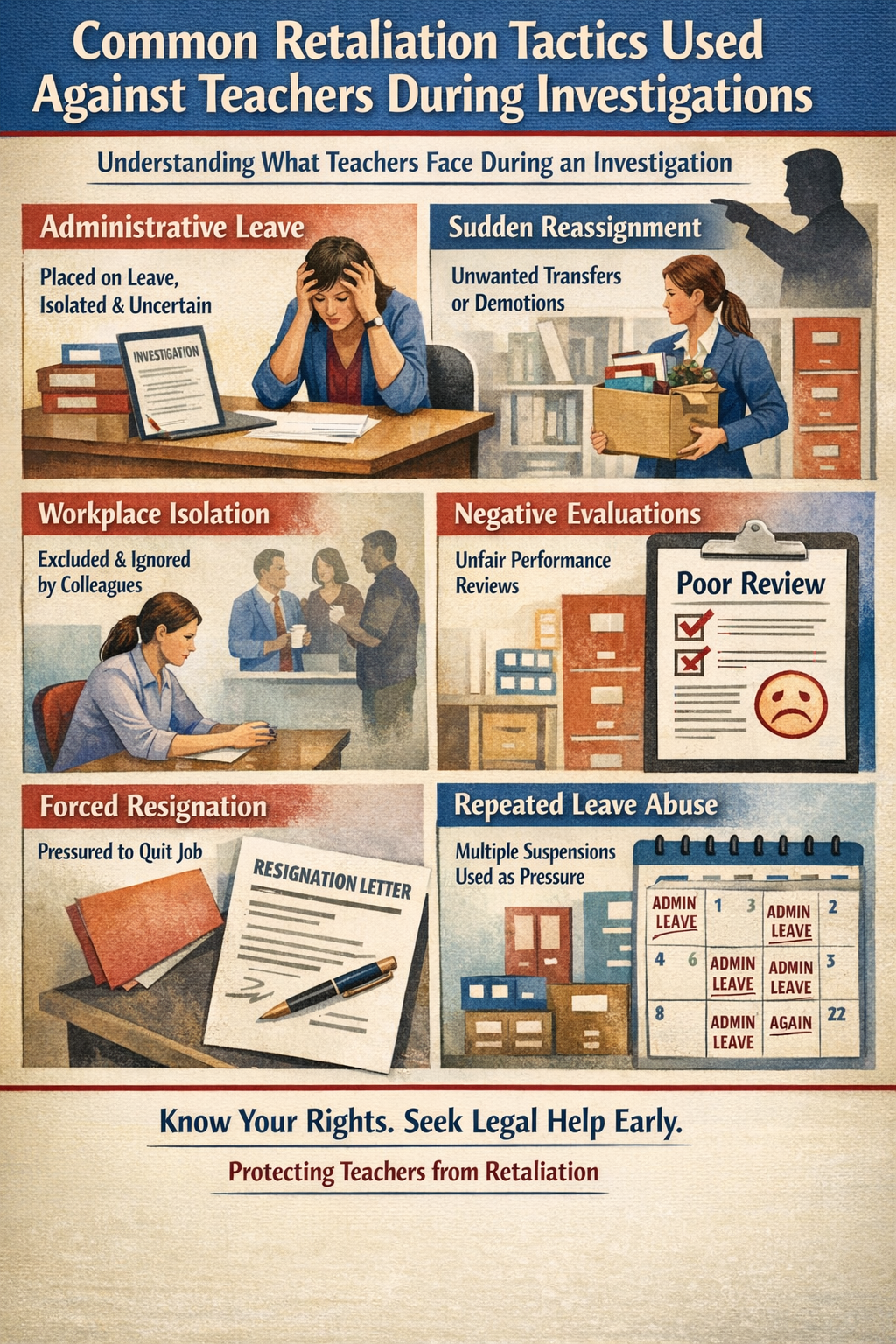
Common Retaliation Tactics Used Against Teachers During Investigations
Understanding What Teachers Face During an Investigation
Teachers often enter the profession to educate, guide, and support students, not to navigate complex legal challenges. However, when an investigation begins, the workplace can quickly shift. What once felt like a supportive environment may turn into a stressful and uncertain situation. Many individual employees find themselves confused about their rights, especially when retaliation begins to surface.
An investigation in a school setting may involve allegations of misconduct, discrimination, or harassment. While these matters must be taken seriously, the process can sometimes be mishandled by an employer. In some cases, retaliation occurs after a teacher participates in a protected activity such as reporting discrimination or cooperating in an inquiry.
Understanding how retaliation develops is critical. It allows teachers and other workers to identify warning signs early and seek legal assistance before the situation escalates.
What Is Retaliation in the Workplace?
An adverse action taken against an employee for participating in a protected activity is referred to as retaliation. This may include reporting discrimination, filing a complaint, or assisting in an investigation. Under federal law and many state laws, retaliation is strictly prohibited.
The civil rights act, including Title VII, protects employees from retaliation related to discrimination based on race, national origin, disability, or other protected characteristics. In addition, whistleblower laws and the disabilities act provide further legal protections.
Retaliation can take many forms. It is not always obvious. Sometimes it appears subtle at first but becomes more severe over time, impacting employee morale and long-term career stability.
Why Teachers Are Especially Vulnerable
Teachers operate in structured environments where administrators hold significant authority. A supervisor or higher level manager often controls schedules, evaluations, and disciplinary action. This dynamic can create an imbalance of power, making it easier for an employer to engage in unfair treatment without immediate accountability.
Additionally, school investigations often involve multiple parties, including human resources, federal agencies, or a state agency. The involvement of these entities can complicate the legal process and make it harder for individual employees to understand their rights.
Teachers may also fear damage to their reputation or future employment opportunities, especially if they are treated differently after reporting concerns, which is why expert legal guidance for teachers during investigations can be so important.
The Role of Administrative Leave During Investigations
Administrative leave is frequently used during school investigations. While it may appear neutral, it can be used in ways that harm the employee.
Administrative leave may be presented as a precaution, but in reality, it can isolate the teacher and limit their ability to defend themselves. Whether it is paid administrative leave or unpaid administrative leave, the impact can be significant.
Teachers placed on administrative leave may feel excluded from the workplace, cut off from colleagues, and uncertain about their future. This uncertainty often contributes to emotional stress and financial concerns related to pay and wages, and Texas teachers facing administrative leave have specific legal steps they can take.
Reassignment as a Form of Retaliation
Sudden Changes in Job Duties
One of the most common retaliation tactics is reassignment. A teacher may be moved to a different classroom, grade level, or even a non-teaching role. This can occur without clear justification.
Reassignment can disrupt work hours, lesson planning, and relationships with students. It may also affect leadership roles or opportunities for advancement.
Impact on Professional Growth
Reassignment can hinder career development. A teacher who was previously thriving may suddenly face new challenges that impact performance reviews.
This tactic can be used to create a negative record that supports further disciplinary action or even wrongful termination, underscoring why every teacher needs a lawyer for legal protection.
Isolation in the Workplace
Being Cut Off From Colleagues
Isolation is another subtle but damaging form of retaliation. Teachers may find themselves excluded from meetings, removed from committees, or denied access to resources.
This isolation can affect collaboration and reduce support from coworkers, making the workplace feel hostile.
Psychological and Emotional Effects
Isolation can lead to anxiety and decreased confidence. Over time, this may affect job performance and overall well-being.
An employer may use isolation to pressure an employee into silence or resignation, especially during an ongoing investigation.
Negative Evaluations and Performance Reviews
Sudden Decline in Evaluations
A teacher with a strong track record may suddenly receive poor performance reviews. These evaluations may not reflect actual job performance.
Negative evaluations can be used to justify disciplinary action or termination.
Documentation as a Tool
Employers may begin documenting minor issues to build a case against the employee. This documentation can later be used in a lawsuit or internal proceedings.
It is important for teachers to keep their own records during this time.
Forced Resignations and Constructive Discharge
Pressure to Resign
Some teachers are pressured to resign instead of going through the full legal process. This may be presented as a “better option,” but it often benefits the employer.
Forced resignations can prevent employees from filing claims or seeking damages.
When Resignation Becomes Wrongful Termination
If a teacher is pushed to resign under unfair conditions, it may be considered wrongful termination. This is especially true if the resignation follows a protected activity such as reporting discrimination.
Employment lawyers and labor and employment lawyers can help determine whether a case qualifies for legal action, including when an employer’s pressure crosses the line into forcing you to resign or quit your job.
Administrative Leave as a Pattern of Retaliation
Repeated Use of Administrative Leave
In some cases, administrative leave is used repeatedly to control the employee. Being placed on administrative leave multiple times can create instability.
Administrative leave can interrupt pay, affect benefits, and limit access to workplace resources.
The Financial Impact
Even when administrative leave is paid, it can create uncertainty. Questions about wages, overtime pay, and long-term employment remain unresolved.
Teachers may also worry about how administrative leave will appear on their record.
Legal Protections for Teachers
Federal and State Laws That Apply
Teachers are protected by various laws, including federal law and state laws. These laws prohibit retaliation and discrimination in the workplace.
Title VII of the civil rights act, the disabilities act, and the medical leave act all provide protections. These laws ensure that employees can report issues without fear of punishment.
Protections for Reporting Discrimination
Reporting discrimination is considered a protected activity. Employees who file a complaint with the equal employment opportunity commission or a state agency are protected under federal law.
This includes situations involving age discrimination, disability, or harassment.
Recognizing Early Warning Signs
Changes in Behavior From Management
A supervisor may begin treating the employee differently after an investigation begins. This could include reduced communication or increased scrutiny.
These changes can signal that retaliation is taking place.
Shifts in Workplace Treatment
Employees may notice changes in how they are assigned work or evaluated. These shifts often occur gradually but can escalate quickly.
Recognizing these signs early allows teachers to take action.
The Importance of Documentation
Keeping Detailed Records
Teachers should document all interactions related to the investigation. This includes emails, meeting notes, and performance reviews.
These records can serve as evidence in a legal process.
Identifying Potential Witnesses
Colleagues who observe unfair treatment can serve as potential witnesses. Their testimony may support a retaliation complaint.
Documentation strengthens the employee’s position in any legal proceeding.
Filing a Complaint and Taking Action
How to File a Complaint
Teachers who experience retaliation can file a complaint with the equal employment opportunity commission or a state agency. Filing is an important step in protecting rights.
The filing process may involve submitting documentation and participating in interviews.
Understanding the Legal Process
The legal process can be complex. It may involve investigations, mediation, or a lawsuit.
Working with employment lawyers or attorneys ensures that the process is handled correctly.
How Lawyers and Attorneys Can Help
Guidance Through Complex Laws
Lawyers and attorneys understand the complexities of labor laws and employment act requirements. They can explain rights and options clearly.
Their experience is valuable when dealing with federal agencies and state laws.
Building a Strong Case
Attorneys gather evidence, identify violations, and represent clients during legal proceedings. They can also seek punitive damages when appropriate.
Having skilled lawyers increases the likelihood of a favorable outcome.
Protecting Your Career and Future
Taking Proactive Steps
Teachers should take steps to protect themselves during an investigation. This includes understanding employment contracts and legal protection options for teachers and seeking legal assistance early.
Proactive action can prevent further harm and protect long-term career prospects.
Avoiding Future Discrimination
Addressing retaliation early helps prevent future discrimination. It also holds employers accountable for their actions.
Employees who take action contribute to a safer workplace for others.
When Retaliation Escalates
From Subtle Actions to Severe Consequences
Retaliation often begins with small actions but can escalate into serious consequences. This may include termination or legal disputes.
Recognizing escalation is key to responding effectively.
The Risk of Physical and Emotional Harm
In extreme cases, retaliation can lead to physical harm or severe emotional distress. This underscores the importance of taking action early.
Workplace safety and occupational safety standards must be upheld.
Protecting Employee Rights Under the Law
Understanding Protected Activities
Protected activity includes reporting discrimination, requesting reasonable accommodations, or taking fmla leave.
These actions are safeguarded under federal law and cannot be used against the employee.
Ensuring Fair Treatment
Employers must treat employees fairly during investigations. Any adverse action taken in response to a protected activity may constitute retaliation.
Seeking Legal Assistance Early
Why Timing Matters
Seeking legal assistance early can prevent escalation. Education lawyers who provide expert legal support for teachers and schools can intervene before the situation worsens.
Early action also preserves evidence and strengthens claims.
Choosing the Right Legal Team
Experienced employment lawyers and education law attorneys offering experienced legal services understand how to navigate these cases. They provide strategic guidance and representation.
Their role is to protect the rights of individual employees.
How Work Retaliation Laws Protect Teachers During Investigations
Work retaliation laws and the attorneys who enforce them are designed to protect employees who speak up about discrimination, harassment, or other violations in the workplace. These laws apply to eligible employees, including both public school staff and federal employees, ensuring they are not punished for engaging in protected activity. For example, a teacher who reports misconduct or participates in an investigation should not face disciplinary action, reassignment, or termination as a result. In many cases, these protections also extend to situations involving genetic information, requests for accommodations, or concerns related to a family member’s medical condition. Teachers may also be entitled to job protected leave or paid time under certain federal statutes, allowing them to address personal or family matters without risking their position. If a teacher is unfairly fired after raising concerns, it may be a violation of these protections, and seeking legal guidance is critical. For additional information, speaking with experienced employment lawyers or attorneys can help clarify rights and next steps based on the specific circumstances.
Contact Masterly Legal Solutions for Guidance
Facing retaliation during an investigation can feel overwhelming, especially when your career and reputation are at stake. If you believe your employer has taken unfair action against you, it is important to speak with professionals who understand these challenges.
At Masterly Legal Solutions, our Texas law firm focused on supporting educators, our education law attorneys for teachers and administrators work closely with teachers and other workers to evaluate their situation, explain their rights, and guide them through every step of the legal process. Whether you are dealing with administrative leave, negative evaluations, or pressure to resign, we are here to help you protect your future.
Contact us at (972) 236-5051 for a free consultation. We will take the time to listen to your concerns, review your case, and provide clear next steps so you can move forward with confidence.
Disclaimer: This article is for informational purposes only and does not constitute legal advice. Reading this content does not create an attorney-client relationship. For advice regarding your specific situation, please contact a qualified attorney directly.








Looking for Legal & Business Solutions? Contact Us Now
Fill in the form or call us to set up a meeting