

Early CPS Contact in San Antonio and the Mistakes That Lead to Escalation
When you get that first knock, call, or message from cps, it rarely feels like the start of something big. Most parents in San Antonio tell themselves it’s probably a misunderstanding, a routine check, or a quick conversation that will fade away. Then the questions come fast, emotions run high, and everyday family life starts to feel like it’s being measured by a stranger with a clipboard. That is the moment when small choices—what you say, what you sign, and what you allow—can quietly steer a cps investigation toward escalation.
Early contact with child protective services often happens before you know the full story behind the allegations. You may be responding while stressed, tired, or trying to protect your child from hearing adult conversations. In that emotional space, families can make mistakes that give protective services more leverage than they needed. At Masterly Legal Solutions, we help clients slow the situation down, protect parental rights, and avoid missteps that turn manageable cps cases into long-lasting legal battles.
This article explains the most common early mistakes and how to reduce risk when cps contacts your home in cps san antonio texas. We will also break down what the cps investigation process typically looks like, what triggers court intervention, and when a court order becomes part of the picture. If you are facing cps, the sooner you understand the process, the better your odds of protecting your family and your future.
Why Early CPS Contact Feels “Informal” but Isn’t
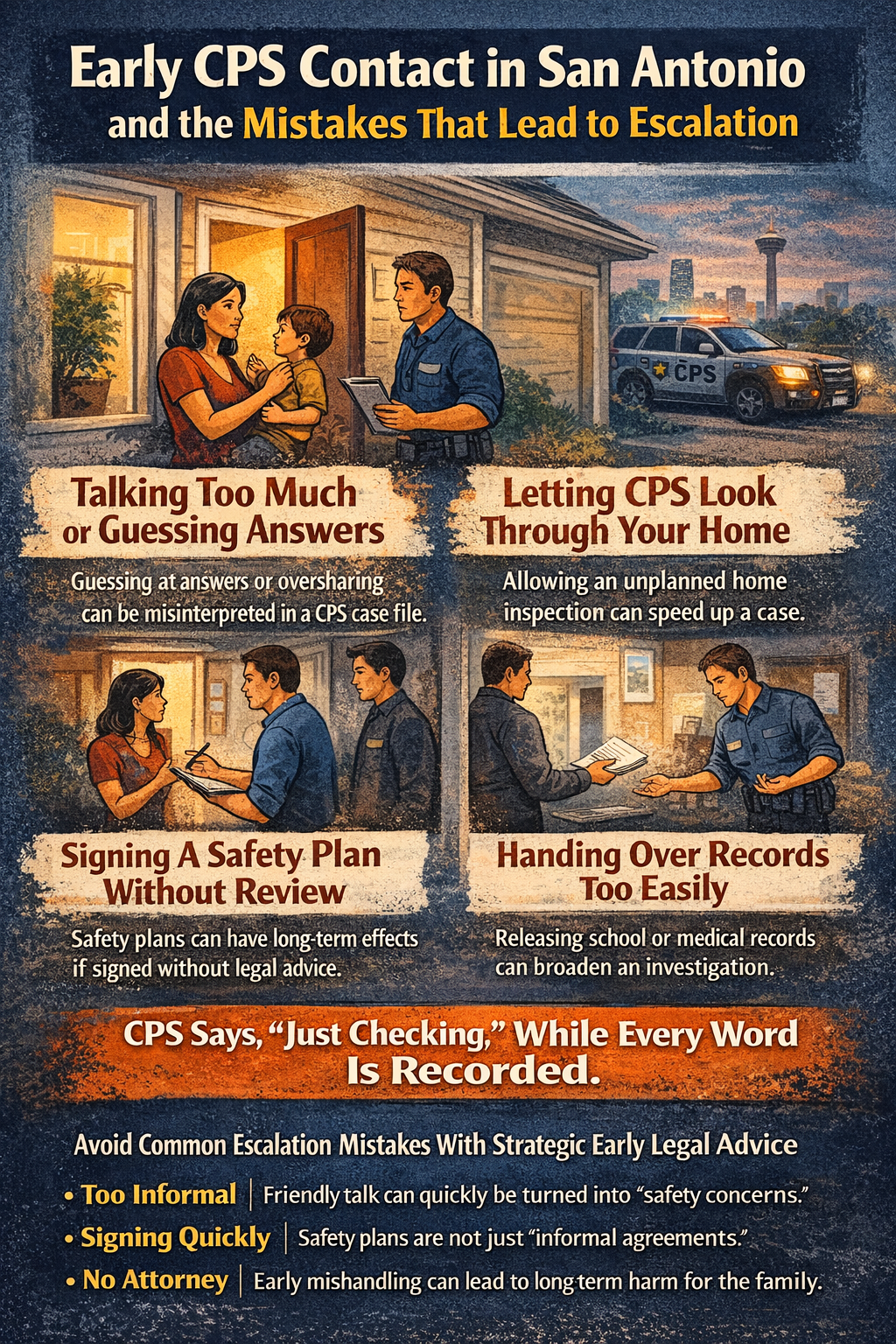
In the earliest stage, cps may speak as if the matter is informal and cooperative. The words may sound friendly—“just checking,” “just verifying,” “just making sure the child is safe.” But child protective services is still a government agency, and early contact is still part of an official investigation. What is said and recorded can influence decisions about safety plans, restrictions, and whether the court gets involved.
Many parents assume they can “talk their way” out of the problem in the first conversation. In reality, the first conversation often becomes the first written narrative in the file, and that narrative can drive further action. If that early narrative includes confusion, defensiveness, or missing context, cps may treat it as a warning sign. That’s how escalation starts before you ever see a courtroom.
What CPS Is Looking For in the First Contact
During early contact, cps workers are typically focused on three things: the claimed child abuse or neglect, immediate child safety, and whether they believe there are ongoing safety concerns. They may ask questions that feel broad or personal because they are trying to determine risk quickly. Even when you believe the allegations are false, cps still treats the report seriously.
This is also when cps decides how aggressive the case might become. If they believe there is immediate danger, they may push hard for quick steps, including temporary separation or emergency supervision. If they believe the risk is lower, they may lean toward interviews, documentation, and monitoring. Your responses, tone, and organization in this first stage matter more than most people realize.
The Fastest Mistake: Treating CPS Like a Normal Conversation
A common escalation trigger is when a parent speaks casually, guesses answers, or tries to fill silence with explanations. In a stressful moment, people often talk more than they should, and cps notes can capture statements in a way that sounds different than intended. A parent might say, “I only left my child alone for a minute,” and a note later reads “left child unsupervised.” That one phrasing can shift a case into a neglect case mindset.
Another risk is using emotional language that sounds threatening or unstable. Even if your anger is understandable, cps may interpret certain statements as safety risk. The goal is not to “win” the conversation; the goal is to protect your family while the facts are verified. This is where early legal counsel can prevent a manageable situation from turning into one of the most stressful experiences in your life.
The Mistake of Assuming “Cooperation” Means Agreeing to Everything
Being cooperative does not mean surrendering your boundaries. Many parents believe if they agree to every request, cps will close the case sooner. Sometimes that happens, but sometimes it does the opposite—because blanket agreement can lead to more requests, more interviews, and more paperwork. When cps sees a parent will comply with anything, the process can expand.
Cooperation should be calm, respectful, and structured. It should focus on ensuring the child is safe while protecting parental rights. You can cooperate without volunteering unnecessary details, signing documents without review, or accepting restrictions that are not needed. A cps defense attorney can help you cooperate strategically instead of emotionally.
The Entry Question: When CPS Enter Requests Create Escalation
One early flashpoint is whether cps enter your home. A worker may ask to come inside to “check conditions” or “verify safety.” Many families panic because they fear that saying no will automatically lead to removal. The truth is more nuanced, and the right approach depends on your situation, the claimed risk, and whether cps has legal authority at that moment.
Some parents choose to refuse entry because they want legal guidance first. Others allow entry but do not prepare, resulting in misinterpretation of clutter, repairs, or normal life mess. If you plan to allow entry, treat it like a formal inspection because the notes can influence whether cps pushes toward a court order later. If you are uncertain, speak with an attorney quickly to reduce risk.
Refuse Entry Without Turning It Into a Confrontation
If you decide to refuse entry, do it calmly and respectfully. A loud argument, slammed door, or hostile tone can become a “risk factor” in the record. The safer approach is to say you want to schedule a time, clarify the allegations, and get advice from a cps lawyer before allowing access.
There are situations where cps may claim urgency due to immediate danger. If they believe a child is in immediate risk, they may pursue emergency steps, including seeking a court order. That is why the decision should be made carefully, not impulsively. A quick call to an experienced cps lawyer can help you choose a path that protects your home and your rights.
The Paper Trap: Signing a Safety Plan Too Quickly
Safety plans often show up early in child protective services work. They are sometimes presented as “voluntary,” but they can change your daily life like a custody order. A safety plan might require the child to stay with a relative, require a parent to leave the home, or limit who can be around the child. Once signed, it can become the new baseline for the entire cps investigation.
The mistake is signing without understanding the consequences. A plan that was supposed to be “temporary” can last weeks or months. It can also create a record that later supports court intervention or an argument to terminate parental rights in severe cases. Before signing anything, it is smart to consult a cps defense attorney who understands how these documents can shape outcomes.
How Safety Plans Become “Evidence” in CPS Cases
Families often assume a safety plan is just a helpful checklist. In many cps cases, it becomes evidence of perceived risk and “necessary restrictions.” Later, if the case escalates to court hearings, the agency may point to the plan as proof that the situation was serious. That can happen even if the plan was signed under pressure and without full information.
The safer mindset is to treat any written agreement as part of the process. If you accept any restrictions, you should understand how they will be measured and how you can exit them. You should also document compliance in a way that protects you. This is an area where strong legal representation can change the direction of a case early.
The Oversharing Mistake: Medical Records and School Records
Another escalation trigger is handing over medical records or school records without understanding what is being requested and why. These records can include sensitive details, misstatements, or unrelated information that gets pulled into the narrative. Sometimes the record supports you; sometimes it creates confusion. The key is to stay organized and avoid dumping documents without a plan.
Child protective services cps may request releases, and those releases can be broad. If you sign an open-ended release, you may lose control over what is shared and how it is interpreted. A cps attorneys team can help you narrow requests, provide relevant documentation, and reduce the chance that unrelated information becomes a new issue.
The Danger of Guessing: “I Think” and “Maybe” Statements
When parents are nervous, they often guess. They say things like “I think that happened last week” or “maybe it was like that.” Those statements can become “inconsistent answers” in the file, even if you were simply trying to be helpful. Cps interprets inconsistency as risk, especially in alleged child abuse or abuse or neglect situations.
It is often safer to say you do not know and you will verify. Calm accuracy builds credibility. Guessing can create contradictions that later require explanation in court. A small contradiction can be used to justify additional steps, including more interviews, expanded investigation, or requests for a court order.
Domestic Violence Allegations and the Escalation Effect
When domestic violence is part of the picture, cps often escalates quickly because they tie it to safety risk for the child. Even when the child was not directly harmed, the agency may argue that exposure creates risk. This is where the words used in early interviews become especially important.
A parent might speak about conflict in a way that sounds worse than reality. Or a parent might minimize events in a way that sounds dishonest. The best approach is accurate, calm, and supported by documentation where possible. If you are dealing with domestic violence accusations, early guidance from a defense attorney is essential to avoid missteps that fuel escalation.
False Allegations and the Mistake of Acting “Offended”
False allegations are more common than most people expect, especially in heated family disputes. When a parent is falsely accused of child abuse or neglect, the natural reaction is anger. Unfortunately, angry reactions can be written down as instability or aggression, which can make cps more suspicious.
The most effective response is controlled and strategic. You can firmly deny allegations while still being respectful. You can provide facts, timelines, and supporting documentation without turning the interaction into a fight. This is a major reason families seek legal counsel early—because a skilled cps defense attorney helps you respond without giving the agency new reasons to escalate.
The Myth That CPS Must Have “Proof” Before Taking Action
A serious misunderstanding is believing cps cannot act without final proof. In reality, protective services can take administrative steps based on concern, not proof beyond a reasonable doubt. That might include expanded monitoring, safety plans, supervision requirements, or pushing for court intervention. Families who expect “proof first” often get blindsided by early restrictions.
That does not mean you are powerless. It means you must treat the early stage as high-stakes. Documentation, calm statements, and early strategy matter. If you wait until a judge is involved to build your defense, you may already be fighting against months of recorded narrative.
Understanding the CPS Investigation Process in Plain Language
The cps investigation process typically starts with a hotline report and a screening decision. If the report is accepted, cps begins contact, interviews, and records review. They may speak with parents, the child, teachers, doctors, and relatives. They may conduct home visits and request documents.
Next, cps decides whether the concerns are “ruled out,” “unable to determine,” or “reason to believe.” That outcome influences what happens next, including services, restrictions, or potential referral to legal action. Throughout the process, cps is building a file that may later be used in court hearings. Your goal is to keep that file accurate and fair.
Investigating Reports: What Caseworkers Actually Do
A cps caseworker is often assigned to start investigating reports and collecting information quickly. They may ask about discipline, supervision, and household routines. They may ask questions that feel repetitive because they are comparing answers across sources. They may also make decisions based on risk checklists and policies.
This is where organization matters. Families who provide clear, consistent information and documentation often reduce confusion. Families who respond emotionally or inconsistently often see increased scrutiny. A cps lawyer can help you prepare for interviews so you do not accidentally worsen the situation.
The Court Order Threshold and Why It Matters Early
A court order changes the power dynamics. Without a court order, cps may rely on voluntary cooperation or internal procedures. With a court order, the agency can compel certain actions, access records, or enforce restrictions. That is why early mistakes can be so costly—because they can push cps toward seeking a court order.
Parents should understand that court orders can address entry, records, visitation, and placement. Some court orders are temporary; others can shape the case for months. The goal is to prevent unnecessary legal escalation by handling early contact strategically. If a court order becomes likely, your defense should already be prepared.
Supervised Visitation and Early Restrictions That Feel Like Punishment
One of the most painful escalation steps is supervised visitation. It can happen even before a formal court ruling if a safety plan is signed or if a temporary placement occurs. A parent who had daily involvement suddenly gets limited, monitored contact with their child. That shift affects the emotional health of the child and the stability of the family.
If supervised visitation is proposed, treat it seriously. Ask what triggers it, what evidence supports it, and what steps will end it. Don’t accept vague timelines. A cps defense attorney can demand clarity and push for a plan that protects the child without unnecessarily damaging the parent-child relationship.
Neglect Case Escalation and the Mistakes Parents Don’t See Coming
A neglect case can grow from everyday challenges—childcare gaps, missed appointments, school absences, or messy housing. Many parents are shocked when normal life stress is framed as neglect. The mistake is dismissing the concern as “petty” instead of addressing it with documentation and solutions.
Neglect allegations are often solved through organization and proof. If you have childcare plans, school attendance explanations, and medical follow-through, document it. If a misunderstanding occurred, show the steps you took to correct it. In many cps cases, demonstrating structure and responsibility early reduces escalation risk.
Abuse or Neglect Language and Why Words Matter
CPS files often use the phrase abuse or neglect broadly. Parents might interpret “abuse” as extreme harm, but in a child protective services context, allegations can include discipline disputes, emotional harm claims, or unsafe environment concerns. The mistake is responding as if the word means only one thing.
You should clarify what is actually alleged. Is the claim physical harm, lack of supervision, unsafe access, or something else? The more specific you get, the better your defense becomes. A knowledgeable attorney helps you focus on the real claims instead of fighting shadows.
Juvenile Dependency and the Path Toward Court Hearings
In some situations, a case can move into juvenile dependency proceedings, where the court becomes involved in decisions about placement, services, and parental access. Families often feel blindsided because they believed the matter was “just an investigation.” Once juvenile dependency starts, the process becomes more formal and deadlines matter.
Court hearings can include initial hearings, status hearings, and review hearings. A judge may issue a court order related to placement, visitation, or services. If the case reaches this stage, the quality of your early decisions matters because they shape what the judge sees first.
Sufficient Evidence and the Mistake of “Waiting It Out”
A lot of parents assume the truth will automatically win. They expect cps to close the case once there is sufficient evidence of safety. Sometimes that happens, but sometimes the process keeps moving because the narrative has already formed. Waiting passively can allow concerns to grow.
Families who take action early often do better. That action can include documentation, corrected misunderstandings, and legal advocacy. It can also include presenting structured solutions to address any legitimate safety issues. A strong defense is not only about denial; it is about proving stability and ensuring child safety.
Criminal Charges and How CPS Cases Can Overlap
Sometimes cps cases overlap with law enforcement and the risk of criminal charges. This is especially common in serious child abuse allegations, injury cases, or cases involving substances. Parents who speak freely to everyone without guidance can accidentally create contradictions that harm them in both systems.
If there is any possibility of criminal exposure, you should be extremely cautious. A cps lawyer and defense attorney can help protect your rights while still addressing the cps investigation. The goal is to avoid statements that can be used out of context while still showing cooperation and safety.
Terminate Parental Rights: The Risk Nobody Wants to Say Out Loud
Most families never reach the stage where the agency tries to terminate parental rights, but the possibility exists in severe or repeated cases. Parents should understand that extreme outcomes are often built step-by-step through documentation, alleged noncompliance, and ongoing restrictions. That is why early choices matter even when the case seems small.
Avoid giving cps unnecessary leverage. Meet deadlines, document compliance, and challenge inaccurate statements. If the agency begins talking about permanency or long-term placement, it is time to engage a cps defense attorney immediately. Early defense can reduce the chance of long-term damage.
Best Interest Standards and What the Judge Deems Important
When cases enter court, the guiding language often centers on the best interest of the child. What a judge deems safe and stable can be influenced by the file created during the investigation. A judge may see service participation, home stability, and cooperation history as signs of safety. They may also see inconsistency and conflict as risk.
This is why early planning is strategic. You want the file to reflect stability, accountability, and structure. You also want the file to reflect your commitment to ensuring child safety without unnecessary separation. The better the early record, the more persuasive your later position becomes.
Custody, Court Intervention, and the Reality of Fast Decisions
Once court intervention occurs, the timeline can move quickly. A court order might set placement terms, visitation schedules, and service requirements. The court may make decisions based on limited early information, especially in urgent settings. That can be frightening for parents who feel unprepared.
Custody outcomes in these situations are often shaped by early impressions. If cps claims the child is at risk, the court may err on the side of caution. Your job is to show clear evidence of safety and stability. Experienced counsel makes it easier to present compelling facts under pressure.
The Role of CPS Attorneys and Why Experience Matters
Not all lawyers are equally prepared for the pace and complexity of child protective services matters. Cps attorneys who regularly handle these cases understand how agency files are built and how escalation occurs. They also understand how to communicate with caseworkers without inflaming the situation.
At Masterly Legal Solutions, we focus on protecting families during the early stages when mistakes are most likely. We understand that early action can prevent the case from becoming one of the hardest chapters of your life. The right legal counsel helps you stay calm, organized, and strategic.
San Antonio CPS Lawyers and Local Pressure Points
Families often search for san antonio cps lawyers because local dynamics matter. Different offices, workloads, and procedures can influence how fast a case moves and how strict early demands become. A local-focused strategy also helps families prepare for specific expectations around documents, interviews, and safety planning.
When you are dealing with cps, you should not assume the system will move slowly. In many cases, the early phase is the fastest. Having a cps lawyer who understands the rhythm of these cases helps reduce risk and keeps you from being overwhelmed by sudden demands.
Experienced CPS Lawyers vs. General Practice Representation
Families sometimes hire a general lawyer who does not focus on child protective services matters. That can be risky because cps investigation timelines and agency expectations are unique. Experienced cps lawyers understand the pressure points that cause escalation, including safety plan language, documentation traps, and interview mistakes.
The right lawyer knows how to negotiate early restrictions and protect parental rights. They know what questions to ask, what to request in writing, and what to challenge. They also know how to build compelling arguments when the agency overreaches. That kind of focused experience matters when your family is on the line.
The Proven Track Record Question: What It Should Really Mean
Families often ask whether a firm has a proven track record in CPS defense. That phrase should mean more than marketing. It should mean the firm understands the system, anticipates escalation moves, and knows how to defend families under pressure. It should also mean the firm can work diligently when deadlines and emotions collide.
At Masterly Legal Solutions, our approach is practical and protective. We focus on the steps that actually influence outcomes: documentation, structured communication, and early legal positioning. We also focus on helping clients understand what is happening so they can make smarter decisions. Clarity is power in a cps case.
What to Document Immediately After CPS Contact
Documentation is one of the most effective ways to reduce escalation. Right after contact, write down what was said, who said it, and what was requested. Track dates and times, and keep copies of anything you receive. That record protects you if notes later differ from your memory.
Consider documenting:
- Names and titles of the cps contacts
- The stated reason for the cps investigation
- Any request for a court order or threat of court
- Any request to sign releases or safety plans
- Any deadlines given for documents or meetings
This kind of structure supports your defense and can help your attorney respond quickly. It also helps you avoid confusion that can be misread as inconsistency.
Why Orange County and Southern California References Sometimes Show Up
Families sometimes notice paperwork, training terms, or online resources that reference orange county or southern california even though they live in Texas. That can happen because agencies share training models, templates, and standardized language across regions. It can also happen because families search online and find content from other states that doesn’t match Texas procedures.
The mistake is assuming out-of-state guidance applies directly to your case. Texas procedures, the texas department structure, and local rules differ. While general concepts can help, strategy should be Texas-specific. That is another reason to speak with a local cps defense attorney instead of relying on generic internet advice.
How Masterly Legal Solutions Approaches CPS Defense
Our firm approaches cps defense with a focus on early action, not late reaction. We help families understand what requests are truly required, what steps are optional, and what choices can reduce escalation risk. We also help families present facts clearly and prevent inaccurate assumptions from becoming permanent “truth” in a file.
We work diligently to protect your family and your relationship with your child. That includes preparing you for interviews, reviewing safety plan language, and responding to agency requests in a controlled way. We also coordinate strategy when cases involve schools, doctors, or law enforcement. The goal is to protect your rights while prioritizing child safety and stability.
When to Call a CPS Defense Attorney Immediately
You should consider calling a cps defense attorney as soon as cps makes contact if any of these issues exist: threats of removal, pressure to sign documents, a request for a broad release, allegations of physical injury, or any mention of court. These moments can change a case quickly. Early strategy often prevents long-term restrictions.
This is also true when a safety plan limits access or a relative placement is proposed. The earlier you understand your options, the better you can protect the parent-child relationship. You do not have to wait for a hearing notice to get help. Early legal planning is often the most effective defense.
Child Protective Services Cases and Why Early Strategy Changes Outcomes
Child protective services cases move fast in the beginning, and the earliest decisions often shape everything that follows. The first interviews, home observations, and written notes can become the foundation for later recommendations, safety plans, and even court involvement. When parents respond without a plan, small misunderstandings can snowball into bigger restrictions. A focused approach—calm communication, organized documentation, and early legal guidance—can help keep the case from escalating unnecessarily.
How the Right Law Firm Helps You Respond Before the Situation Grows
Choosing the right law firm matters because CPS matters are not like typical legal disputes where you have time to think and respond. CPS can introduce restrictions early, request records quickly, and build a narrative before you fully understand the allegations. A firm that knows CPS procedures can help you communicate strategically, avoid signing harmful agreements, and correct inaccuracies before they become “facts” in the file. The goal is to protect your family while keeping the focus on safety and stability.
Why a Defense Law Firm Approach Is Different in CPS Matters
A defense law firm handles CPS cases with the mindset that every interaction can impact your rights, your access to your child, and your future position in court. Defense work is not about being combative—it’s about being intentional, protecting your words, and challenging unsupported claims with clear evidence. It also means identifying where the case is likely to escalate and taking action early to prevent unnecessary restrictions. This protective strategy can make the difference between a brief investigation and a long-term case.
What an Experienced Attorney Watches for During Early CPS Contact
An experienced attorney focuses on the pressure points that cause CPS cases to escalate—broad information releases, safety plans that restrict parenting time, and inconsistencies in early statements. They also watch for signs that the agency may seek court involvement or push for stronger restrictions than the facts support. Most importantly, an experienced attorney helps you communicate in a way that shows responsibility and stability without accidentally admitting to something you did not do. That early guidance can protect your parental rights before the narrative hardens.
Foster Care Risk and the Moment Families Feel Forced to Agree
The fear of foster care is one of the biggest reasons parents sign agreements too quickly or accept restrictions without understanding their rights. CPS may present safety plans or placements as a way to avoid removal, and in a stressful moment, families can feel like they have no real choice. But quick decisions made under pressure can become the new normal and make it harder to return to full parenting time later. If foster care is mentioned—or even hinted at—it is usually a sign to speak with legal counsel immediately so you can respond strategically and protect your family.
Contact Masterly Legal Solutions for a Free Consultation
If you have been contacted by cps in San Antonio, you may feel like time is moving too fast and answers are hard to get. Early interactions can shape the entire direction of a cps investigation, and small mistakes can lead to bigger restrictions, court orders, or court hearings that disrupt your family. You deserve clear guidance, strong advocacy, and a plan that protects your child while defending your rights.
At Masterly Legal Solutions, we provide focused cps defense for families who need help navigating child protective services pressure, paperwork, interviews, and escalating demands.
Call (972) 236-5051 to schedule a confidential consultation and a free initial consultation so we can listen to what happened, explain what to expect, and help you take the next step with confidence. If you feel like you might risk losing time with your child, don’t wait for the situation to get worse—get informed and protected now.
Disclaimer: This article is for educational purposes only and does not constitute legal advice or legal guidance. Every CPS matter is different, and outcomes depend on specific facts and applicable laws. For advice about your situation, consult a qualified attorney.

Teacher Rights When Assaulted by a Special Needs Student: Safety, Reporting and Investigation Issues



Looking for Legal & Business Solutions? Contact Us Now
Fill in the form or call us to set up a meeting