
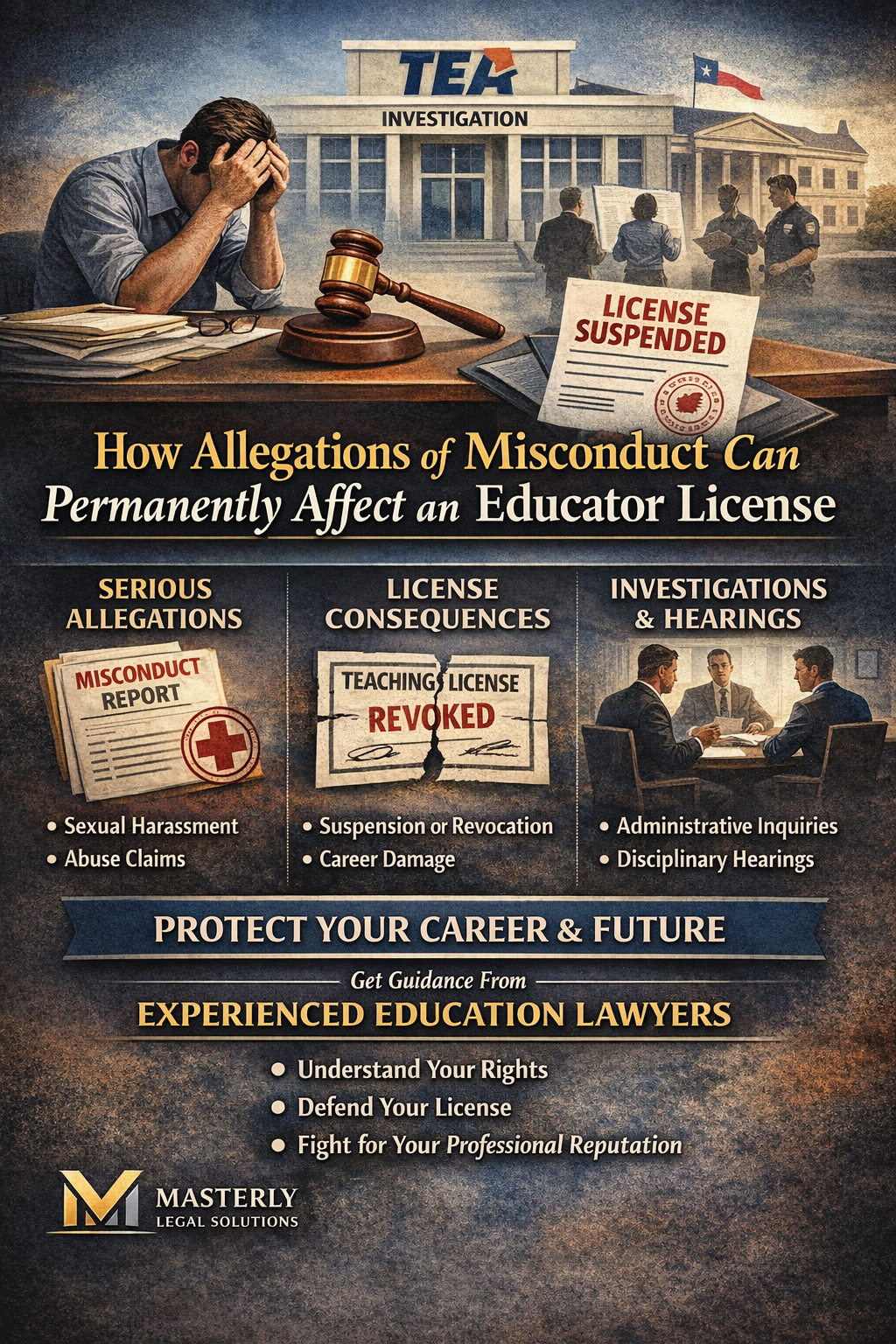
How Allegations of Misconduct Can Permanently Affect an Educator License
A career in education is more than a job. For many teachers and school administrators, it is a calling built on years of training, long nights of planning, and a deep commitment to students and their future. That is why allegations of misconduct can feel terrifying, even when the accusation is exaggerated, misunderstood, or simply untrue. In a matter of hours, your reputation inside a public school or private school can change, and the professional life you worked for can suddenly feel unstable.
At Masterly Legal Solutions, we understand that these situations are not just about paperwork or policies. They involve real people, real children, and real consequences that can last for years. When an educator’s license is investigated, the process can become overwhelming, and one mistake in communication can create new legal issues that did not exist before. That is why getting guidance from an experienced education lawyer can make all the difference, especially when the allegations involve sensitive topics like sexual harassment, physical or sexual abuse, or other serious misconduct claims.
If you are dealing with an allegation that could affect your tea license or certification, it is important to take the situation seriously, protect your teachers rights, and understand your options in law before you make the next move. These matters can grow quickly, especially when they involve school districts, charter schools, or investigations connected to the texas education agency.
Why Educator Licenses Matter More Than Most People Realize
In education, a license is more than permission to work. It is a legal credential tied to professional standards, ethical responsibilities, and public trust. Without it, many teachers cannot remain in the public school system, and many administrators may be barred from their roles entirely. Even if a person has decades of experience, a licensing problem can disrupt an entire career.
An educator license is also tied to employment opportunities across multiple schools and educational institutions. One negative mark can affect future hiring decisions and limit professional options. The consequences often go beyond a single workplace, making it hard to rebuild a career.
In many cases, licensing consequences do not happen immediately. An educator may be placed on administrative leave while the investigation continues. But once the licensing process begins, it can lead to long-term professional consequences, regardless of whether the educator stays at the same campus.
This is where an education law firm can provide real value. Education law matters require a different approach than typical workplace disputes, because they involve licensing standards, civil rights, and strict administrative rules.
What Counts as “Misconduct” in the Education System
Misconduct in an educational setting can mean many different things, and not every allegation is criminal. Sometimes the situation involves poor judgment, a misunderstanding, or a workplace conflict that turned into an accusation. Other times, the allegation is serious and requires immediate, strategic action.
Misconduct claims may relate to behavior toward students, conflicts with coworkers, boundary violations, or concerns about professional decision-making. The education system often treats these allegations as potential threats to student safety, even when the facts are unclear.
Misconduct can also include documentation concerns, communication issues with parents, and failure to follow certain policies. In some cases, even a small mistake becomes a licensing concern when it is presented as a pattern of behavior.
Because these claims touch licensing and career reputation, it is important to respond thoughtfully and legally. A skilled legal team can help you understand the allegation, gather facts, and reduce risk.
How Allegations Usually Begin Inside Schools
Most educator allegations start in one of three ways: a complaint, an internal report, or a misunderstanding that escalates. Sometimes a student reports something to a counselor. Sometimes a coworker raises a concern to leadership. In other cases, a parent reports a situation to the campus or district.
Once the allegation is reported, many schools must follow reporting steps required by policy. A public school may notify district leadership immediately, while a private school may handle matters internally at first. Still, these complaints often end up in a formal process.
Some complaints grow quickly because people talk, assumptions spread, or social media becomes involved. Even when a complaint is minor, the pressure from the school environment can create a faster response than the facts support.
If you are accused, you should assume the allegation may be reviewed by district officials or licensing authorities. Protecting yourself early can reduce the risk of long-term harm.
Why Misconduct Allegations Can Permanently Impact Your Professional Future
An educator allegation can follow you, even after you leave one school system. A licensing investigation may remain on file, and certain findings can limit future job opportunities. Many employers want to avoid risk, and even a non-criminal allegation can create hesitation during hiring.
In some cases, an educator can lose the ability to work in certain roles, supervise students, or hold leadership positions. The long-term effects can also include professional stigma, damaged relationships, and restrictions on work in university programs or school-based contracts.
Even if you transfer to another district, an unresolved licensing concern may resurface later. That is why it matters to fight the issue correctly the first time. Once a record is created, reversing damage can be much harder.
A well-prepared legal defense is often the best way to protect your career before permanent consequences happen.
Understanding the Role of the Texas Education Agency in License Cases
The texas education agency plays a major role in many educator license matters across texas education. When allegations involve professional misconduct, the state may investigate or review whether disciplinary action is needed. The standards can be strict, and educators may feel like the process is designed against them.
Many educators do not realize how administrative cases work until they are living through one. These processes can involve documentation requests, interviews, case reviews, and formal findings. Even if the school district handles employment issues separately, the licensing process may continue.
The system is not just about the allegation itself. It may focus on patterns, prior concerns, or whether the educator “should have known better,” even if the situation was complicated. These are often highly complex legal issues with lasting impact.
Having help from texas education lawyers can provide clarity and protect you from making mistakes while under pressure.
License Investigations Are Not the Same as Criminal Cases
Many educators fear that a licensing investigation means they are being treated like a criminal. While some allegations do involve criminal accusations, many licensing cases are administrative. That does not mean they are harmless. In fact, administrative discipline can still end a career.
Administrative investigations focus on professional standards, the safety of children, and public trust. In some situations, even an allegation that does not lead to criminal charges can still lead to license sanctions. That is one reason educators must treat these cases seriously.
Administrative consequences may include restrictions, suspension, or permanent loss of certification. These outcomes can affect employment even if the educator is never arrested or convicted.
Working with education attorneys helps ensure you do not underestimate what is at stake, even when a case feels “internal.”
Common Allegations That Trigger License Discipline
Misconduct allegations can range from minor to severe, but some categories trigger immediate concern. Claims involving student boundaries are treated with high urgency, especially when they include power dynamics and vulnerability.
Some frequent allegations include:
- Sexual harassment or inappropriate comments in a school environment
- Allegations of sexual abuse or physical or sexual abuse
- Improper communication through private messages or social media
- Boundary violations involving favors, gifts, or personal relationships
- Aggressive physical interactions, restraint issues, or discipline concerns
- Reporting failures involving special programs or student protections
Even when an educator believes the situation was innocent, licensing authorities may interpret facts differently. A person’s intentions and a person’s actions can be judged in very different ways.
Because of how much is at stake, legal support can help ensure that evidence is reviewed fairly and professionally.
When a Simple Complaint Becomes a Serious Legal Matter
One of the hardest parts of education-related allegations is how quickly they escalate. A comment taken out of context, a misunderstanding during student discipline, or a disagreement with a parent may turn into a formal allegation.
In many cases, the educator is shocked because they believed the issue could be resolved through communication. But once leadership becomes involved, the matter may be treated as a compliance concern. The educator may be limited in who they can speak to or what they can share.
This is often when educators make mistakes. They try to “clear things up” by sending messages, apologizing, or talking to coworkers. Unfortunately, these actions can be misinterpreted and used as evidence.
When the situation becomes a formal investigation, it is no longer just a workplace conflict. It becomes a legal matter that can change your career.
The Emotional Weight Educators Carry During Allegations
Educators often carry guilt, stress, and fear even when they did nothing wrong. The pressure can be intense because teachers often care deeply about the best interests of their students. When an allegation is filed, it can feel like your entire identity is questioned.
It can also affect your personal life. Many educators struggle with anxiety, sleep disruption, and isolation during investigations. Some feel ashamed even before the facts are determined. These emotions are normal, but they can lead to rushed decisions.
It is important to remember that an allegation is not a final outcome. You still have rights, options, and a path forward. But you need to handle it with care and strategy.
That is where legal counsel and support can provide stability in a moment that feels chaotic.
Administrative Leave and Career Damage Before a Finding Is Even Made
Being placed on administrative leave can be devastating. Even if it is described as “standard procedure,” it often comes with loss of trust and a sense of being labeled. Educators may feel like they are being punished before any investigation is complete.
Administrative leave can also affect your future. It may show up in employment records and become part of the story told to future employers. The educator may be removed from campus, blocked from contacting coworkers, and cut off from classroom access.
Some educators assume leave means the case will go away. In reality, leave is often the start of a longer legal and administrative process. The outcomes can impact both employment and licensing.
This is why early planning matters. The goal is not just to survive the moment, but to protect your career moving forward.
How School District Investigations Work
School districts usually have internal procedures for investigating staff complaints. This may involve interviews, written statements, evidence collection, and documentation review. These processes can feel formal, but they are not always consistent from one district to another.
District investigations may include involvement from HR staff, campus leadership, or district-level administration. They may also involve reviewing classroom footage, emails, or complaint histories. Educators often feel like they are expected to cooperate fully without guidance.
It is critical to understand that what you say in a district investigation can impact licensing decisions later. Your statements may be documented and shared in official files.
For educators, it is smart to treat every interview and document request as something that could affect your future license standing.
The Role of School Administrators in Reporting and Decision-Making
In many cases, school administrators are required to take action when an allegation is reported. They may be required to document complaints, notify higher leadership, or separate the educator from students immediately.
Administrators may or may not have full information. Sometimes they respond based on risk and liability concerns, not personal judgment. That means an educator can feel targeted even when leadership is “following policy.”
Administrators also have a role in documenting performance concerns and behavior patterns. Even unrelated concerns might be referenced during a misconduct investigation. That is why educators should be careful about how they respond, especially in writing.
When leadership is involved, the educator needs strong support to protect their rights and ensure accuracy in the record.
Charter Schools and Private Schools Can Have Different Procedures
Charter schools and private school environments may use different internal procedures than traditional district settings. While charter schools operate within state rules, their internal processes can feel less predictable and more administrative. Private schools may act quickly based on contractual policies, rather than public employment protections.
Even when internal procedures differ, the licensing consequences can still be severe. An educator may assume a private school matter will stay private, but that is not always the case. If a case involves student safety or reporting obligations, it can become broader.
The best approach is to treat every school environment seriously when it involves allegations of misconduct. Whether you work in a public campus, charter setting, or private institution, your license can still be impacted.
Protecting yourself requires understanding not only the employment side, but the licensing side as well.
Misconduct Allegations and Special Education Risks
Allegations involving special education settings can be especially sensitive. Educators working with students who have disabilities are often under more scrutiny because these students may be considered more vulnerable. A misunderstanding in behavior support, discipline, or communication can become a serious complaint.
Some complaints arise during conflicts over accommodations, discipline methods, or emotional support practices. These situations may involve frustration from parents, staff, or students themselves. Sometimes a teacher’s actions are questioned even when they were attempting to manage safety.
Cases involving special education services may include concerns about compliance with federal protections and student access. That can lead to claims involving civil rights, procedural violations, or failure to follow plans.
Educators should never assume special education allegations will be treated lightly. They can become licensing issues quickly.
IEP Meetings and How Missteps Can Become “Misconduct”
IEP meetings are critical moments for students receiving special education support. They are also common sources of disputes between schools and families. A disagreement during an IEP meeting can sometimes turn into an accusation of discrimination, retaliation, or procedural violations.
Educators may be accused of failing to provide services, ignoring accommodations, or mishandling communication. Even if the educator was doing their best within limited resources, the outcome can still create a complaint record.
Common issues connected to IEP meetings include:
- Disputes over accommodations and modifications
- Claims that staff did not follow the IEP
- Communication problems between staff and parents
- Conflicts about behavior plans and discipline responses
These issues may not sound like “misconduct,” but in certain cases they become formal investigations. That is why educators should document carefully and seek guidance when problems escalate.
Special Education Law and Educator Liability Concerns
Special education law is designed to protect student access, support, and educational fairness. When it is not followed properly, schools may face legal risk, and educators may become personally involved in the process. Allegations may point to failures in documentation, implementation, or conduct during service delivery.
Educators may feel unfairly blamed when systems break down. A lack of staffing, training gaps, or inconsistent policies can create mistakes. But administrative processes sometimes focus on individual behavior, even if the issue was systemic.
Understanding special education requirements helps protect both students and educators. It also helps reduce risk of legal disputes, licensing complaints, and investigations.
Experienced legal professionals can help educators navigate these highly emotional and highly technical cases.
Title IX Investigations and Educator Risk
Title IX is often discussed in the context of student safety and sexual misconduct concerns. Title IX investigations can involve staff conduct, student complaints, and campus response requirements. When these cases happen, they can move fast and feel intimidating.
Educators may be accused of inappropriate behavior, failure to intervene, or mishandling student reports. Even if an educator did not intend harm, investigation processes may still treat the claim as a major compliance matter.
Title IX cases often involve documentation, timeline issues, witness interviews, and leadership decisions. Because the reputational stakes are so high, educators should not try to handle Title IX allegations alone.
When Title IX becomes part of the story, legal guidance helps ensure the educator’s rights are respected and their future protected.
Civil Rights Claims Can Influence Educator Discipline
Many education-related allegations connect to civil rights concerns, especially when discrimination is alleged. These claims can involve disability, race, religion, gender identity, harassment, or retaliation. Even when a teacher feels they treated everyone fairly, the perception of unfair treatment can lead to formal complaints.
Civil rights concerns may appear in cases involving discipline, grading disputes, classroom communication, and parent conflicts. These issues sometimes escalate into official investigations within the school system.
Educators should be careful about documentation, consistent decision-making, and professional communication. What seems small can be presented as bias or unfair targeting.
Handling civil rights-related accusations requires experience and strategic planning, not quick explanations or emotional responses.
Student Discipline Accusations Can Be More Dangerous Than They Seem
Accusations tied to student discipline often begin with a claim that the educator acted too harshly or unfairly. Educators may be accused of humiliating a student, escalating a conflict, or using inappropriate discipline methods.
In some situations, discipline incidents involve physical contact, restraint, or student safety intervention. What a teacher views as protection, a family may view as harm. These perceptions matter in licensing and administrative processes.
Discipline-related complaints can also connect to civil rights allegations. For example, a parent may claim that their child was targeted because of disability or background. The educator may face investigations even when they were following policy.
When discipline complaints occur, educators should treat them seriously and seek legal advice early.
Representing Teachers in Misconduct Investigations
At Masterly Legal Solutions, we understand that representing teachers is not just about defending a job. It is about defending a professional identity, protecting a license, and making sure the process is fair. Educators are often placed under extreme pressure during investigations.
Teachers may be unsure what to say, who to speak to, or how to respond to leadership. They may feel trapped between cooperation and self-protection. We help educators navigate those decisions with clarity and confidence.
We also help educators respond without creating unnecessary damage. One unplanned statement can become a major issue later. A careful approach reduces the risk of misinterpretation.
When educators feel overwhelmed, having strong legal representation can provide structure, strategy, and peace of mind.
Protecting Students While Defending Educators
There is a balance in these cases. Schools must protect students, and educators deserve fair process. Many educators care deeply about their students and do not want anyone harmed. But when an accusation is false or exaggerated, the educator deserves a defense that respects both truth and professionalism.
Defense is not about ignoring student safety. It is about ensuring facts are examined and rights are respected. The system should not assume guilt before a fair review.
Educators need advocates who understand both the school environment and legal expectations. That combination matters in case outcomes.
An educator can be professional, cooperative, and still protect their rights with legal support.
Representing Students When Their Rights Are At Stake
Our work in education law can also involve representing students, especially when a family believes a child’s rights were violated. These cases often relate to discipline, disability accommodations, discrimination, harassment, or procedural violations.
In these matters, the focus may be ensuring fairness, access, and safe educational opportunities. These cases often involve civil rights, disability protections, and school compliance responsibilities. They may include disputes about services, records, and campus responses.
Whether representing students or educators, we take these matters seriously. They involve children’s futures, family trust, and the integrity of the education system.
When rights and careers are both on the line, the legal strategy must be careful and informed.
Administrative Hearings and What Educators Should Expect
In serious cases, an educator may face administrative hearings or disciplinary processes that resemble a courtroom but operate under administrative rules. These hearings may involve evidence, witnesses, and formal arguments about what happened and what sanctions should apply.
Educators often underestimate these hearings. They may assume they can explain their side and everything will be fine. But administrative processes focus heavily on documentation, rules, and professional standards.
A hearing may also affect whether an educator keeps their license, receives restrictions, or faces suspension. These outcomes can change everything, even if the educator hopes to move to a different campus later.
Preparing properly for administrative hearings can be the difference between keeping a career and losing it.
Disciplinary Proceedings and Long-Term Professional Consequences
Disciplinary proceedings can affect an educator for years. Even when a teacher is not terminated, disciplinary outcomes may create barriers to promotions, leadership roles, and future employment.
These proceedings may involve written warnings, license sanctions, restrictions, and compliance requirements. They may also trigger mandatory reporting obligations. Some educators are shocked to learn how far the consequences can reach.
Even when a person believes the matter is “handled,” licensing concerns may remain active. That is why it is not enough to settle for quick resolution without understanding the long-term impact.
When the future is at stake, legal professionals can help you make informed decisions and avoid permanent harm.
Disciplinary Hearings and Why Preparation Matters
Disciplinary hearings are high-stakes moments where decision-makers evaluate the allegation and determine what consequences follow. The educator’s credibility, documentation, and professionalism often influence the outcome.
Preparation includes reviewing records, planning responses, and ensuring the educator avoids statements that can be twisted or misunderstood. Many educators want to speak from the heart, but these hearings require careful framing.
A strong defense is not just about denying wrongdoing. It is about showing facts, context, and compliance with professional responsibilities. It is also about ensuring the process respects due process standards.
Educators facing disciplinary hearings should not face them alone.
Due Process Hearings and License Protection
Some cases may involve due process hearings, especially when student rights or procedural protections are a major issue. These hearings can involve disputes over services, discipline outcomes, and school responsibilities.
Educators may be involved as witnesses or participants, and the consequences can still affect careers. Due process hearings can also connect to broader investigations involving civil rights or special education concerns.
These cases often require careful documentation review and legal framing. Educators should not assume that because the case is about a student issue, it cannot affect them.
In reality, due process disputes can become part of the record and influence credibility, employment, and licensing outcomes.
Grievance Hearings and Employment Disputes in Education
Grievance hearings may arise when educators dispute unfair discipline, harassment, retaliation, or workplace mistreatment. In education settings, grievances can involve leadership conflicts, contract issues, and policy enforcement.
Educators may feel trapped when they are accused and also treated unfairly by coworkers or supervisors. A grievance process can be one way to address procedural mistakes and protect professional standing.
However, grievance hearings must be approached carefully. What is said in one process can sometimes appear in another. That is why legal planning matters.
When legal issues overlap with employment conflicts, strategic guidance can reduce risk and strengthen your position.
Employment Law Issues That Often Appear in License Cases
Even though licensing cases involve education standards, employment law often appears in the background. Educators may face termination threats, contract disputes, or retaliation concerns while also defending their license.
Employment issues can involve:
- Job suspension and placement on leave
- Contract non-renewal and termination procedures
- Workplace harassment concerns
- Retaliation after reporting misconduct or safety issues
These disputes are stressful because they affect income and stability. They may also influence how school leadership documents the educator’s performance.
When employment conflicts connect to license investigations, having a coordinated legal approach is critical.
Personal Injury Allegations and School Liability Concerns
Some educator allegations involve claims that a student was injured. These cases may include injury during sports, recess, classroom incidents, or special education behavioral interventions. In these situations, families may pursue personal injury claims while the school investigates the staff involved.
Educators may feel blamed even when they followed policy and the injury was accidental. However, schools often move quickly to protect liability interests. That can result in the educator being removed or investigated even before the facts are clear.
Personal injury claims can also bring insurance considerations and outside legal teams into the situation. This can increase pressure and complexity.
Because these cases involve multiple legal angles, strong representation can help protect the educator’s rights while addressing the facts responsibly.
Sexual Abuse Claims and the Reality of High-Stakes Allegations
Claims involving sexual abuse are among the most serious accusations an educator can face. Even an allegation without proof can destroy reputation, career, and stability. These cases are deeply emotional and often trigger immediate administrative action.
Schools may remove the educator from campus and restrict contact with students. Investigations may involve interviews, documentation, and collaboration with outside agencies. The educator may feel isolated and judged before a full review happens.
In these cases, educators must act carefully. They should avoid discussing the case casually, responding emotionally, or attempting to “fix it” through conversations. Every action matters.
When the stakes are that high, the right education attorneys can protect the educator while ensuring the process stays fair and lawful.
How False Allegations Can Still Cause Permanent Harm
One of the hardest truths in education is that false allegations can still cause real damage. Even when an educator is cleared, reputational harm can linger. Rumors may spread, leadership may hesitate to fully support the educator, and career opportunities may shrink.
Educators may feel like they have to prove their innocence endlessly. They may also feel emotionally exhausted, even after a case is resolved. That stress can affect performance, confidence, and professional identity.
False allegations can also lead to ongoing documentation in employment records. Even a dismissed complaint may leave traces. That is why early defense is so important.
A strategic approach protects not only your license, but your long-term career future.
Teachers Rights, Students Rights, and the Need for Balance
A healthy education environment protects students rights and supports teachers rights. When allegations arise, the system should investigate fairly without assuming guilt. But fairness requires that educators understand their rights and respond correctly.
Teachers have the right to protect themselves legally, especially when they are being questioned or investigated. Students have the right to safety, fairness, and proper services. These goals can coexist, but only when the process is handled properly.
When schools rush or act inconsistently, both educators and students can be harmed. That is why a careful, lawful approach matters.
When balance is lost, legal support helps restore fairness and accuracy in the process.
Child's Rights and Special Needs Children in Education Disputes
Many disputes connect to a child's rights, especially when the child has disabilities or needs specialized services. In some cases, families believe a school failed to provide proper accommodations or supports. These claims can quickly become serious complaints.
Concerns involving special needs children may include service delivery failures, improper discipline responses, or denial of access. These issues may be framed as civil rights violations, and they can involve multiple layers of law and compliance.
Educators may feel personally attacked when they are doing their best. But the system may still demand accountability for mistakes. These cases must be handled with care and professionalism.
Our goal is to help clients navigate these challenges and protect what matters most.
How Educators Should Respond When Accused
If you are accused of misconduct, the first step is to stay calm and avoid rushing into explanations. Many educators panic because they want to protect their reputation immediately. But quick responses can create long-term damage.
You should also be cautious about what you put in writing. Emails, texts, and statements can become official evidence. You may believe you are clarifying facts, but others may interpret your words differently.
It is also important to keep records. Save relevant communications and document timelines. Memory fades under stress, and documentation can protect you later.
Most importantly, get legal guidance early so you do not face the process alone.
Mistakes Educators Make That Can Worsen Their Case
Even well-meaning educators sometimes make choices that make an investigation worse. These mistakes often come from fear, confusion, or trying to fix the problem too quickly.
Some common mistakes include:
- Speaking to coworkers about the Title IX allegations in detail
- Contacting students or parents to “clear the air”
- Deleting messages or records that look suspicious later
- Making emotional statements during interviews
- Signing documents without understanding long-term effects
You do not have to be perfect, but you do need to be careful. One mistake can become the story instead of the facts.
Legal help provides structure during a moment where emotions and pressure are high.
How an Education Lawyer Can Help Protect Your License
An experienced education lawyer understands the difference between school policy issues and licensing legal standards. They can help you respond properly, avoid harmful statements, and prepare for the next phase of the process.
An education lawyer can also help you understand timelines, reporting obligations, and procedural protections. This matters because every step affects the record created against you.
When educators try to handle these cases alone, they often underestimate the complexity. They may not realize that internal investigations and licensing consequences move separately. They may also assume cooperating fully means everything will work out.
Strong legal strategy helps protect your license, your livelihood, and your future.
Why Experienced Education Lawyers Make All the Difference
Many educators are smart and capable, but these legal issues are not part of daily teaching. Cases involving licensing discipline are stressful, technical, and full of procedural traps. This is why experienced education lawyers matter.
They know what licensing authorities focus on, what administrators document, and how evidence is evaluated. They also know how to build a defense that feels professional, respectful, and credible.
The goal is not only to respond. It is to respond in a way that protects your future. That is where extensive planning matters.
When your career is on the line, you deserve guidance from people who handle these matters professionally.
The Role of Skilled Lawyers and Legal Professionals in Education Cases
Not every attorney understands education systems, school policy structure, and licensing standards. That is why working with skilled lawyers who focus on education-related cases matters.
Legal professionals in this space can review allegations, evaluate risks, and communicate effectively with decision-makers. They can also help clients avoid statements or actions that create new legal problems.
In many situations, the goal is to resolve matters quickly without making things worse. A calm, strategic defense can reduce stress and protect your professional standing.
Working with a focused legal team offers confidence during uncertain situations.
Masterly Legal Solutions and Our Approach to Education Law Matters
Masterly Legal Solutions is a law firm that understands how stressful and serious educator misconduct allegations can be. We take these cases personally because we know careers, reputations, and livelihoods are on the line.
Our practice includes handling education law concerns that affect educators across different school environments. That includes public campuses, charter programs, and private settings. We understand how quickly cases can evolve and how easily miscommunication can damage a defense.
Our team provides tailored legal services for clients dealing with professional crises. We do not treat your case like just another file. We take time to understand your story and your priorities.
When you need focused legal help, our goal is to protect your future with clarity and strength.
Legal Representation and Strategic Support for Complex Legal Issues
When allegations become formal proceedings, educators may need legal representation that is strategic and consistent. These cases can involve licensing records, employment consequences, and long-term professional harm.
Many cases involve complex legal issues like civil rights allegations, Title IX procedures, disability protections, and administrative rules. Educators should not be expected to navigate these processes alone.
Our work includes helping clients respond to investigations, prepare for hearings, and protect their license. We also help ensure the record reflects the truth, not assumptions or bias.
When the pressure is intense, the right approach can protect your life’s work.
Education Attorneys Supporting the People Behind the Job Titles
Educators are more than staff numbers. They are mentors, leaders, and everyday role models in the lives of students. When a teacher is accused, it can feel like the world stops, even if the educator is still trying to keep life normal at home.
Our team of education attorneys understands the human impact of these cases. We understand the fear of losing your career, the anxiety of being investigated, and the pain of feeling misunderstood.
At the same time, we recognize that schools must protect students. We take that responsibility seriously while also defending educators who deserve fairness and due process.
When we represent clients, we stand with them through each step with professionalism, focus, and respect.
When to Call an Education Lawyer Instead of Waiting
If you are being questioned, placed on leave, or informed of an investigation, it is usually the right time to seek legal help. Waiting may feel easier in the moment, but it can cause irreversible damage later.
Many educators believe they should wait until they are officially charged with something. In reality, damage often happens early, before any final decision is made. Early support protects your decisions from day one.
An education lawyer can help you prepare for interviews, gather records, and avoid mistakes that create new issues. They can also help you understand what is happening behind the scenes.
When your license is involved, proactive action is often safer than reactive defense.
Public Education and the Responsibility Educators Carry
Public education is built on trust, structure, and accountability, which means even small mistakes can quickly turn into serious concerns for teachers and administrators. When an allegation comes up, it often triggers reporting requirements, internal reviews, and licensing concerns that can follow an educator for years. In many situations, the pressure to respond immediately can lead to miscommunication or decisions that create long-term consequences. Protecting your career and reputation starts with understanding how these systems operate and responding strategically from the beginning.
Administrative Matters That Can Affect an Educator’s Career
Administrative matters may seem routine at first, but they can become career-changing when they involve investigations, official documentation, or disciplinary actions. These issues may include contract disputes, policy violations, performance concerns, and conflicts with school leadership that eventually lead to formal complaints. Even when the concern is not criminal, administrative decisions can still impact licensing, job opportunities, and professional standing. Having guidance through these processes can help ensure your rights are respected and your side of the story is properly documented.
Why Extensive Experience Matters in Education Law Cases
When your career is at stake, extensive experience makes a difference because educator discipline cases require more than general legal knowledge. These cases involve complex rules, strict timelines, and documentation standards that can be difficult for educators to navigate alone. An experienced team understands how school investigations work, what decision-makers look for, and how to protect your license while minimizing long-term damage. With the right strategy, educators can respond effectively, avoid common mistakes, and keep a difficult situation from permanently defining their future.
The Role of the State Board in Licensing Discipline
In some cases, licensing concerns can move beyond a school district and involve the state board, where serious disciplinary outcomes may be considered. This process can feel intimidating because it often includes formal procedures, evidence review, and decisions that can impact an educator’s ability to work in schools across Texas. Educators may not realize how powerful these decisions can be until their license is directly threatened. Getting legal support early can help protect your record and ensure you are prepared for every stage of the process.
Facing New Challenges as an Educator Under Investigation
New challenges can appear fast when allegations surface, especially when an educator is placed under scrutiny by leadership, coworkers, or the community. Teachers may feel pressured to defend themselves while also trying to protect their professionalism and personal wellbeing. In many cases, fear and uncertainty lead educators to speak too quickly, respond emotionally, or make choices that unintentionally worsen the situation. With the right guidance, educators can face these challenges with a clear plan, stronger protection, and more confidence in their next steps.
Special Education Cases and Increased Risk for Educators
Special education cases often involve higher legal risk because they deal with vulnerable students, heightened parent concerns, and strict compliance expectations. Allegations in these cases may involve student discipline decisions, IEP implementation disputes, communication issues, or claims involving civil rights violations. Even when educators act with good intentions, misunderstandings can escalate quickly and become formal complaints that affect both employment and licensing. Legal guidance can help educators respond professionally, protect their position, and ensure the situation is handled fairly from start to finish.
Contact Masterly Legal Solutions for a Free Consultation
If you are a teacher, administrator, or staff member facing allegations that could impact your professional future, you do not have to face it alone. These situations can feel isolating, but the right legal support can help you regain control and protect what you have worked so hard to build. At Masterly Legal Solutions, we provide guidance in education law matters involving licensing concerns, investigations, disciplinary proceedings, and administrative processes that may affect your career.
Whether the issue involves student complaints, Title IX concerns, special education disputes, employment conflicts, or serious accusations, we are here to help you take the next step with confidence. The earlier you get support, the more options you may have to protect your reputation, defend your rights, and move forward with your life and career.
Call (972) 236-5051 today to schedule your free consultation, and let us answer your questions and explain how we may be able to assist with matters related to educator licensing and TEA concerns.
Disclaimer: This article is for educational purposes only and does not constitute legal guidance or legal advice. For advice about your specific situation, you should speak directly with an attorney.
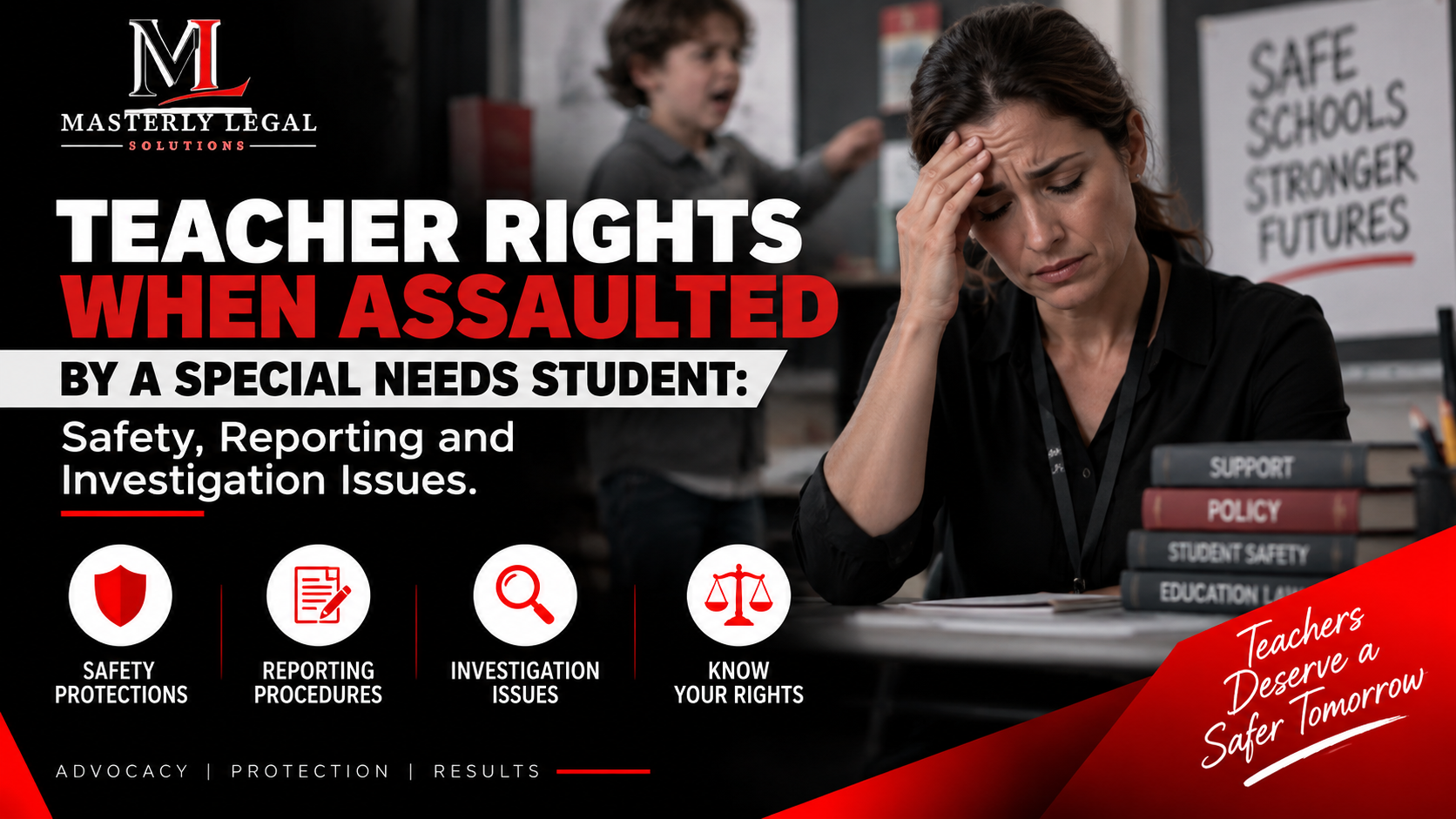
Teacher Rights When Assaulted by a Special Needs Student: Safety, Reporting and Investigation Issues

Looking for Legal & Business Solutions? Contact Us Now
Fill in the form or call us to set up a meeting