

How CPS Determines “Risk” and “Safety” Without Hearing Your Full Side
A child protective services call can start with a single report and end with a family feeling like strangers wrote their story. Many parents describe the same shock: CPS arrives, asks a few questions, looks around, and then acts like it already knows what happened. Even when you are calm and cooperative, the process can feel rushed, incomplete, and unfair. If you are trying to explain context—medical issues, a child’s behavior, a messy week, a misunderstanding—those details may not land the way you think they will.
At Masterly Legal Solutions, we see how easily families lose control of the narrative in a child protective services investigation. The system is built to move quickly, and the focus is often on “risk” and “safety” rather than your lived reality. That means internal assessment tools, screening rules, and caseworker checklists can shape outcomes before your full side is heard. It is not that your family’s story does not matter. It is that the system often decides what matters first, and then filters your story through that lens.
This article explains how child protective services cps determines “risk” and “safety,” why the process can affect a child and an entire family, and why legal representation can matter early. We will walk through how the child welfare system relies on structured tools, how protective services interpret neglect and child abuse and neglect, and why a careful response can protect parental rights. If CPS is involved, the safest move is not panic. The safest move is a plan.
Why CPS Focuses on Risk and Safety First
When CPS shows up, its primary goal is not to gather your full story in one sitting. Its primary goal is to decide whether it needs to act quickly to protect children. CPS evaluates risk because the agency is expected to prevent future harm, not only respond to past events. That is why families can feel like CPS is deciding a case before hearing all the context.
In most cases, CPS uses structured models to assess whether a child is safe right now and whether the agency believes the child could be harmed soon. That is where “risk” enters the conversation. “Safety” is not only about what happened yesterday. It is about what the agency believes might happen next.
This can be frustrating for families because risk is often based on patterns and probabilities. One messy moment can be interpreted as a sign of ongoing danger. That is why your response has to be organized, calm, and strategic.
How a Report Triggers the System Before You Are Contacted
Most CPS cases begin when someone makes a report suspected child abuse or report suspected child abuse concerns to a hotline or local intake system. The person who reports may be a teacher, doctor, counselor, neighbor, or even a relative. CPS then screens the report using its own standards. Some reports are closed quickly, but many are assigned for follow-up.
By the time CPS contacts you, parts of the process have already occurred. The report is summarized, coded, and routed through internal steps. A caseworker may arrive with a frame of reference based on the wording of that report. That means your first interaction may begin with assumptions you never got to correct.
This is one reason families feel unheard. It is not only about the visit itself. It is about the system building momentum based on the initial report.
The Difference Between Allegations and Findings
Families often assume that a report means CPS has evidence. A report is not proof, and suspected child abuse is not the same as confirmed abuse. But in the early stages, CPS may treat an allegation as a potential threat until it is ruled out. This is where families can feel like they are being punished before anything is established.
CPS may refer to alleged abuse or concerns that a child may be at risk. The agency’s job is to evaluate whether the allegation meets a legal definition of abuse or neglect and whether the child needs protection. At this stage, CPS is often looking for markers that fit internal categories.
That does not mean the agency is right. It means the agency is using a system that reduces complex human lives into standardized forms. When families understand that, they can respond more carefully.
What “Safety” Means to Child Protective Services
When CPS says “safety,” many parents hear “danger.” But CPS safety language can include many categories, including supervision, access to food, home conditions, and caregiver functioning. Safety also includes how quickly a caregiver responds to a concern. A parent who appears overwhelmed may be labeled as unable to protect, even if the parent is doing their best.
Safety decisions are often time-sensitive. Caseworkers may need to decide quickly whether a child can remain in the home without immediate intervention. They may look at the child’s current environment and decide whether the child can be “kept safe” through a plan.
This is why families should avoid emotional spirals during the visit. Caseworkers are trained to observe behavior under stress. A calm approach helps your family’s stability show through.
What “Risk” Means and Why It Can Be Misleading
Risk is not always about a specific event. Risk can be about factors that CPS believes increase the chance of future harm. That can include prior history, caregiver stress, mental health concerns, substance use allegations, housing instability, or domestic conflict. Even if the child is not currently harmed, the agency may decide the risk is unacceptable.
Risk can also rise when information is missing. If a parent refuses to answer questions or cannot provide basic details, CPS may interpret that as a risk factor. This is where families feel trapped: cooperate fully and feel exposed, or hesitate and look suspicious.
Understanding risk helps families respond strategically. The goal is not to “perform” for CPS. The goal is to provide accurate information that reduces unnecessary suspicion while protecting your rights.
Internal Assessment Tools: The Checklist You Never See
Many families do not realize CPS uses internal tools that shape decisions. Caseworkers often complete structured safety assessments and risk assessments. These tools are designed to promote consistency, but they can also create pressure to fit your story into a box.
The tool may ask whether a child has adequate supervision, whether there are hazards in the home, and whether the caregiver can provide basic needs. It may include categories related to child abuse and neglect. It may also include the child’s vulnerabilities based on child's age and developmental stage.
When the tool is completed, it can drive the case toward certain outcomes. If the tool flags multiple “concerns,” the case may escalate. This is why representation matters: an attorney helps ensure the facts and context are communicated clearly before the tool’s narrative becomes permanent.
How Child’s Age Affects CPS Decisions
A child’s vulnerability is one of the most powerful factors in CPS risk scoring. A toddler has a different safety profile than a teenager, and CPS often views young children as needing more protection. The child's age can influence how CPS interprets supervision, home safety, and discipline.
For example, leaving an older child home for a short time may be treated differently than leaving a very young child. A minor injury might be interpreted differently depending on age and mobility. CPS may also weigh a child’s ability to self-report, seek help, or avoid hazards.
Parents can feel unfairly judged because they are compared to an ideal standard. But understanding how age influences risk helps families prepare for CPS questions and provide clearer context.
The Role of Social Workers and Caseworker Judgment
Even with structured tools, human judgment matters. CPS social workers and caseworkers interpret what they see and hear. They decide how to summarize your statements and what details to emphasize. Two different workers can view the same home and write two very different narratives.
Caseworkers are trained to look for signs of unsafe conditions, caregiver impairment, and threats of harm. They may interpret your frustration as hostility. They may interpret your nervousness as dishonesty. Families often feel misread because stress changes behavior.
This is another reason representation helps. A lawyer can reduce misinterpretation by guiding communication and ensuring key facts are clearly documented.
Why You May Feel Like CPS Never Listened
Many parents try to explain context, but CPS visits are often short and structured. The caseworker may have limited time and multiple cases. They may prioritize questions that feed the assessment tool. If your explanation does not fit the categories, it may be treated as “extra.”
Parents often ask, “Why didn’t they ask me about that?” The reality is that CPS often collects information in a sequence designed for its internal process. That sequence may not feel fair to you. It may feel like a one-sided interview rather than a conversation.
This does not mean you should stop trying to be heard. It means you should plan how to be heard. Representation helps ensure your voice is captured in a way the system must recognize.
Child Abuse and Neglect: Broad Categories With Real Consequences
CPS cases often revolve around child abuse and neglect categories. These categories include physical harm, emotional harm, sexual harm, and failure to provide care. Families can be stunned by how quickly a caseworker uses strong language.
Child abuse may include physical abuse, emotional harm, and sexual abuse. Neglect may include failure to supervise, unsafe conditions, or failure to provide needs. Some cases involve an accusation that seems minor but still fits a category in CPS terms.
Because these categories are broad, families need to be careful. A misunderstanding can be categorized as neglect. A disciplinary choice can be interpreted as physical abuse. When CPS labels the situation, the label can drive the case.
Physical Abuse Allegations and How CPS Evaluates Injuries
When CPS suspects physical abuse, it may focus on bruising, marks, patterns, and medical explanations. Parents may be asked to explain injuries in detail. If the child’s story differs from the parent’s story, CPS may treat that as a risk factor.
Caseworkers may also look for delays in care. If medical care was not sought promptly, CPS may view that as neglect or concealment. Even when a parent thought care was unnecessary, CPS may expect documentation.
This is why medical records and clear timelines matter. An attorney can help you gather records and present information in a way that reduces confusion.
Sexual Abuse Allegations and the “Safety First” Approach
Sexual abuse concerns trigger strong CPS responses because the consequences can be severe. CPS may separate children from certain adults, require safety plans, or seek court involvement. Families may feel devastated, especially if the allegation involves a household member.
In these cases, CPS often focuses on preventing access and limiting risk immediately. Even if you believe the allegation is false, CPS may still require safeguards. The agency may also coordinate with law enforcement, and the case may involve potential criminal charges.
When sexual abuse allegations appear, the need for representation becomes urgent. The wrong statement can create long-term harm. A structured legal plan can protect the child and protect the family’s rights.
Neglect: The Most Common Driver of CPS Cases
Neglect is one of the most common reasons CPS becomes involved. Neglect can include supervision concerns, housing issues, medical issues, or lack of basic necessities. Many families experience neglect allegations during times of stress, job loss, health crises, or unstable housing.
CPS may use neglect language even when a parent is trying hard. A parent might be working multiple jobs and still be accused of inadequate supervision. A parent might be coping with mental health challenges and still be judged harshly. This is why neglect cases are often emotionally painful.
Neglect cases can escalate quickly because they are tied to risk predictions. A caseworker may view neglect as ongoing and likely to repeat. The way you respond can shape whether the agency views the family as stable or dangerous.
Neglected Children and How CPS Decides “Ongoing Risk”
When CPS believes children are being neglected, it often looks for patterns. The agency may ask whether the home has consistent food, consistent schooling, and consistent supervision. It may also look at whether parents follow through on services or safety plans.
The term neglected children can appear in documentation even before a final finding. Families may feel labeled and shamed. The label matters because it can influence whether CPS seeks court involvement or service plans.
Your goal is to keep the narrative accurate. If CPS is misunderstanding, you need a clear response supported by records and stable behavior.
Medical Care Decisions and How CPS Interprets Them
Many CPS cases involve questions about medical care. CPS may ask whether a child receives regular checkups, medication, therapy, or needed treatment. Parents may be accused of neglect if they missed appointments or delayed treatment.
Some families face barriers, including cost, transportation, work schedules, and access issues. Those realities matter, but they are not always reflected in the initial assessment. CPS may interpret missed care as indifference rather than hardship.
This is where documentation matters. Showing appointment history, prescriptions, and efforts to provide care can reduce risk. A lawyer can help present these facts clearly and avoid misunderstandings.
Social Services and Human Services: What CPS Can Offer Versus What CPS Requires
Families often hear promises of support, but CPS involvement can feel like surveillance. CPS is connected to broader social services and human services systems. The agency may offer referrals, parenting classes, therapy, or housing support. In some cases, these supports are genuinely helpful.
However, services can also become obligations. CPS may require programs, evaluations, and ongoing monitoring. Families may feel trapped in a system where refusing services looks suspicious. That is why families need legal advice before agreeing to everything.
The line between support and control can be thin. A plan that is helpful for one family may be burdensome for another. Representation helps ensure services are reasonable, targeted, and fair.
Providing Services and the Logic of “Compliance”
CPS often focuses on whether a family is “compliant” with services. Providing services becomes part of CPS’s justification for staying involved. The agency may create a plan and then measure whether the parent follows it.
Compliance can become a new version of risk. If you miss a class, CPS may interpret that as unwillingness to change. If you question the plan, CPS may interpret that as resistance. Families can feel like they are being tested, not helped.
This is where careful communication matters. A parent can cooperate while still advocating for fairness. A lawyer can help you respond professionally and ensure the record reflects your efforts accurately.
Reasonable Efforts, Active Efforts, and the Language CPS Uses
Many parents hear vague phrases like “efforts” and do not know what they mean. In child welfare, terms like reasonable efforts and active efforts relate to what the system is supposed to do to help keep families together and prevent unnecessary removals. These terms also connect to broader policy expectations and sometimes to federal standards.
When CPS escalates a case, it may claim it made reasonable efforts to prevent removal. Families may disagree, especially if services were offered late or were not accessible. These disputes can matter in court.
Understanding this language helps families push back when services were not meaningful. Representation helps you identify when CPS is failing to make appropriate efforts and how to raise that issue strategically.
Federal Funding and Why CPS Decisions Are Not Only About Your Home
Families often believe CPS decisions are purely local. In reality, many CPS systems rely on federal funding tied to compliance measures and documentation expectations. That does not mean CPS is “paid to remove children,” but it does mean systems are influenced by federal rules, audits, and performance metrics—much like the investigative processes school districts follow when responding to educator misconduct allegations.
CPS documentation can be shaped by what must be recorded to justify actions. Caseworkers may focus on risk factors that support the agency’s decisions. Families may feel like the paperwork matters more than the people.
This is why families need representation. When the system is paperwork-driven, you need a plan that protects how your family is described in writing.
The Social Security Act and Federal Child Welfare Frameworks
The broader child welfare system has been shaped by major federal laws, including parts of the Social Security Act. Families do not need to memorize federal statutes, but it helps to understand that CPS systems are guided by national frameworks. This is one reason terminology is so standardized.
Federal frameworks influence priorities like reunification, prevention services, and adoption timelines. They also influence data collection and reporting requirements. This shapes how CPS structures its plans and evaluates progress.
The key takeaway is that your case may be influenced by systems bigger than your county. That is why professional guidance matters.
The Child Welfare Act and the Many “Acts” Families Hear About
Families may hear references to acts and amendments without understanding what they mean. In public policy, terms like child welfare act, families safe act, safe families act, and prevention services act reflect evolving priorities in child welfare. Some focus on prevention and services. Others focus on timelines and permanency.
There are also laws influencing adoption and placements, such as the adoption promotion act, increasing adoptions act, and interethnic placement provisions. Families may be surprised by how quickly adoption language can appear if CPS believes reunification is uncertain.
This does not mean adoption is inevitable. It means the system plans for outcomes early. Understanding that helps families respond with urgency.
Keeping Children and the Pressure of Timelines
CPS often talks about keeping children safe, but the system also operates on timelines. When CPS believes a case is serious, it may move toward court involvement, services, and permanency planning. Families can feel like the timeline is unfair because healing and stability take time.
The system may push parents to meet goals quickly. Parents may feel overwhelmed by requirements, especially if they are working, caring for other children, or facing housing issues. Failure to meet a timeline can be framed as lack of effort.
A legal strategy helps families focus on what matters most and document their progress. It also helps prevent the system from moving too fast without hearing the full story.
Foster Care Decisions and Why Risk Scores Matter
When CPS believes risk is high, it may consider removal and foster care placement. Foster care decisions often depend on safety assessments, risk scores, and whether CPS believes the home can be stabilized quickly. Once foster care begins, families face new hurdles, including court hearings and service plans.
Foster care may include placement with relatives, friends, or foster parents. Children may become foster children even if the goal is reunification. The emotional impact on a child can be significant, and families often feel desperate to undo the removal.
This is why early advocacy matters. Preventing removal is usually easier than reversing it after the system is in motion.
Foster Care Independence Act and the Long-Term Reality of Placement
Some families do not realize the system includes laws and programs shaped by acts like the foster care independence act. These policies reflect how the system views long-term placement and youth transitions. For families, the key point is that once a child enters foster care, the system begins tracking a long-term plan.
That plan can affect visitation, schooling, medical decisions, and case timelines. Parents may feel like they lost control over everyday parenting choices. The longer the child remains in state care, the harder reunification can become.
If CPS is moving toward foster care, representation becomes urgent. You need a plan to challenge risk claims and show the child can be safe at home.
Adoption, Adoption Assistance, and the System’s “Backup Plan”
Families are often shocked when they hear the word adoption in a CPS case. But the system uses “concurrent planning,” meaning it plans for reunification while also preparing for a different outcome if reunification fails. This is known as concurrent planning, and it can feel like the system is already giving up.
CPS may discuss adoption options when it believes parents will not complete services or risk will remain. Adoption may involve relatives, foster parents, or other placements. Policies like adoption assistance exist to support adoptive placements, and that can make adoption planning move quickly when CPS believes it is in the child’s best interests.
This does not mean adoption will happen. It means you must act early to protect parental rights and show progress clearly.
Reunify Families and the Primary Goal That Can Get Lost
Many CPS systems claim their primary goal is to reunify families when safe. In practice, families sometimes feel reunification is treated as optional. If CPS believes risk is high, it may shift toward long-term placement strategies.
This is where representation matters. A lawyer helps keep the system accountable and ensures your reunification efforts are documented. The lawyer can also challenge unfair assumptions and highlight protective factors.
Reunification depends on both progress and perception. Your legal team helps ensure the perception is accurate.
Parental Rights and Children’s Rights in a Fast-Moving System
CPS cases involve both parental rights and children's rights. Children have the right to safety and care. Parents have rights to due process, fair treatment, and family integrity. When CPS moves quickly, those rights can feel invisible.
Parents may feel pressured to sign plans, accept services, or agree to restrictions without understanding the long-term consequences. They may also feel like speaking up will be used against them. This creates a trap: silence can look like guilt, but speaking can be misquoted.
A lawyer helps balance these rights. Representation does not mean you oppose child safety. It means you want safety decisions based on full facts.
Legal Definition and Why Words Matter in CPS Files
CPS decisions are shaped by words. Terms like “neglect,” “abuse,” “unsafe,” and “failure to protect” are not casual. They reflect a legal definition that can trigger court action. Families may describe something in ordinary language, but CPS may translate it into legal terms that sound worse.
This translation can happen quickly. A parent might say they “lost their temper,” and a report may summarize it as “aggressive behavior.” A parent might describe a messy home, and a report may label it “unsafe conditions.” These summaries matter because they become evidence.
Representation helps control the language of the record. The goal is to ensure facts are documented accurately, with context.
Criminal Charges: When CPS and Law Enforcement Overlap
Some CPS cases involve potential criminal charges, especially in serious child abuse or sexual abuse allegations. When law enforcement becomes involved, families need to be extremely cautious about statements. What you say to CPS can sometimes be shared or referenced across agencies.
Even if no criminal case is filed, the possibility changes how you should respond. Families may be tempted to explain everything in detail to clear the air. That can be dangerous when criminal exposure exists.
Legal representation is critical when there is any risk of criminal consequences. Your attorney can guide communication and protect your rights in both systems.
Preventing Sex Trafficking and How CPS Evaluates Vulnerability
CPS systems also evaluate certain risks tied to community threats, including sex trafficking. Policies related to preventing sex trafficking exist because vulnerable children can be targeted, especially when they have unstable housing, lack supervision, or have a history of running away.
Families may be surprised that CPS asks questions about internet use, older relationships, or missing episodes. CPS may interpret certain behaviors as heightened vulnerability. This can affect the risk assessment even when the parent is trying hard.
If your child is a teen facing risky influences, CPS may still judge parental protection. A plan and representation can help document protective steps and reduce risk labels.
National Origin and Placement Decisions
In some cases, families worry that their background affects how the case is handled. Issues tied to national origin can influence misunderstanding, communication barriers, and bias. Families may feel judged for cultural parenting norms or language differences.
The system also includes placement policies, including the interethnic placement provisions, which relate to adoption and foster placements. Families do not need to become experts in these rules, but they should know that identity and culture can become part of placement conversations.
If you feel misunderstood, it is important to document communication clearly and seek support. Representation can help reduce bias and ensure your voice is accurately heard.
Local Department Decisions and Government Agencies
Families often assume CPS is a single office. In reality, local offices operate as a local department within larger structures. Different government agencies may coordinate, including courts, law enforcement, and social services providers. This creates a web of communication that families rarely see.
Because agencies share information, a single statement can travel far. A misunderstanding can become a multi-agency narrative. That is why families should be careful about what is said and to whom.
Representation helps you manage the agency web. It helps ensure your case does not spiral due to miscommunication.
Federal Laws, the United States Government, and Oversight
CPS is influenced by federal frameworks and oversight tied to the United States government and broader federal laws. These rules shape funding, priorities, and documentation standards. Families do not need to study federal policy, but it helps to understand that CPS is not only local discretion.
Systems are built around compliance, safety metrics, and permanency planning. That can create pressure to move quickly and document “risk” even when a family is stable. It can also create rigid planning that does not match real life.
A lawyer helps navigate this rigidity. When the system is standardized, your response must be strategic to be heard.
The United States Supreme Court and Family Rights
Family integrity and due process have been discussed in cases connected to the United States Supreme Court, and those principles influence how child welfare cases are treated. Parents have important rights, even when CPS is investigating. Those rights include fair process and the ability to challenge actions that affect family life.
In real life, families often do not feel these rights during the first visit. They feel overwhelmed, frightened, and unsure what they can refuse. Understanding that rights exist helps families act with more confidence.
Representation is one of the practical ways families protect those rights. A lawyer helps ensure decisions are not made based on incomplete narratives.
Child Abuse Prevention and Promoting Safe Families
Most parents want the same thing CPS claims to want: safety and stability. Concepts like child abuse prevention and promoting safe home environments are important, and many families are open to support. The issue arises when CPS assumes danger without fully understanding context.
True prevention is not about labeling families. It is about identifying needs and supporting safe parenting. Many families can correct problems quickly when treated with respect and clear guidance.
A balanced approach protects the child and respects the family. Legal guidance helps families engage in prevention efforts without surrendering rights or being misrepresented.
How CPS Reports Are Written and Why They Can Hurt You
CPS reports are often written quickly and summarized in agency language. Your words may be condensed into a sentence. Your explanation may be replaced with a conclusion. Families are often shocked when they later read a report that does not reflect what they meant.
Reports become the backbone of the case. They shape how supervisors view the file. They influence court decisions. They also affect future cases if another report is ever made.
This is why you need to think about documentation early. If something is misquoted, you need a plan to correct it. A lawyer can help challenge inaccuracies and build a stronger record.
Why Representation Matters Before the Case Gets Bigger
Many families wait until court involvement to hire an attorney. By then, the risk and safety narrative may already be set. Early representation helps shape the record before the system hardens its conclusions.
A lawyer helps you understand what CPS is asking and why. They help you avoid over-sharing, inconsistent statements, and emotional responses. They also help you document protective steps and present evidence that reduces risk.
Representation also changes how agencies treat communication. When an attorney is involved, CPS often becomes more careful and structured. That can protect the family from informal misunderstandings.
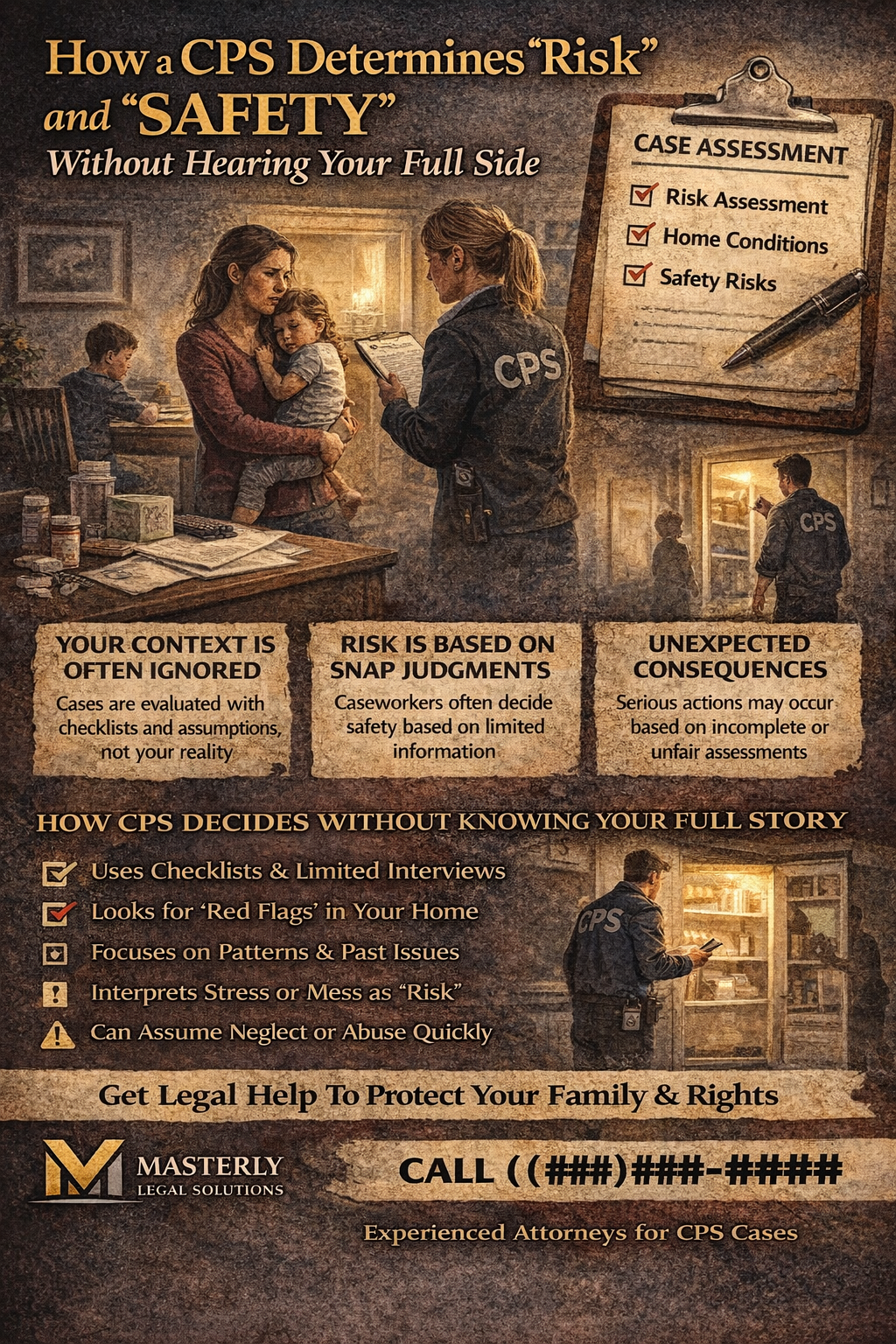
Child Protection Services and Why the Label Matters
When families hear “child protection services,” it can feel like a final judgment instead of the start of a process. In reality, the phrase often signals that the system is focusing on child protection, meaning CPS is evaluating whether your child is safe today and whether future harm could occur. That focus can lead to quick safety plans or restrictions before your full context is considered. Understanding how child protection services thinks—and how it documents decisions—helps families respond strategically and protect their rights early.
Child Protection Is a System Goal, Not a Full Picture of Your Family
The idea of child protection is centered on preventing risk, but it does not always capture the everyday reality of a home. A parent may be managing stress, medical issues, or temporary hardship while still keeping a child safe, yet CPS may interpret those factors as signs of instability. This is why families often feel unheard—because the system is trained to sort information into risk categories, not to tell your family’s full story. With the right approach, families can show stability and reduce the chance that child protection concerns become long-term case labels.
Stable Families Amendments and the Push Toward Faster Permanency Decisions
Policies like the stable families amendments reflect how the child welfare system emphasizes permanency and measurable progress in active cases. These standards can influence how agencies evaluate whether a parent is meeting expectations and whether the case should move toward reunification, placement, or other outcomes. Families may feel pressured to comply quickly, even when services are difficult to access or the timeline feels unrealistic. When you understand how stable families amendments influence decision-making, you can respond with clearer documentation and a stronger plan to protect your family’s future.
Family Members and Why Kinship Options Come Up Early
When CPS believes there may be a safety issue, the agency often asks about family members who could help support the child or provide temporary care if needed. Families sometimes view these questions as a threat, but CPS may be documenting possible kinship options as part of its safety planning process. The risk is that if relatives are mentioned casually, CPS might later treat that as proof the parent cannot provide safe care. Careful communication about family members can protect your position while still showing that your child has support if an emergency arises.
Bills Introduced and How Public Policy Shapes CPS Decision-Making
Many families do not realize that CPS practices evolve over time because of bills introduced at the state and federal level. These laws can change how investigations are handled, what services are prioritized, and how quickly permanency decisions are encouraged. Even when families never read the legislation, policy shifts influence the checklists, training, and reporting rules caseworkers follow. That is why a case today may look different from a case years ago, and why representation can help you navigate the most current expectations.
Prevent Abuse Without Assuming the Worst About Parents
CPS systems are designed to prevent abuse, but prevention should not mean labeling families before facts are verified. Many reports come from misunderstandings, single incidents, or incomplete information, and families can feel punished while simply trying to explain what happened. A strong response helps show that you take safety seriously while also ensuring your side is documented accurately. When the goal is prevention, families benefit most when they have clear guidance, stable documentation, and a plan that protects both the child and the parent.
Fostering Connections and Why Placement Discussions Can Start So Early
Programs and policies tied to fostering connections emphasize maintaining family relationships and stability when CPS becomes involved. That can include exploring kinship placements, preserving sibling connections, and supporting long-term stability when a child is removed or monitored. Even if removal is not happening, CPS may still document connection options because it is part of the agency’s internal planning process. Understanding fostering connections helps families recognize why CPS asks certain questions—and how to answer in a way that protects parental rights and keeps the focus on keeping the child safely at home when possible.
Most Adoptions Are Discussed Long Before Families Expect It
Families are often shocked to hear adoption language, but most adoptions connected to child welfare systems are discussed early through “backup planning,” even when reunification is still possible. CPS may reference adoption when it believes risk is high or progress will be slow, and those references can appear in reports long before parents realize it. This does not mean adoption will happen, but it does mean the system is thinking ahead. Early legal guidance can help keep the focus on reunification and prevent premature assumptions from shaping the case record.
Well Being and How CPS Evaluates More Than Physical Safety
CPS does not only evaluate immediate safety; it often considers a child’s well being, including emotional stability, schooling, medical needs, and consistency at home. Families may feel judged because CPS can interpret stress, conflict, or instability as harm even without physical injuries. A child’s well being can become part of the agency’s justification for keeping a case open or requiring services. Showing stability, routines, and responsible decision-making can help reduce concerns and protect the family from escalating interventions.
Child Abuse or Neglect and the Broad Language CPS Uses
Many cases expand because CPS documents concerns as child abuse or neglect, even when parents believe the issue is minor or misunderstood. This phrase covers a wide range of allegations, from supervision questions to physical discipline concerns, and the wording can make a situation sound more severe than the actual facts. Once child abuse or neglect language appears in the record, it can influence risk scoring, service demands, and court decisions. That is why families should respond carefully and seek legal guidance early, so the record reflects accurate context rather than conclusions based on limited information.
How Masterly Legal Solutions Helps Families Respond Strategically
At Masterly Legal Solutions, we understand that CPS cases are not just paperwork. They affect children, parents, and the stability of the entire family. We help clients respond to protective services involvement with clarity, organization, and calm strategy. We focus on protecting parental rights while also ensuring the child’s safety is addressed responsibly.
We help families understand the internal tools CPS uses and how those tools translate your life into risk categories. We also help clients gather records, prepare for interviews, and respond to service requests in a way that protects the case. Whether the allegation involves neglect, physical abuse, sexual abuse, or a misunderstanding, we work to ensure the full story is presented effectively.
When your family’s future is on the line, you deserve more than guesswork. You deserve a plan that protects your children and protects your rights.
Contact Masterly Legal Solutions for a Free Consultation
If child protective services cps is involved with your family and you feel like “risk” and “safety” decisions are being made without hearing your full side, now is the time to act. A single report can grow into a protective services case that affects parental rights, visitation, foster care risk, and long-term outcomes for your child. The earlier you get guidance, the more control you can keep over the record that CPS and the court will rely on.
At Masterly Legal Solutions, we help families respond strategically to child welfare investigations, service plans, and safety assessments. We can answer your questions, help you understand what CPS is doing behind the scenes, and explain how to protect your family while the case is active. Call (972) 236-5051 today to schedule your free consultation, and let us help you take the next step with clarity and confidence for your family and your child.
Disclaimer: This article is for educational purposes only and does not constitute legal guidance or legal advice. For legal advice regarding your specific situation, consult an attorney.




Teacher Rights When Assaulted by a Special Needs Student: Safety, Reporting and Investigation Issues


Looking for Legal & Business Solutions? Contact Us Now
Fill in the form or call us to set up a meeting





